
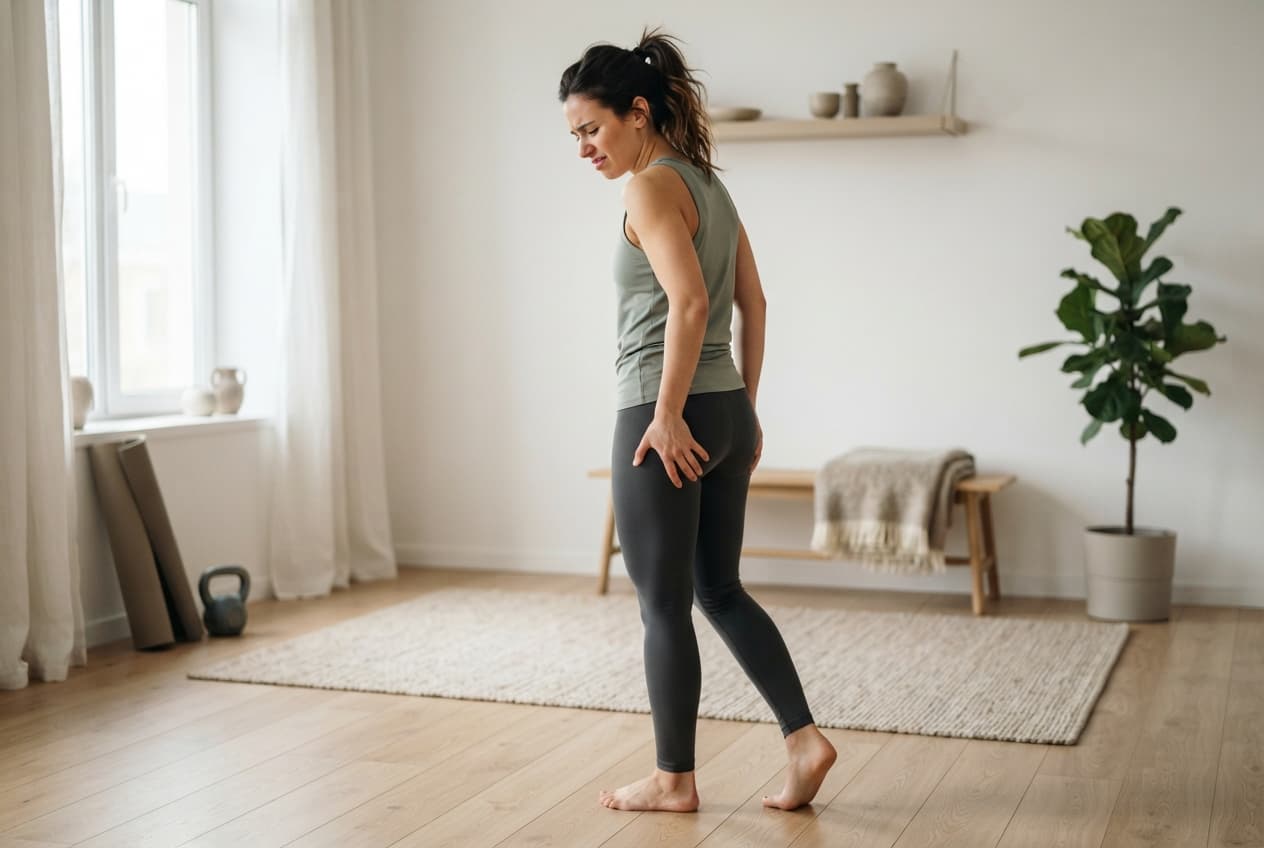
Piriformis syndrome usually shows up as a dull, deep-seated pressure in the glutes that gets worse when sitting and occasionally pulls down into the leg. It is triggered by tension in the piriformis muscle, which lies deep beneath the large glute muscles and runs close to the sciatic nerve – one reason why the symptoms sometimes feel like radiating sciatic pain. We show you exercises that can help, and how to tell the two causes roughly apart.
Why the glutes tighten up so quickly
Long periods of sitting – especially with your legs crossed – keep the piriformis permanently in a shortened position. One-sided loading while running or weakly trained hip muscles can also cause the muscle to become overloaded and tense. Because it lies so close to the sciatic nerve, pronounced tension can occasionally put pressure on the nerve and trigger a pulling sensation down into the leg – similar to a slipped disc, but with a different cause.
5 exercises for tight glutes
1. Fascia roller seated with one leg crossed
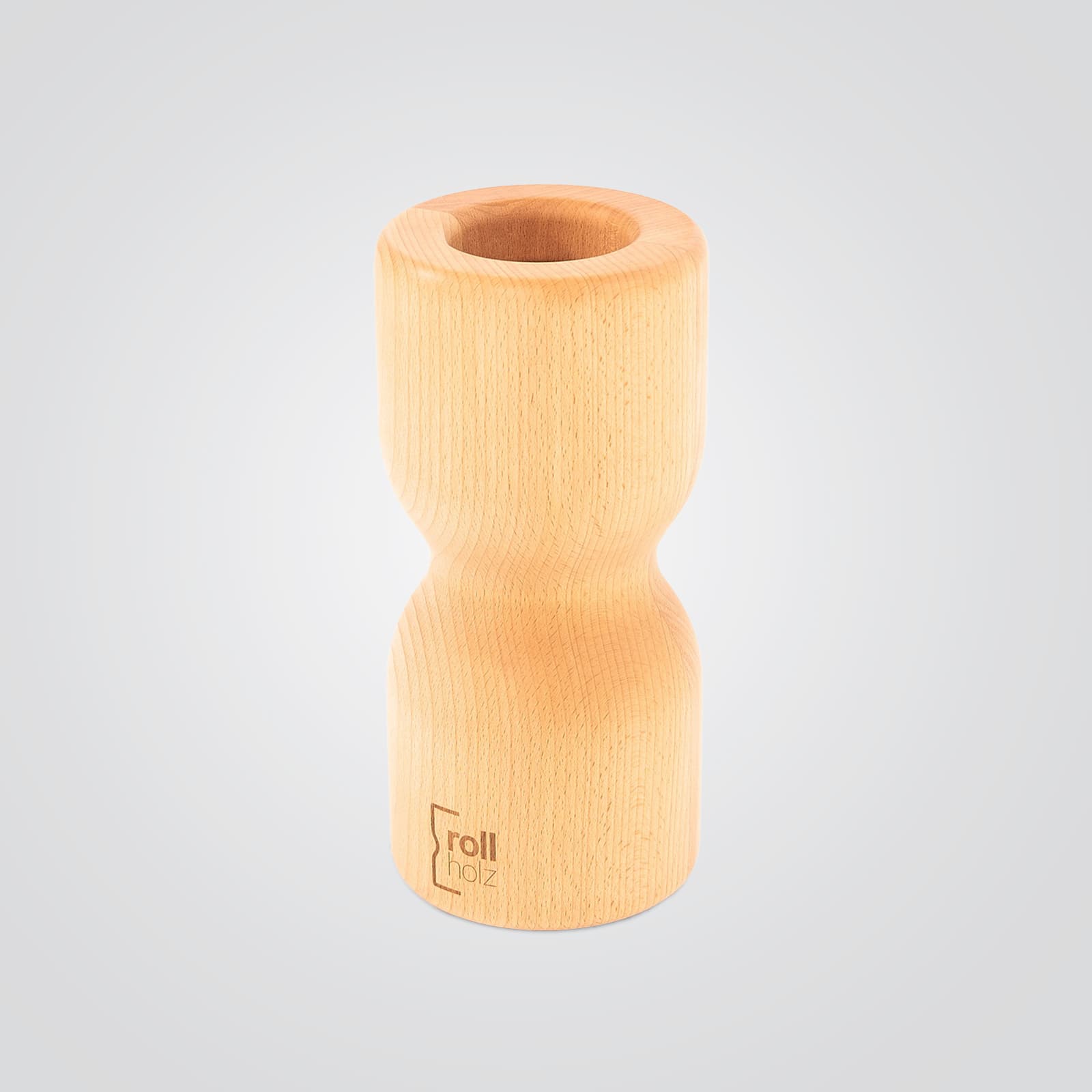
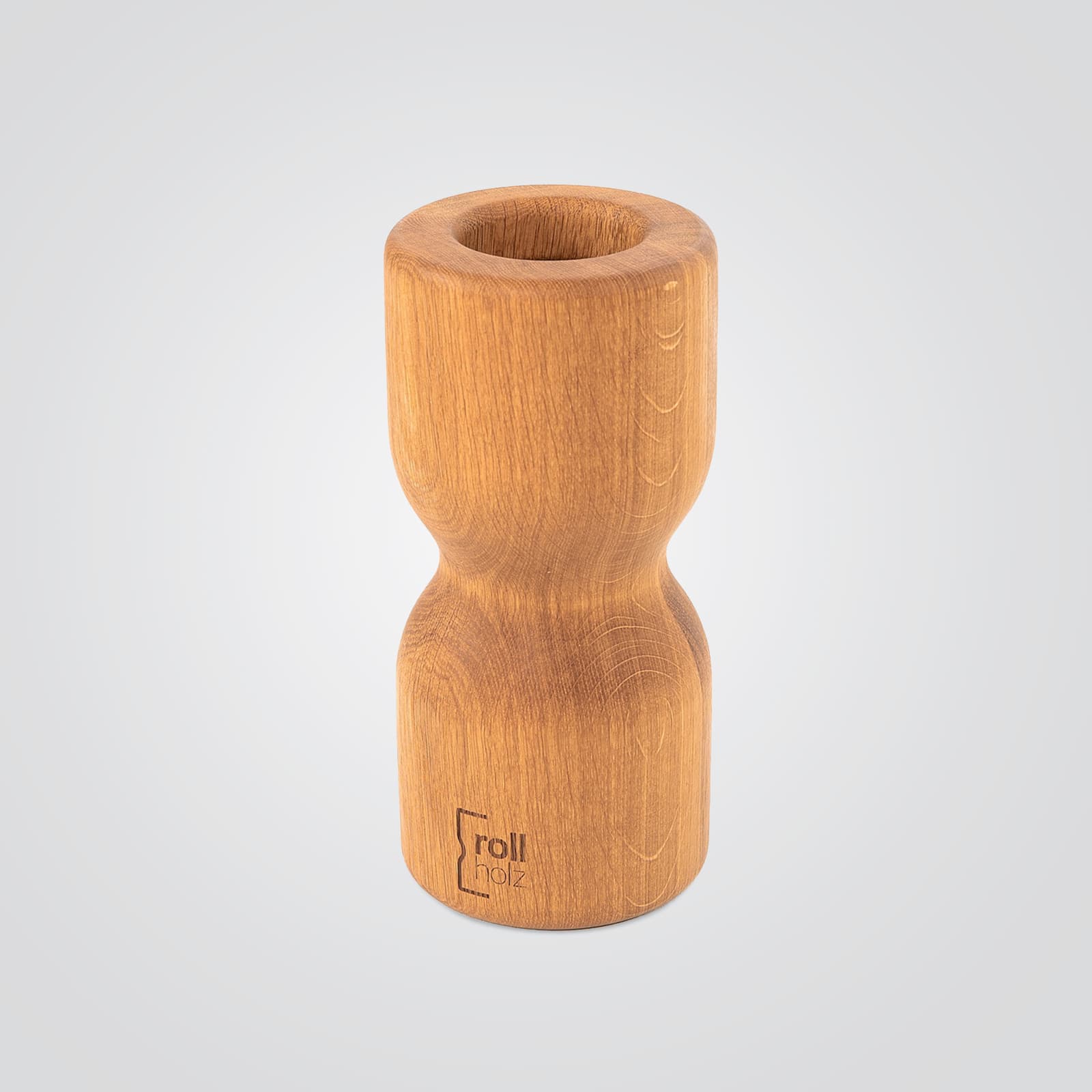
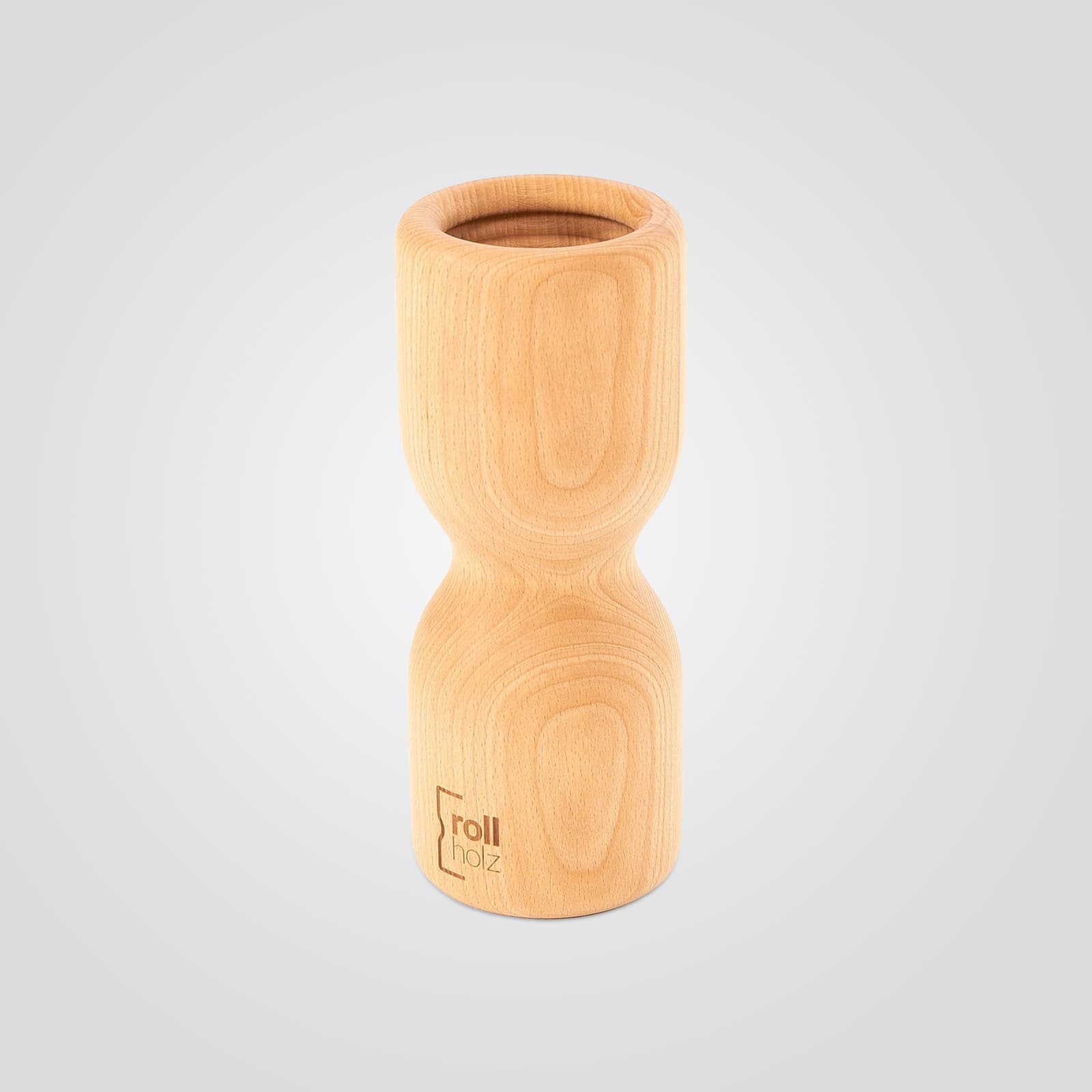
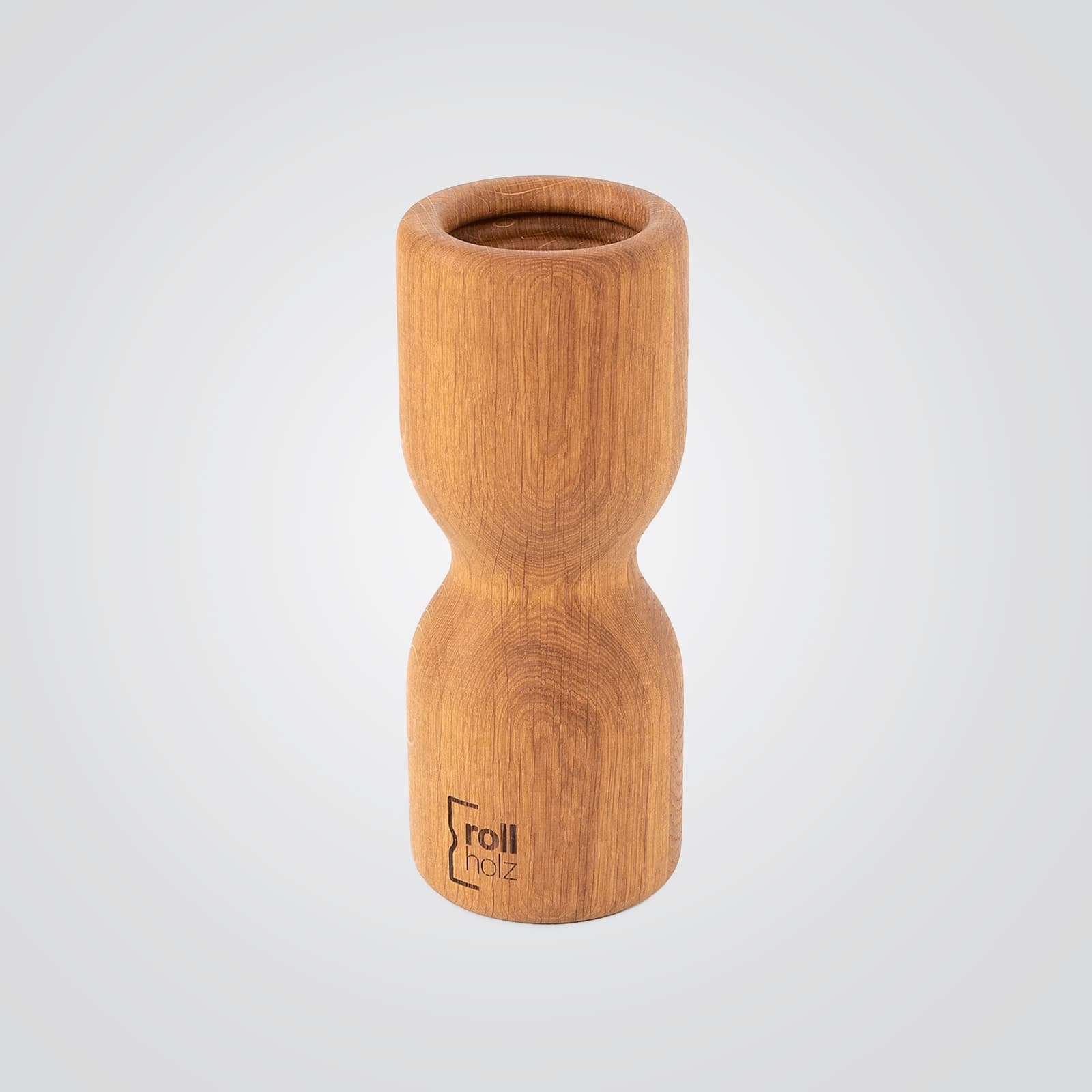
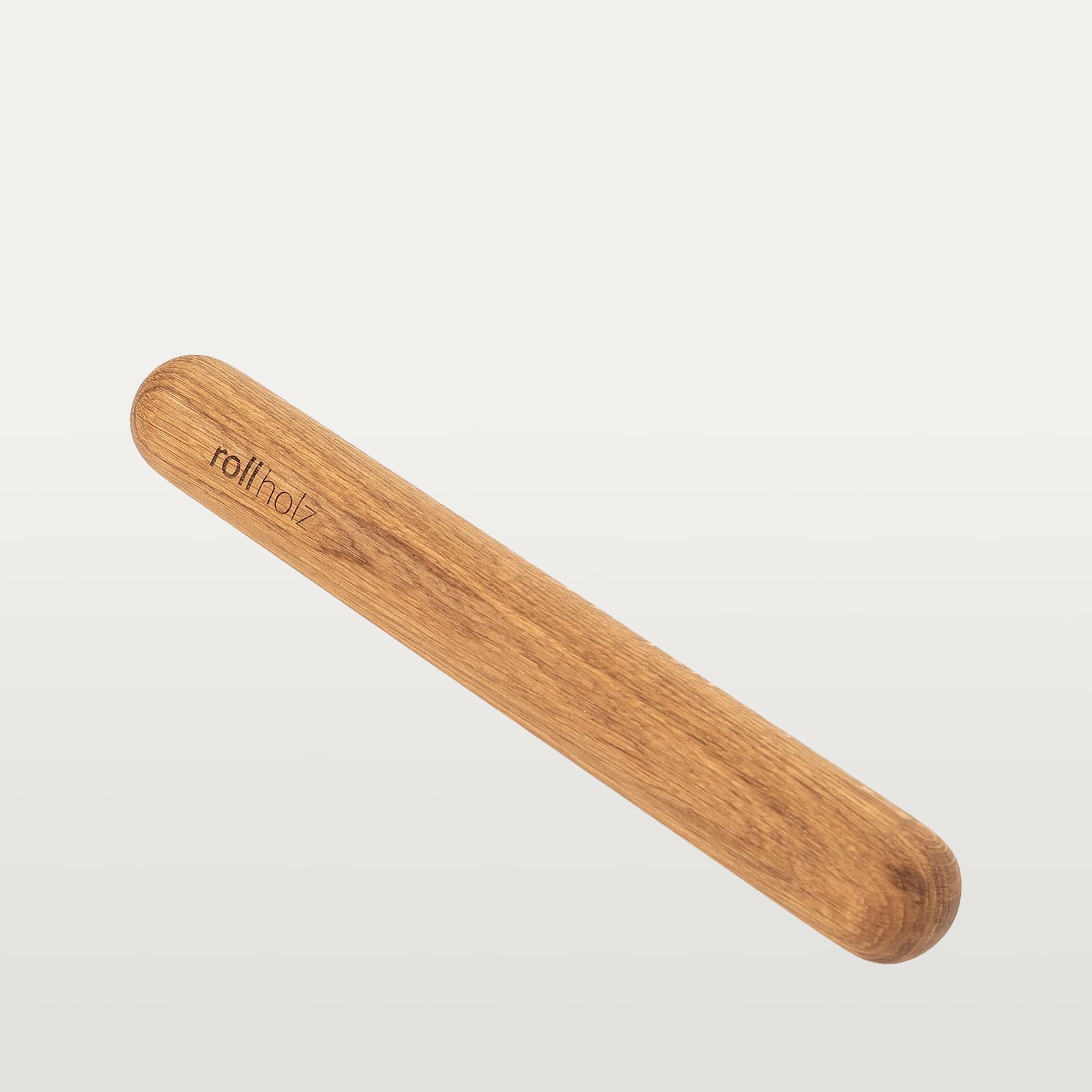
Sit on your rollholz original or rollholz Pro fascia roller and cross one leg over the other: the outer ankle of one leg rests on the knee of the other, with the knees pointing apart so that the legs form a lying “4”. Support yourself with your hands behind you and roll slowly over the glutes on the side of the bent, upper leg. Pause on tight spots and move minimally back and forth there.
You can place the fascia roller either crosswise (at right angles to your spine) or lengthwise (in the direction of your legs). Crosswise, you cover the surface of the glutes well; lengthwise, you reach further out towards the hip, where the piriformis is often particularly tight.

2. Fascia ball for pinpoint work
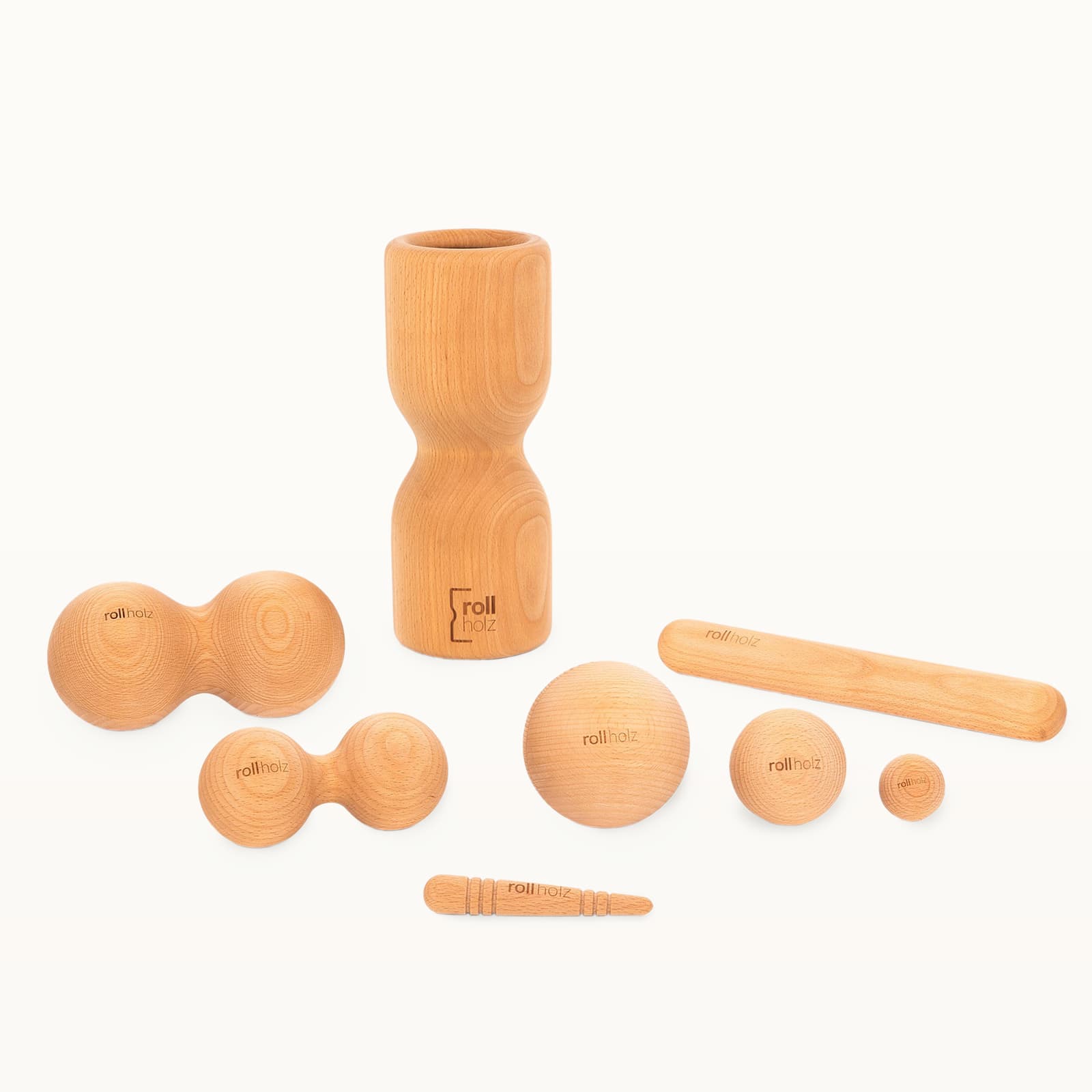
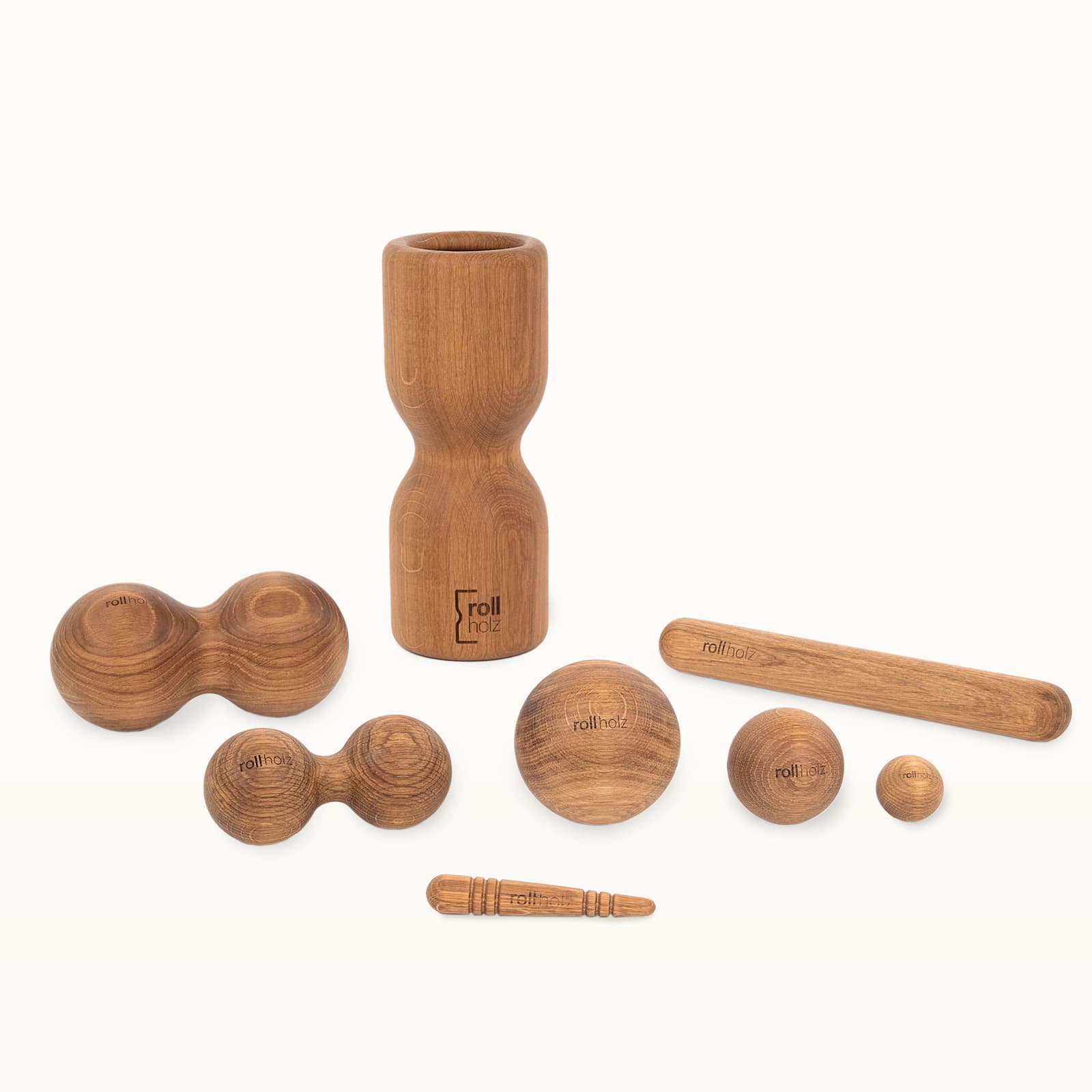
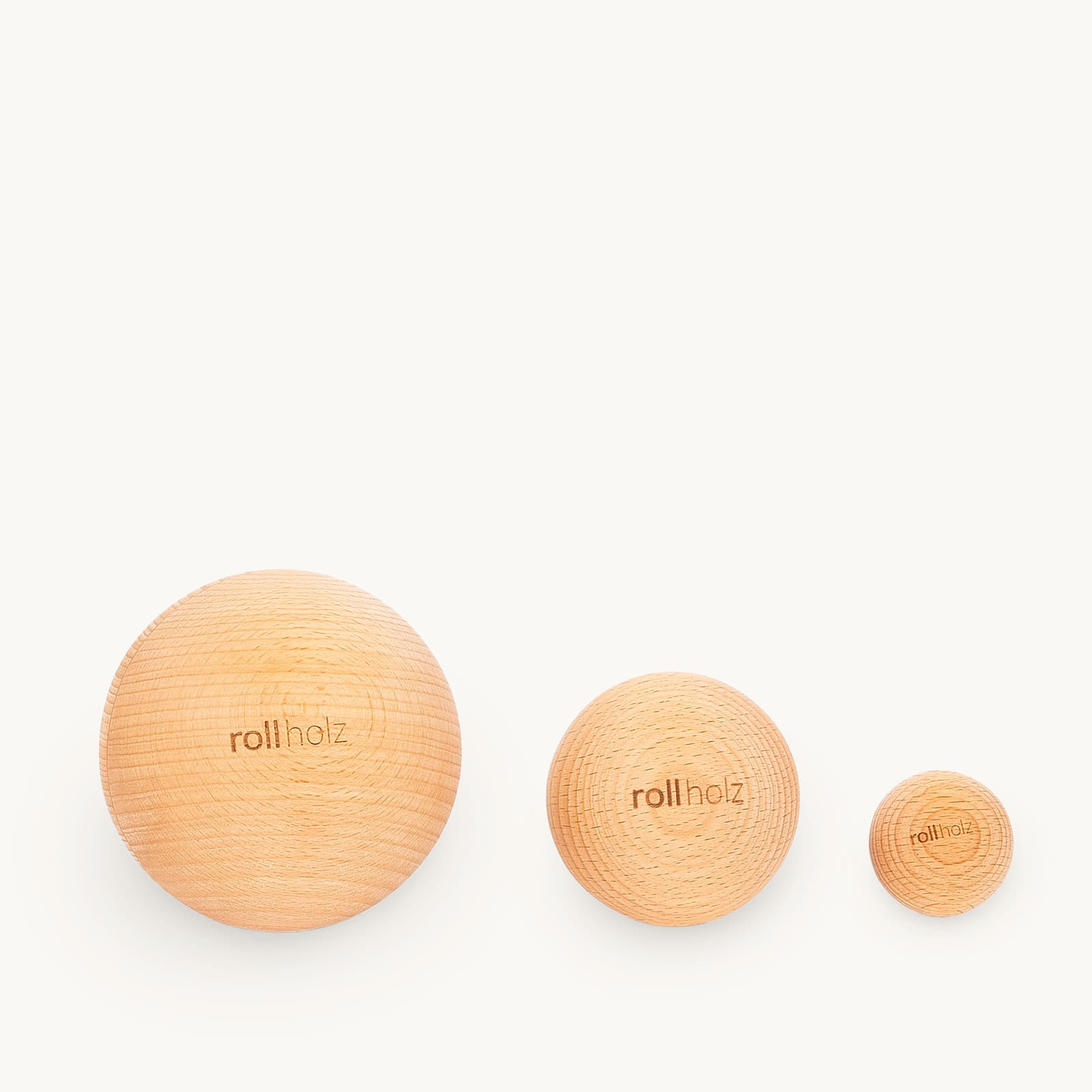
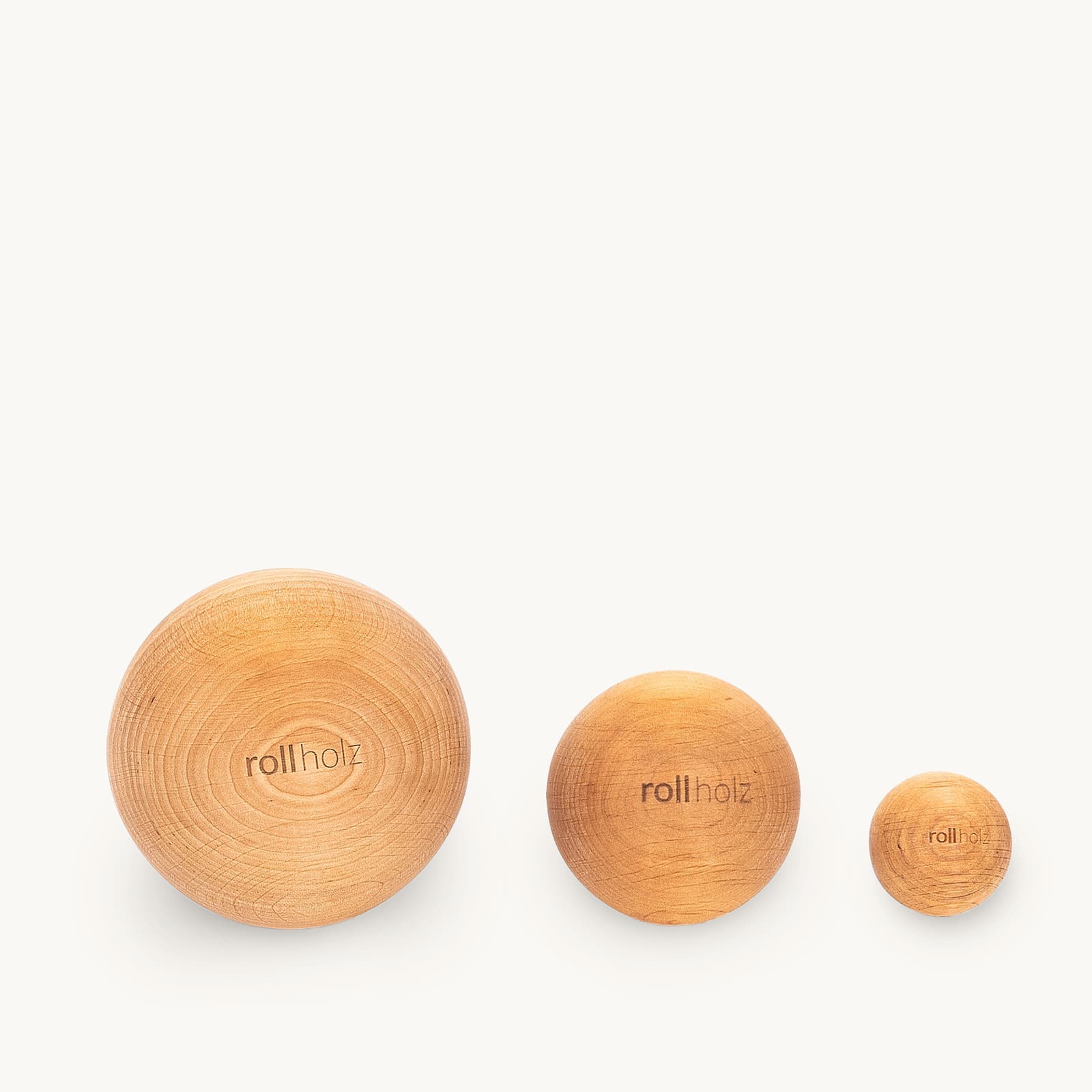
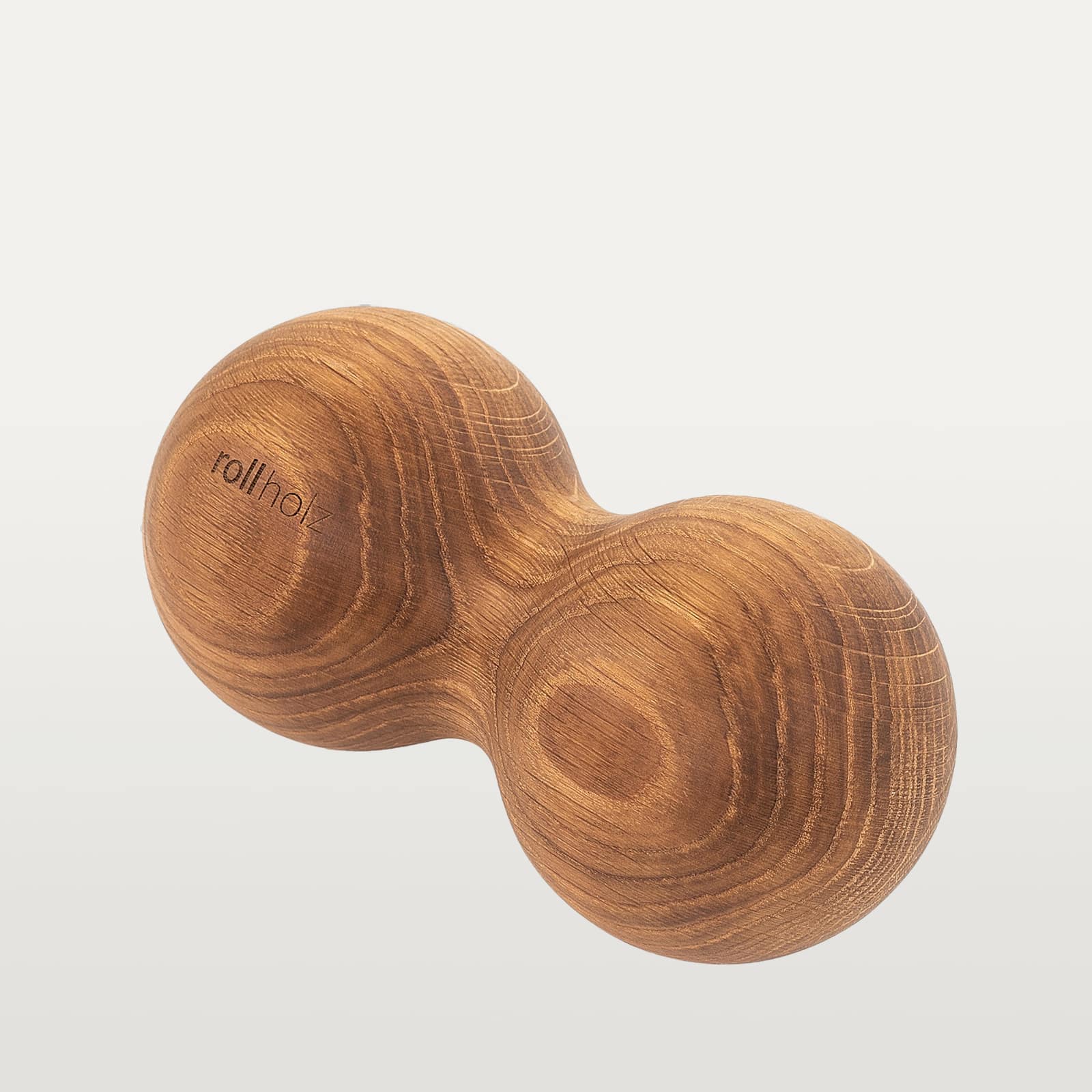
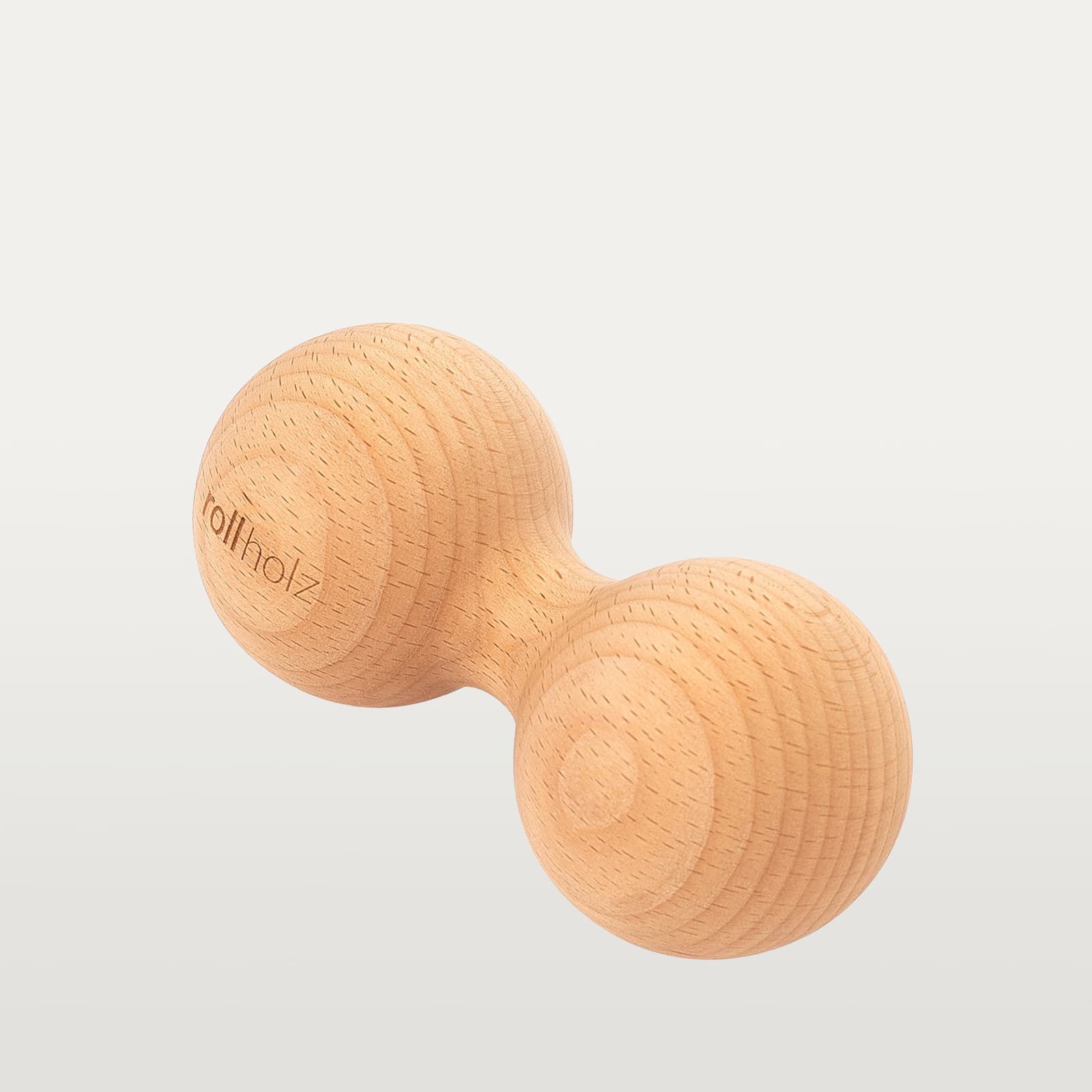
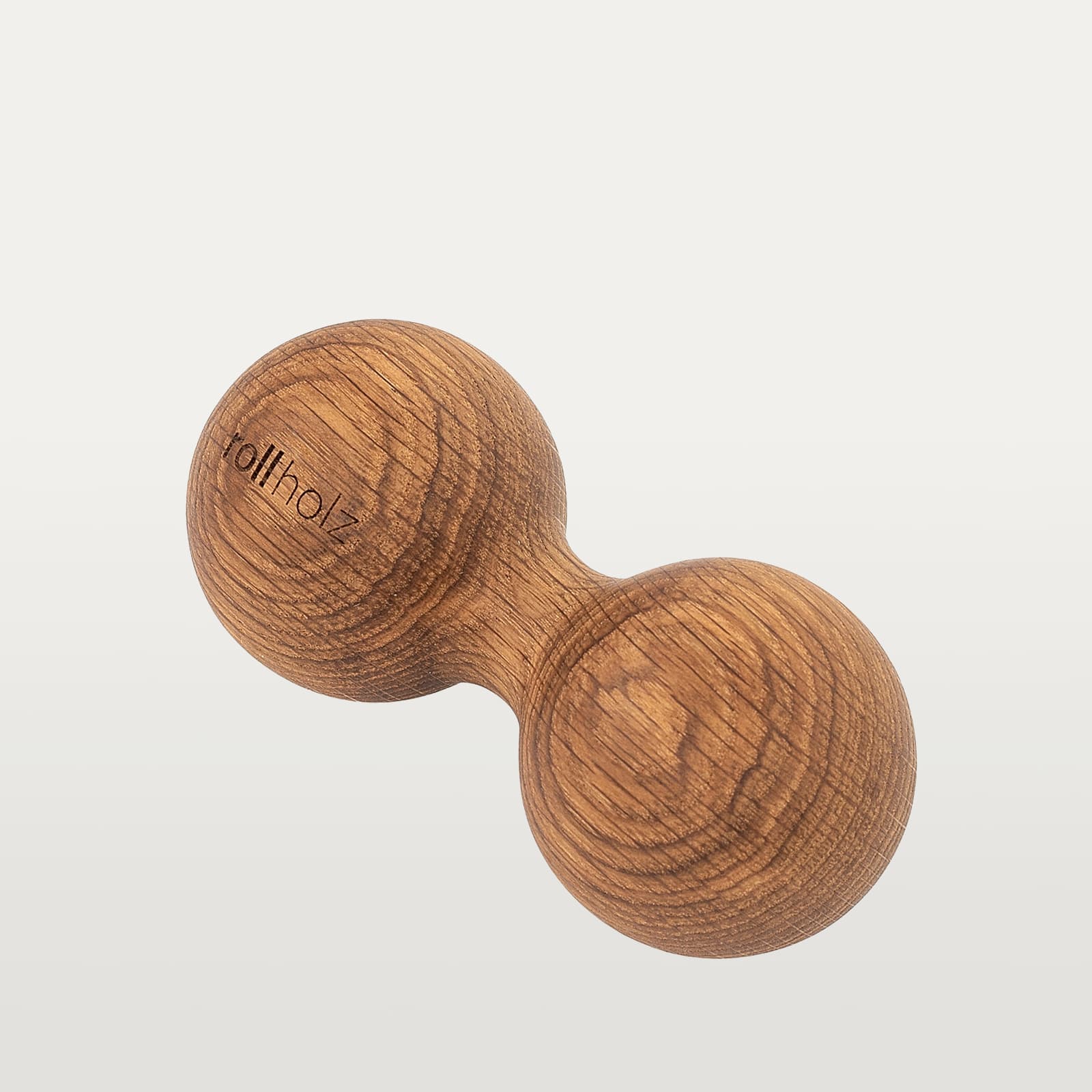
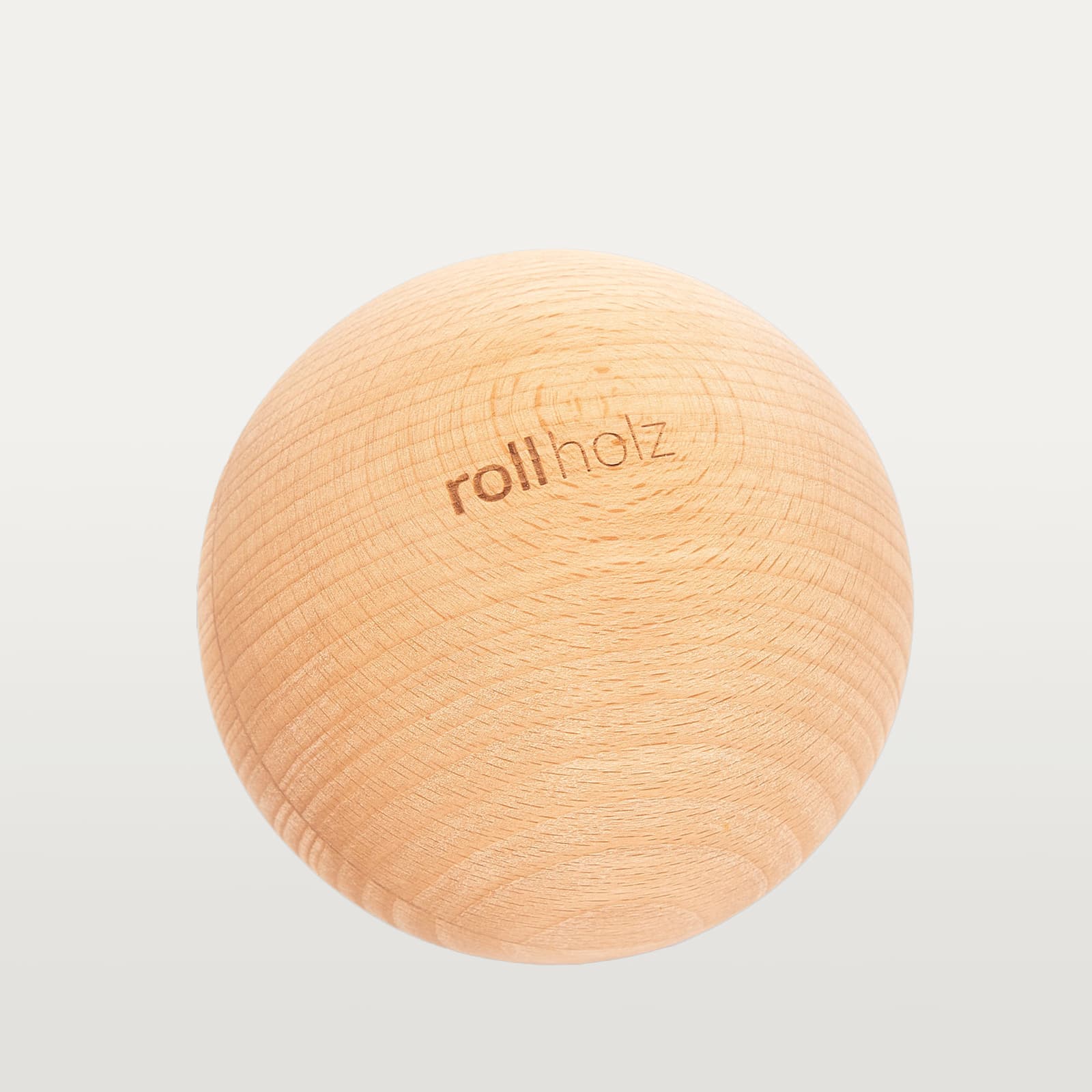
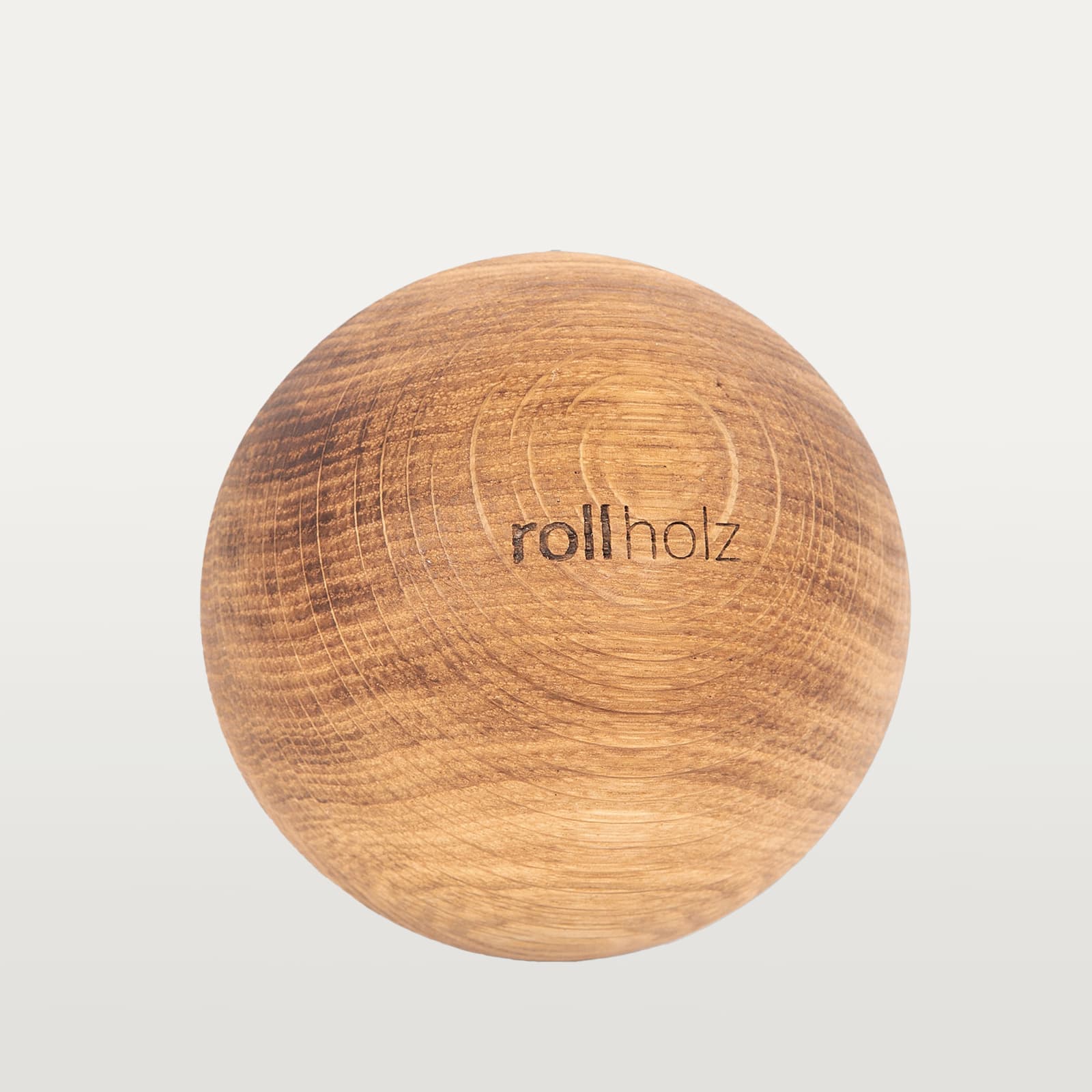
For even more targeted pressure, a single rollholz fascia ballworks well. Place it where you feel the strongest tension – usually in the middle of the upper glute area – and hold the pressure for 30–60 seconds instead of rolling.
3. Working the piriformis with a partner (lying face down)
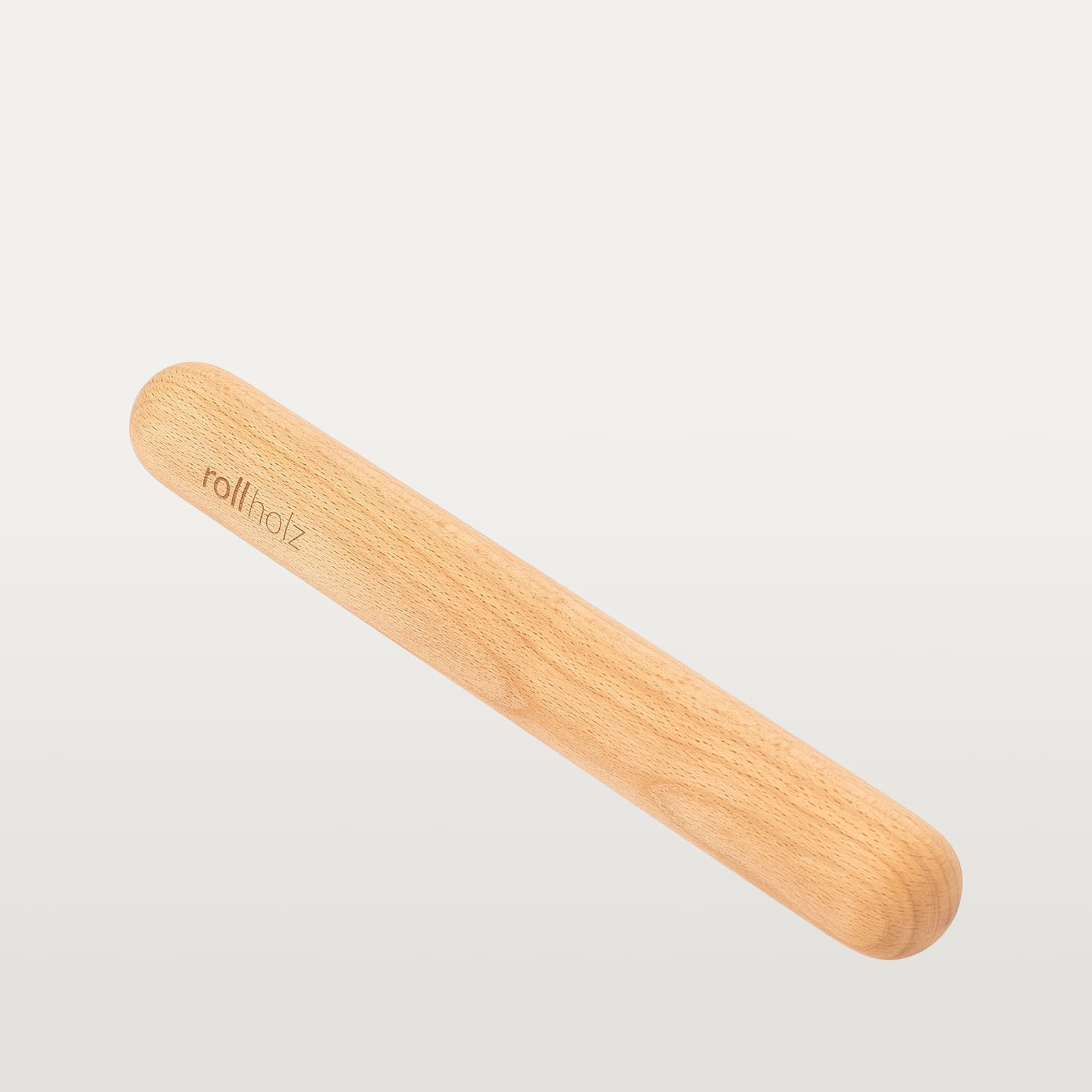
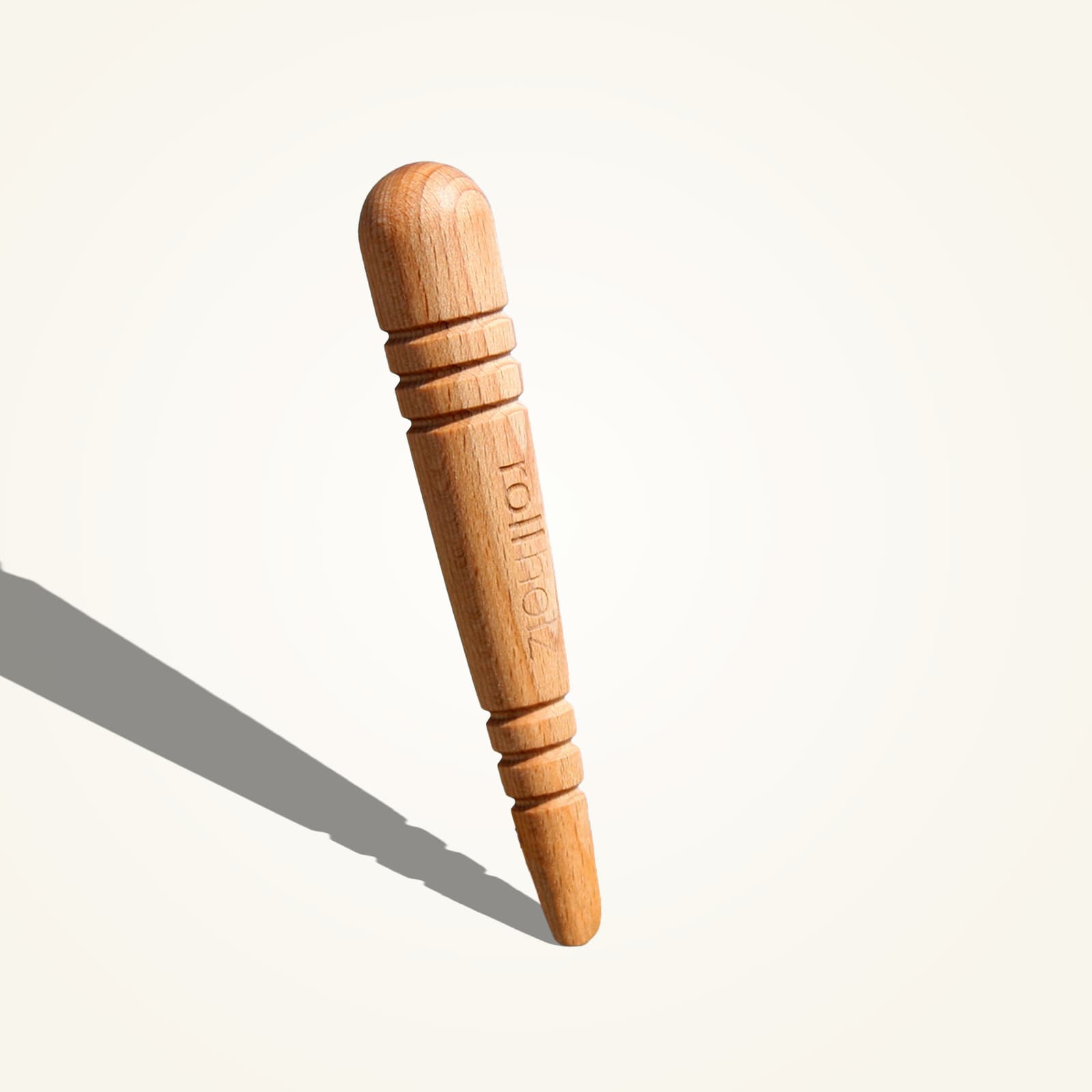
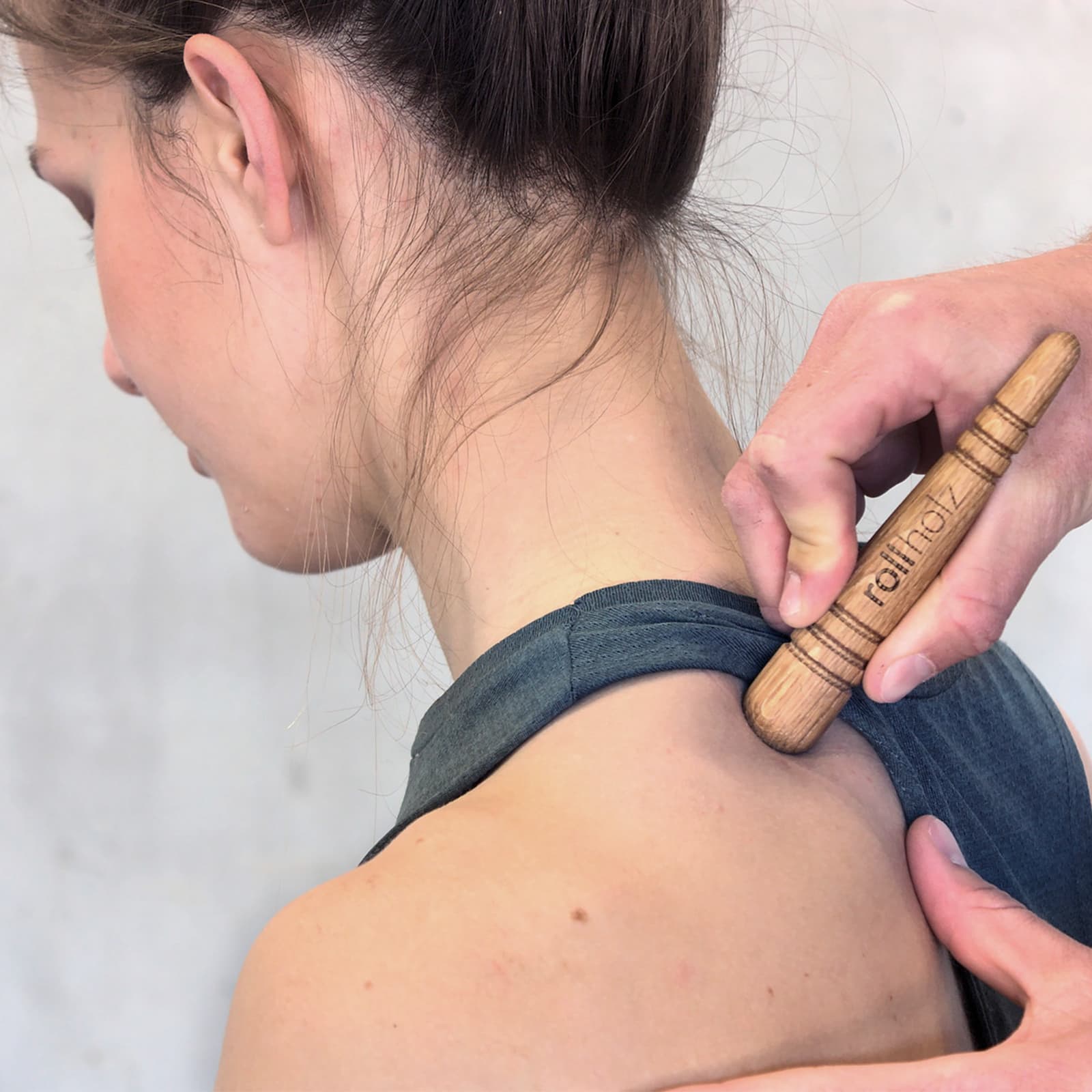
The piriformis lies deep beneath the large glute muscles and is often hard to reach precisely when seated. Lie face down for this and consciously relax the glutes – without your own body weight on the spot, they are easier to palpate. A second person can then apply targeted pressure to the tight spot with the rollholz trigger stick or the rollholz mini roller . Hold the pressure for 40 to 60 seconds – it should ease noticeably after the first few seconds. This technique from trigger point therapy allows more precise treatment than you can achieve alone while sitting.
4. Standing piriformis stretch
Stand on one leg, hold on to a wall if needed, and place the lower leg of the other leg across the thigh of the standing leg. Slowly bend your knees and lean your upper body forward a little until you feel a stretch deep in the glutes. Hold for 20–30 seconds, then change sides.
5. Pigeon pose on the floor
From all fours, draw one knee forward between your hands, with the lower leg lying across and the other leg extended behind you. Slowly sink forward with your upper body. If the hip of the front leg does not rest flat, put a yoga block underneath to support the position.
Piriformis syndrome or sciatica – what is the difference?
With piriformis syndrome, the pain can usually be reproduced by pressing directly on the glutes and often improves with stretching and fascia work alone. With irritation of the sciatic nerve from the spine (a disc, for example), the pain typically radiates along the whole leg down into the foot, often accompanied by numbness – here the exercises in this article may only help to a limited extent, and getting it checked makes more sense.
When to see a doctor or physiotherapist
The exercises above are meant for occasional, muscular tension. Please have yourself examined by a doctor if:
- the pain radiates into the lower leg or foot, especially with numbness
- you lose strength in the leg or foot, for example when standing on your toes or walking on your heels
- problems with urinating or bowel movements, or numbness in the groin or perineal area, occur as well (please seek medical help immediately)
- the symptoms persist for more than two weeks despite the exercises, or get worse
- the symptoms appear after a fall or an accident
Conclusion
Tight glutes or an irritated piriformis can often be loosened well with targeted pressure from a fascia roller, trigger stick, fascia ball and stretches – with particularly deep-seated tension, the help of a second person is often valuable. What matters is keeping an eye on the difference from genuine sciatic nerve irritation – if the pain radiates into the foot or toes with numbness, having it checked by a doctor is a better first step than more rolling.




Leave a comment
This site is protected by hCaptcha and the hCaptcha Privacy Policy and Terms of Service apply.