
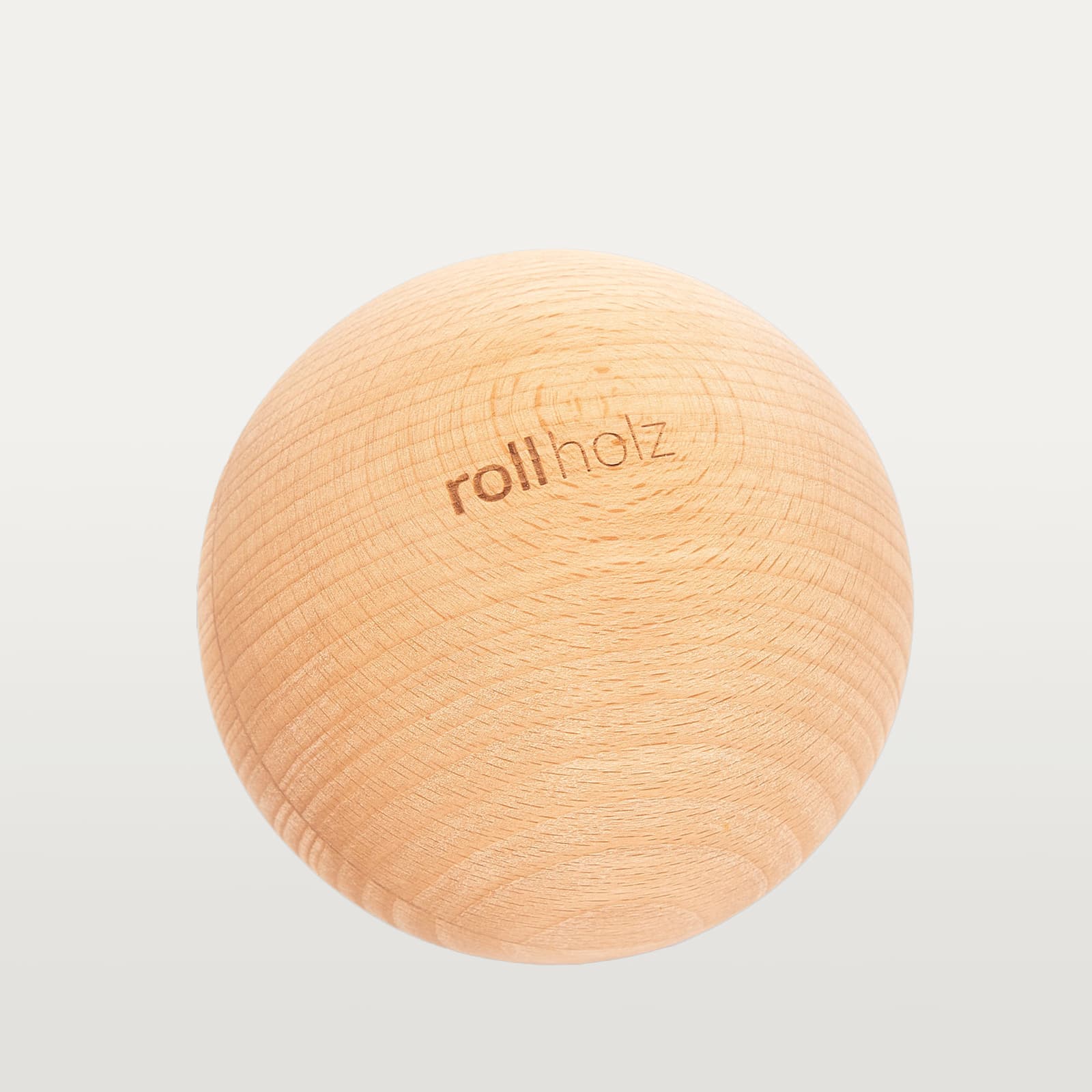
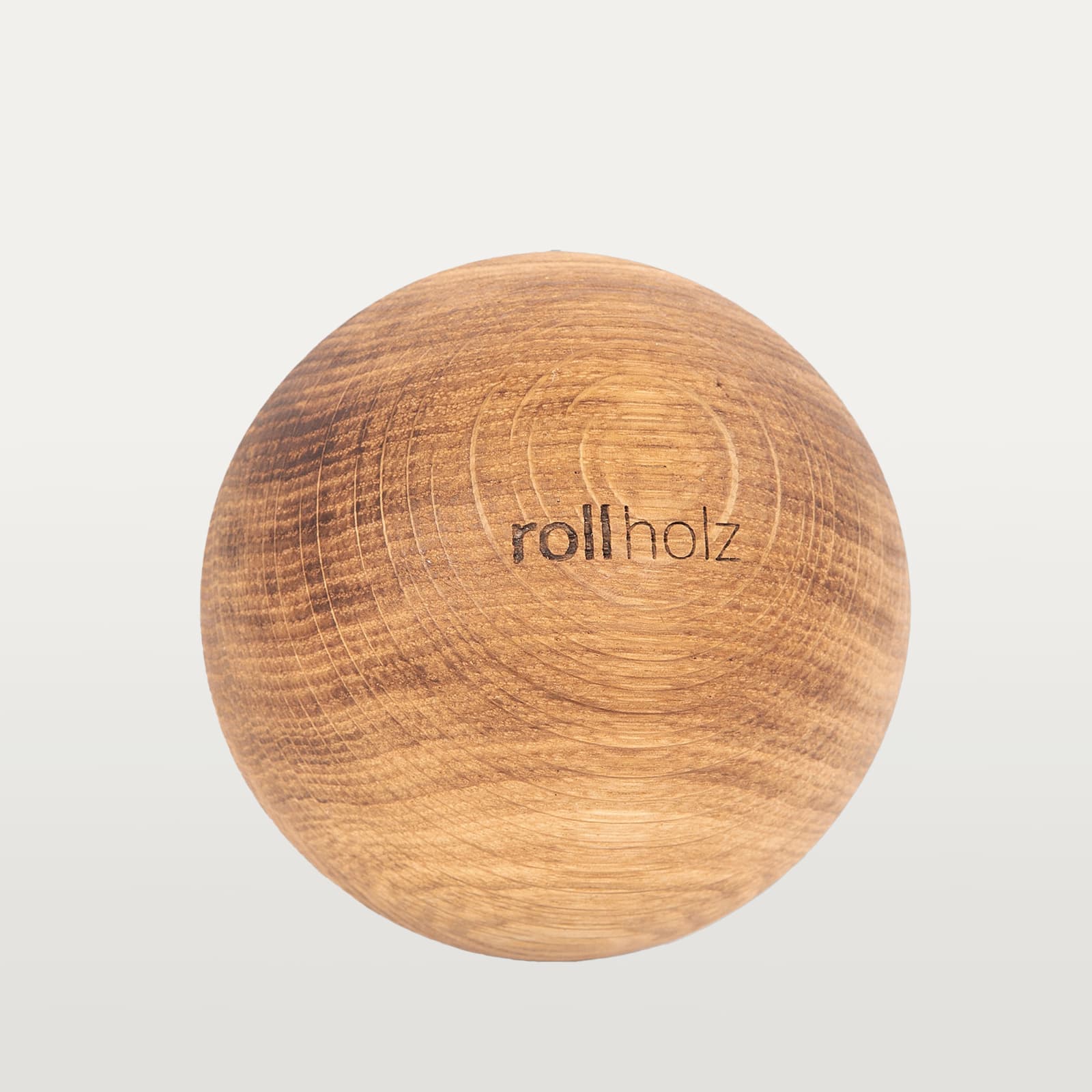
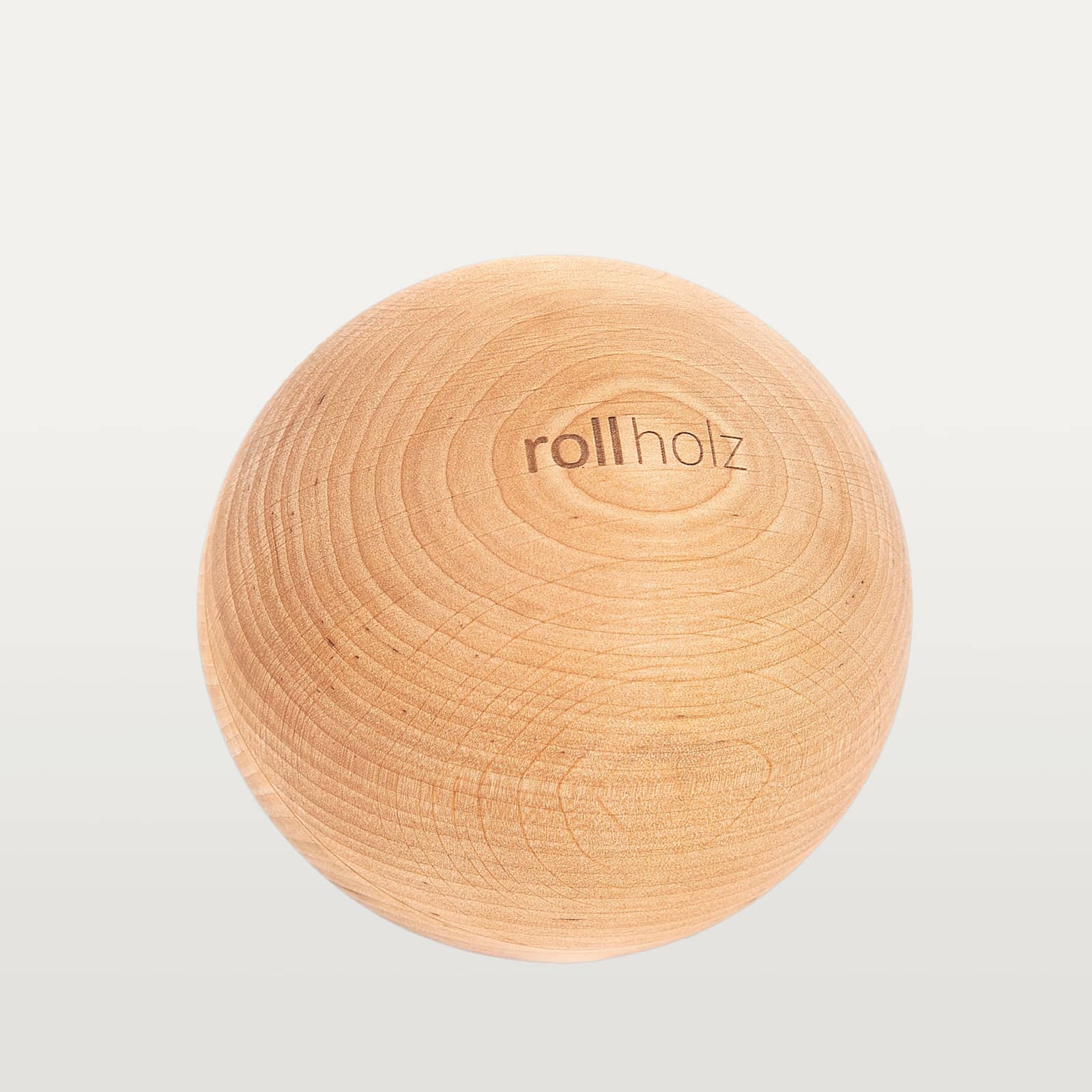
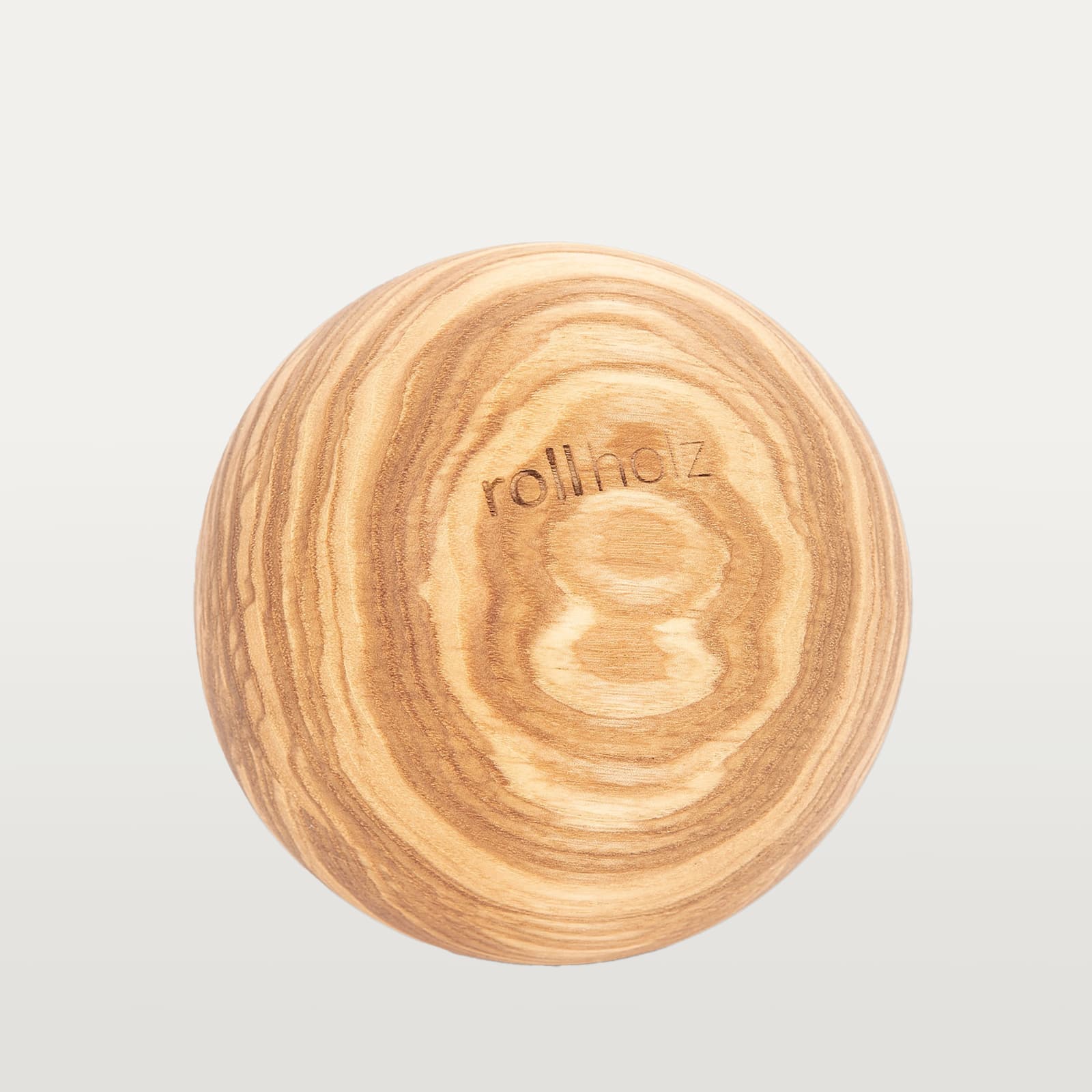
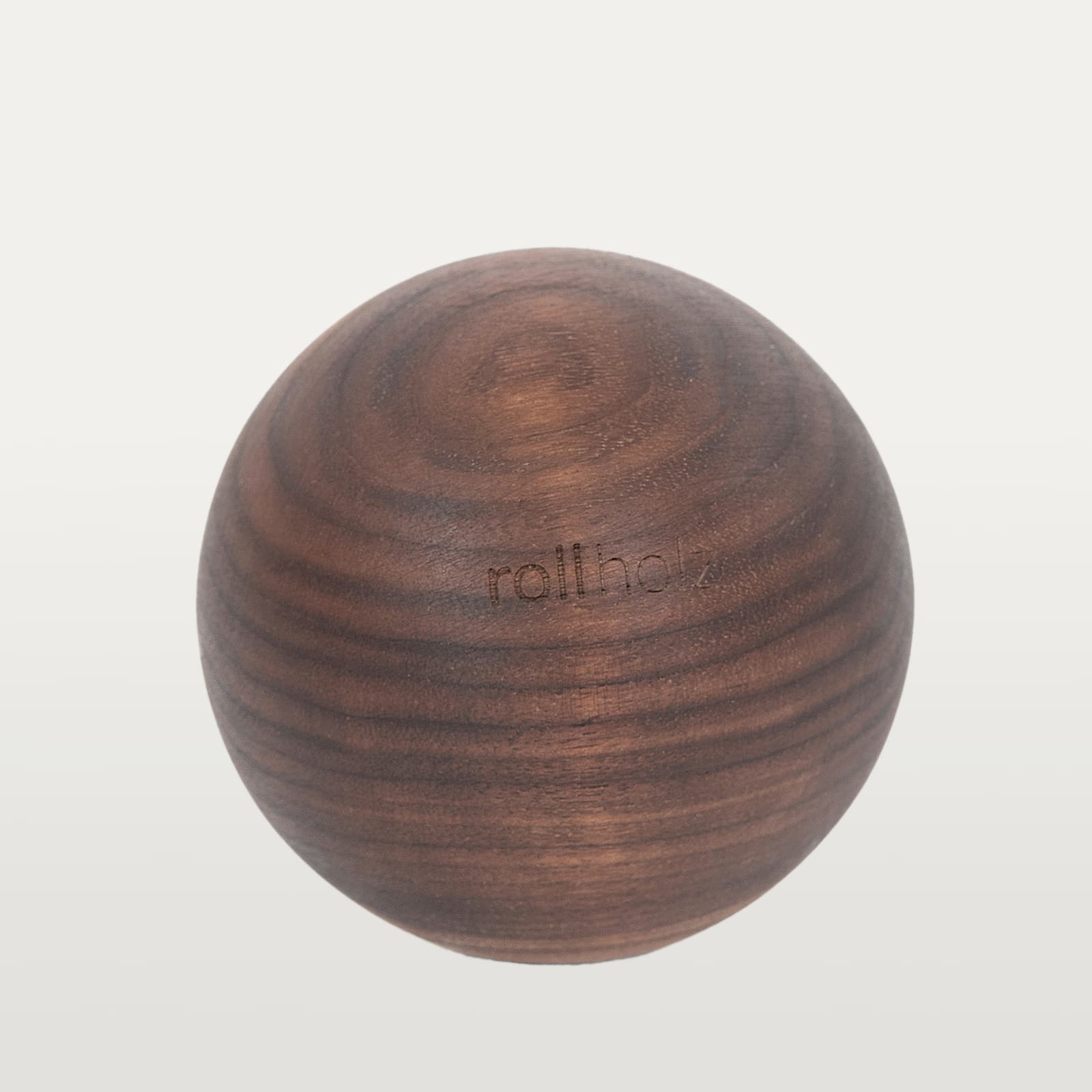
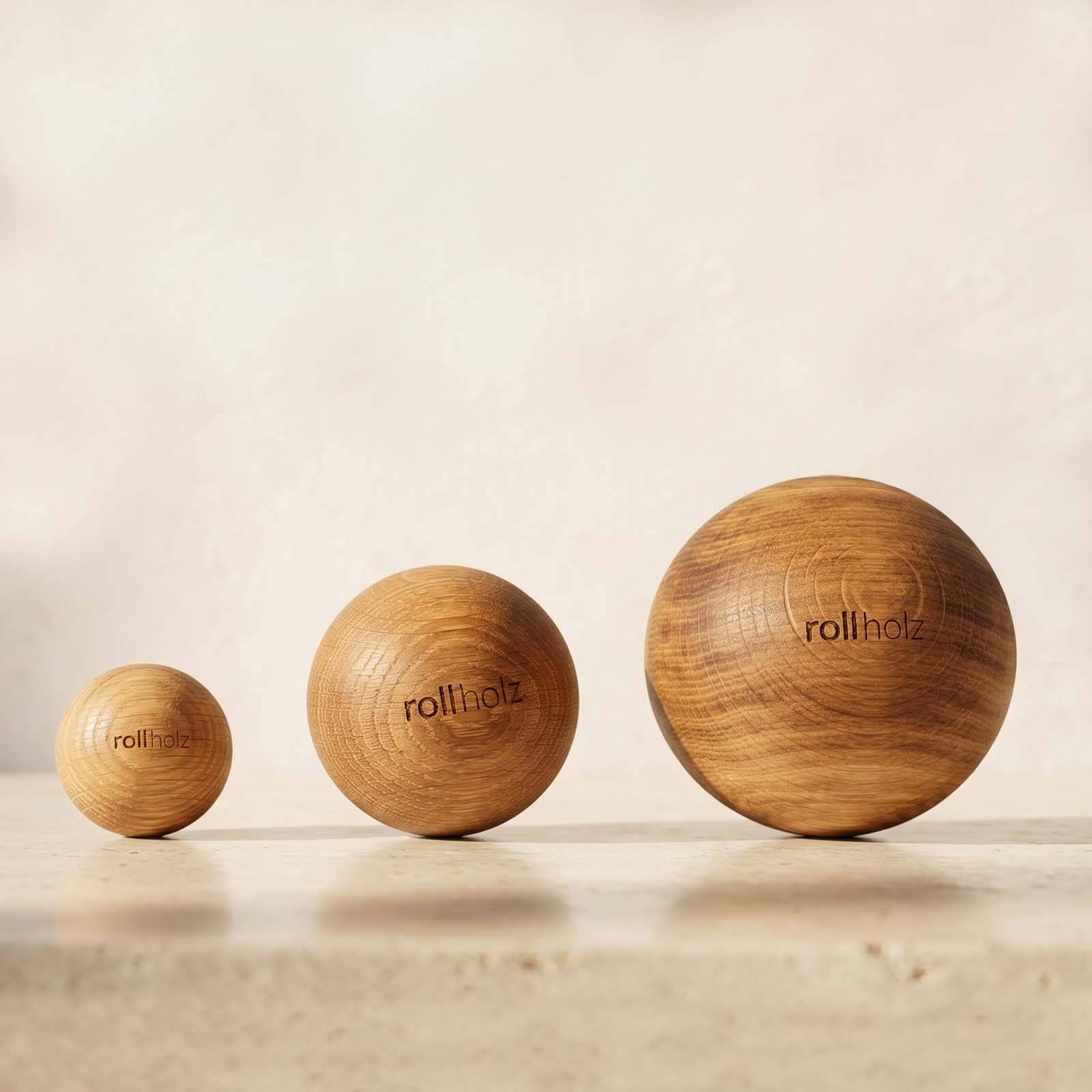
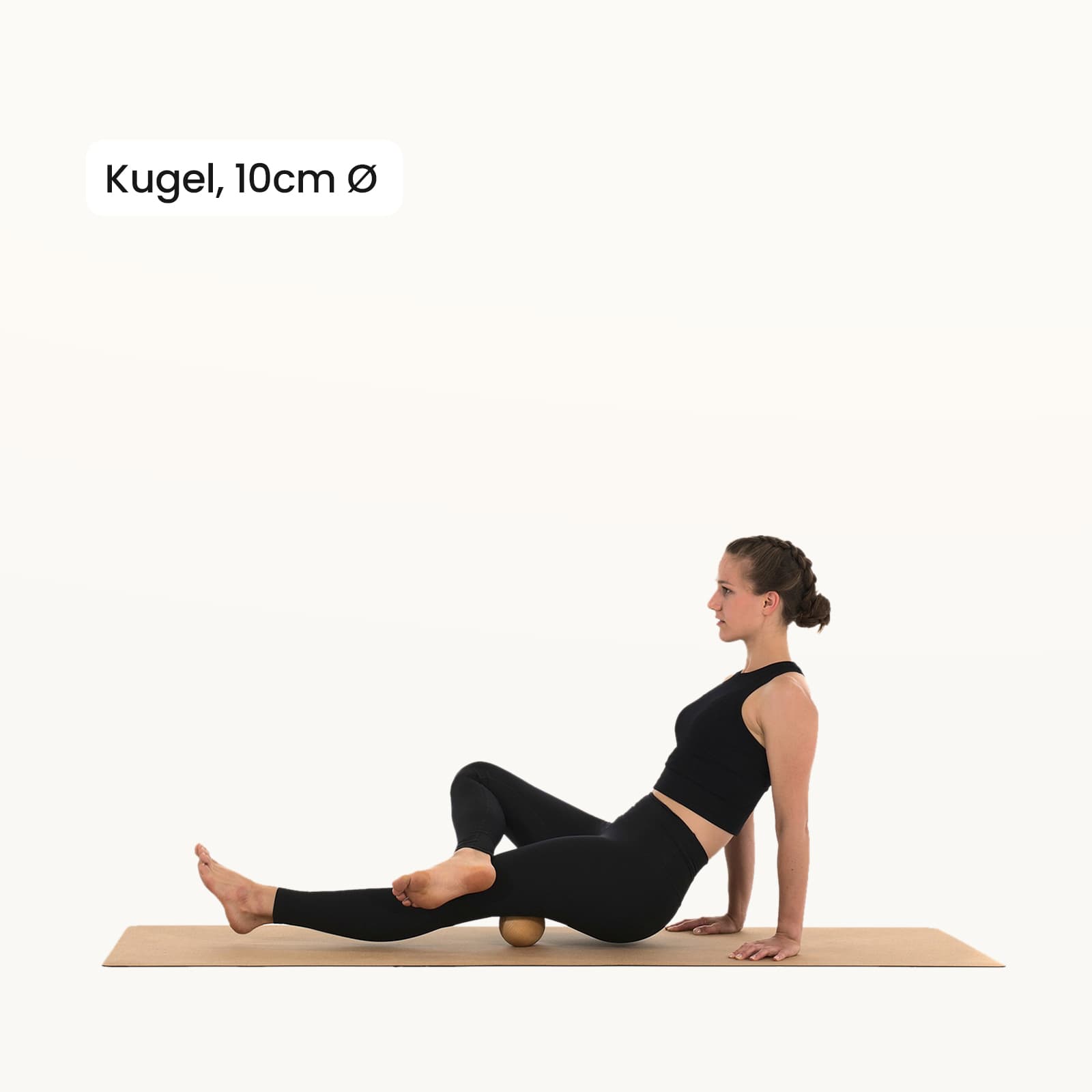
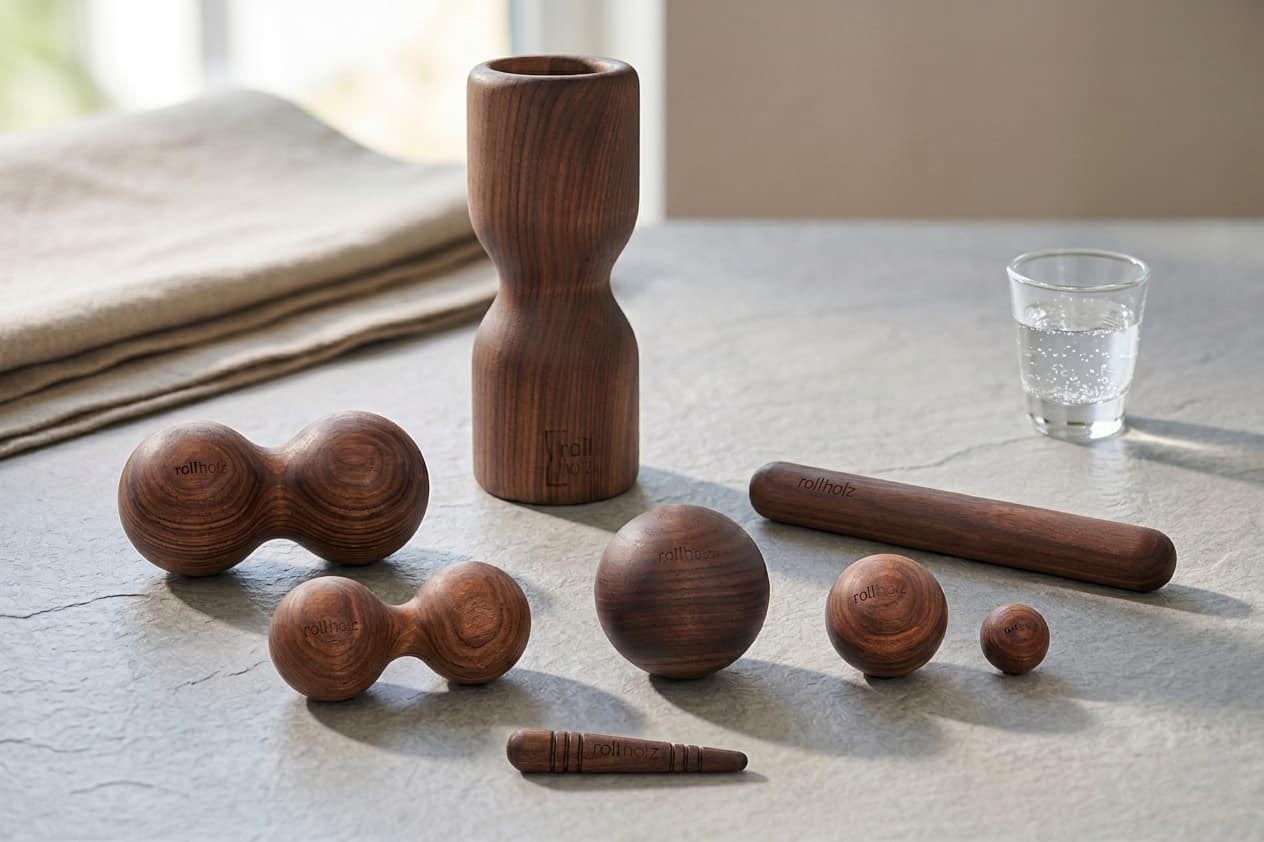
Wooden fascia ball – 4, 7 & 10 cm, 5 types of wood
Ideal for warming up, easing and preventing tension and the muscle pain that comes with it, and for recovery and improving mobility.
Available in 3 sizes
- 10 cm, a "soft" contact surface
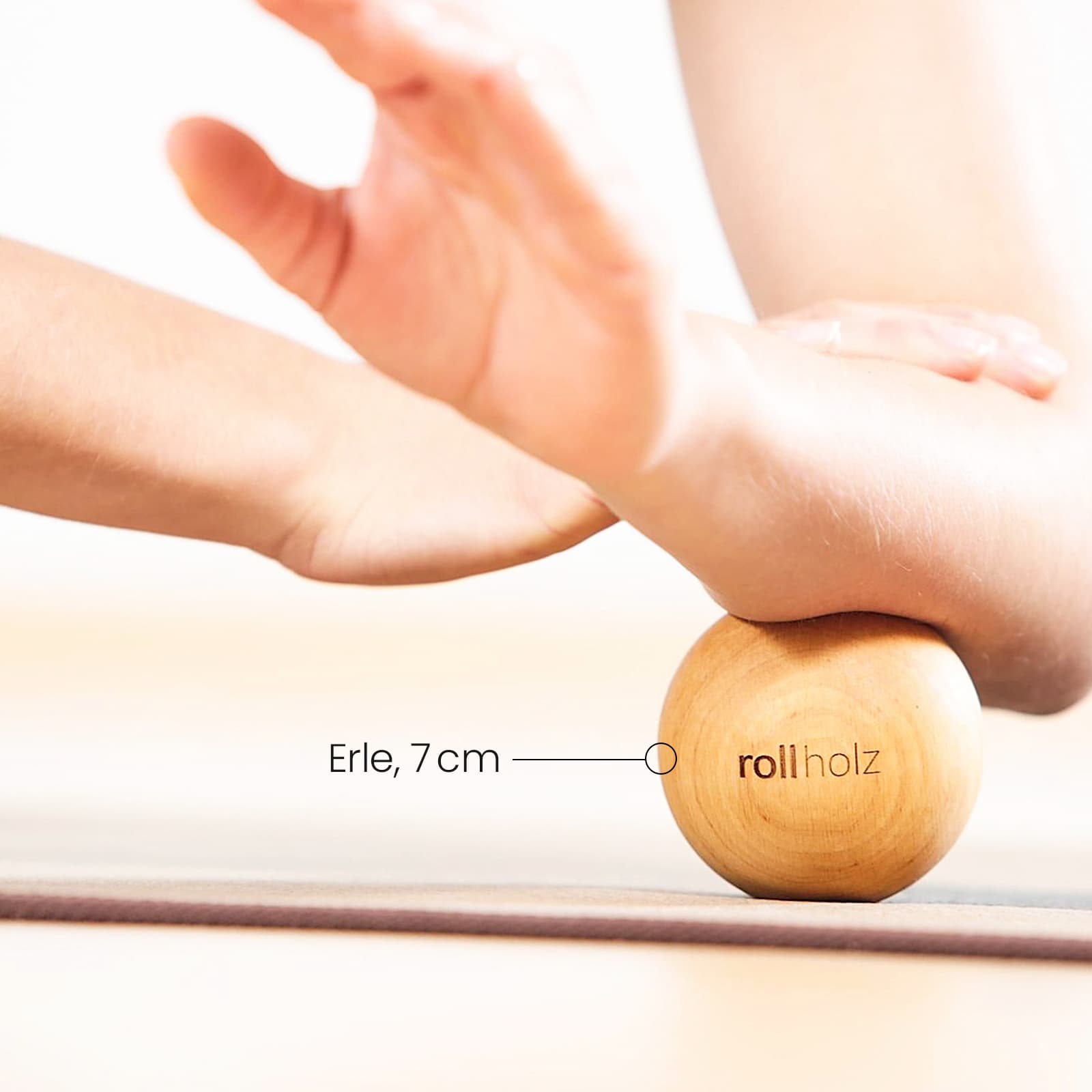
- 7 cm, medium-firm
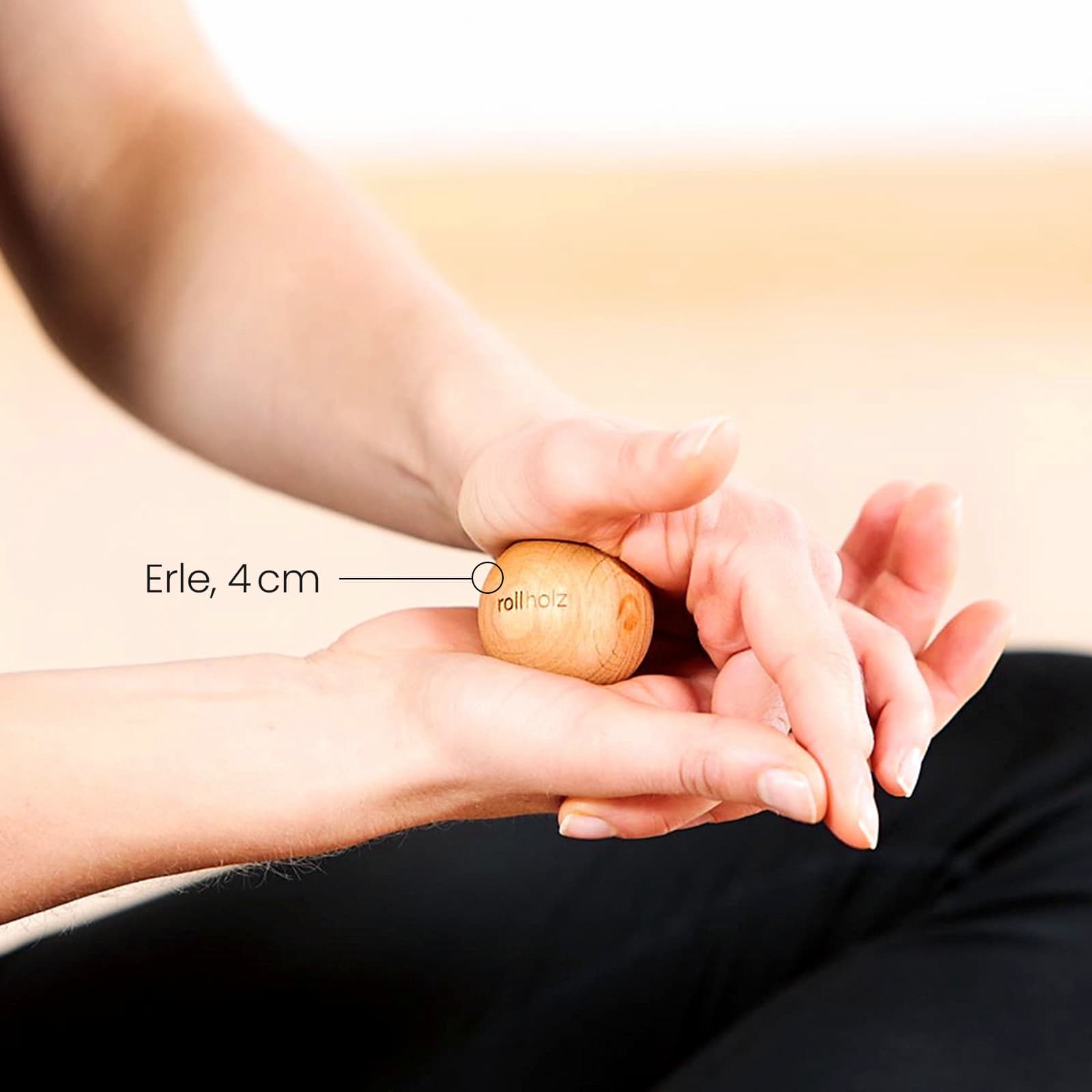
- 4 cm for precise, targeted work
- 🌲 Wood from the Black Forest
- 🛠️ Handmade in the Black Forest
- 🌿 100% natural
- ♻️ 10-year warranty
Delivery time: 1 to 2 working days
Made in our own workshop

How to use

How to use

Material & origin

Material & origin
The wood for our products comes from the Black Forest – whether beech, oak, alder or ash. Walnut is of European origin. All the woods are FSC-certified and therefore sustainably managed. Turning also happens in the Black Forest, before each product gets its final sanding in our workshop in Freiburg and a coat of pure linseed oil. No frills, no chemicals – just honest craft.

What's included

What's included

Dimensions & details

Dimensions & details
- Weight: 4 cm: 18 - 25 g • 7 cm: 100 - 140 g • 10 cm: 300 - 400 g
- Diameter: 4, 7 & 10 cm
- Surface: oiled with pure linseed oil
- Warranty: 10 years

Care

Care
Our products are easy to care for – in the most literal sense: they need none. Their longevity doesn't suffer if you simply never bother. They last a lifetime – and can be handed down without a problem.
If you do want to treat your product to something, just rub it with a little oil – that brings the natural grain back out beautifully. For heavier marks, sand it lightly beforehand.
The smooth surface is easy to clean and disinfect – ideal for professional therapy use. Wipe it down or disinfect it when needed, let it dry briefly, done.
Manufacturer
rollholz GmbH
Schwarzwaldstraße 48 (Hausrückseite)
79117 Freiburg
Deutschland
info@rollholz.com
Type designation
Faszienball · 4, 7 und 10 cm
Safety information
- Do not put in the mouth; keep away from small children.
- Do not continue to use damaged parts.
- If you have existing health complaints, seek medical advice before use.
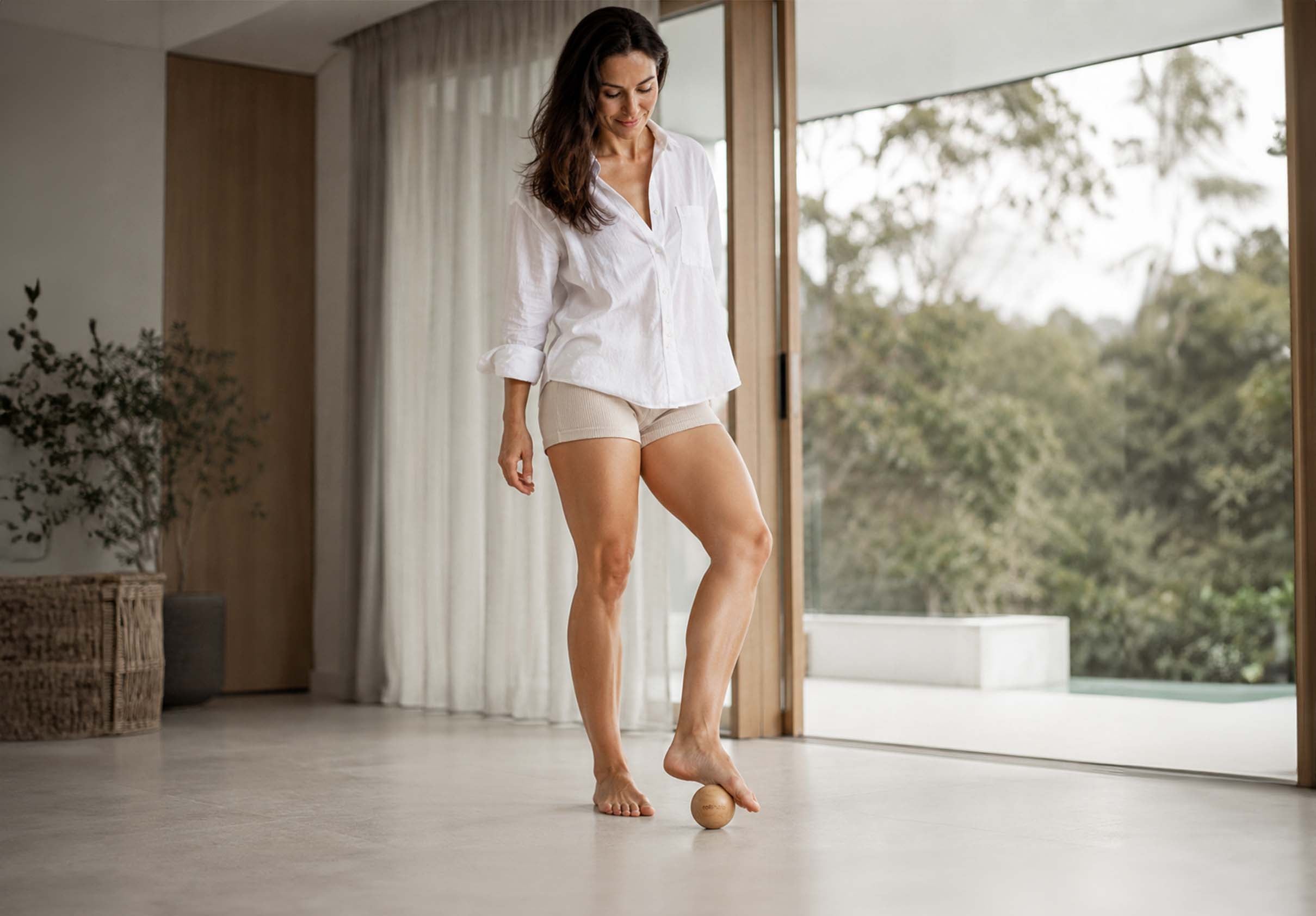
For active relaxation in everyday life
After long days on your feet, targeted pressure under the sole can help you arrive back in your body.
The natural wooden surface keeps the application calm and controlled — at home, in between or at the end of the day.
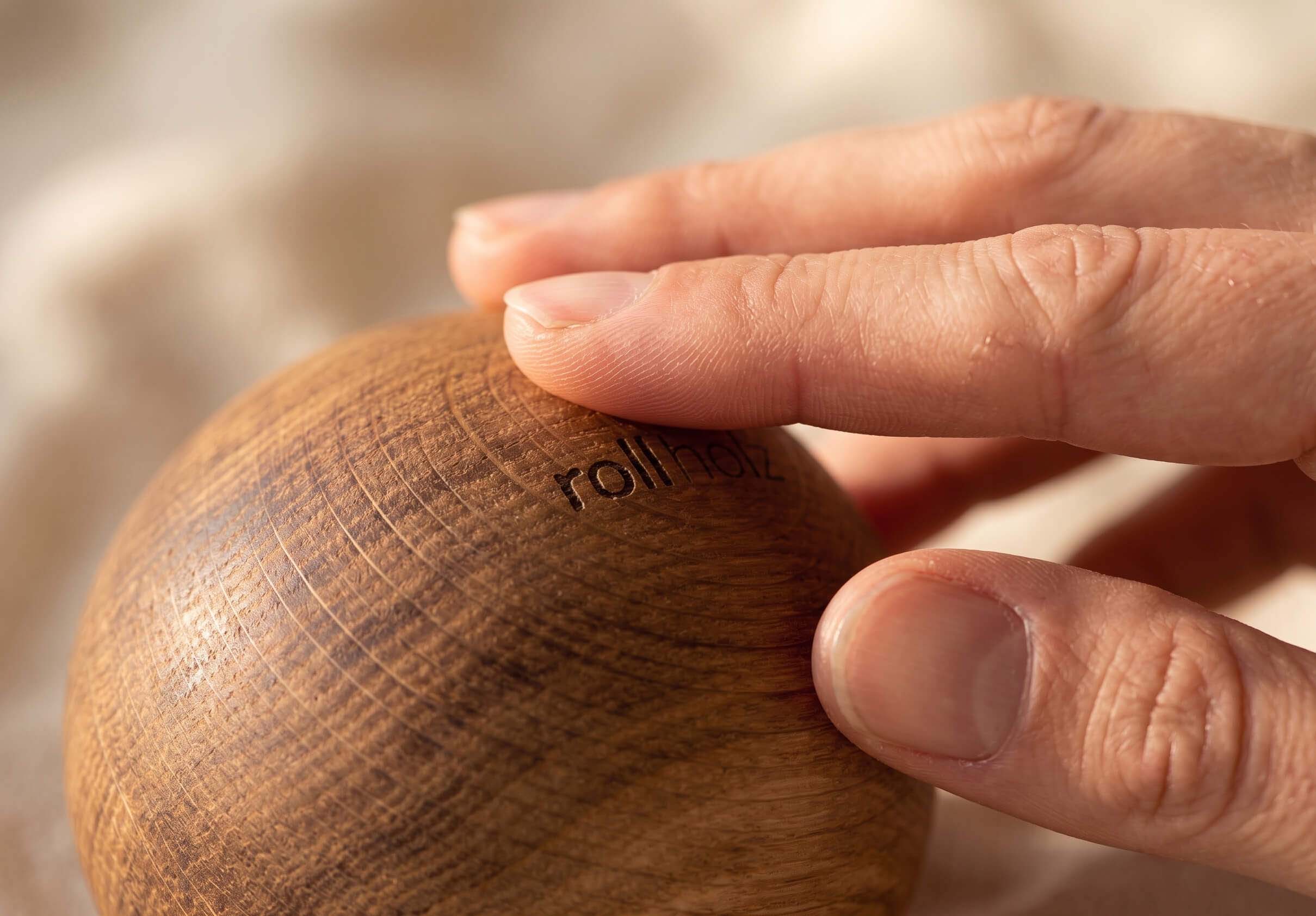
Why wood feels different
Plastic often feels cold, hard and technical. Solid wood sits warm, natural and pleasant in the hand — and that changes how it feels on the skin too. The rollholz fascia ball rolls over the tissue in a controlled way, without feeling artificial or clinical. Many people find the massage calmer, more mindful and more pleasant as a result.
Questions about the product
How do the five types of wood differ?
How do the five types of wood differ?
The difference isn't in function or hardness – all five woods are equally durable and feel equally effective when you roll. It comes down to personal preference in four areas:
Feel & warmth
Alder feels especially warm and soft in the hands – almost velvety. Beech, ash, oak and walnut feel a little smoother and cooler by comparison, which many people find particularly pleasant.
Weight
Alder is the lightest of the five hardwoods. The other four – beech, ash, oak and walnut – are close to one another in weight.
Scent
Every wood has its own natural smell. Since all our products are treated with linseed oil, that warm, nutty linseed note is always there on first use – a nice sign of natural finishing.
Look & grain
Beech is usually very even and uniform – plain and classic. Alder, ash, oak and walnut, on the other hand, can have beautiful, individual grain: every piece is one of a kind. Walnut stands out with deep, dark tones, oak and ash with bold structure. Purely a matter of taste.
Durability
On longevity, none of the five compromises – they're built to last forever.
Isn't the wood far too hard?
Isn't the wood far too hard?
Yes, wood doesn't give – that's true. But hard foam fascia balls from other makers barely give either. The real difference: with these you don't lie on them with your full body weight, you control the pressure yourself. That gives you full control – and that's exactly what makes it comfortable and effective.
How often and how long should I roll?
How often and how long should I roll?
The nice thing about the rollholz: it fits around your day – you don't have to follow a strict programme. As a rough guide:
Stretching can be done daily, 5–10 minutes is plenty.
Rolling out – the classic back-and-forth over a muscle group – we recommend about twice a week with roughly 3 exercises each time.
Melting – staying on one point until the tension eases – you do as needed, for example when you notice a particularly tight spot. That takes about 1.5 to 4 minutes per spot.
All the techniques, the exercises and what to watch out for are explained in detail in the free e-book you get after your purchase.
What's in the e-book and when do I get it?
What's in the e-book and when do I get it?
The e-book was developed together with sports scientists and therapists and takes you through your fascia training step by step. It has everything you need: from the basics (what are fascia, anyway?) through the two techniques of rolling out and melting, to a large collection of exercises with photos and precise notes for almost every muscle group – for all rollholz products. There's also a section on contraindications, so you know when to pause or ask a doctor.
You get it automatically – just look at the very bottom of your order confirmation email after you buy.
HOW TO USE & INSIGHTS
Expert tips for your daily fascia training

The Recovery Guide: Fascia Training for Maximum Regeneration
In a world that never stands still, true recovery has become one of the most valuable resources. But regeneration means much more than just lying on the couch. If you really want to "reset" your bo...
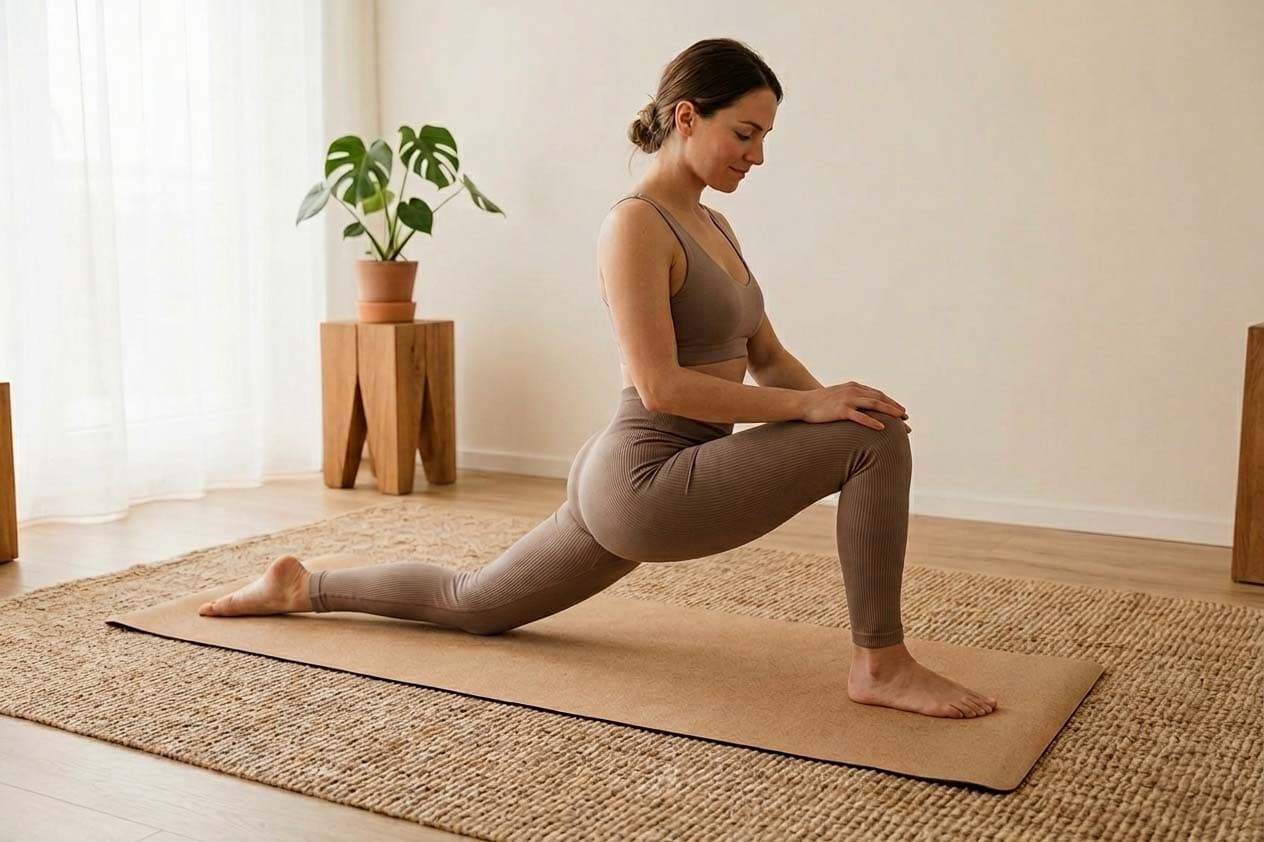
Everyday Power – How Mobility Protects and Strengthens You
Strength is good, flexibility is better. Learn how supple fascia act as energy stores, relieve your muscles, and help you achieve noticeably more power and ease in everyday life.

The Pain Killer – Why Fascia Is the Real Cause of Tension
Back pain from prolonged sitting? Often it's not the muscles to blame, but rather "glued" fascia. Learn how the pain vicious circle arises and how you can specifically break it.
What are fascia? The hidden basis of your mobility
What are fascia and why is exercise so important for them? Learn how the elastic connective tissue network works and how to prevent adhesions in everyday life.


