
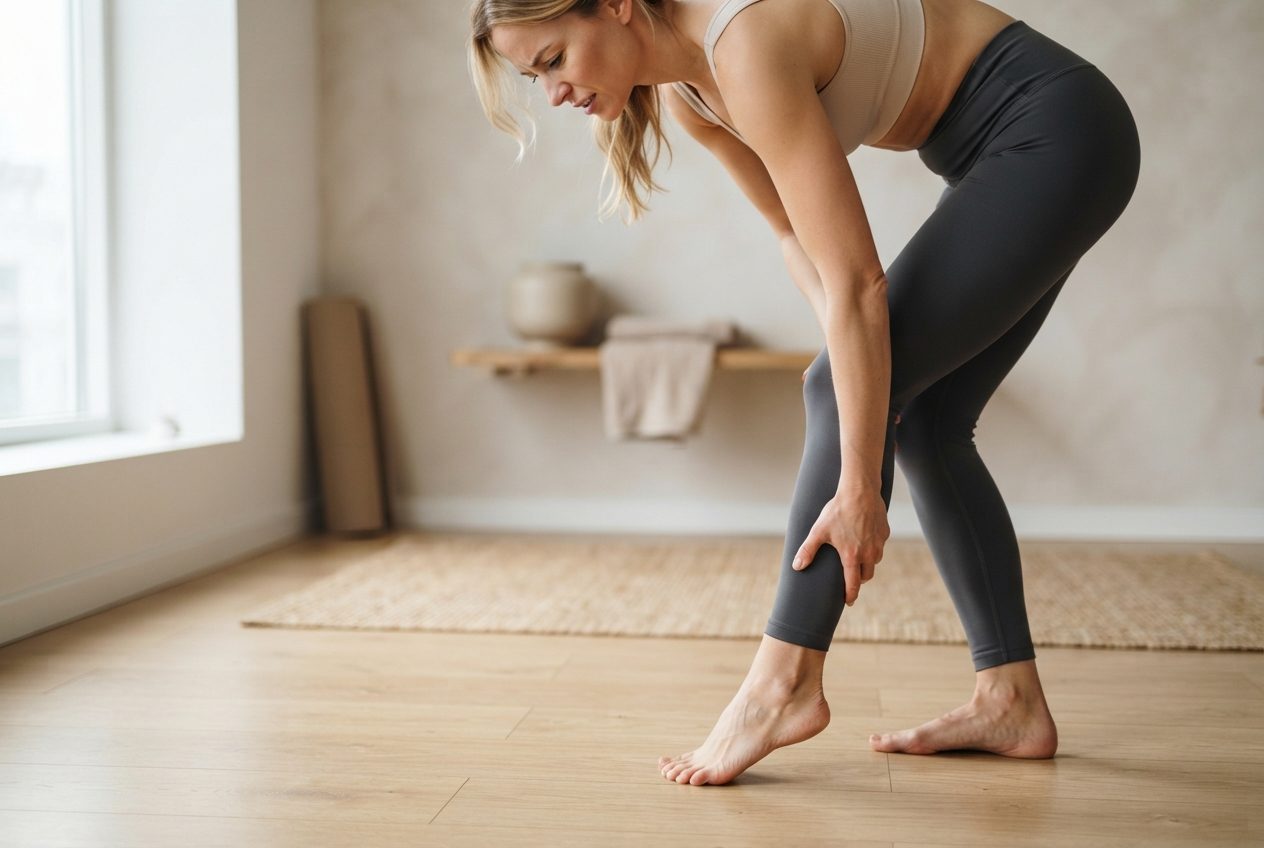
A tight calf muscle and an irritated Achilles tendon often occur together – no coincidence, because functionally they form one unit. The calf muscle attaches directly to the heel bone via the Achilles tendon, and with every step the tension from the calf is transferred to the tendon. In this article we show you exercises for both areas – and what to watch out for before you work directly on the Achilles tendon.
Why calf and Achilles tendon are so closely connected
The calf muscles (gastrocnemius and soleus) merge at their lower end into the Achilles tendon, the strongest tendon in the human body. When walking, running and jumping, this tendon transfers many times your body weight with every step. If the calf muscles are tight or shortened – for example from a lot of sitting, unfamiliar loads or narrow shoes with high heels – the resting tension on the Achilles tendon automatically increases too. If this tension is not released, the tendon can become irritated and inflamed – this is known as Achilles tendonitis (technically also called achillodynia).
Heel spur at the Achilles attachment: the posterior heel spur (Haglund's deformity)
When people hear “heel spur”, most first think of the better-known heel spur on the sole of the foot, which we cover in a separate article . But there is also a variant at the back of the heel, exactly where the Achilles tendon attaches: the posterior, technically dorsal heel spur, also called Haglund's heel or Haglund's exostosis. If the Achilles tendon pulls strongly on its attachment to the heel bone because of shortened or permanently tight calf muscles, the body can respond there with a bony reinforcement. It usually makes itself felt through pain at the Achilles attachment and a palpable thickening at the back of the heel. The bone formation is encouraged by chronic overload, shortened calf muscles and additional rubbing pressure from the heel counter of tight shoes. Important to know: this heel spur is usually more a consequence of a long-standing, irritated Achilles tendon than its actual cause.
The usual exercises target exactly this: calf stretching and eccentric heel raises lower the resting tension on the Achilles tendon and thus on the bony attachment point as well. With a known posterior heel spur, however, you should lower the heel during heel raises (exercise 5) only to step level rather than clearly below it, so that the bony prominence does not rub against the tendon additionally. Soft shoes that do not press at the back can take further pressure off the spot.
Important safety note before rolling
A pulling, muscle-soreness-like feeling in the calf is usually harmless. It is different if, during sport, you notice a sudden stabbing sensation or an audible “snap” in the calf or at the Achilles tendon and afterwards can no longer stand on your toes – these can be signs of a ruptured Achilles tendon. In that case, please do not roll, stretch or keep loading it, but seek medical treatment immediately.
5 exercises for calf tension and Achilles tendon complaints
1. Fascia roller for the calf
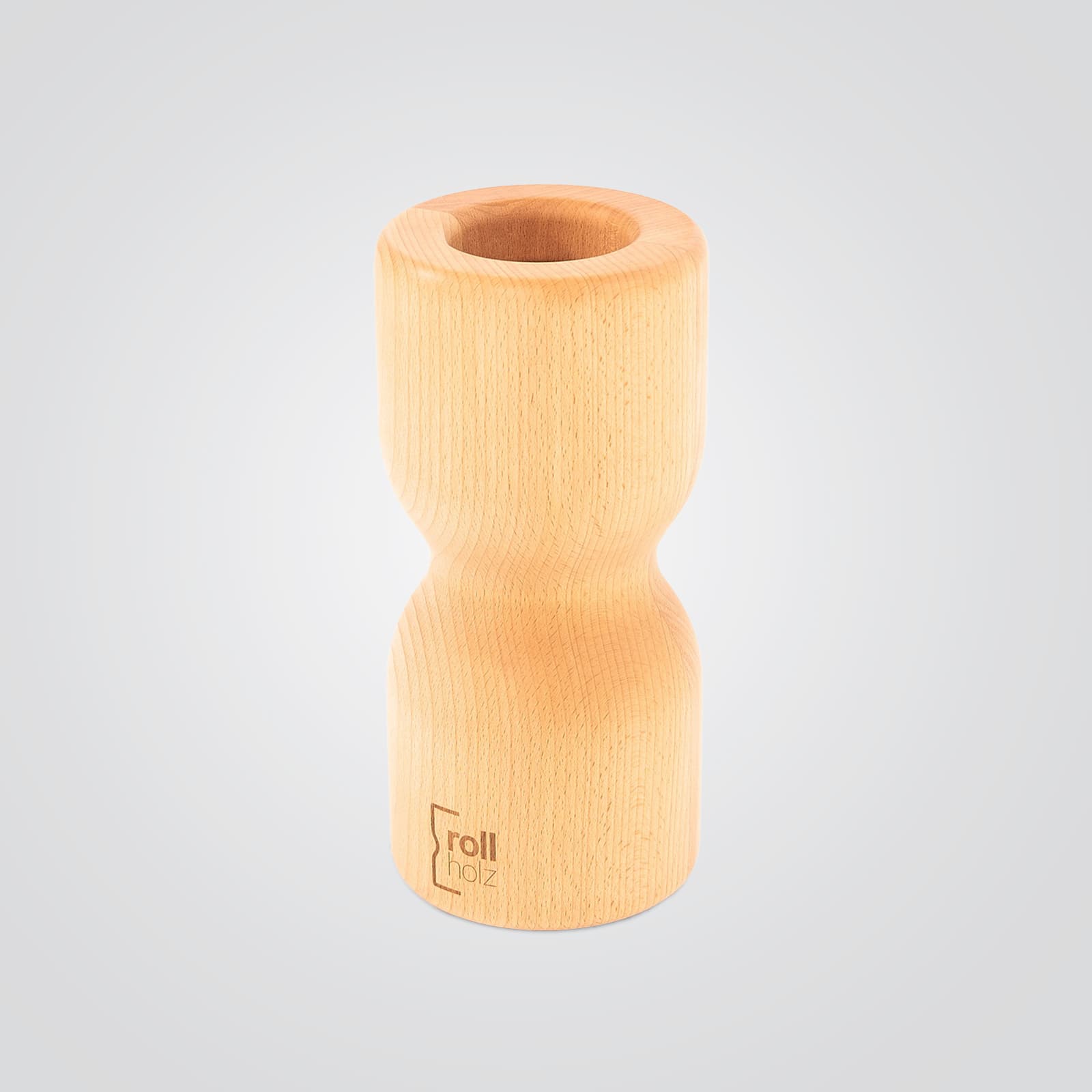
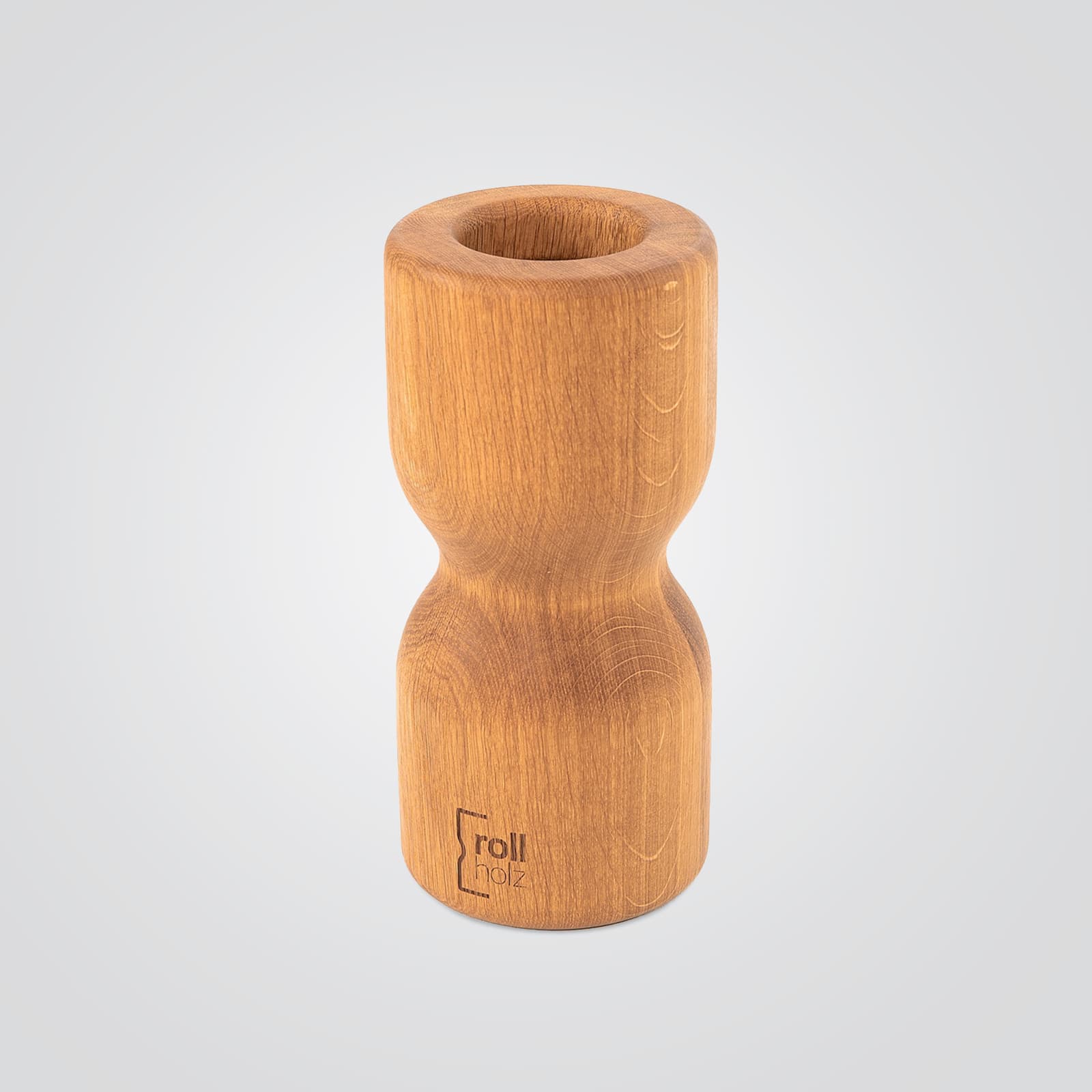
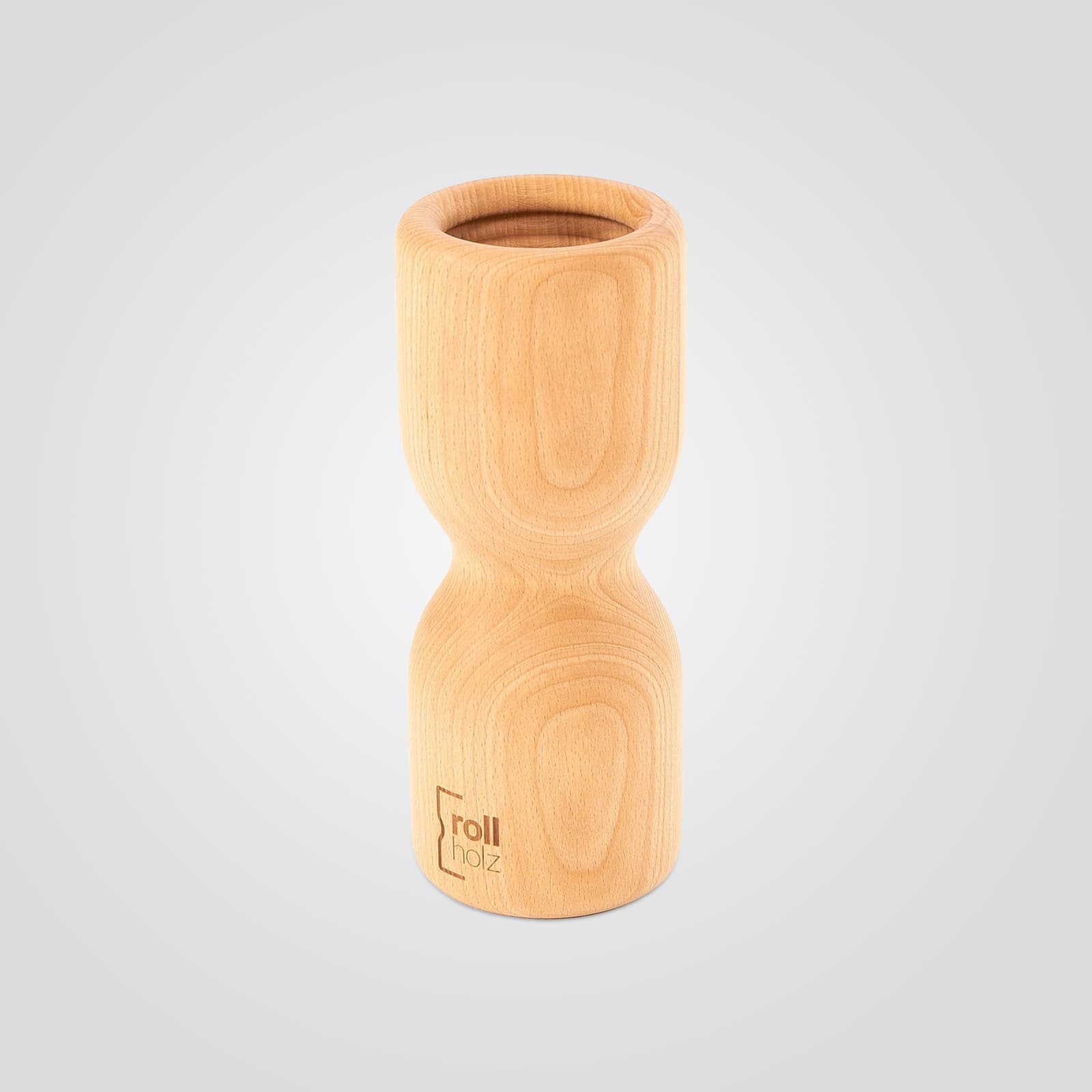
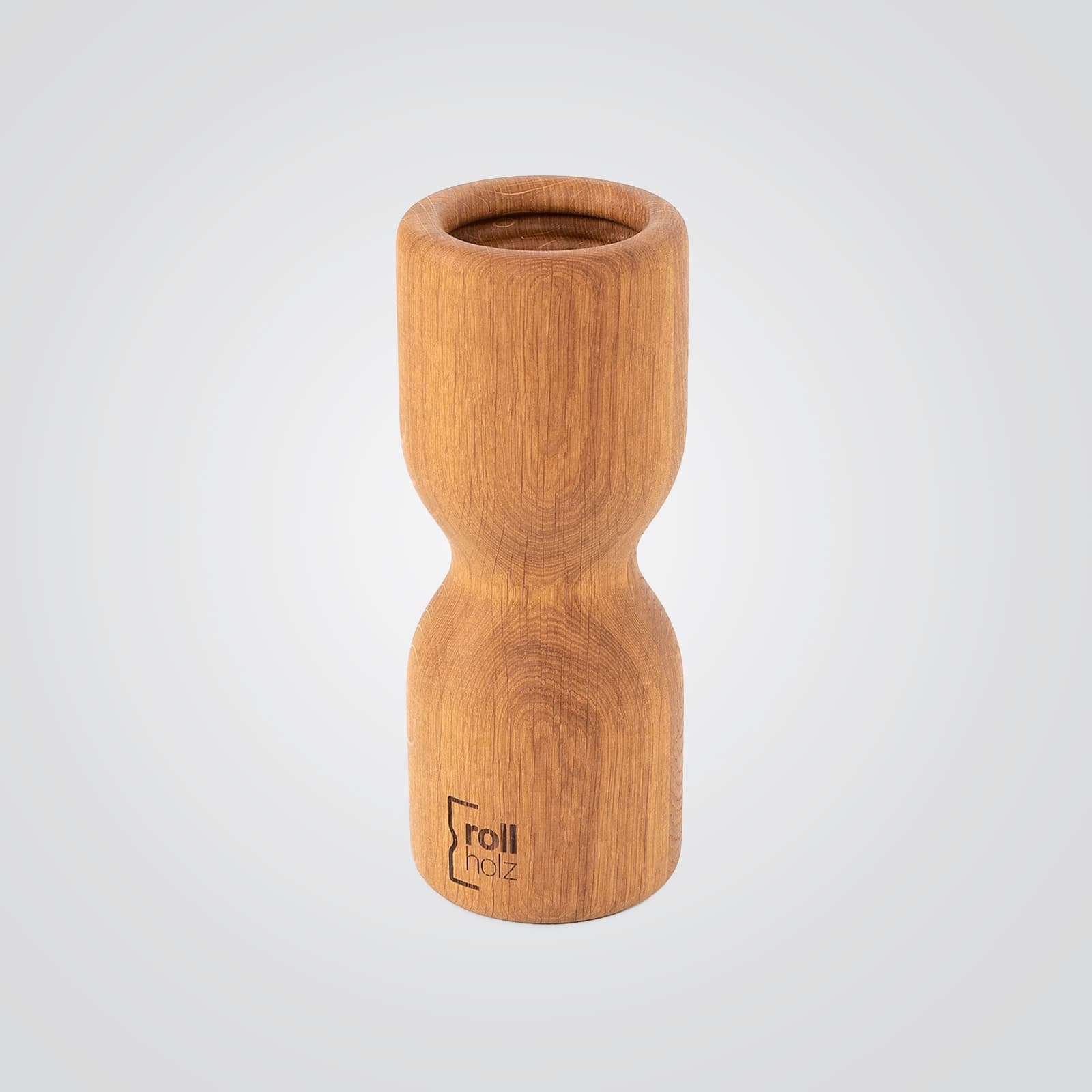
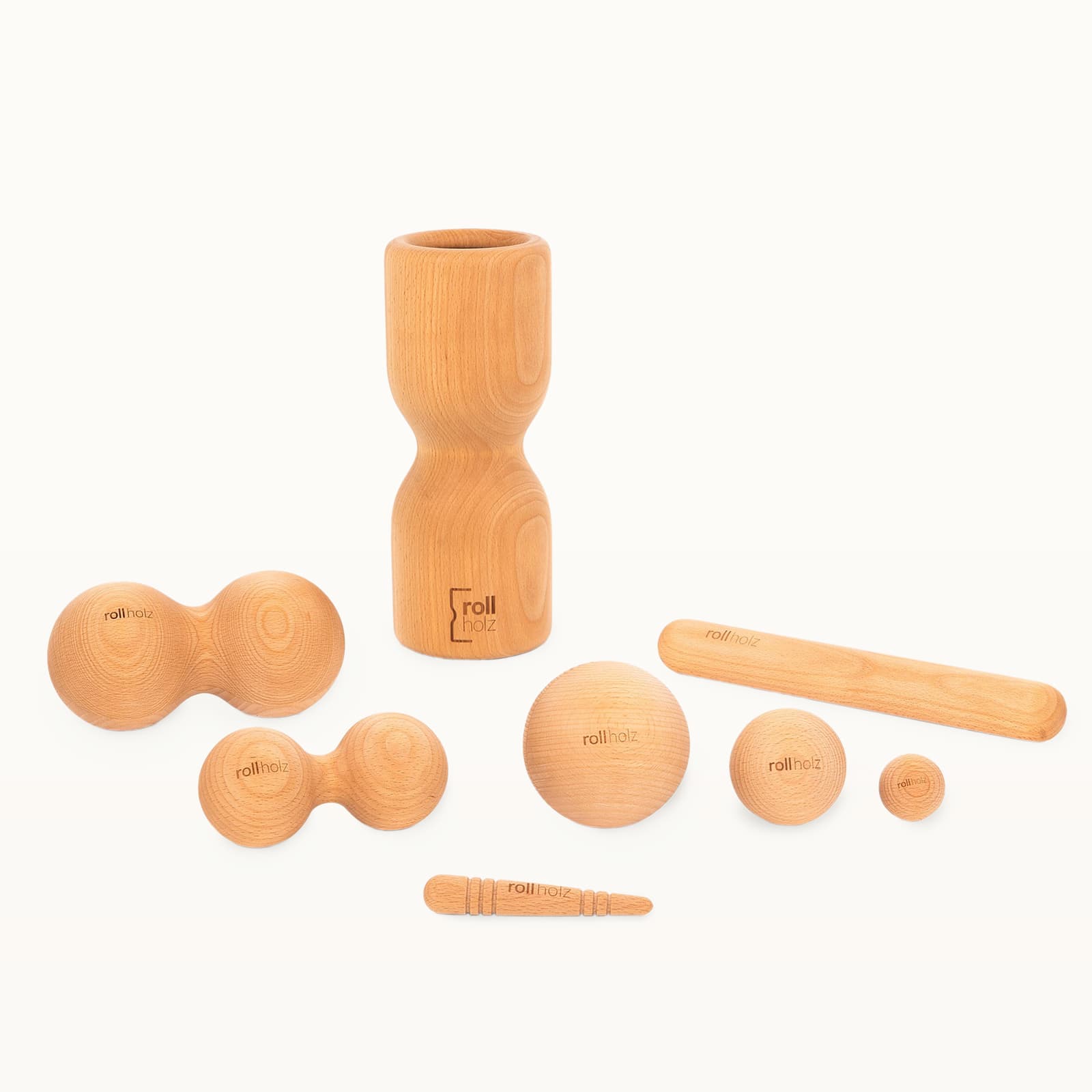
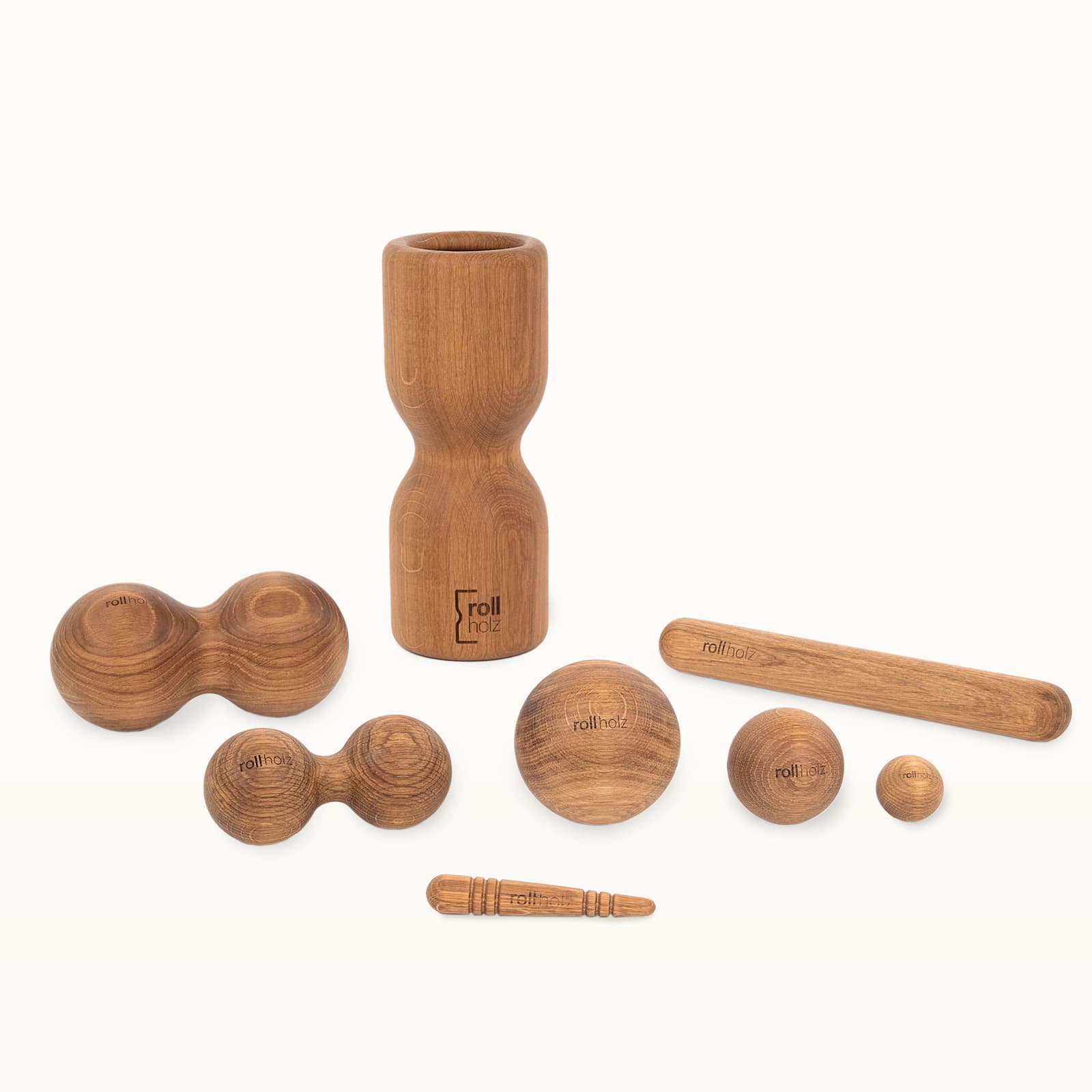
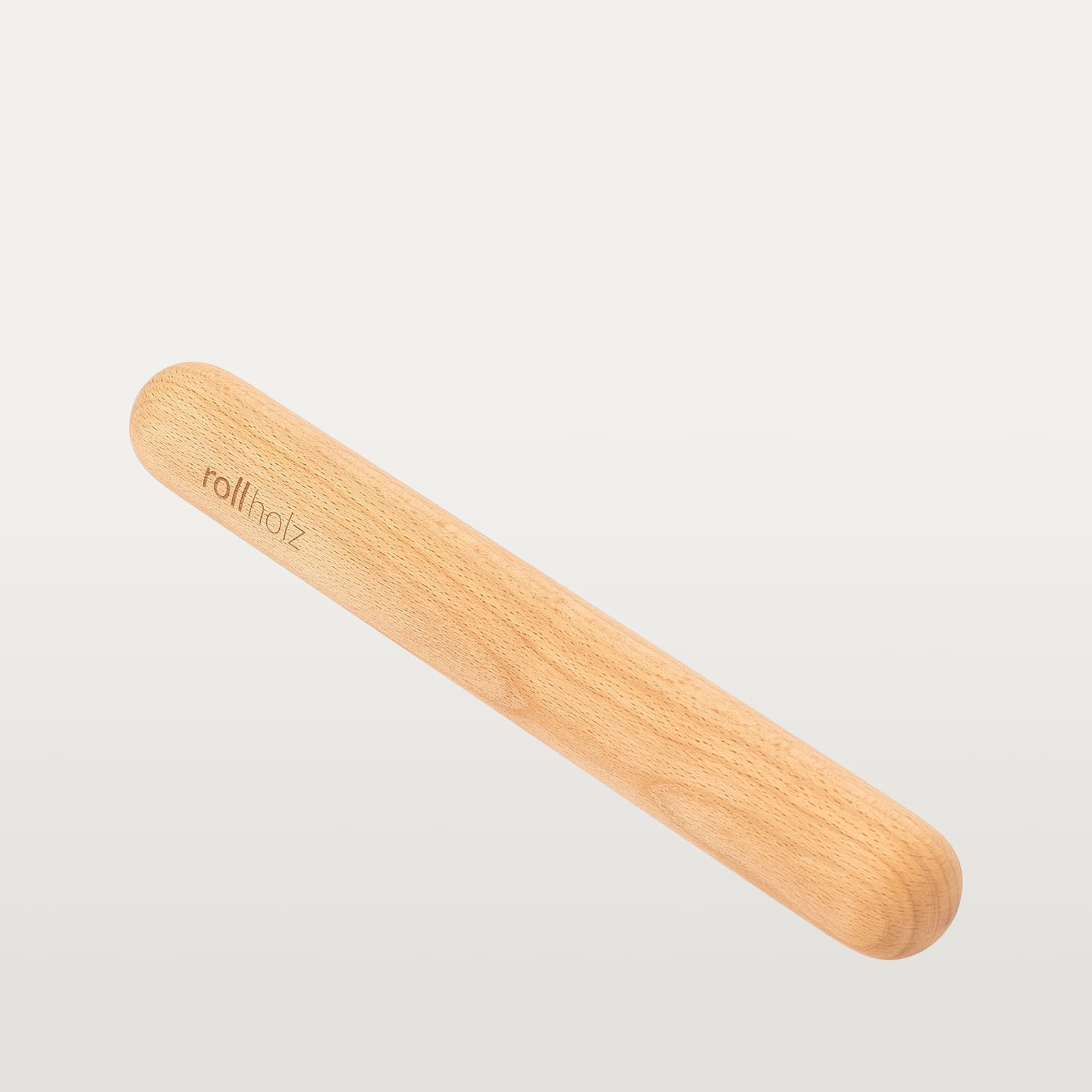
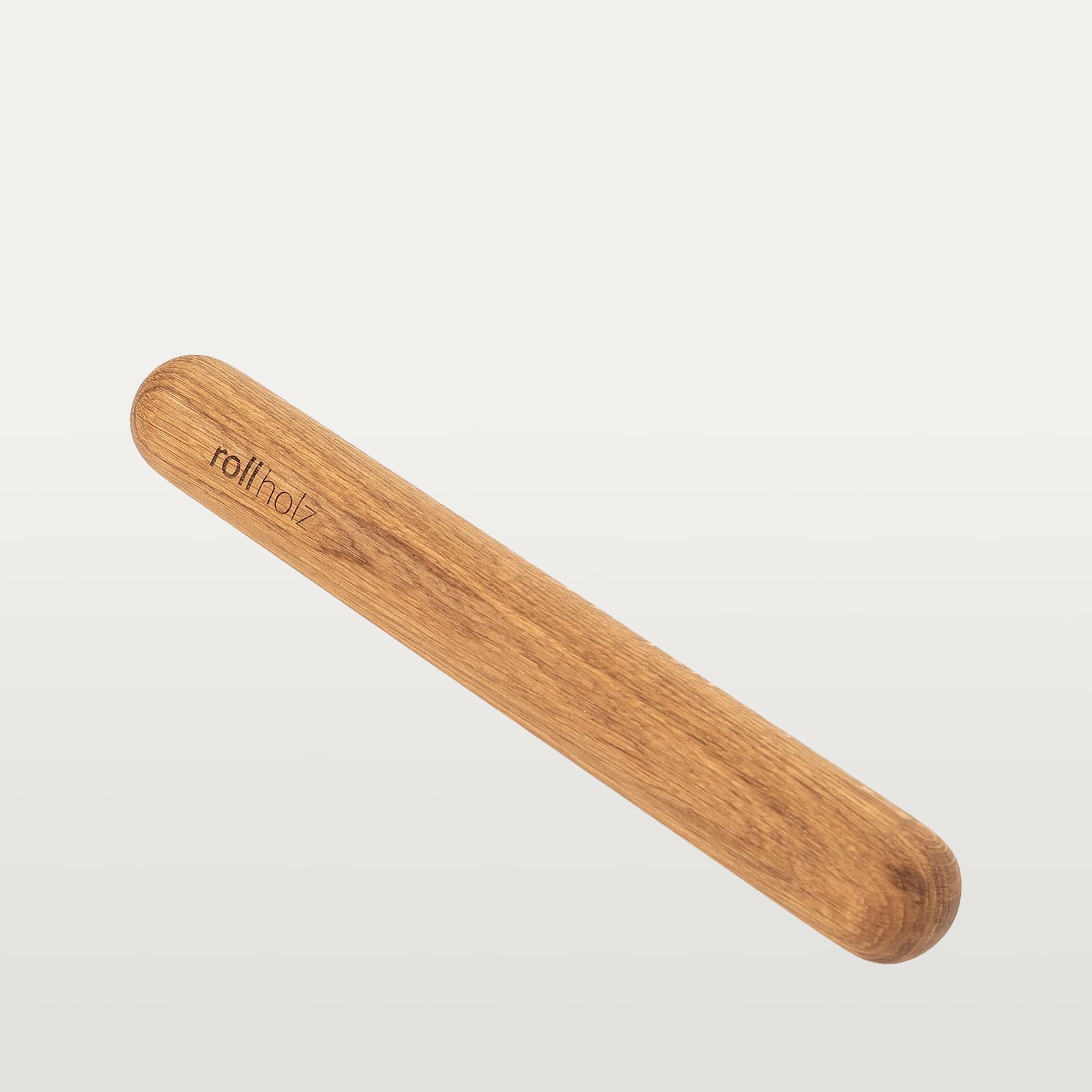
Sit on the floor with one leg extended, the calf resting on your rollholz original or rollholz Pro fascia roller. For more pressure, rest the other leg on top as well. Roll slowly along the whole length of the calf, rotating the leg slightly inwards and outwards to reach different areas of the muscle.
You can control the intensity through your position on the roller: if the calf sits exactly in the central groove, the roller wraps around it over a wide area – that is the gentlest version. Slightly to the side, on the straight surface, the pressure becomes noticeably more intense, and it is most intense directly on the curve at the transition to the groove, where the roller feels almost like a single point.

2. Mini roller for the calf
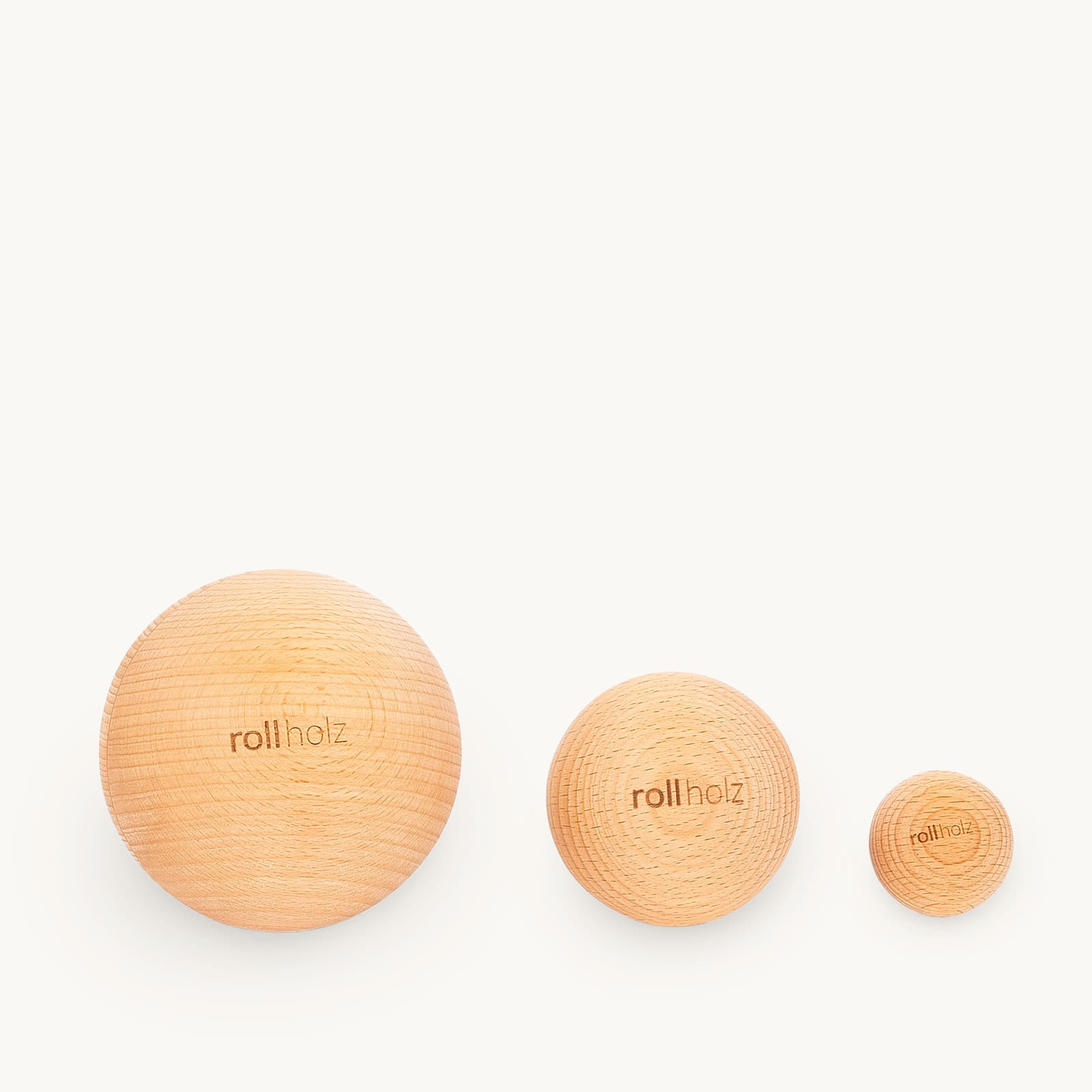
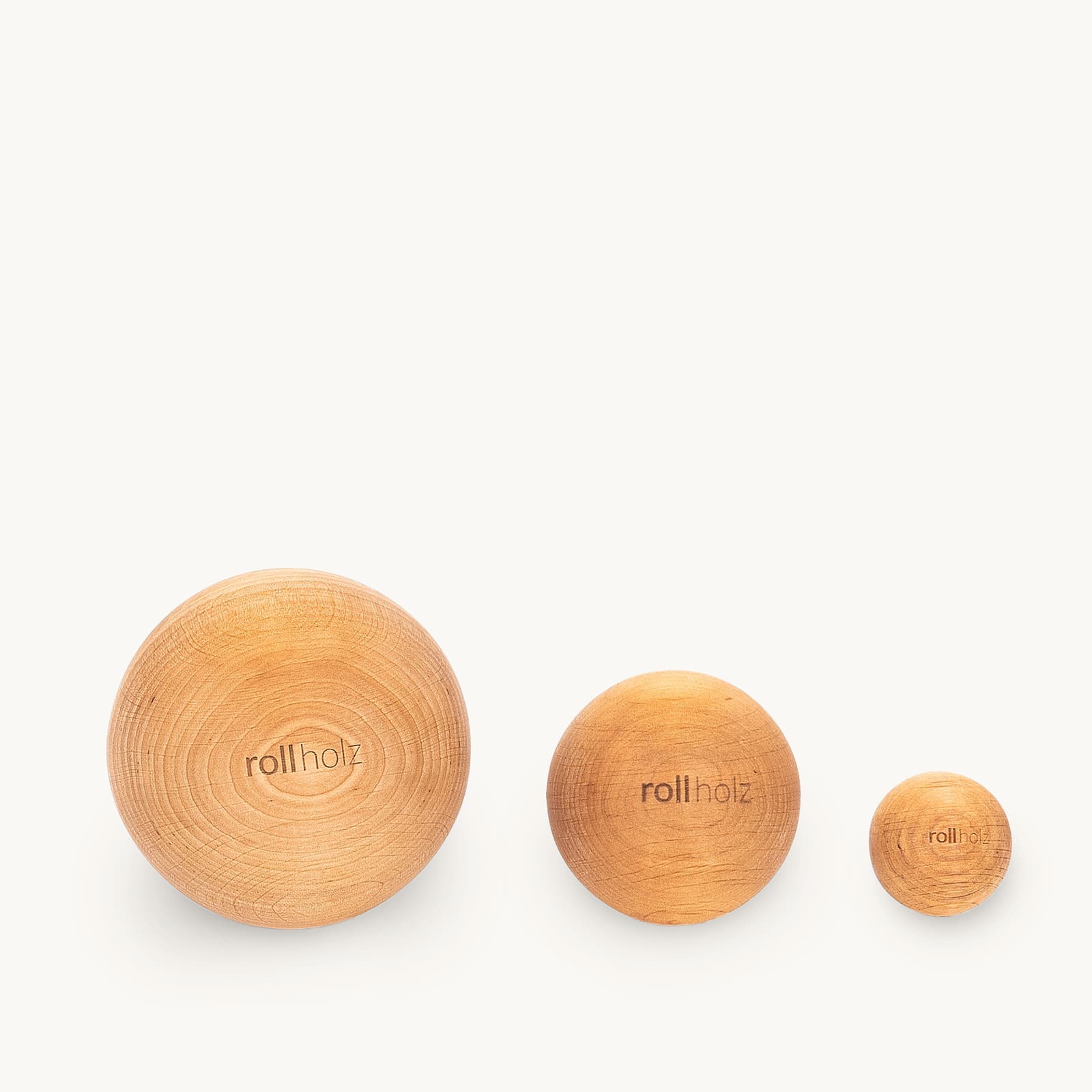
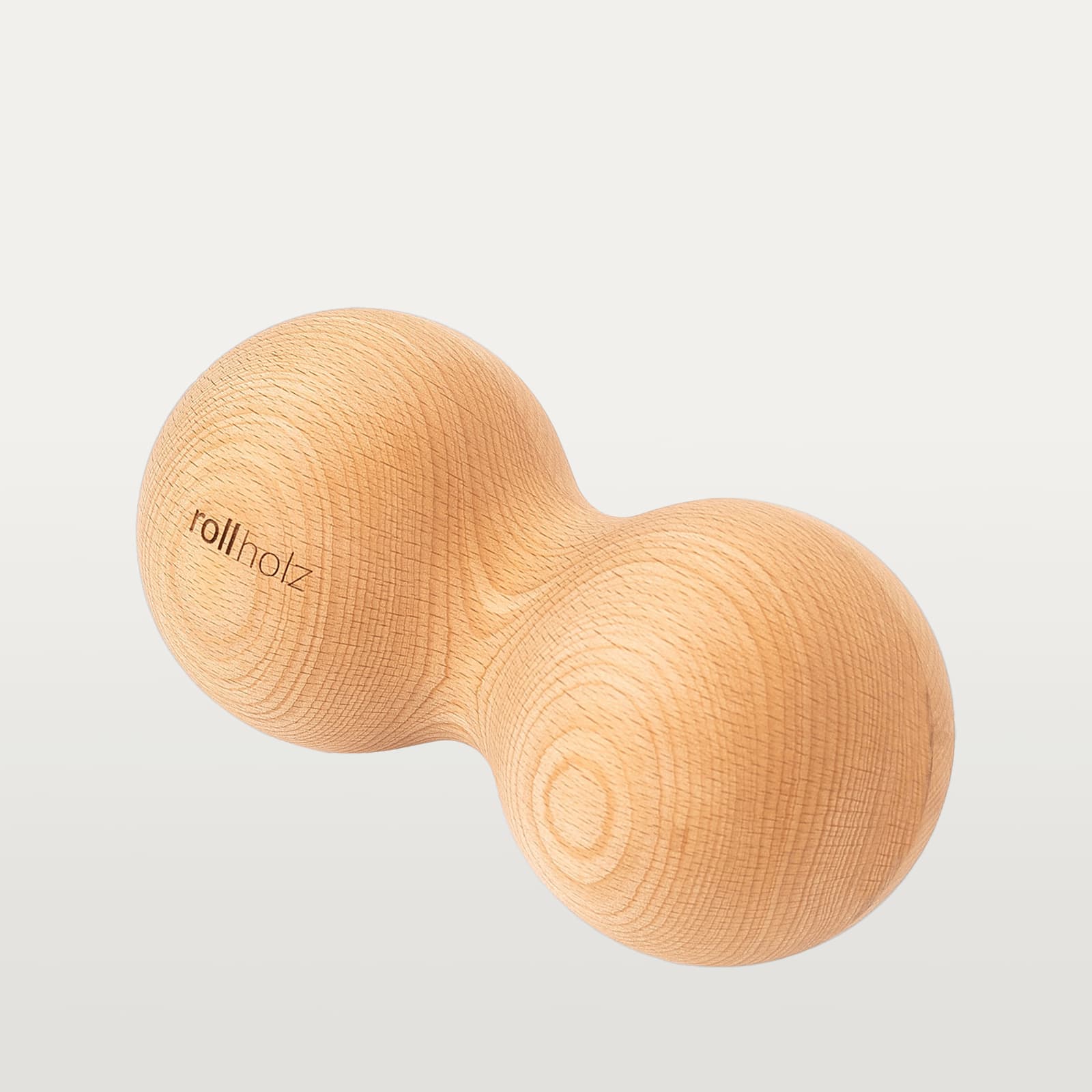
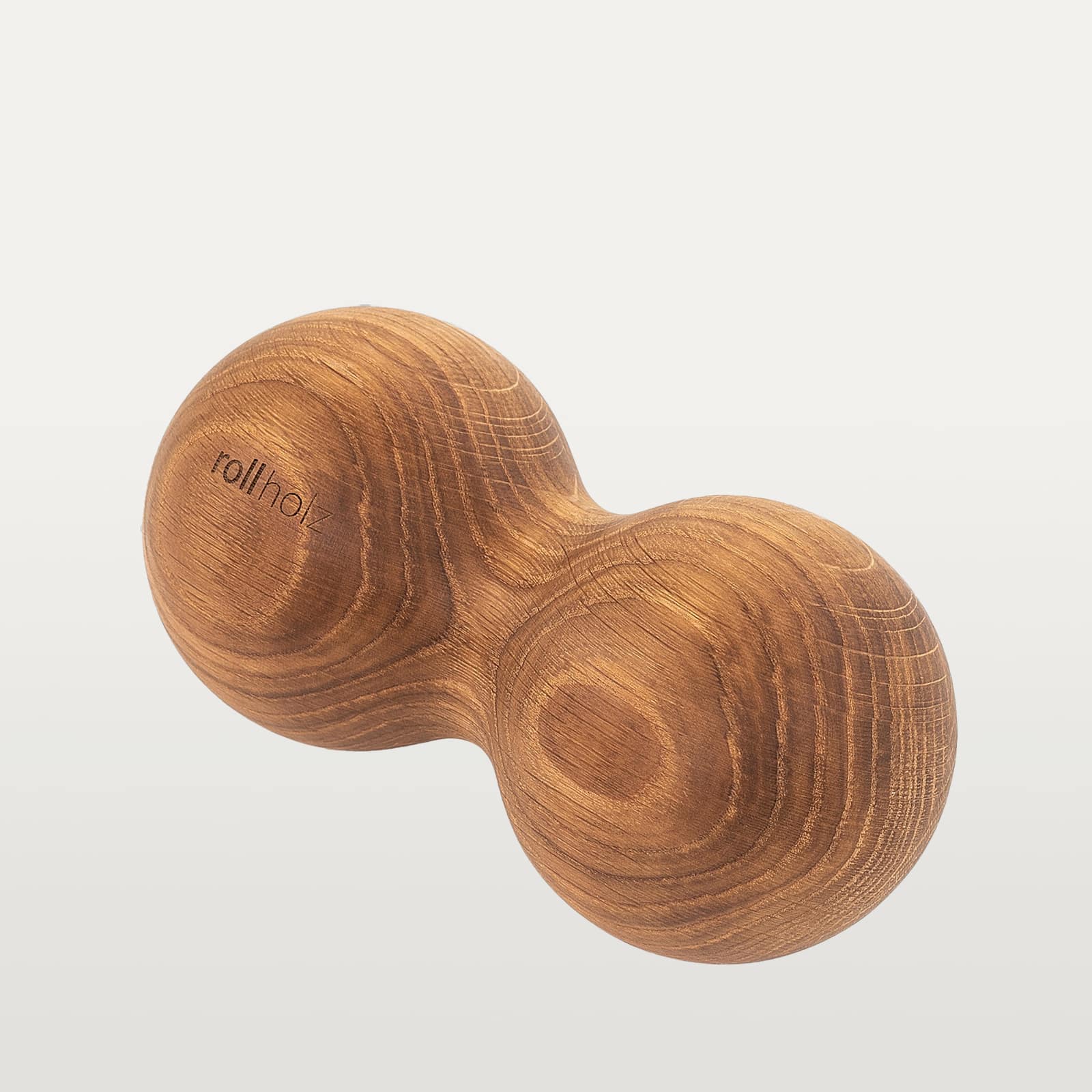
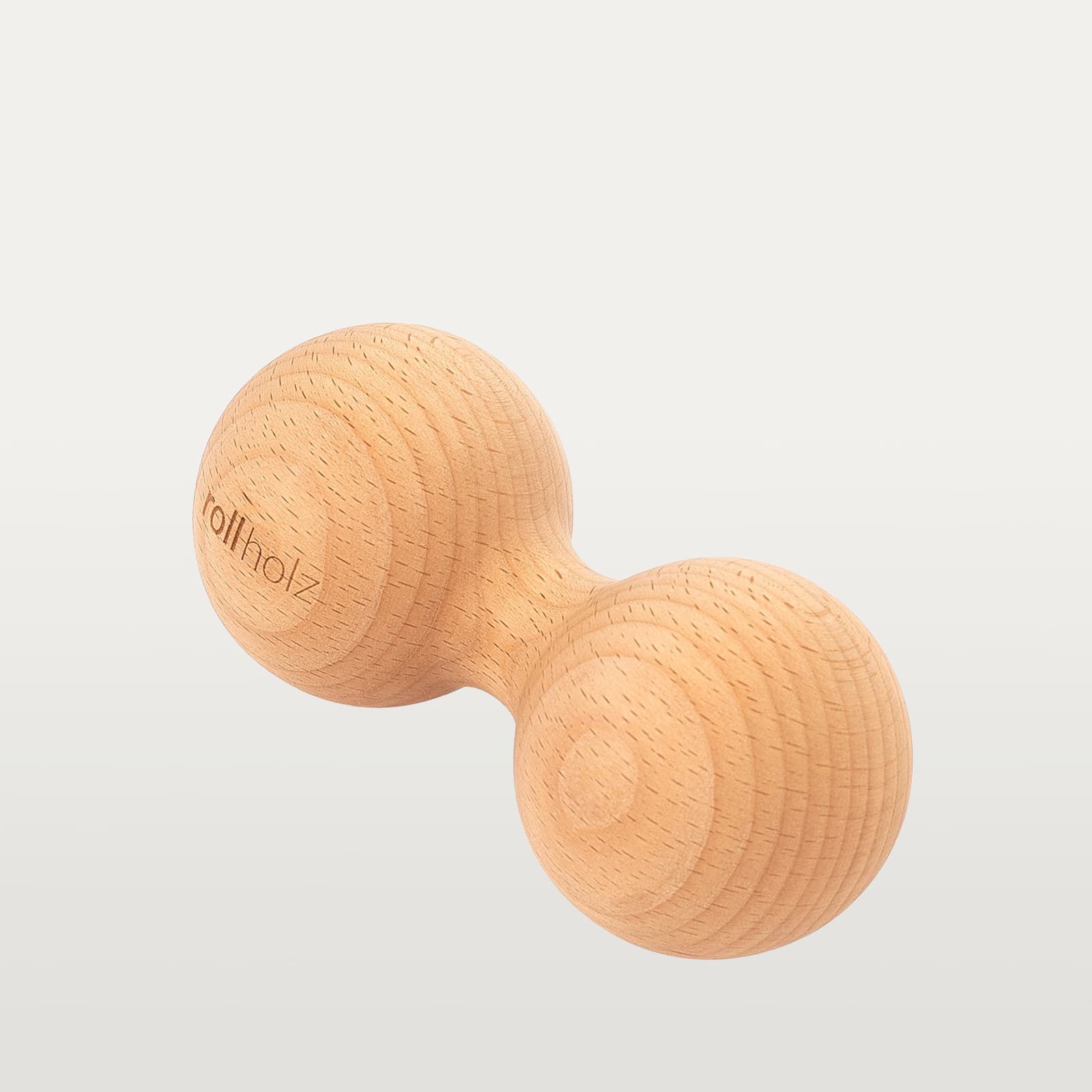
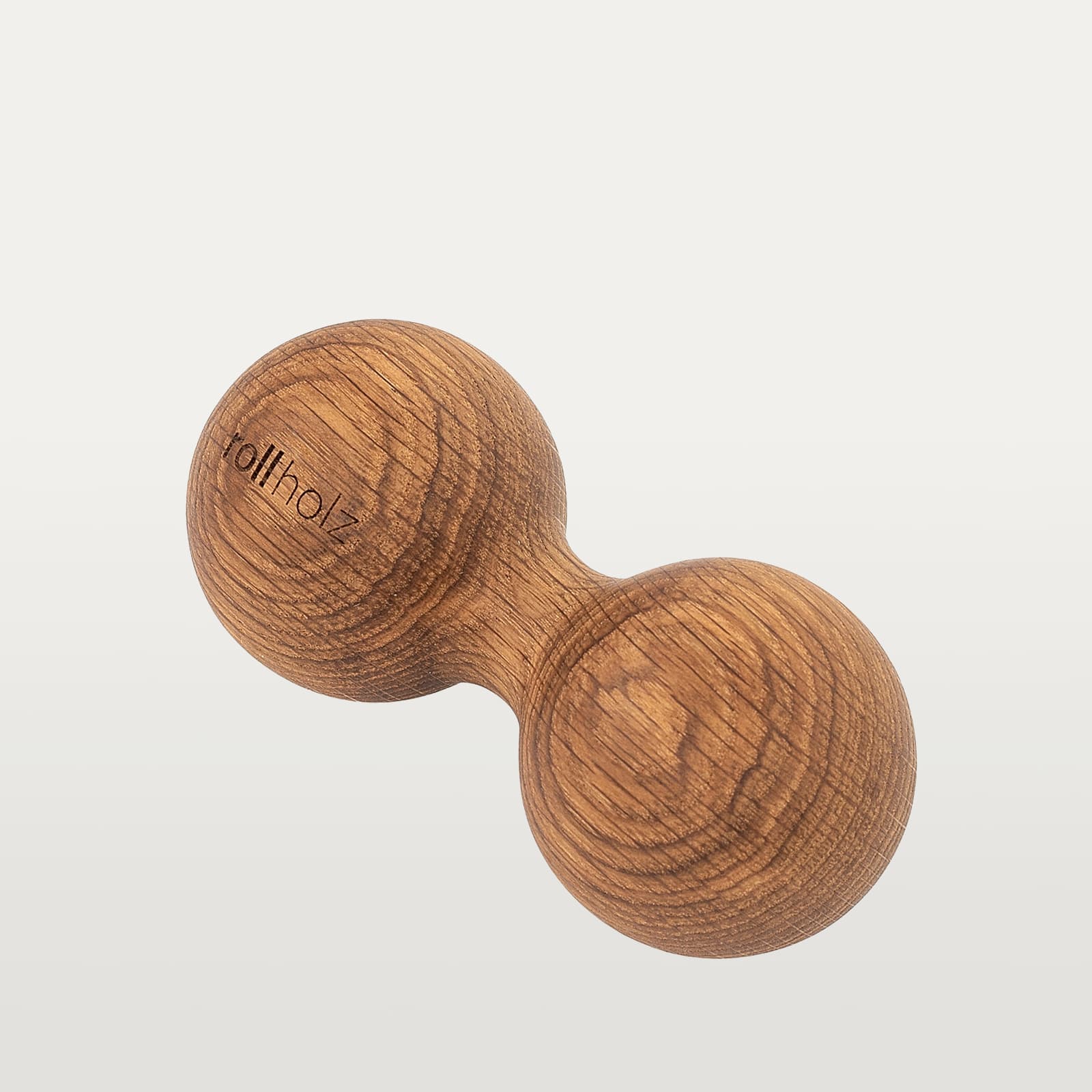
Sit on the floor as in exercise 1, one leg extended, the calf resting on your rollholz mini roller. For more pressure, rest the other leg on top as well. Roll slowly from the back of the knee to just above the heel and back again, letting the foot hang loose so the calf stays relaxed. Because of its smaller diameter, the mini roller is more intense than the large fascia roller.
Alternatively, you can hold the mini roller with both hands, one on the left and one on the right, and slide it along the calf instead of rolling it on the floor. A third option: sit on the floor, bend one leg and clamp the mini roller between calf and the back of the thigh. With the part of the roller sticking out, you can then transfer small movements by hand to the clamped muscle – this variant only works on one side, so one leg after the other.
3. Trigger stick at the transition to the Achilles tendon
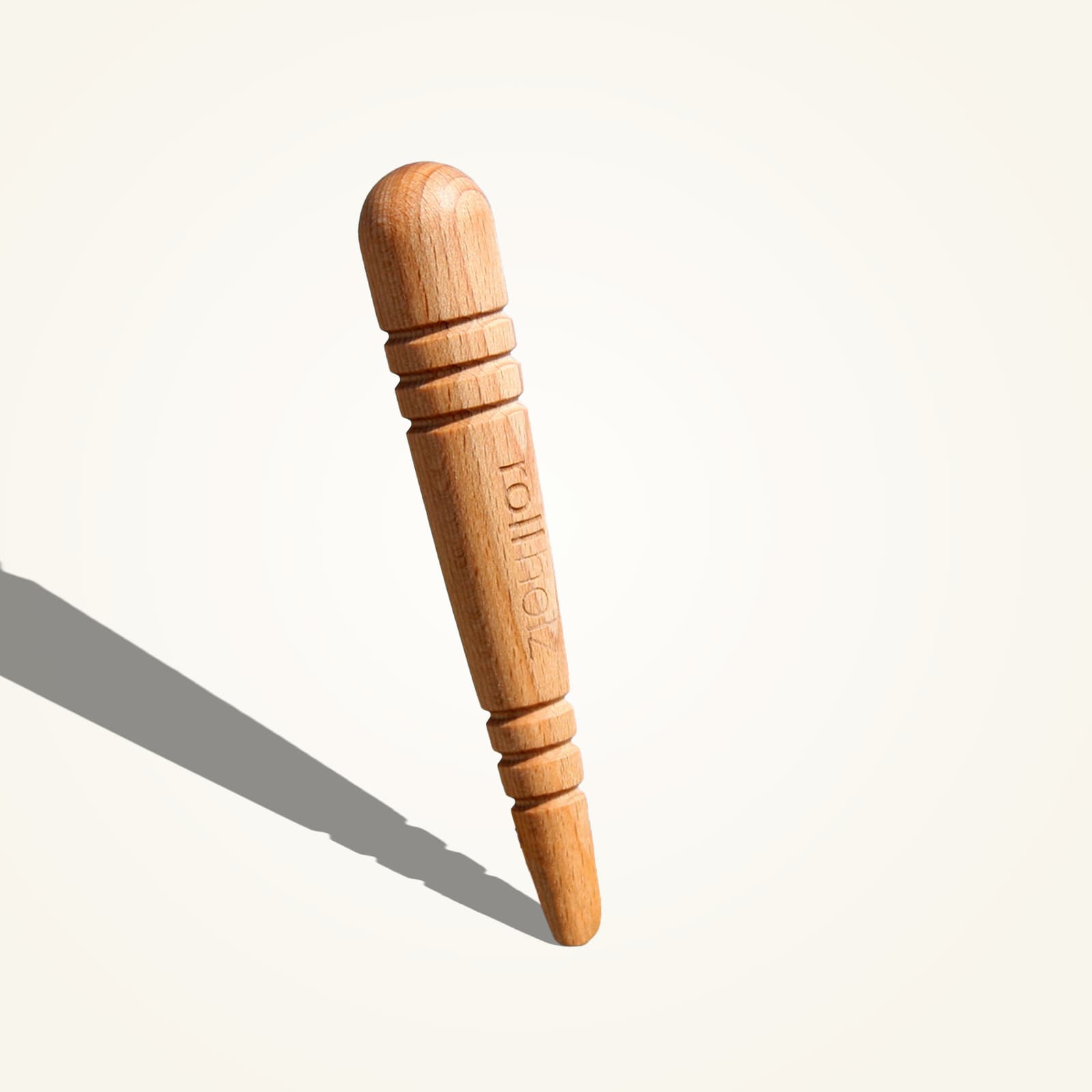
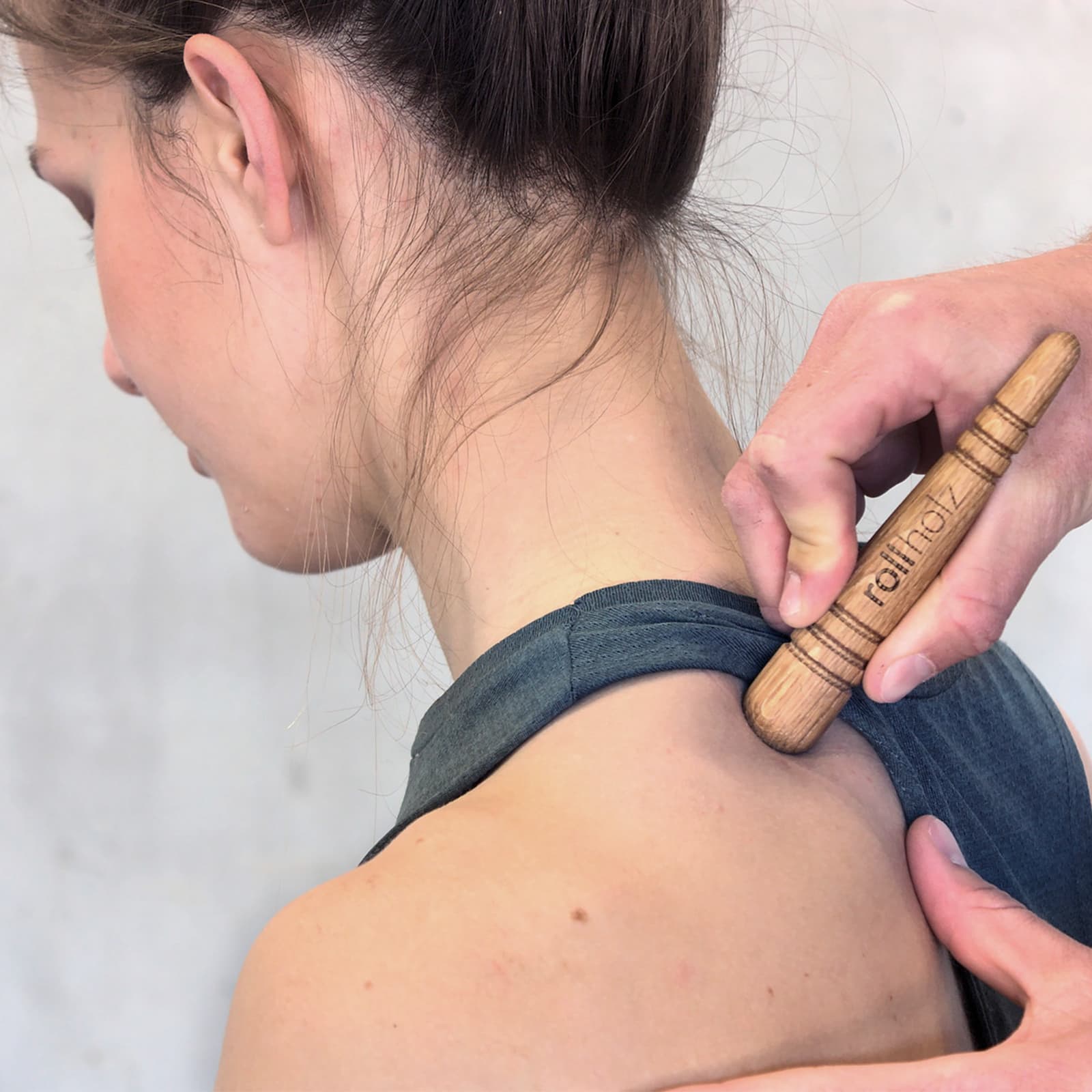
With the rollholz trigger stick you can work specifically at the transition from the lower calf to the Achilles tendon, above the heel. Work here with gentle pressure in the surrounding muscle and tendon tissue rather than directly on the middle of the tendon, especially if it is currently irritated or tender.
4. Calf stretch against the wall
Stand in front of a wall with the back leg straight, the heel staying on the floor. Lean against the wall with your hands until you feel a stretch in the calf, and hold for 20–30 seconds. With our calf stretcher & balance wedge this stretch can be done even more precisely and consistently, because the heel sits lower and the forefoot higher.
5. Eccentric heel raises for strength
Stand with the balls of your feet on a step, heels projecting freely behind. Rise onto your toes with both legs, then shift your weight onto one leg and let the heel sink slowly, over several seconds, below the edge of the step. This strengthening exercise is considered one of the most effective measures for recurring Achilles tendon complaints – what matters is the slow, controlled execution.
Acute calf cramp – what helps now
A sudden, stabbing calf cramp – often at night or after sport – usually has a different cause from the tension described above: it arises when the muscle contracts involuntarily and no longer releases by itself. The fastest help is an active counter-stretch: sitting or lying down, pull the toes of the affected leg firmly towards you so the calf lengthens, and hold the tension until the cramp eases. Afterwards, gently stroking the calf with your hand or the mini roller can calm the muscle further.
Common causes of recurring calf cramps are a lack of magnesium or electrolytes, too little fluid, unfamiliar or intense loads, and long periods of sitting or standing. With occasional cramps, especially at night, it can help to make sure you get enough fluid and magnesium. If the cramps occur very often, are very painful or come with other symptoms, it is worth getting checked by a doctor to rule out other causes.
When rolling makes sense – and when rest is better
With muscular calf tension you can use the fascia roller and trigger stick regularly without concern. If the Achilles tendon is already acutely irritated and hurts with every step, the focus should first be on gentle stretching, the eccentric strengthening exercise and reducing running and jumping loads – direct, firm pressure on the painful tendon itself is rather counterproductive then.
When to see a doctor or physiotherapist
The exercises above are meant for everyday, muscular tension and mild tendon irritation. Please have yourself examined by a doctor if:
- a sudden stabbing sensation or an audible “snap” occurs in the calf or Achilles tendon and you can no longer stand on your toes afterwards (suspected tendon rupture – please seek help immediately)
- the calf swells on one side, feels warm or turns red without any recognisable sporting cause (possible sign of thrombosis)
- the pain directly at the Achilles tendon does not improve over several weeks despite rest and exercises
- numbness or tingling in the foot develops as well
- the symptoms appear after a fall or an accident
- calf cramps occur very often, are very painful or do not improve despite sufficient fluid and magnesium
Conclusion
Calf and Achilles tendon are best looked at together, since tension in the calf acts directly on the tension of the tendon – over time even leading to a heel spur at the Achilles attachment. Fascia roller, mini roller and trigger stick help to loosen the muscle, while targeted stretching and eccentric heel raises strengthen the Achilles tendon. An acute calf cramp can usually be released quickly with an active counter-stretch – recurring cramps often point to too little magnesium or fluid. With acute or persistent tendon pain the rule is: better to stretch and strengthen carefully than to roll firmly – and when in doubt, have it checked by a doctor.


Leave a comment
This site is protected by hCaptcha and the hCaptcha Privacy Policy and Terms of Service apply.