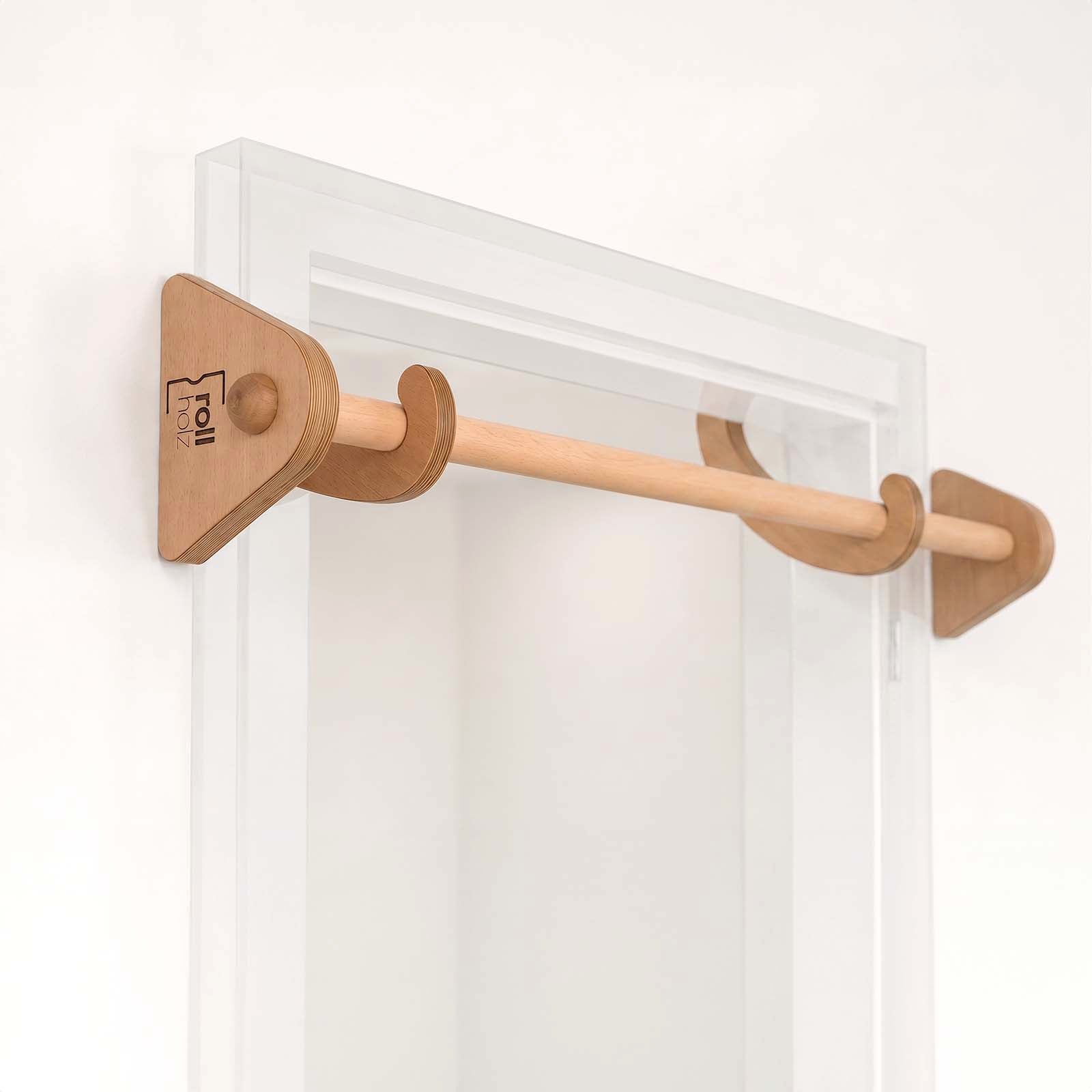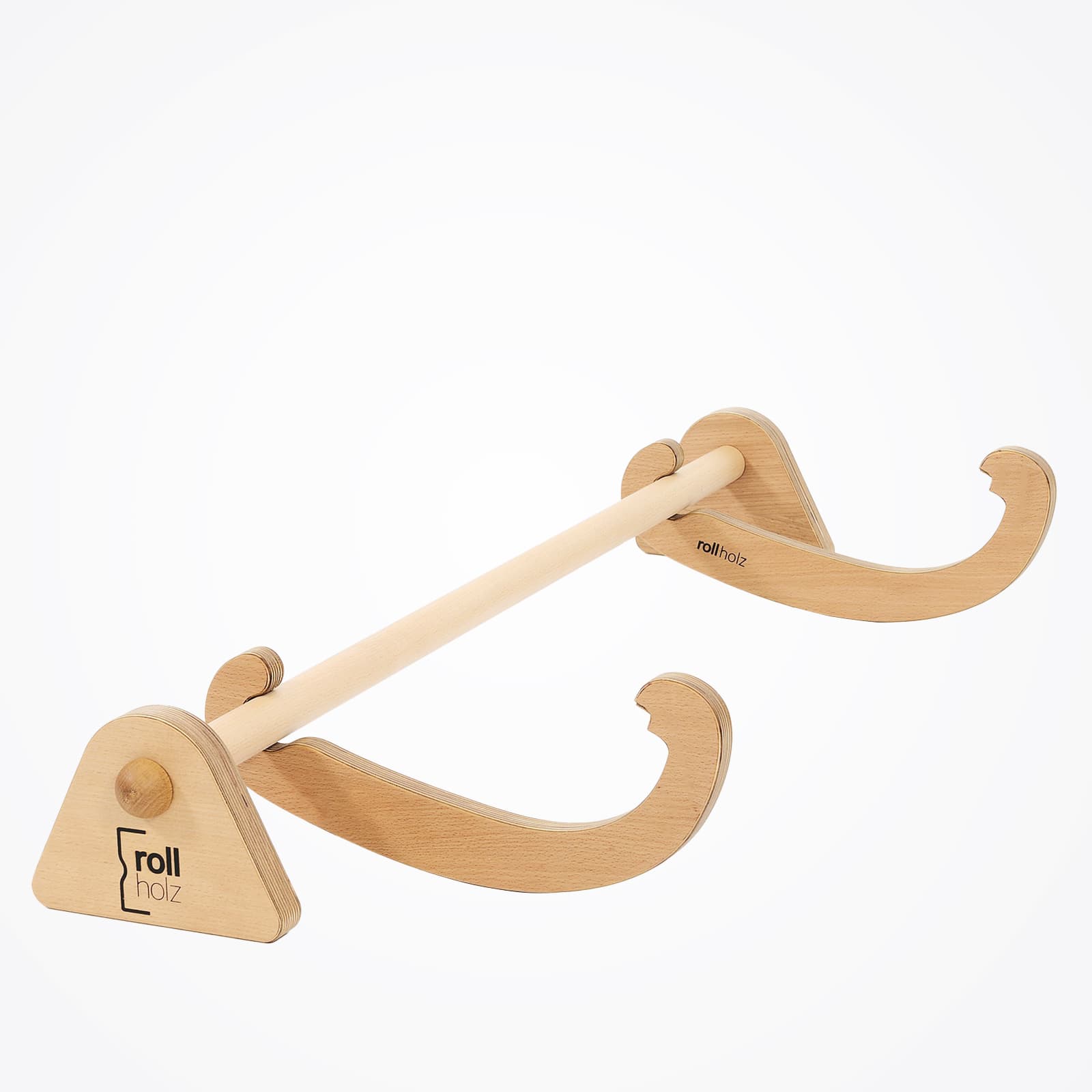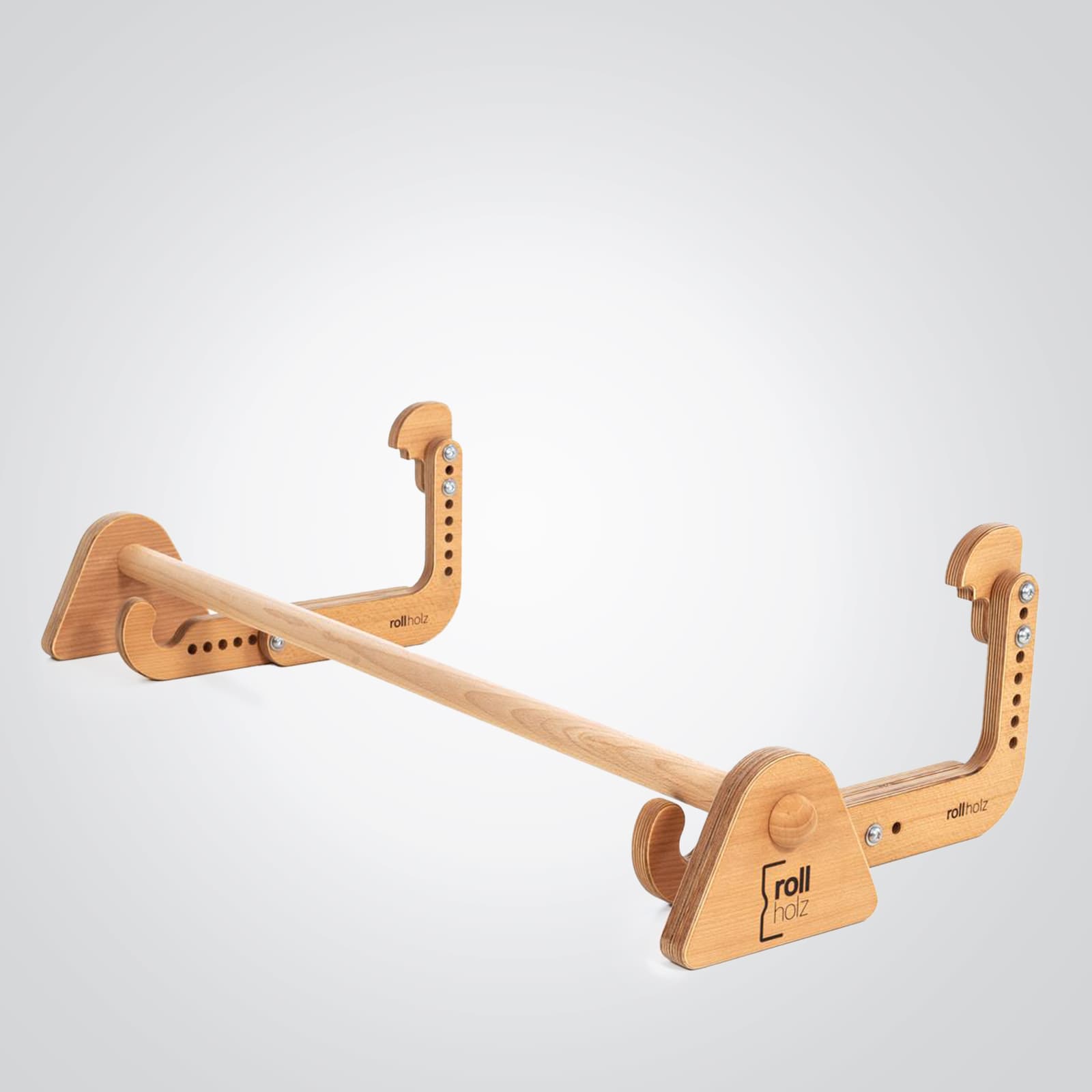
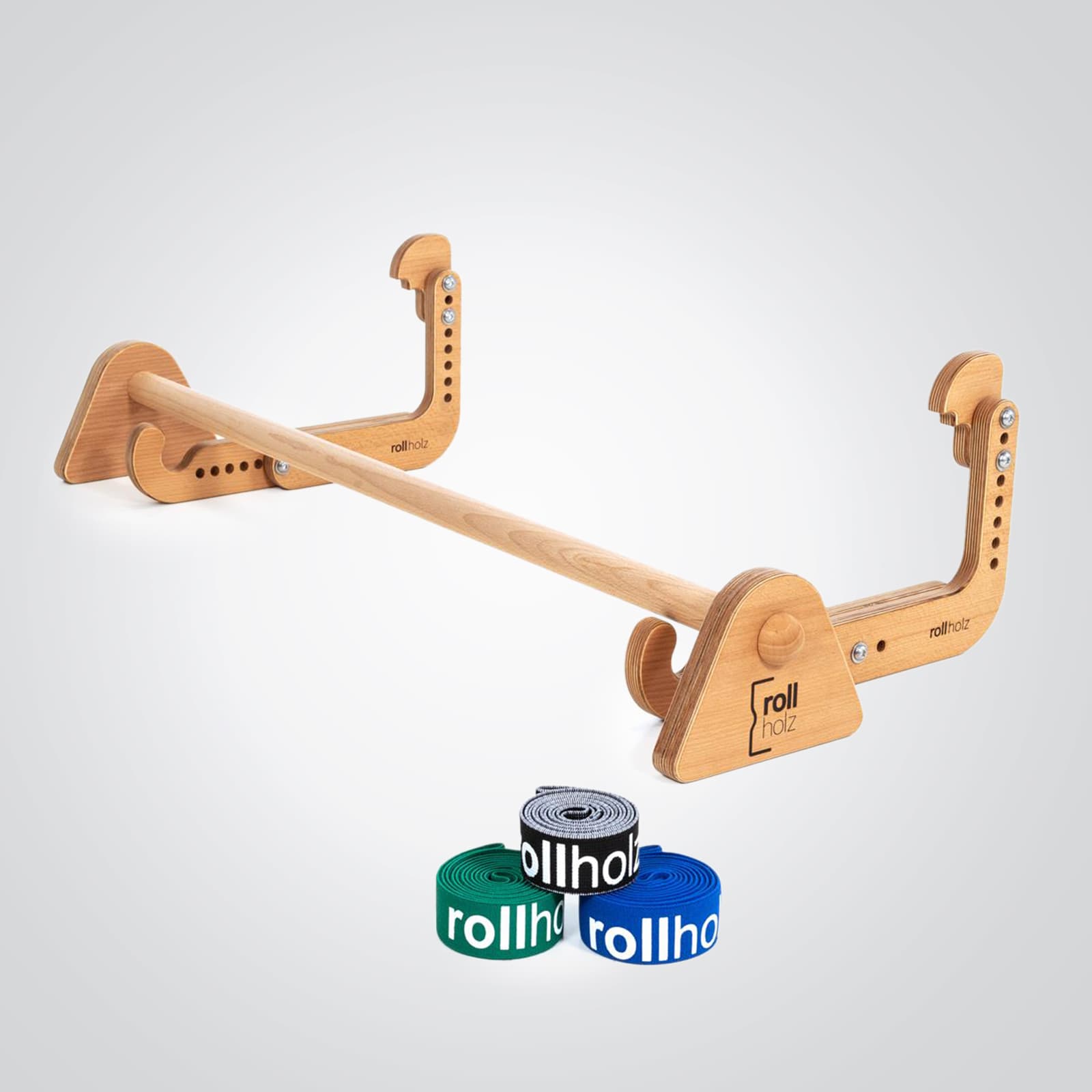
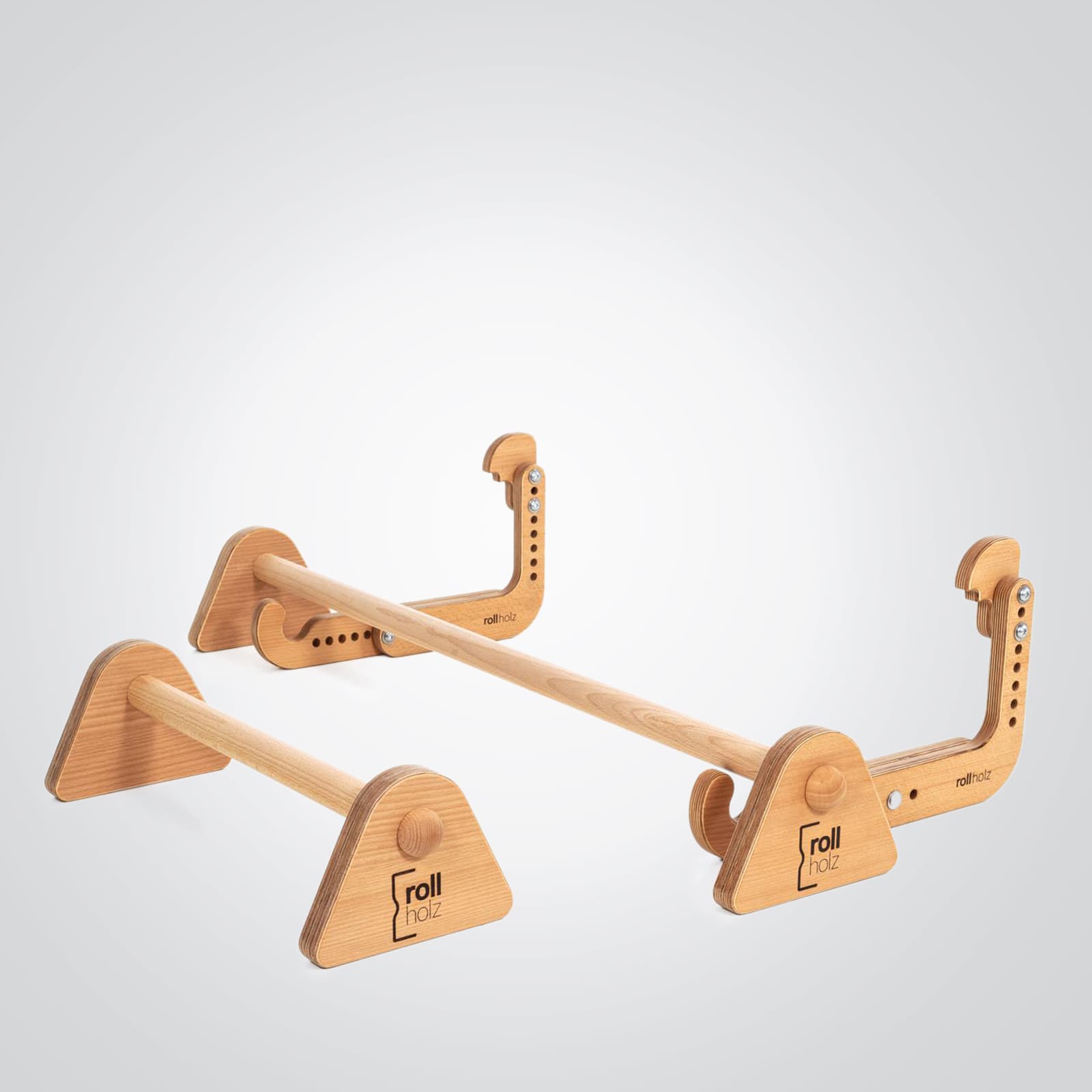
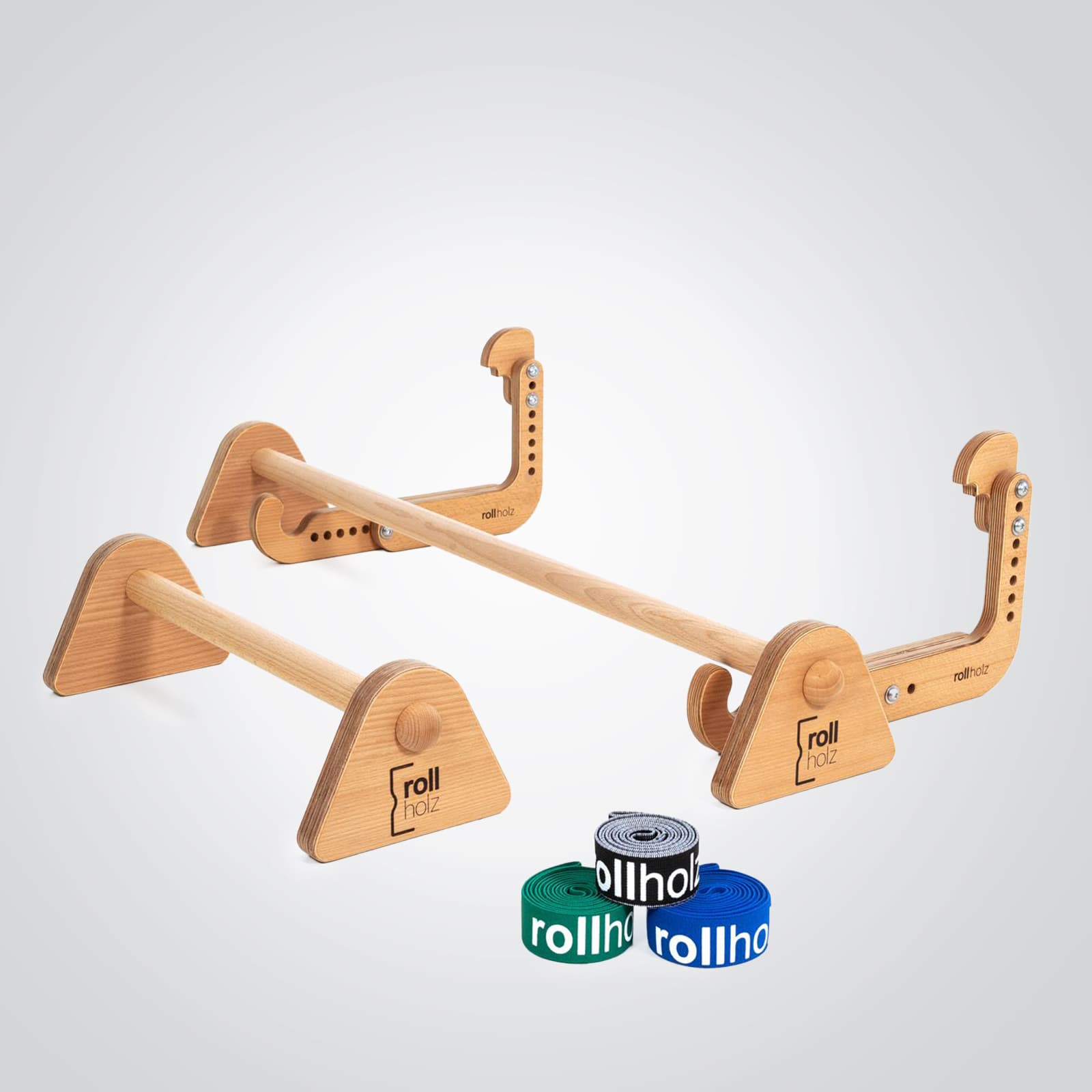
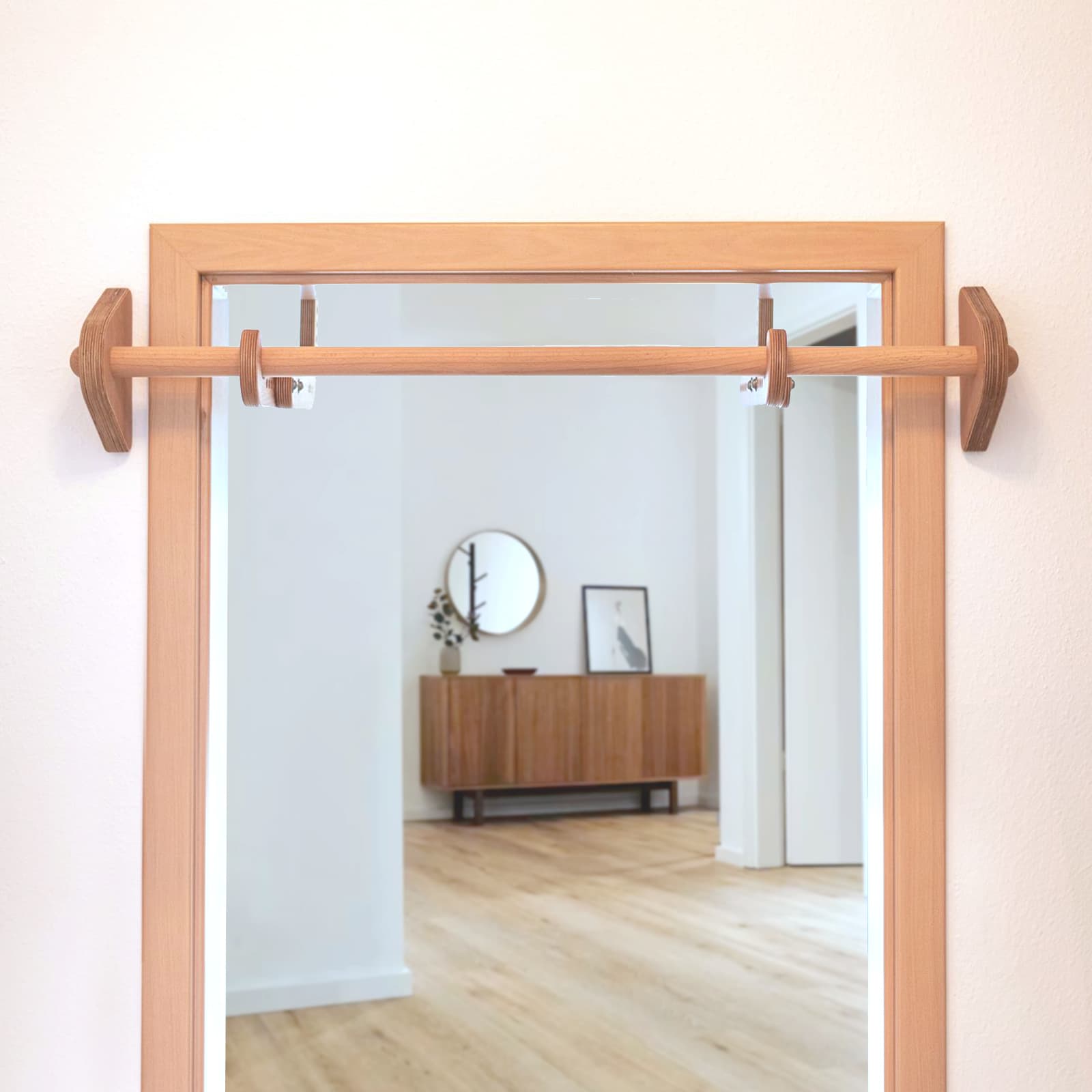
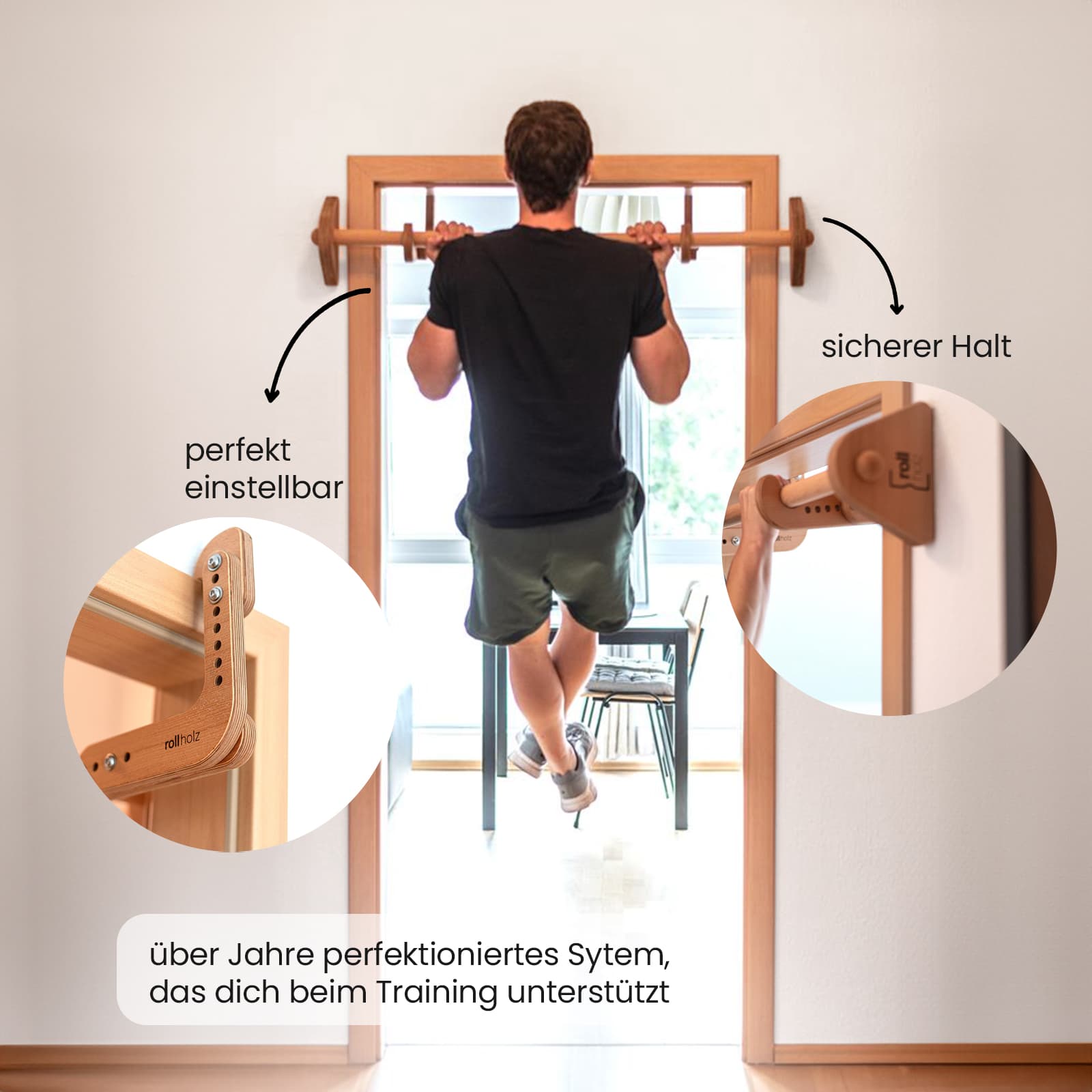
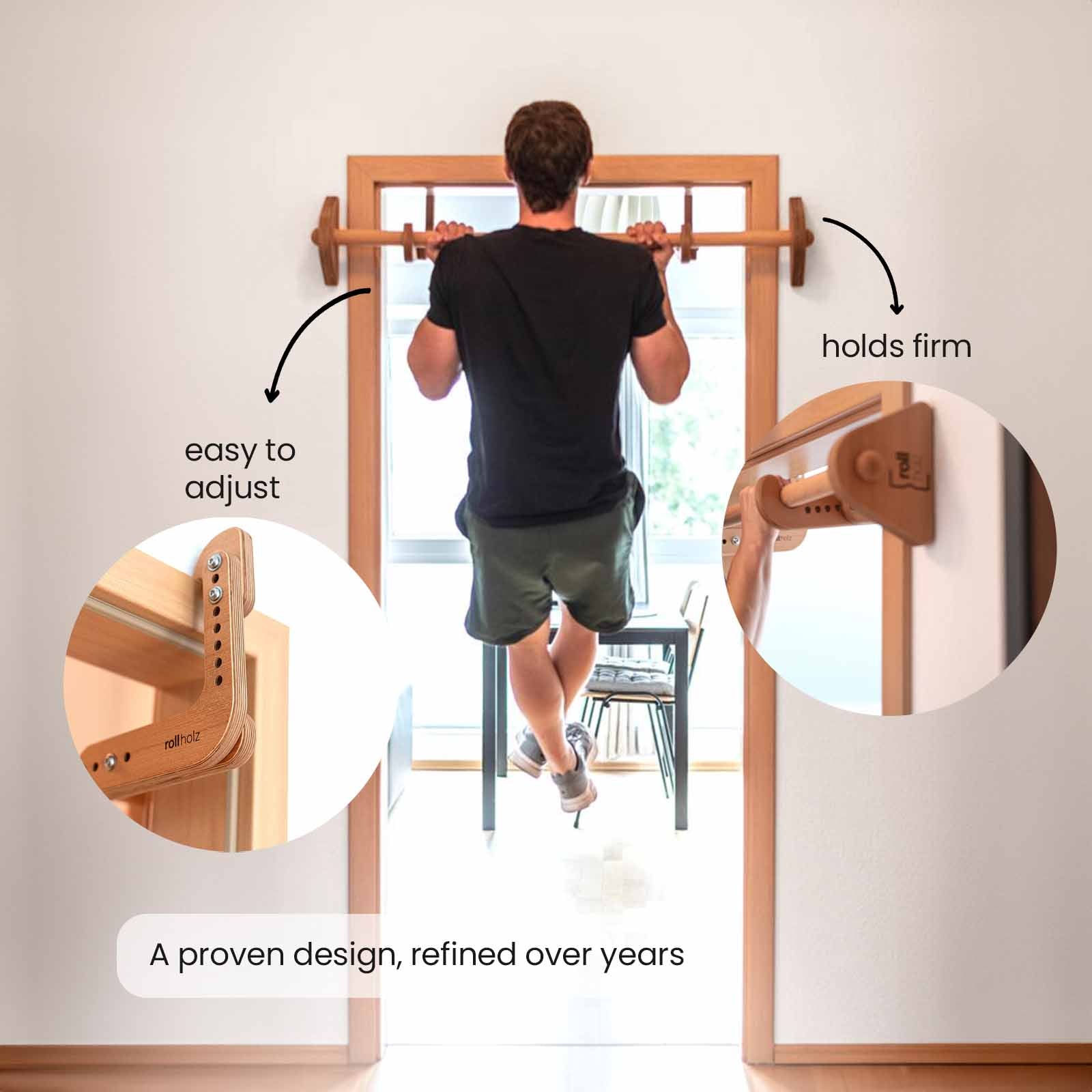
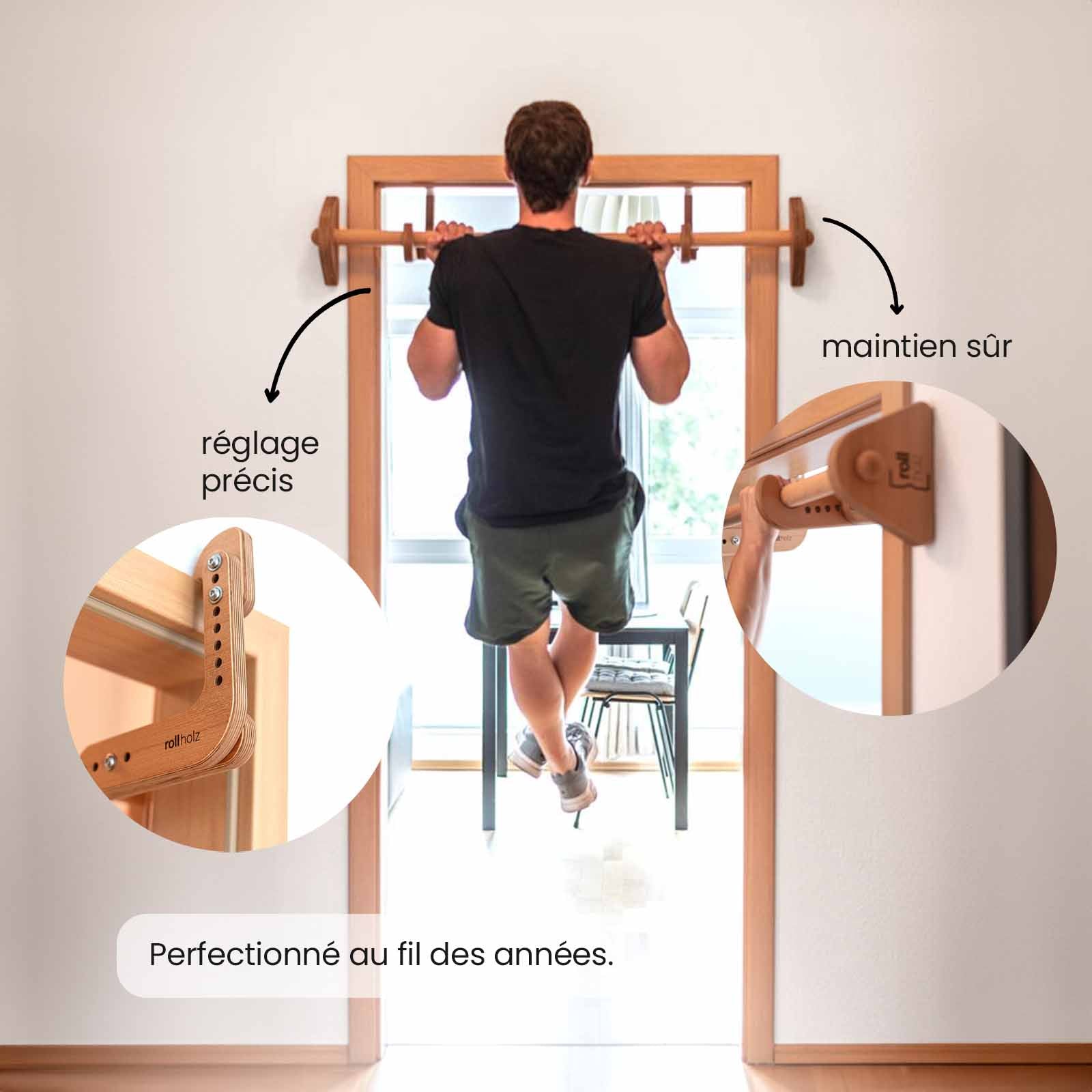
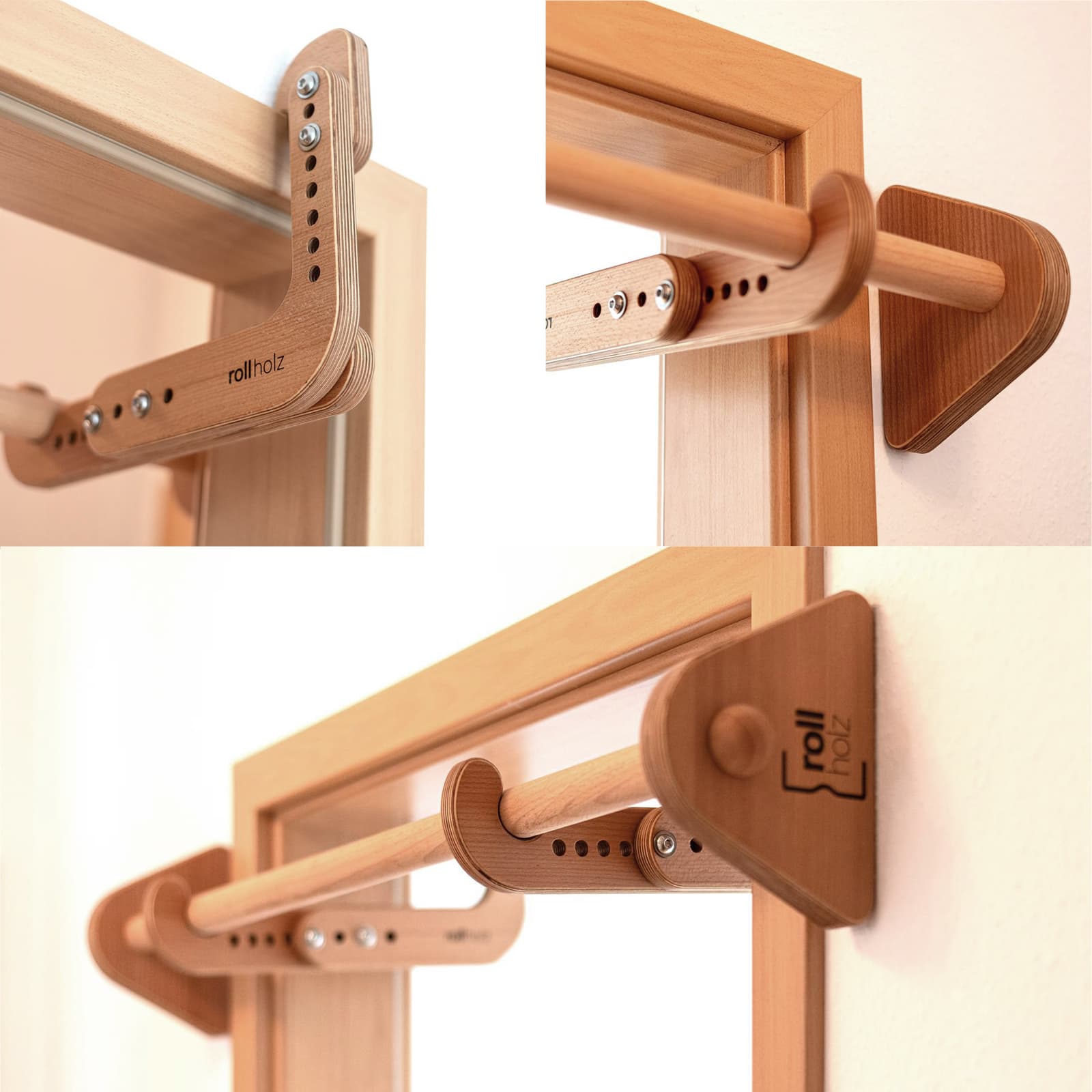
Adjustable pull-up bar – for period buildings & thick walls
Maximum flexibility for your training – it adapts perfectly to you and your setup.
Can be combined with accessories for even more exercises – stable, functional and high-quality, in wood.
- 🛠️ Handmade in Freiburg
- 🌿 100% natural
- 🏚️ Suitable for period buildings
- ⚡ Ready to use in seconds
Delivery time: 1 to 2 working days

How to use

How to use

Material & origin

Material & origin
The pull-up bar is mostly made and finished in our workshop in Freiburg. The bar itself and the rounded outer end caps are high-quality beech from the Black Forest – tough, long-lasting and pleasant to hold.
The feet and hooks are made from birch plywood with a beech veneer. That material comes mainly from Scandinavia and adds stability and dimensional stability.
Every pull-up bar gets its final sanding in Freiburg and a treatment of pure linseed oil. No frills, no chemicals – just honest craft.

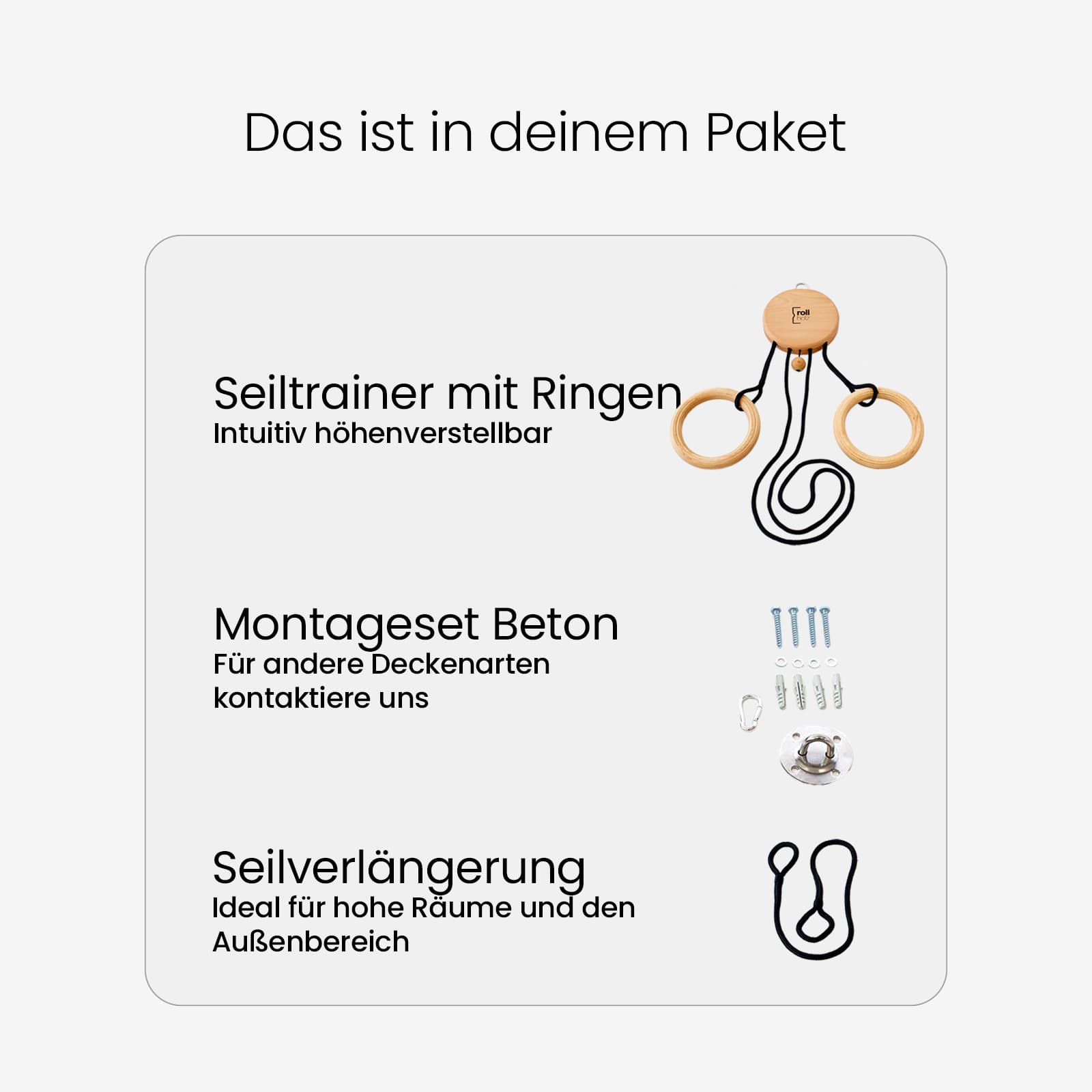
What's included

What's included

Dimensions & details

Dimensions & details
- Weight: 3.3 - 4.9 kg
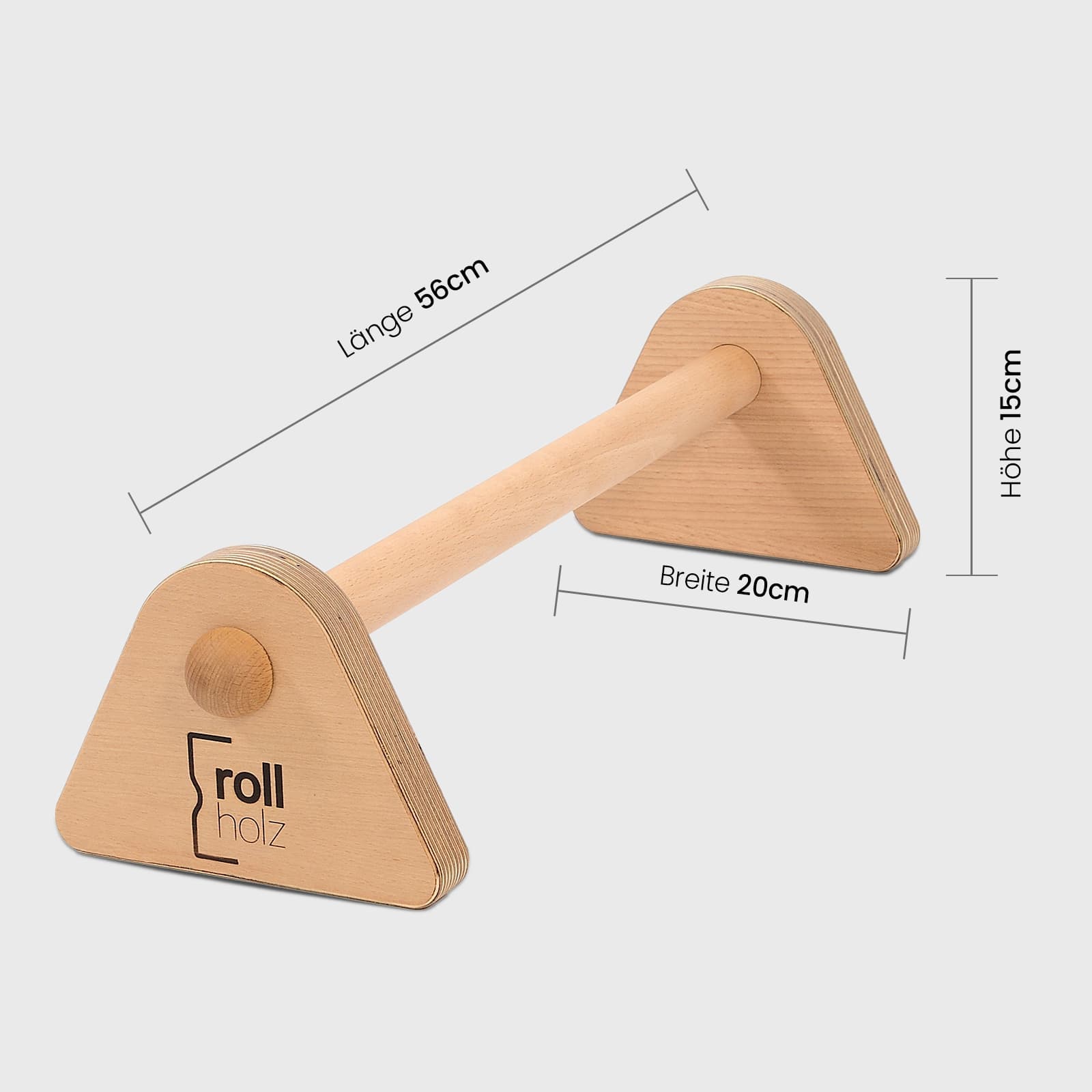
- Length: bar only (L x W x H) 109.5 cm x 20 cm x 15 cm
- Max. user weight: 130 kg
- Surface: oiled with pure linseed oil
- Warranty: 2 years

Care

Care
Our products are easy to care for – in the most literal sense: they need none. Their longevity doesn't suffer if you simply never bother. They last a lifetime – and can be handed down without a problem.
If you do want to treat your product to something, just rub it with a little oil – that brings the natural grain back out beautifully. For heavier marks, sand it lightly beforehand.
The smooth surface is easy to clean and disinfect – ideal for professional therapy use. Wipe it down or disinfect it when needed, let it dry briefly, done.
Manufacturer
rollholz GmbH
Schwarzwaldstraße 48 (Hausrückseite)
79117 Freiburg
Deutschland
info@rollholz.com
Type designation
Klimmzugstange · Modell anpassbar
Safety information
- Maximum user weight: 130 kg.
- Only use on a door frame that is firmly anchored in the wall. Check the fit before every use.
- Check for damage and secure fit before every use.
- Do not let children use the equipment unsupervised.
- Do not continue to use damaged parts.
Product video


Additional training options
With our resistance bands the pull-up bar also works as an anchor point for effective upper-body training, especially for the back muscles.

For recovery days or for getting started
The bands are also great for extra support on recovery days, or for training with more repetitions at lower intensity.
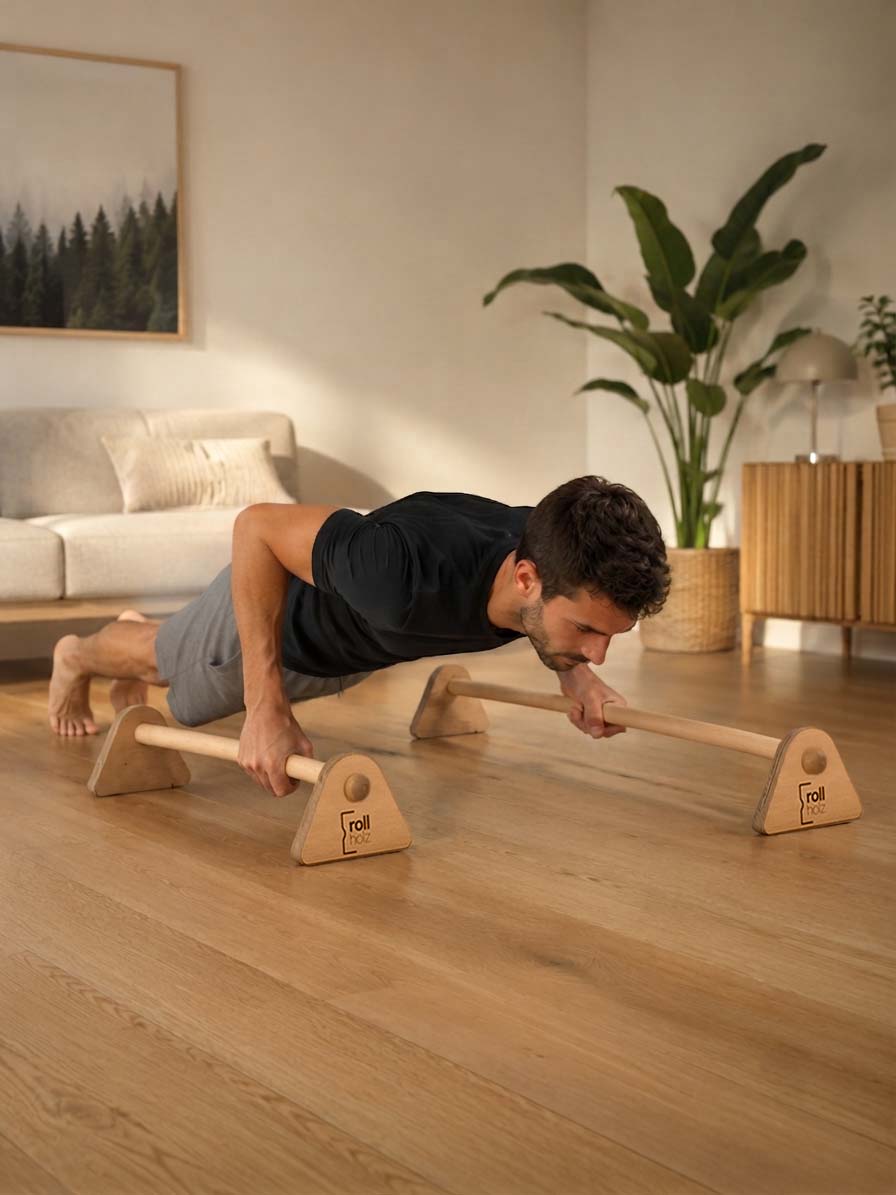
Perfect for push-ups and bodyweight training
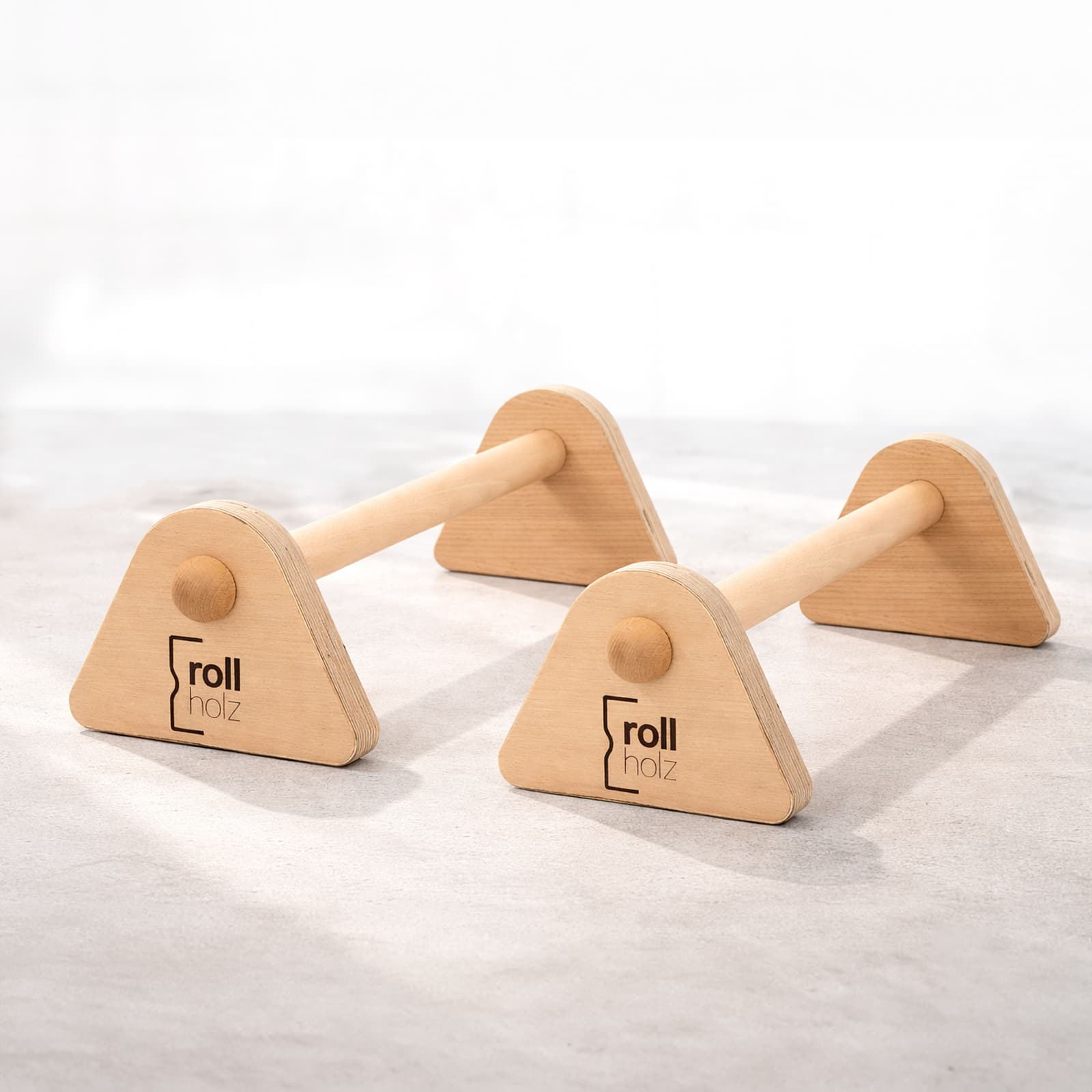
With the second parallette you take your bodyweight training to the next level. The raised grip gives you more freedom of movement for push-ups and opens up L-sits, dips or handstand work.
Additional training options
With our resistance bands the pull-up bar also works as an anchor point for effective upper-body training, especially for the back muscles.
For recovery days or for getting started
The bands are also great for extra support on recovery days, or for training with more repetitions at lower intensity.
Perfect for push-ups and bodyweight training
With the second parallette you take your bodyweight training to the next level. The raised grip gives you more freedom of movement for push-ups and opens up L-sits, dips or handstand work.
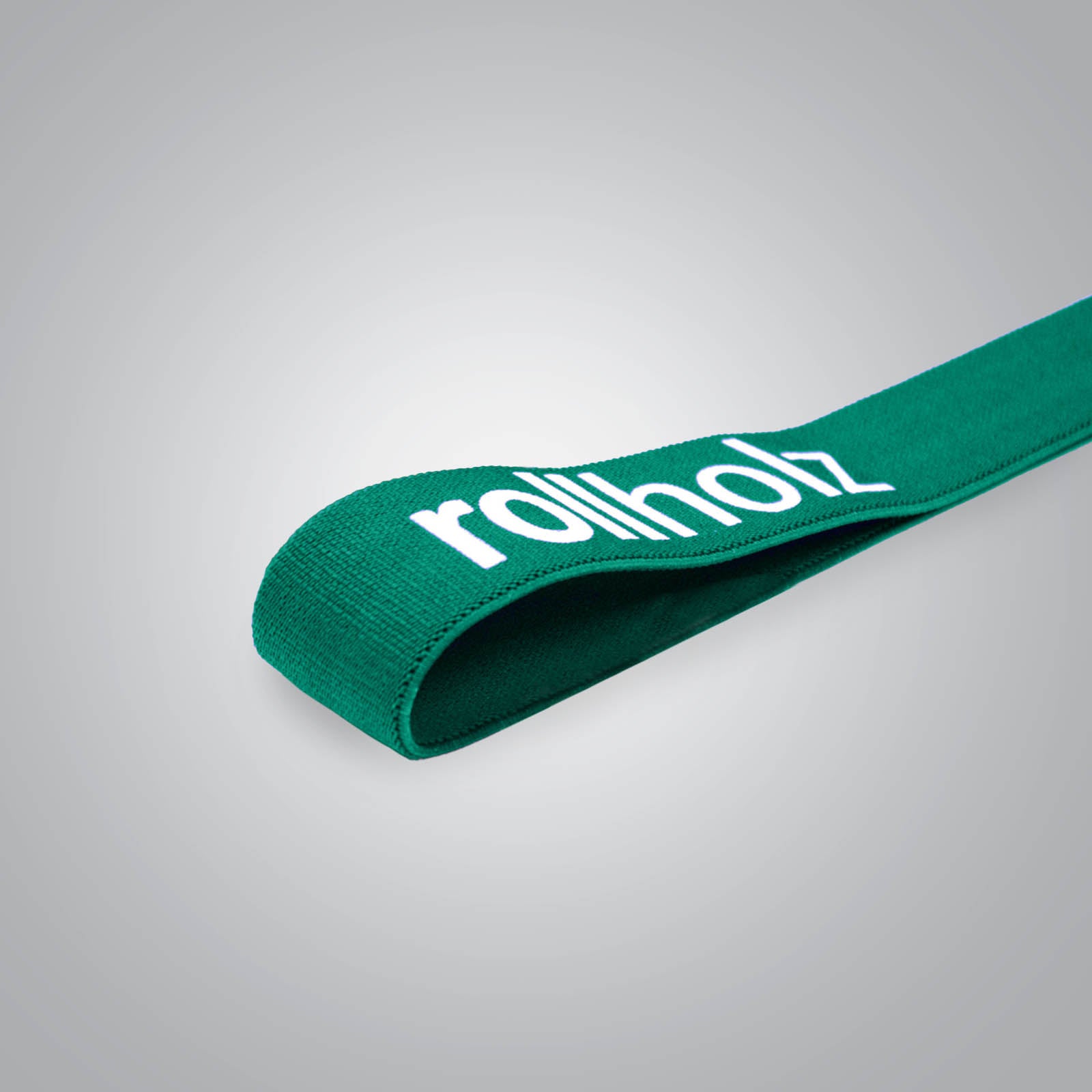
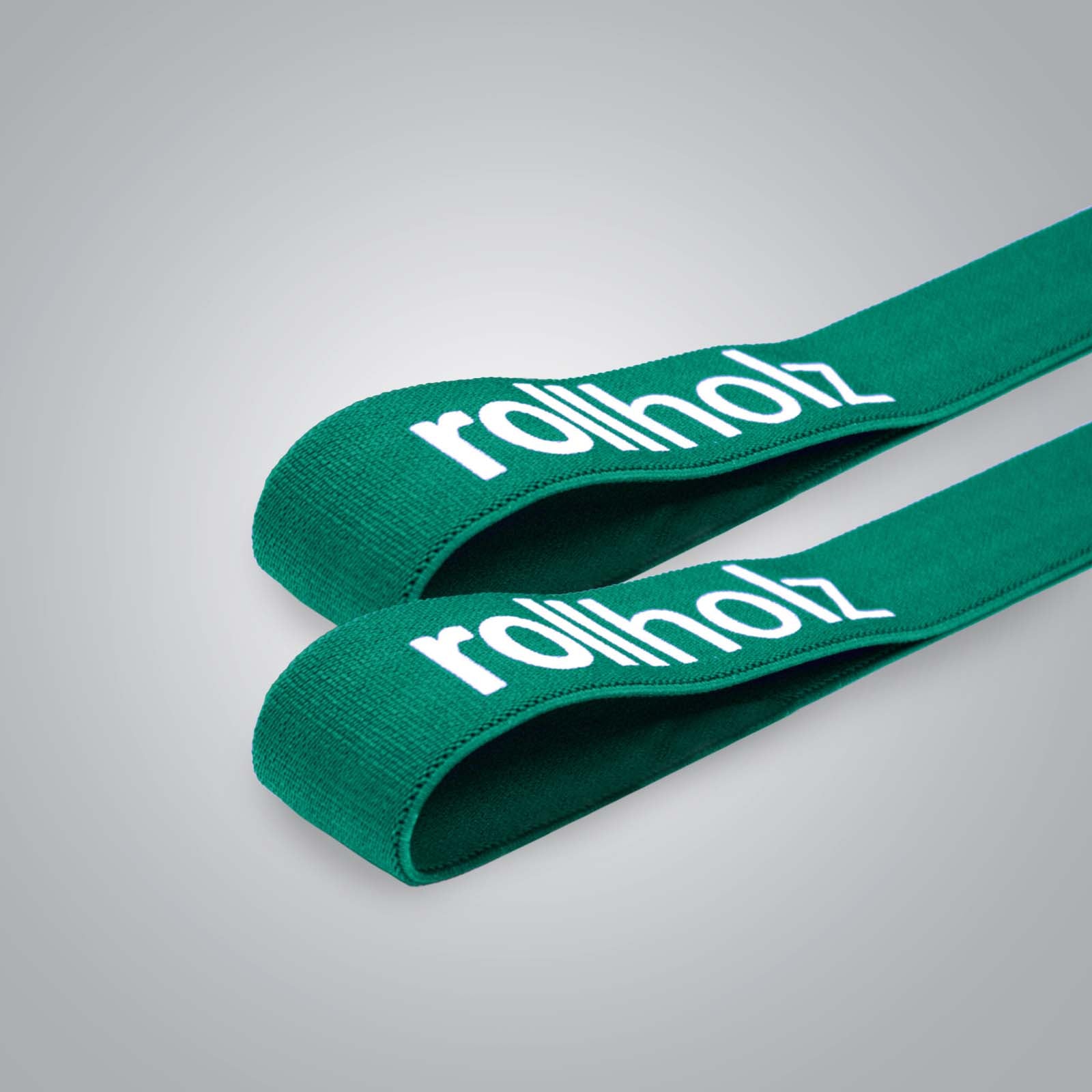
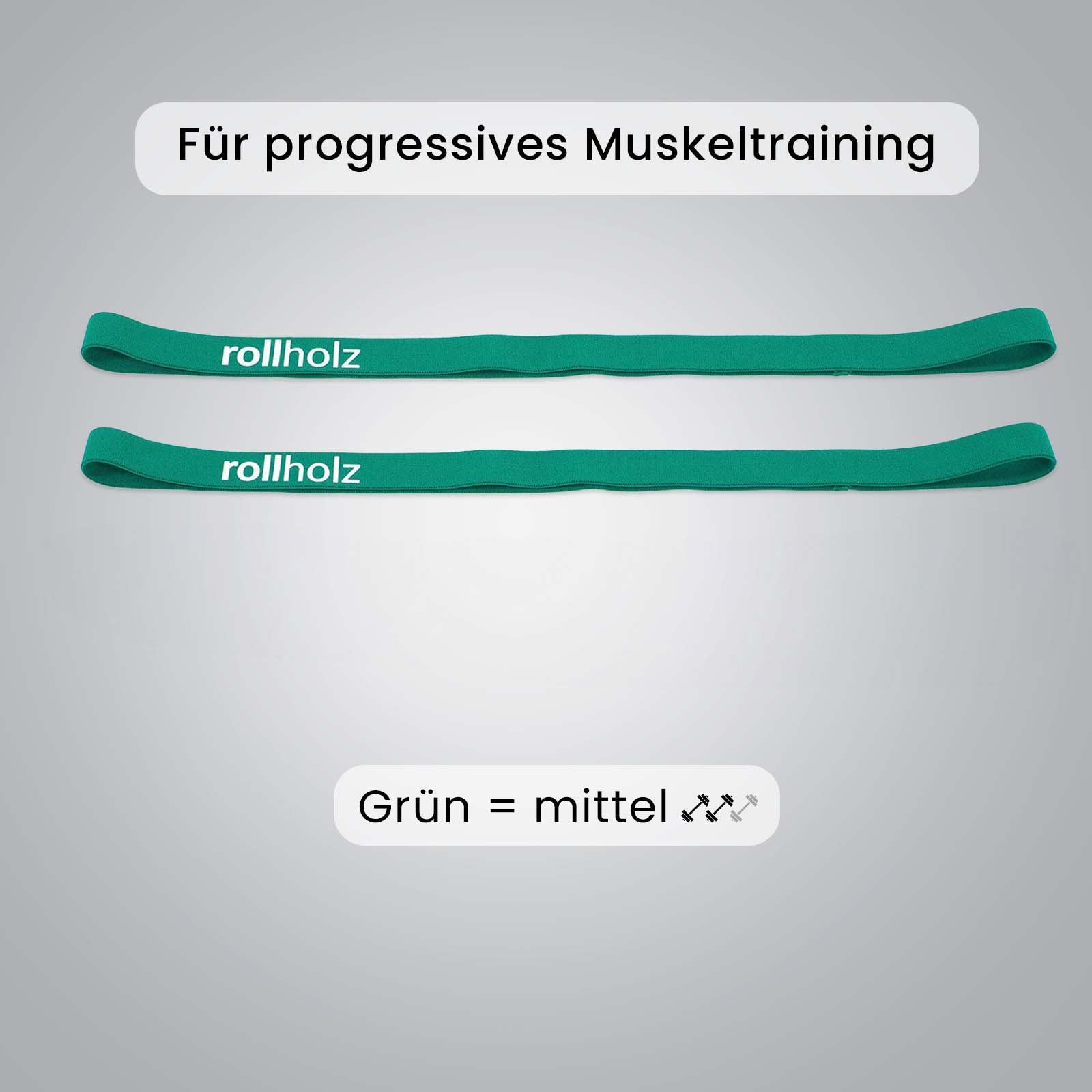
🔥 Production error on clearance – limited, only while stocks last
Green resistance band – production error (medium strength) – reduced
⚠️ Production error – limited offer: These bands were mistakenly dyed green instead of blue, but they do match the medium resistance level. Visually and functionally flawless – only the colour doesn't match our regular labelling. That's why we're offering them to you at a reduced price.
💡 Tip for the 2-band set: If you use two bands at once as pull-up assistance, the combined resistance is roughly equivalent to a single black band (heavy) – ideal if you need more support but don't have a black band (yet).
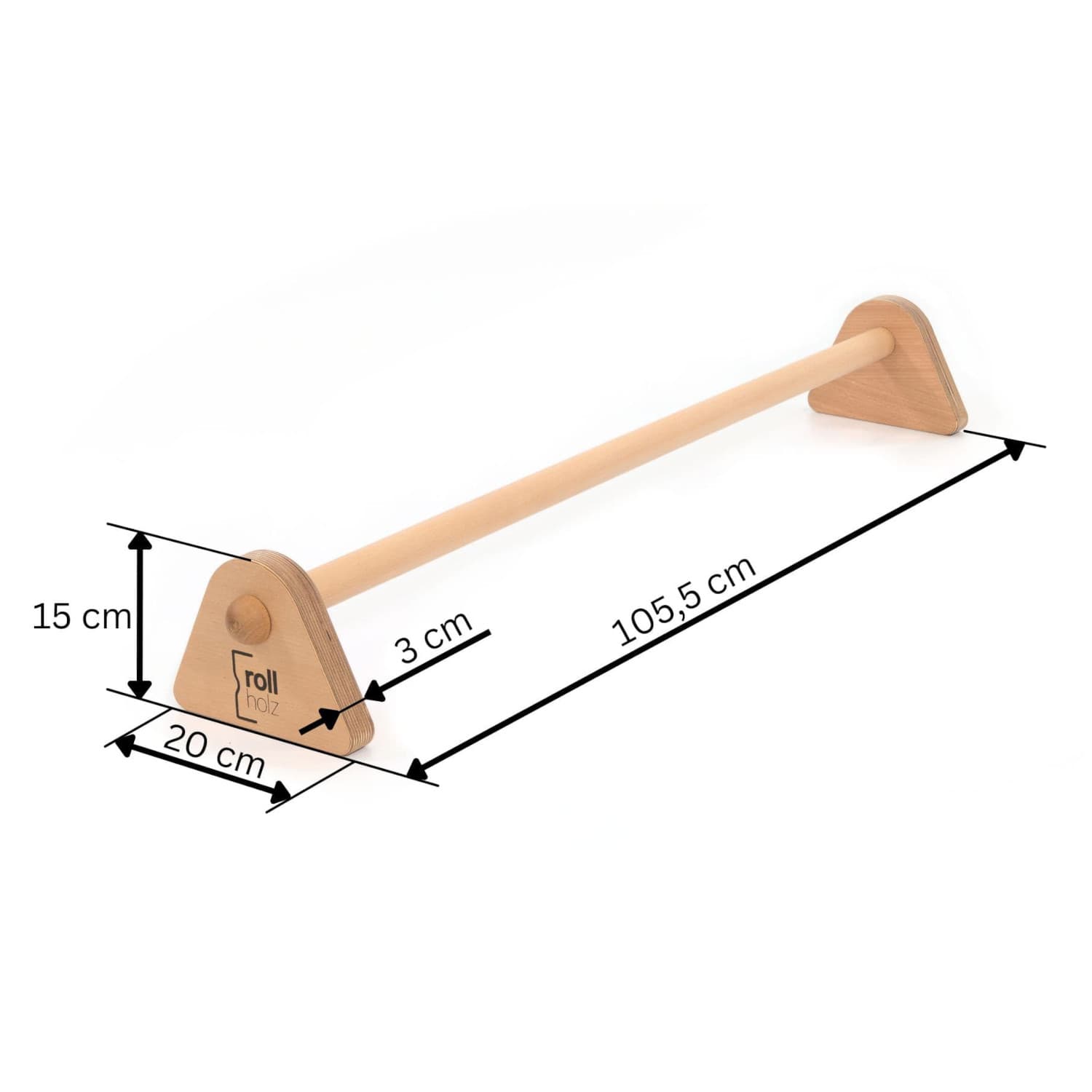
Need a different length?
No problem – we adjust the bar to the length you need, free of charge. Measure from the outer edge of one foot to the outer edge of the other (105.5 cm here) and tell us the measurement you want. We can make the bar up to 10 cm longer than standard, or shorter – whatever your doorway calls for. Just send us a short message before you order and we'll sort it out.
Request a custom length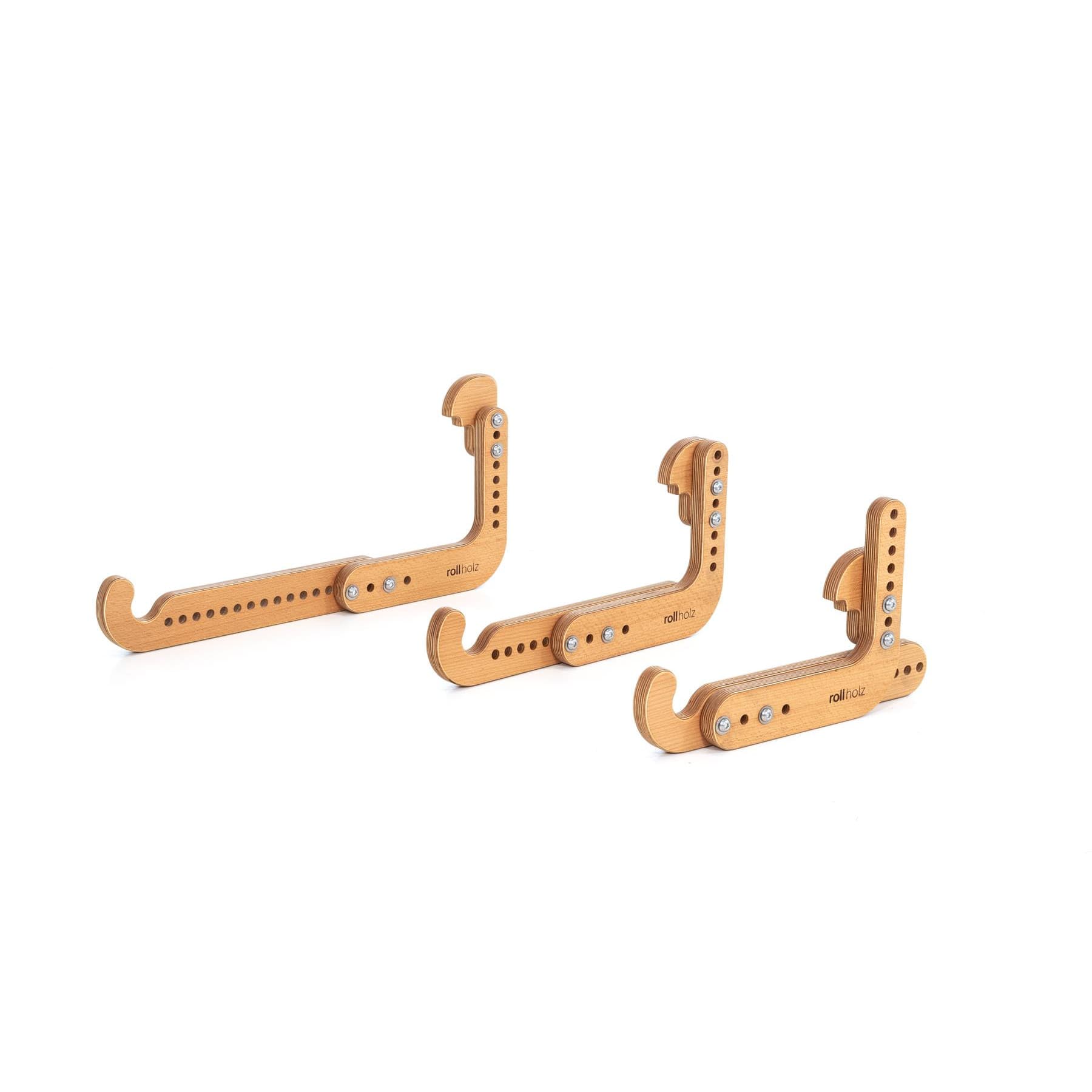
Fitting the hooks to the door frame correctly
- Hold the smallest hook piece against the top bearing surface of the door frame.
- Add the middle hook piece and pick the pair of holes that leaves as little gap as possible to the underside of the door frame. Join the two parts with the bolts, washers and screws supplied.
- Hold the pull-up bar in place (a second pair of hands helps here). Now pick the pair of holes for the third hook piece so that the hook slots into the pull-up bar easily.
- Don't go for the shortest possible setting – go one row of holes longer. That makes hooking the bar in and out easier later on.
- Then build the second hook exactly the same way. Both hooks then hang at the same height and the bar sits straight in the door frame.
Questions about the product
Will the pull-up bar fit my door frame?
Will the pull-up bar fit my door frame?
Three things to check first:
1. Does your door frame have a lip at the top? The hook has to be able to sit on top of the door frame – it needs an overhang of at least 5 mm.
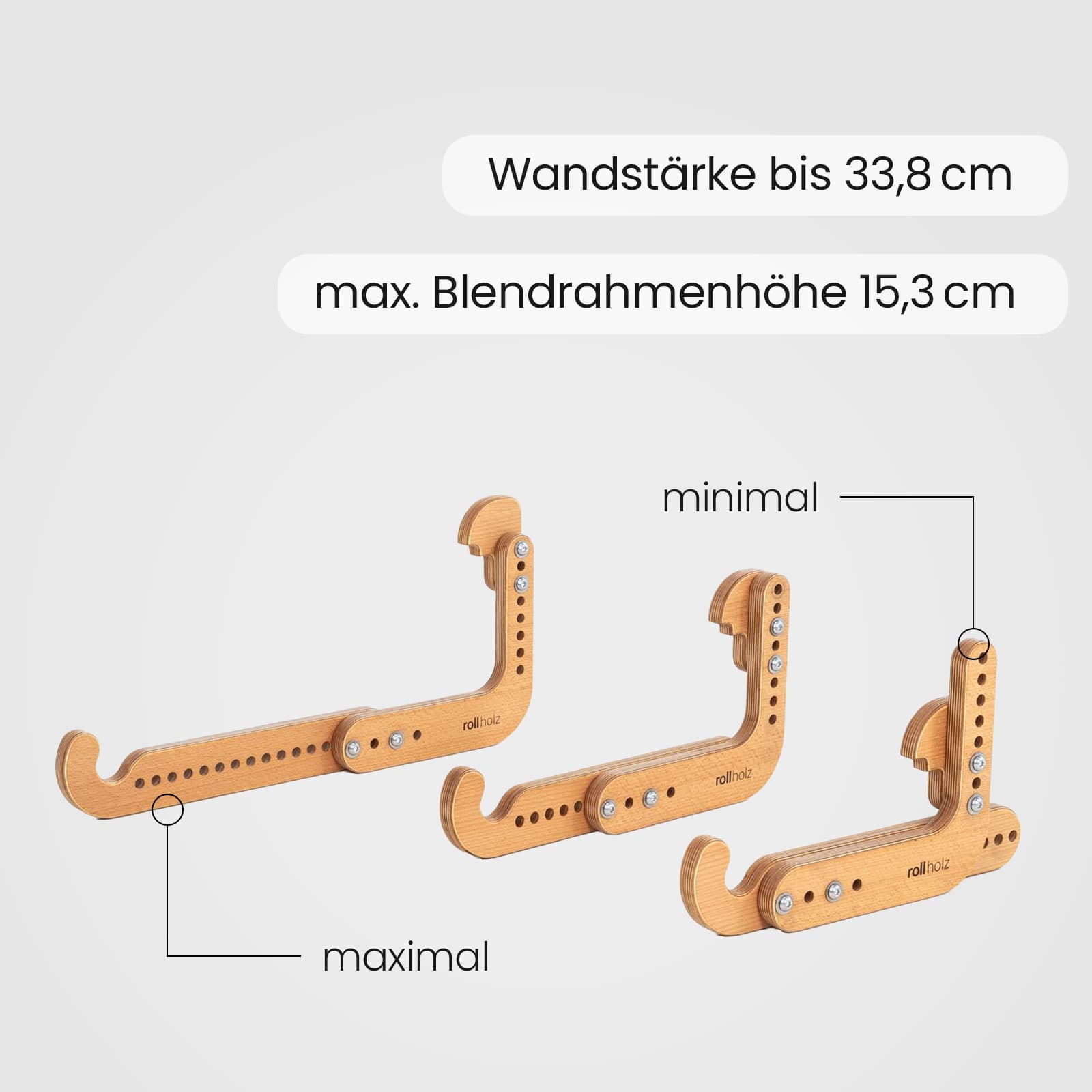
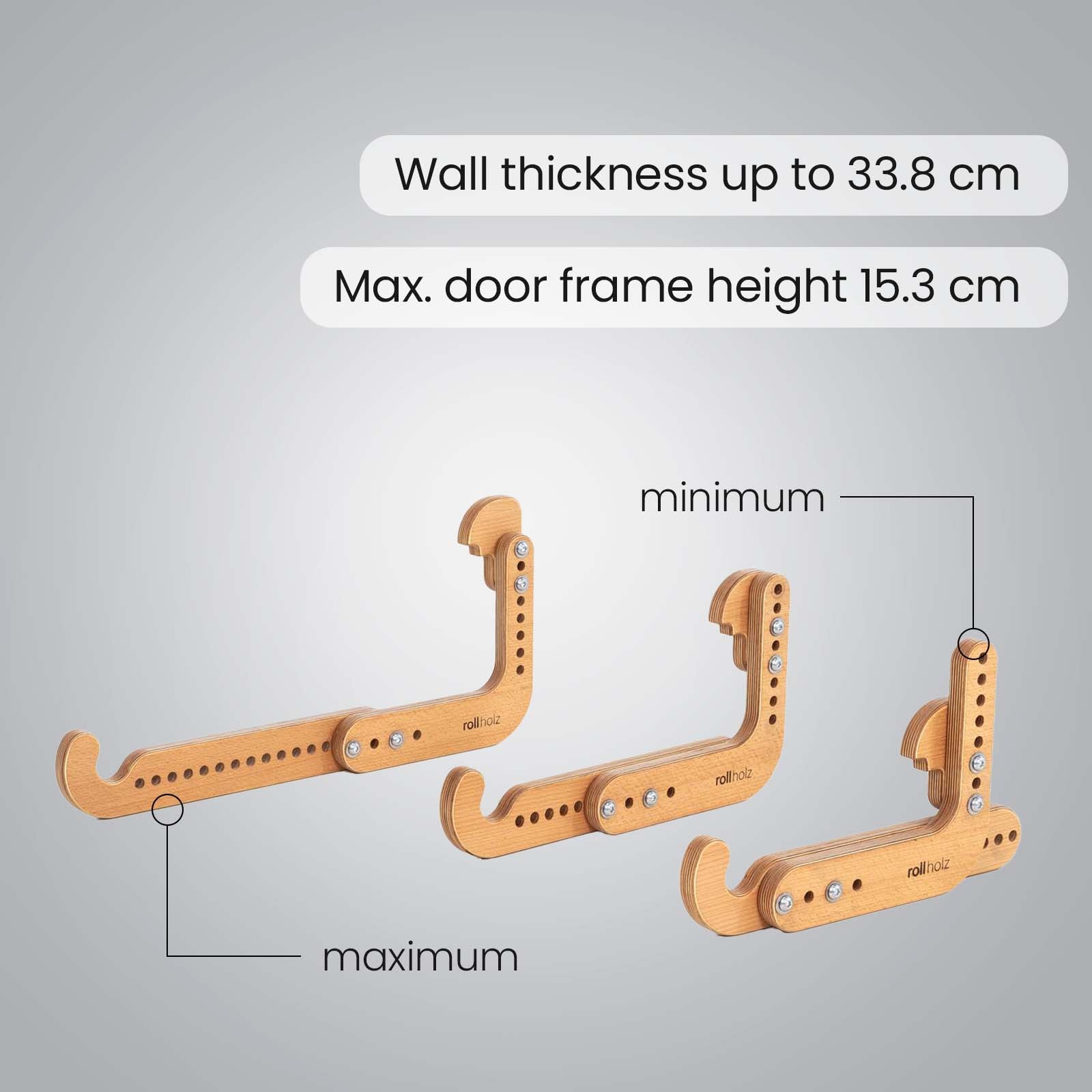
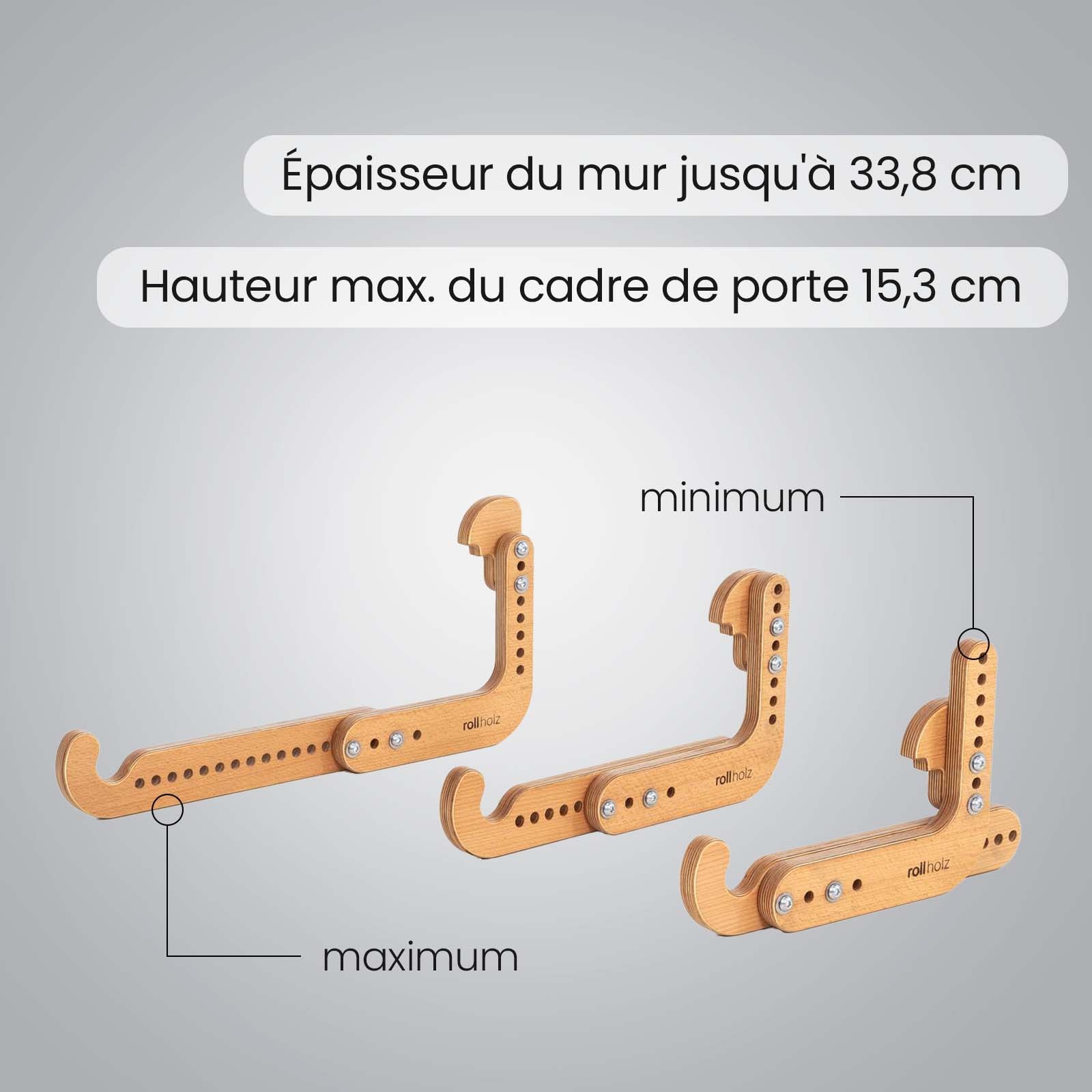
2. How tall is your door frame trim? The hook has to reach around the top of the frame. On the fixed-hook version the trim can be at most 8 cm tall; on the adjustable-hook version up to 15.3 cm – which covers many period door frames too.
3. Does the bar fit onto the wall around the door frame? If your door frame is narrower than 99 cm, the bar fits without trouble. If it's wider, there are two options: either the bar rests directly on the door frame, or we make you a bar up to 10 cm longer. And if you need a shorter bar, no problem – just tell us the length you want from outer edge to outer edge and we'll adjust it free of charge.
Still not sure? Just send us a photo of your door frame on WhatsApp, Telegram or Signal – we'll tell you whether the bar fits. And even if not every measurement lines up straight away: often the bar can still be adapted so that it works for you.
What is the difference between the two pull-up bars?
What is the difference between the two pull-up bars?
The only difference is the hook. With the classic fixed-hook version you measure once: wall thickness minus the height of the frame trim gives you the hook length you need. With the adjustable hook you simply set the length in small steps – so it fits almost any door frame, which is especially handy with older period doors and their unusual dimensions. Apart from that, both bars are identical in quality, function and load capacity.
Is the pull-up bar safe – will it hold my weight?
Is the pull-up bar safe – will it hold my weight?
Yes, absolutely. The pull-up bar works on counter-pressure: the more weight you hang on it, the harder it presses against the door frame – much like a wedge. No screws, wall plugs or other fixings needed. The bar is built for bodyweight training and has been load-tested accordingly.
Will the pull-up bar damage my door frame or the wall?
Will the pull-up bar damage my door frame or the wall?
The bar needs no drilling and no screws – no tools, no wall plugs, no lasting damage to the door frame. Where the feet press against the wall, light marks can appear over time from pressure and friction. If you'd rather avoid that, just stick small felt pads under the contact points.
Do I have to take the pull-up bar down after every workout?
Do I have to take the pull-up bar down after every workout?
No, you can just leave it up – taking it down and putting it back takes only seconds, but plenty of people simply leave it in the doorway. One small side effect: while the bar is up, the door won't close – which is actually rather practical, because you keep seeing it and get reminded to knock out a few pull-ups.
Expert tips for your daily strength training
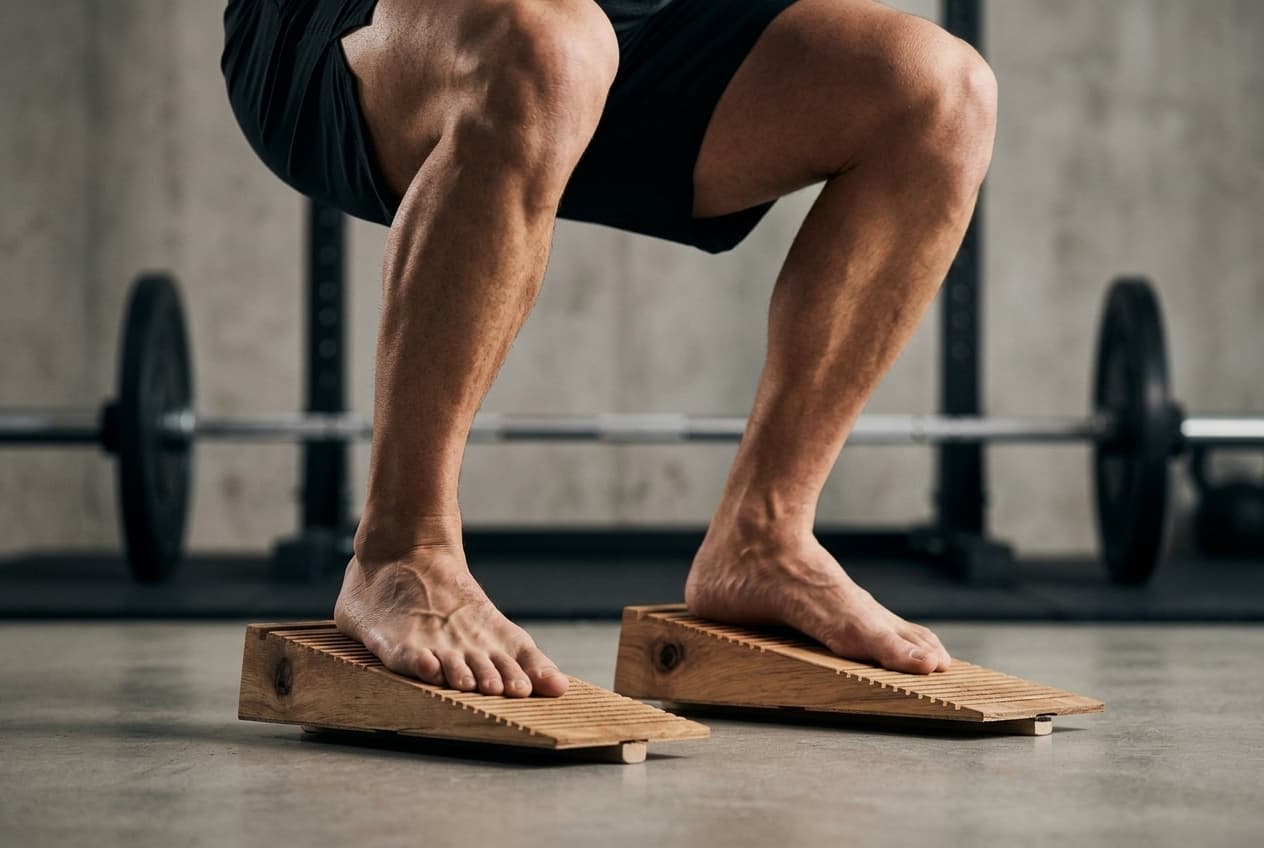
Foot Health & Squats: Stable Leg Alignment in Training
Every heavy squat and deadlift depends on your foundation: your feet. In the grand finale of our Science Guide series, we illuminate the biomechanics of foot health and axial stability. Learn how r...
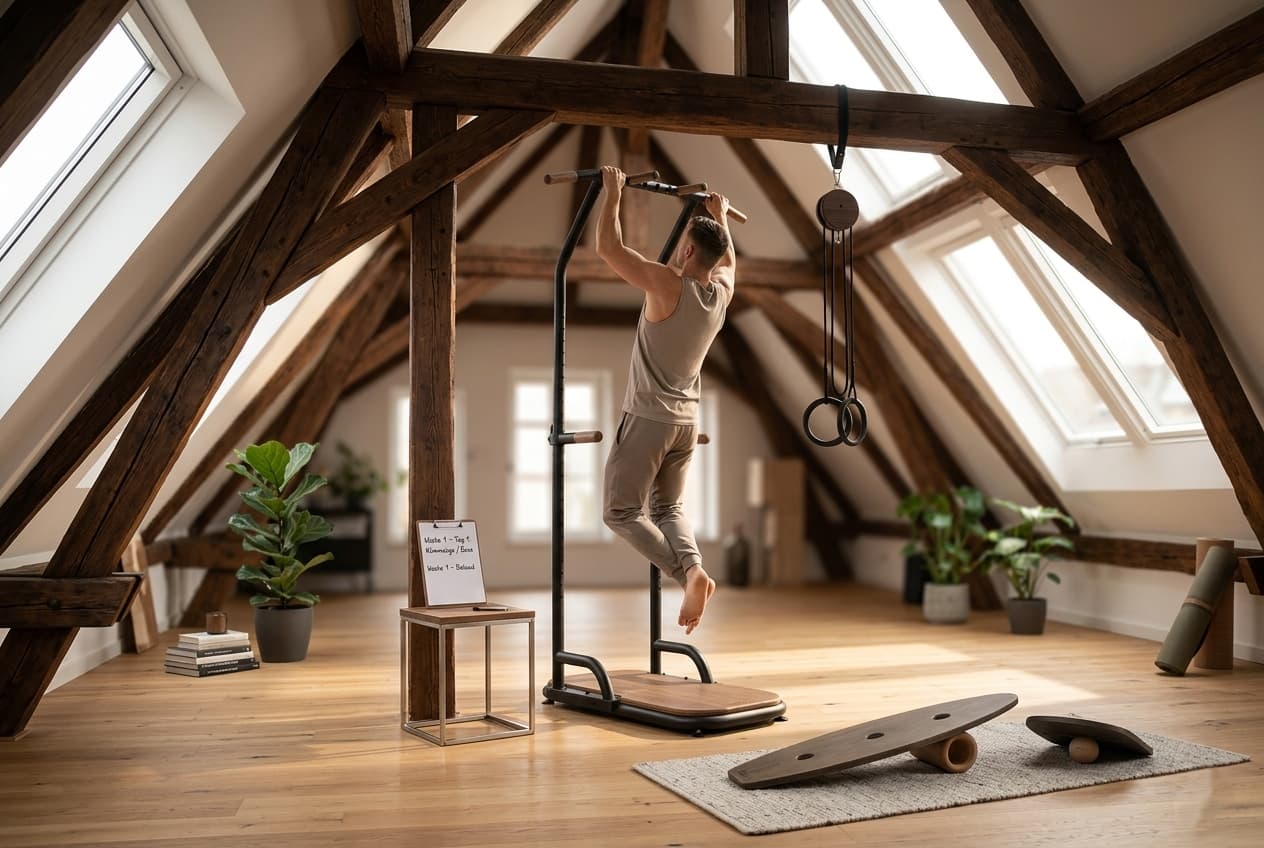
Training Plan for Your Home Gym: The Perfect Training Week
The best equipment is useless without the right structure. In part 4 of our Science Guide series, we show you how to scientifically plan your training week. Learn why the heaviest compound exercise...
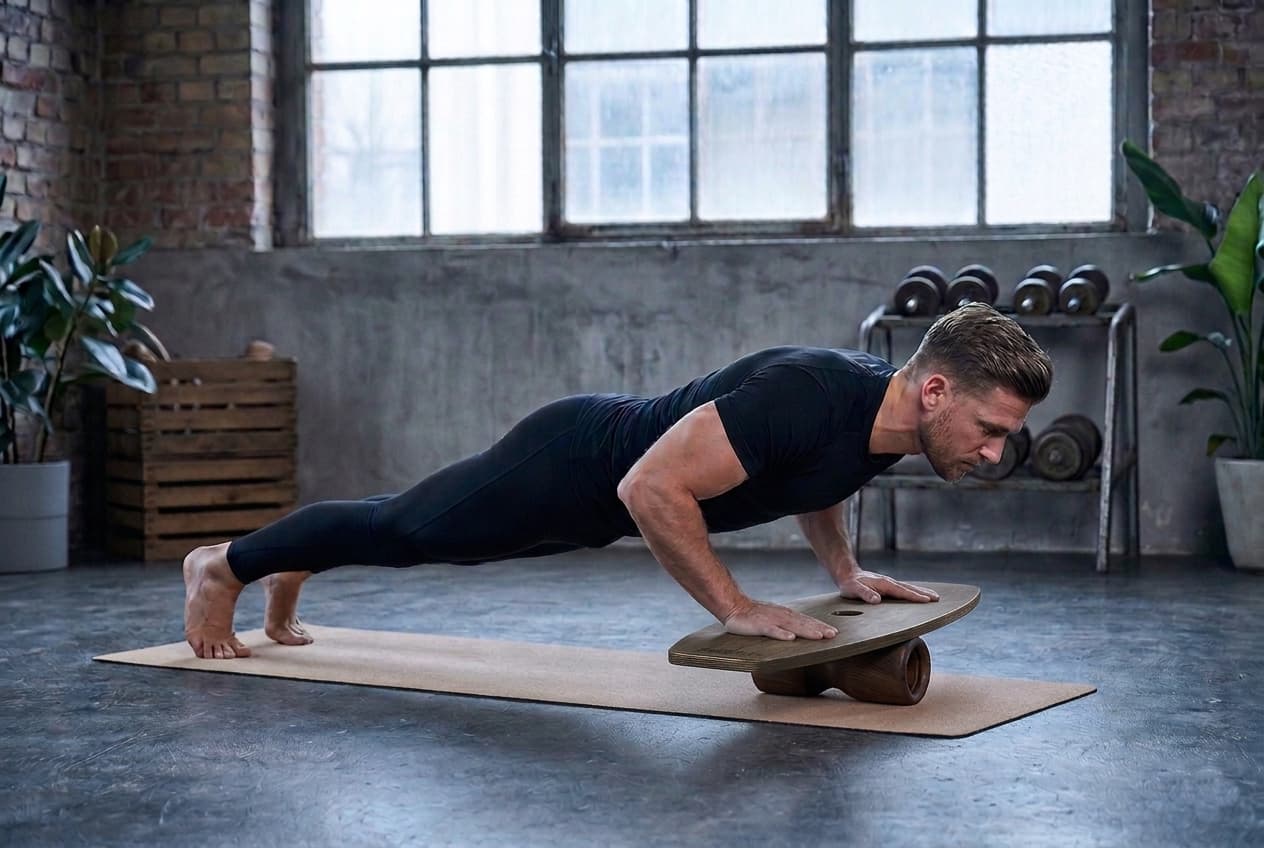
Advanced Core Training: Core Stability in Your Home Gym
A strong core is much more than a six-pack – it's your body's power transfer center. In part 3 of our Science Guide series, we focus on Advanced Core Training. Learn the difference between global m...
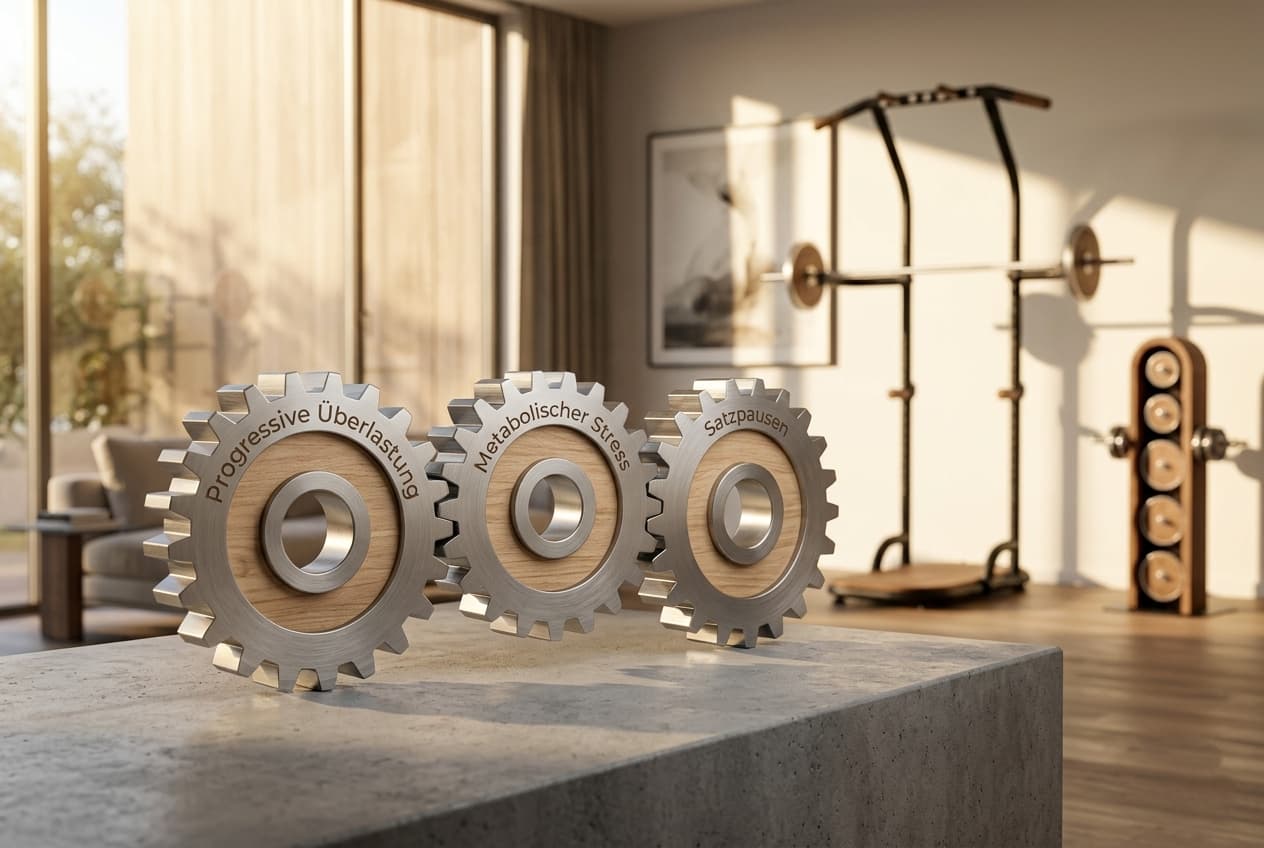
Muscle building scientifically controlled: Set breaks, reps, and stimuli in your home gym
The Screws for Success: How many repetitions yield maximum muscle growth? Why are short rest periods often a mistake? Learn how to scientifically and precisely control your training parameters in t...
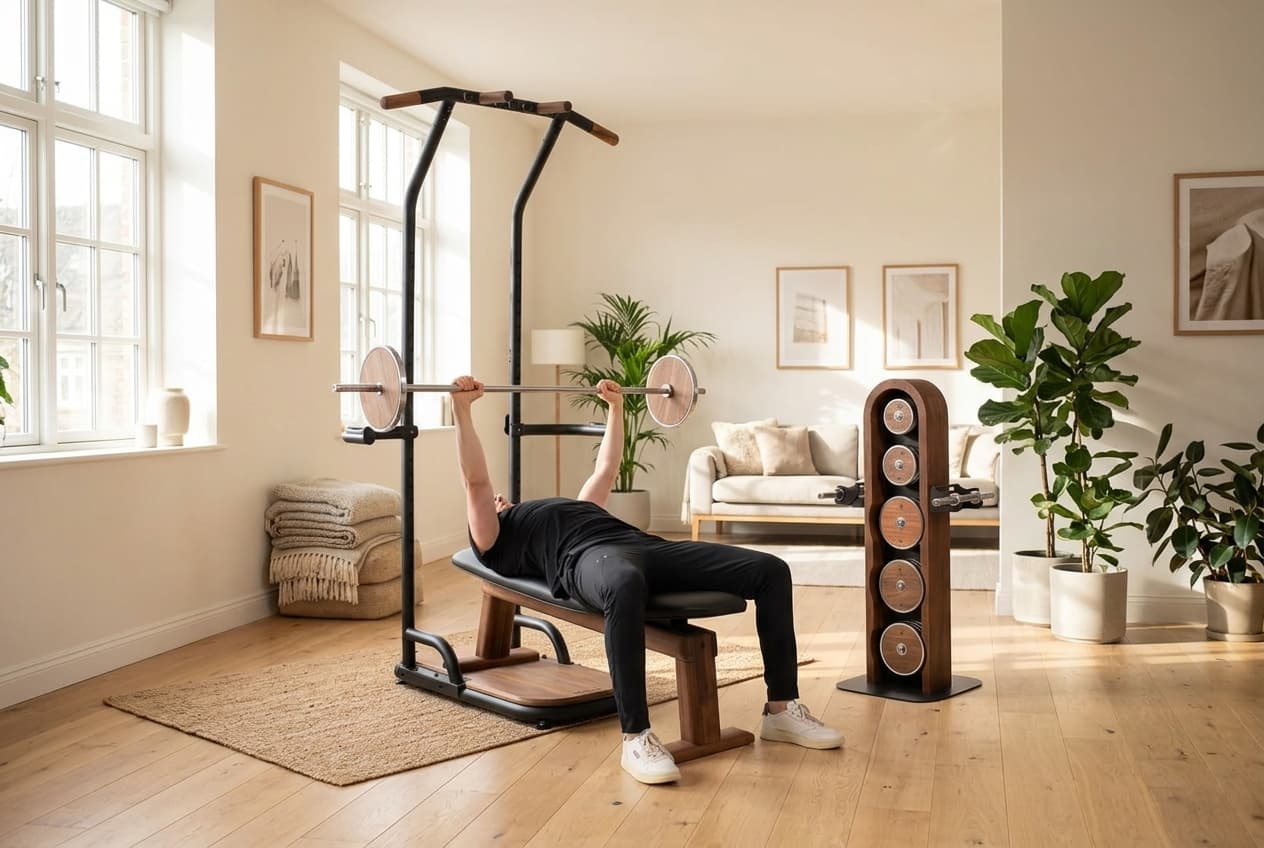
The Big Three for Your Home Gym: Why Compound Exercises Are the Foundation of True Strength
No more complicated equipment parks: Sports science shows that real muscle growth and maximum strength are based on a few fundamental movements. In part 1 of our new series, learn why the "big thre...
For sustainable training
You may also like