

Most people don't notice tension in their jaw muscles during the day – it often only becomes apparent at night when the jaw unconsciously clenches or the teeth grind together. This is frequently followed by a pulling sensation in the temporomandibular joint in the morning, sometimes even a dull feeling extending to the ear or temples.
In this article, we'll show you how this tension develops and what stretching and massage exercises you can use to counteract it.
Why jaw muscles tense up so easily
The masticatory muscles are among the most heavily used muscle groups in the body – and are particularly sensitive to stress. For many people, tension and inner restlessness cause the jaw to unconsciously tense or clench, often without them even realizing it. At night, when conscious control is absent, this tension manifests in some as teeth grinding.
Since the temporomandibular joint is located directly in front of the ear, tension in this area can also be perceived as a feeling of pressure extending to the ear or temples – an indication of the close proximity of the two structures, but nothing more.
Stretching exercises for the jaw muscles

Jaw stretch with the hand
Tilt your head slightly back and place your hand around your chin, fingers straight, thumb extended at a right angle. Gently pull the lower jaw downwards until you feel a clear but comfortable stretch in the jaw muscles. Hold for 20-30 seconds, breathing calmly.
Side jaw stretch
From the same starting position, gently push the lower jaw to the side instead of pulling it down. This stretches the jaw muscles from a different angle. Hold for 20-30 seconds per side.
Massage of the jaw and cheek muscles

Self-massage with a fascia ball
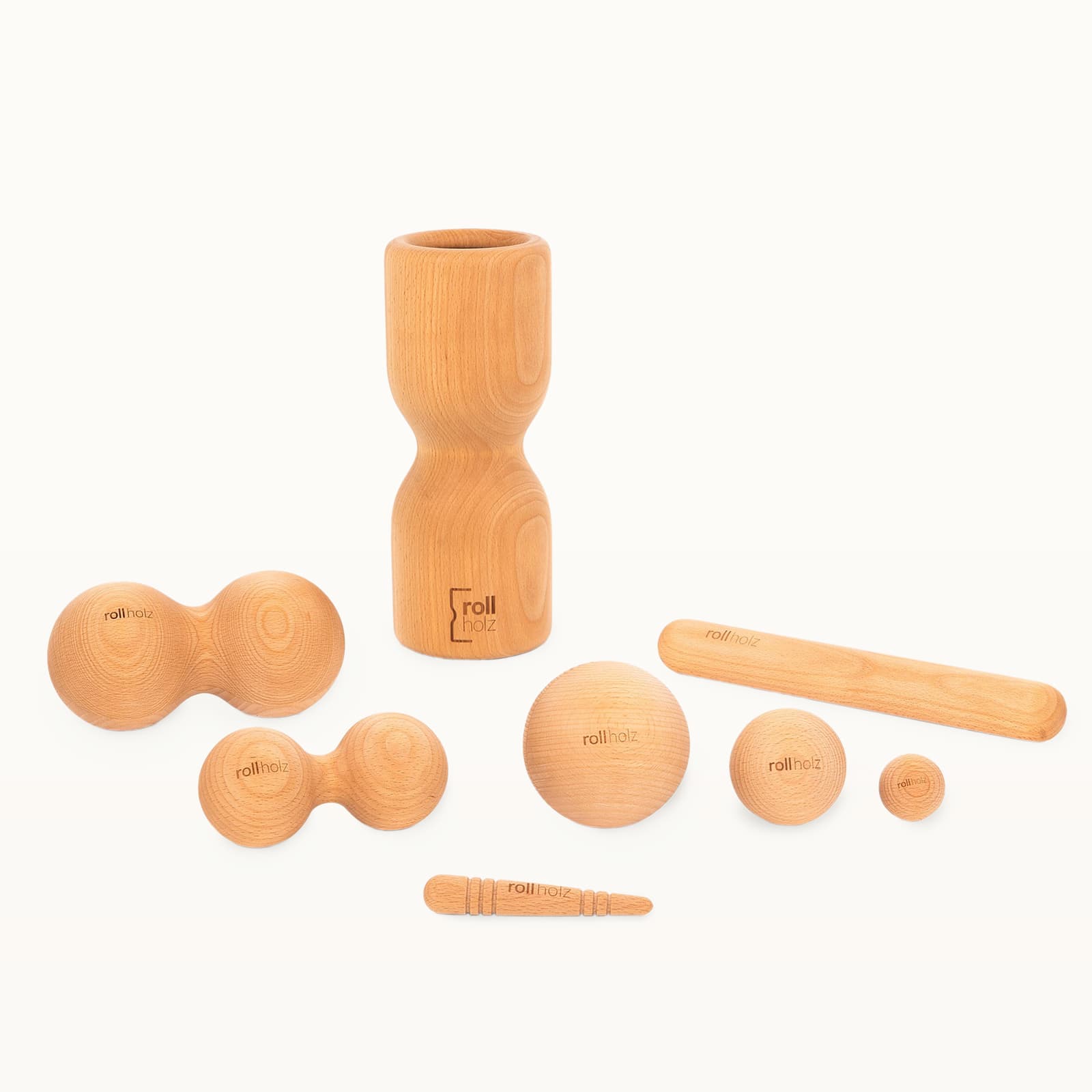
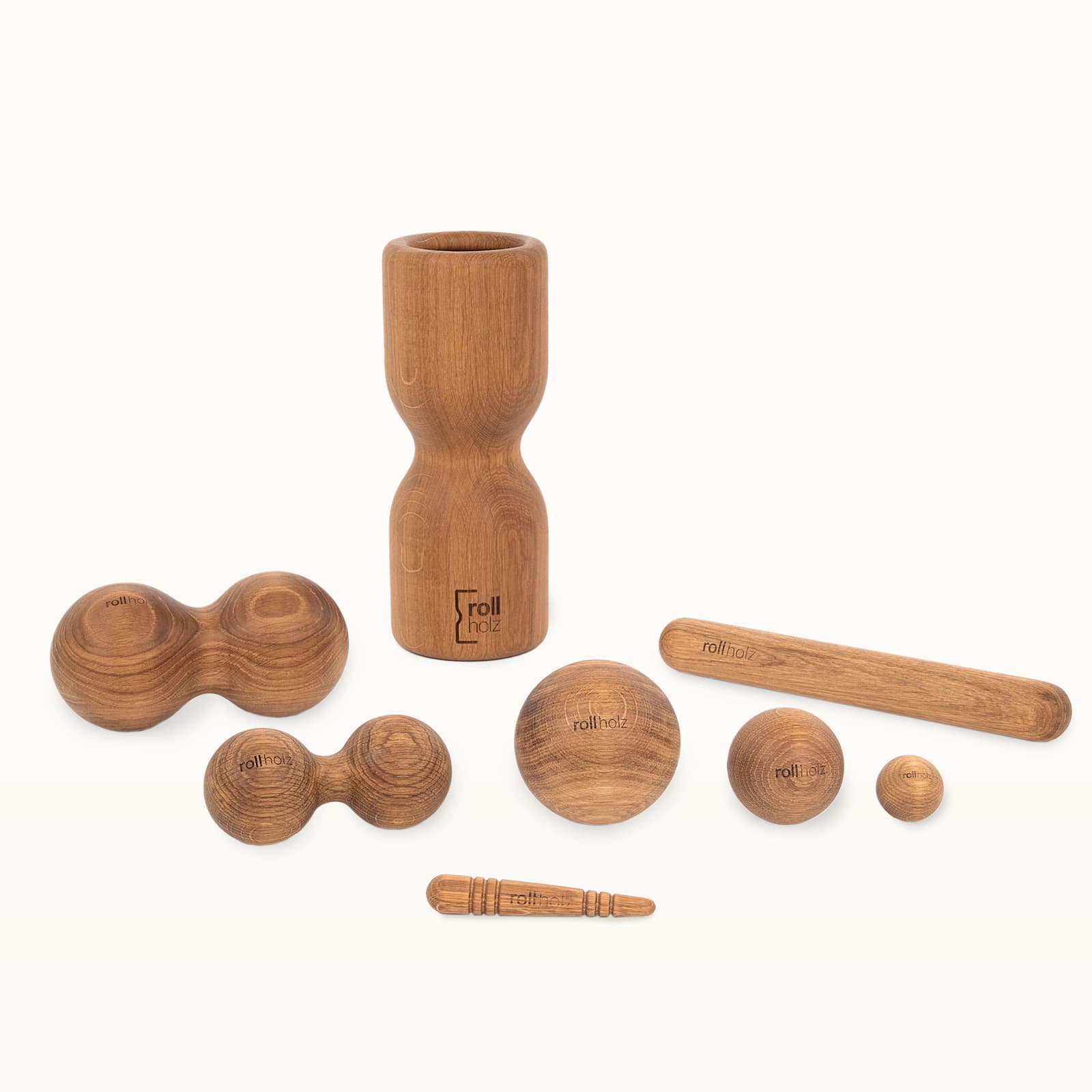
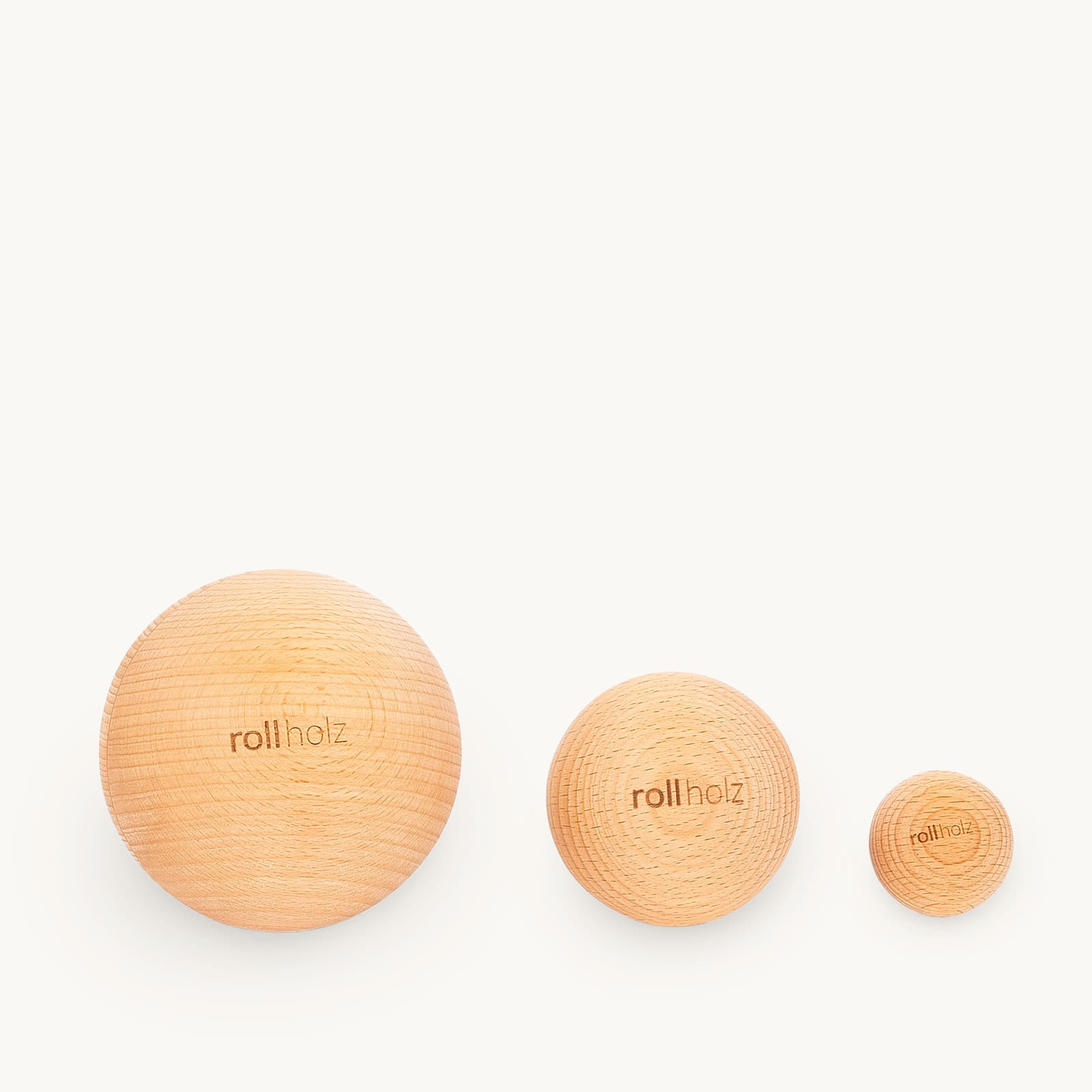
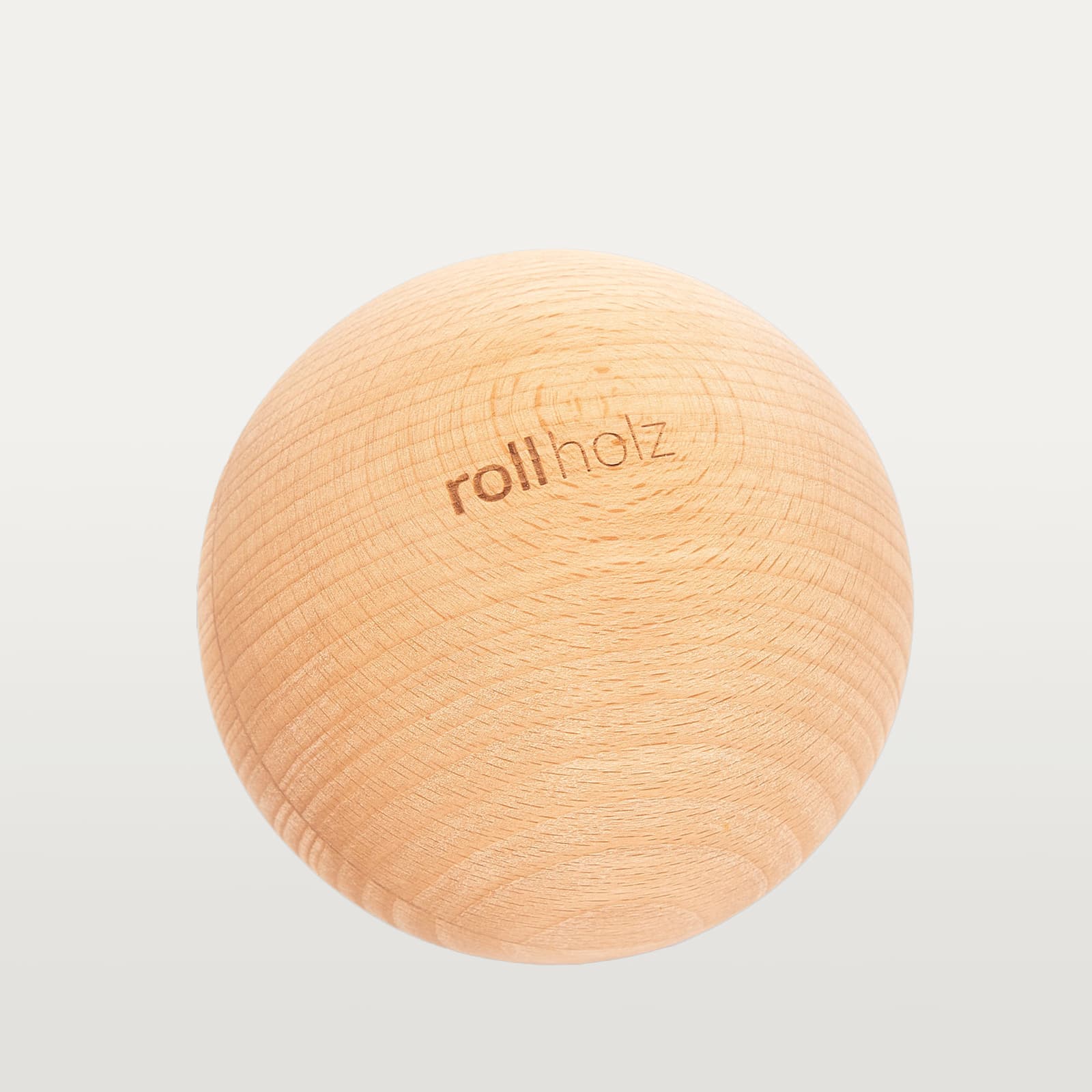
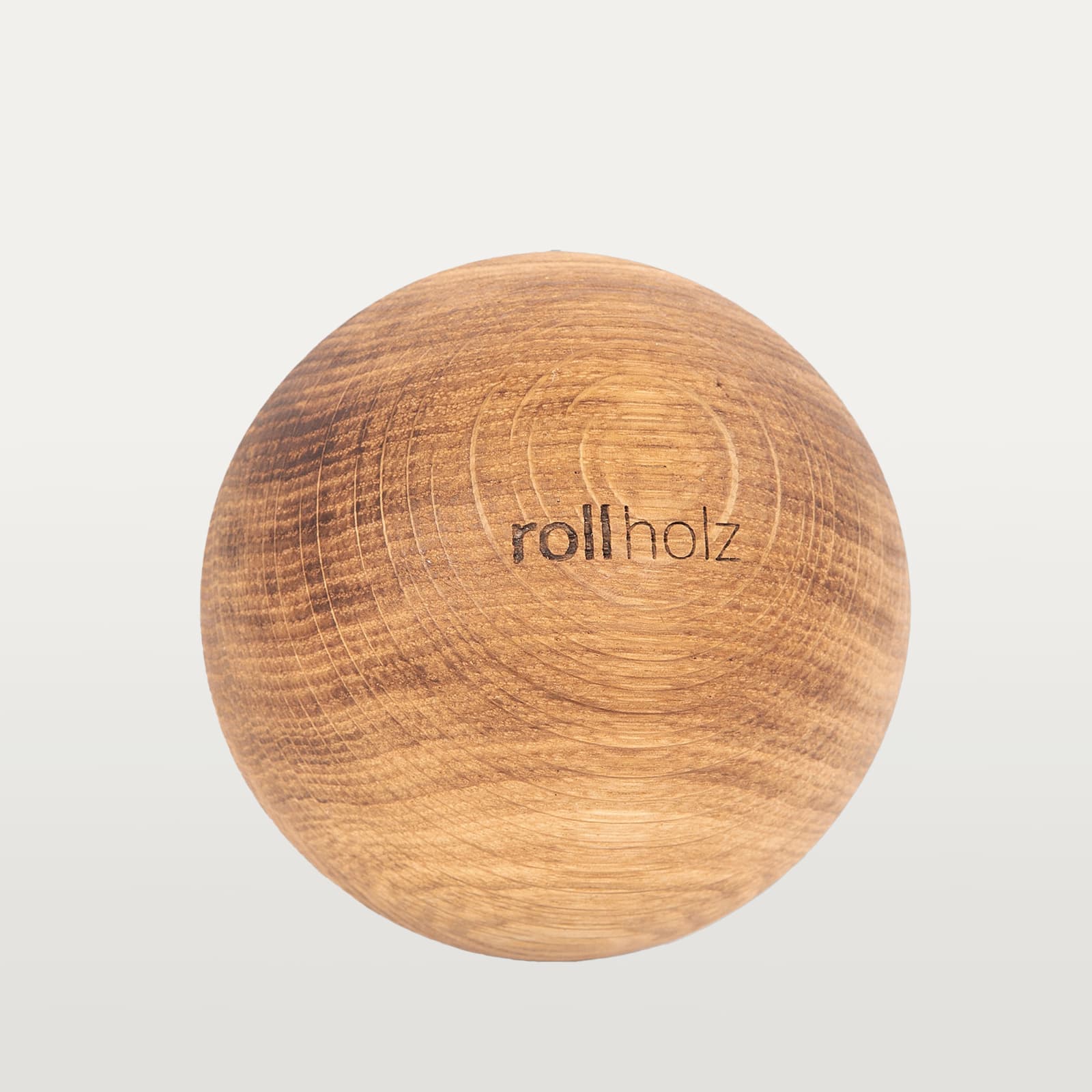
For a broader massage of the cheek and jaw area, a small fascia ball (4 cm) is suitable. Guide it with gentle pressure in small, circular movements over the cheek area, directly above the jaw muscles. The movement should always remain gentle – facial muscles are significantly more sensitive than, for example, back muscles.

Punctual massage with a trigger pen
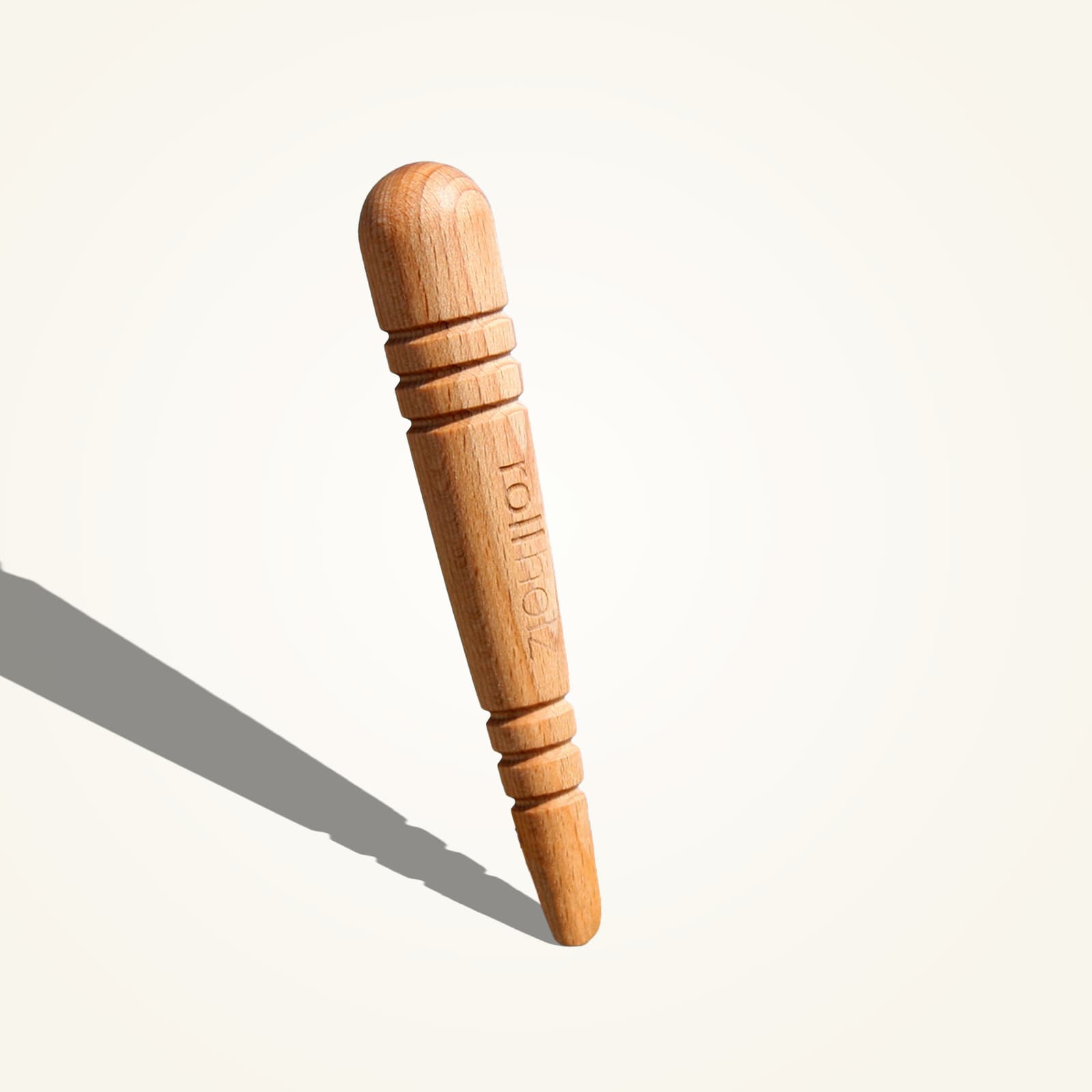
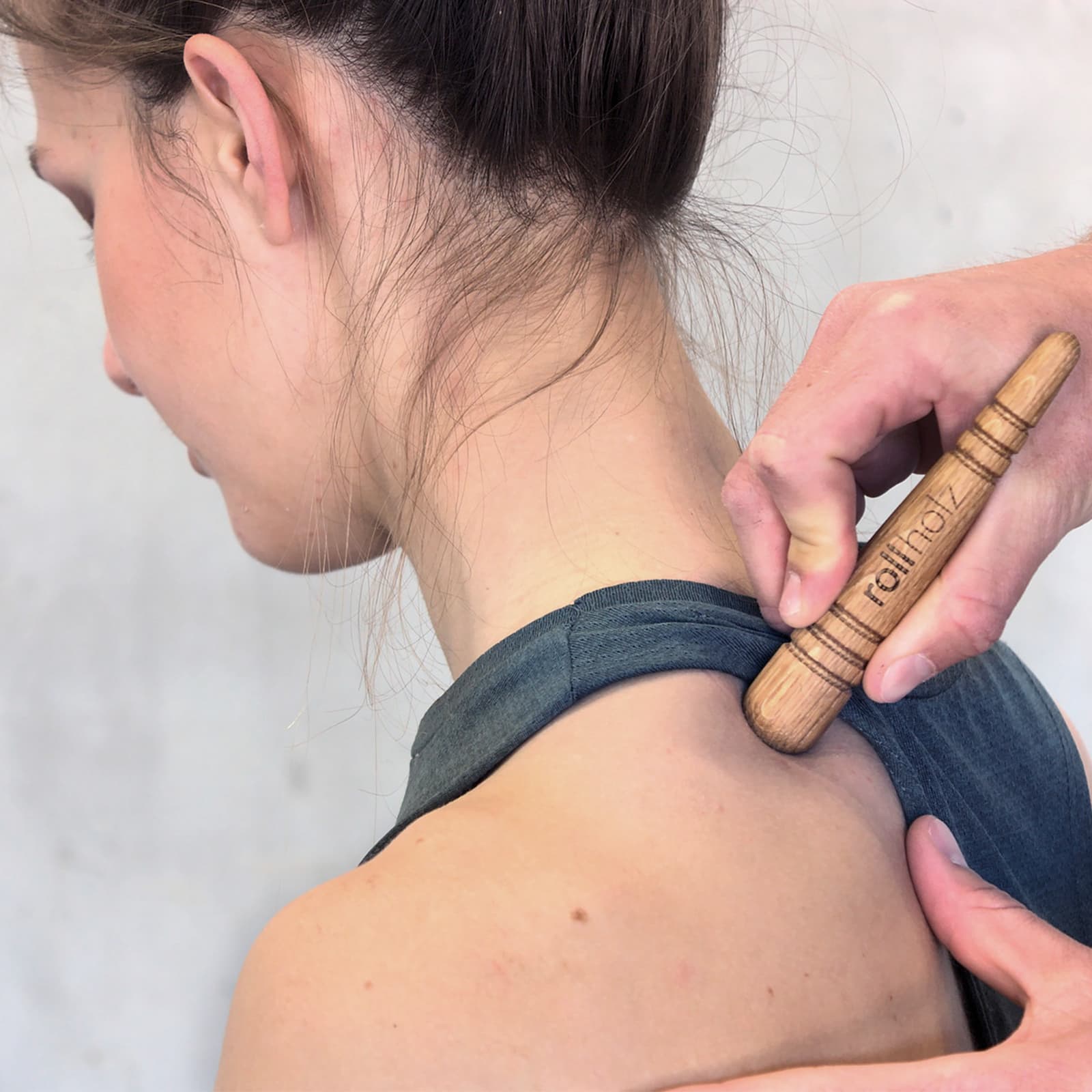
For more targeted points, such as the angle of the jaw (where the upper and lower jaws meet), the trigger pen is suitable. Apply it with light, controlled pressure and hold the position for a few seconds, rather than rubbing or rolling.
Relaxation routine before bedtime
Since many jaw tensions only become noticeable at night due to teeth grinding, it's worthwhile to consciously incorporate the exercises shown into a short evening routine – for example, directly before going to bed. This signals to the body to release the day's tension before unconscious control ceases at night.
When you should see a dentist
The exercises shown are suitable for everyday, muscle-related tension. You should seek dental advice if you experience the following signs:
Visible wear or damage to the teeth. Persistent or severe pain in the temporomandibular joint. A jaw that can only be opened with limited range. Symptoms that do not subside after several weeks despite the exercises. A dentist can also fit a night guard to protect the teeth from nightly pressure – this does not replace the exercises but complements them effectively.
Conclusion
Jaw tension usually develops gradually and is often only noticed by its nighttime consequences. With regular stretching and massage exercises, ideally as a fixed evening routine, the tension in the jaw muscles can be significantly reduced – although this does not replace a dental examination for persistent symptoms.





Leave a comment
This site is protected by hCaptcha and the hCaptcha Privacy Policy and Terms of Service apply.