

The shoulder is our most mobile joint – and that's precisely what makes it vulnerable. Unlike the hip, it is almost exclusively stabilized by muscles, primarily the rotator cuff, a group of four small muscles around the shoulder joint. Hours of sitting at a desk, one-sided movement patterns in daily life, or overhead work quickly throw this system out of balance.
Almost everyone knows the result: a pulling sensation in the shoulder and neck area that can spread to the shoulder blade or upper arm. In this article, we show you how these tensions arise and what exercises you can do to counteract them – from mobilization to stretching and targeted strengthening.
Why the shoulder is so prone to tension
The shoulder, neck, and upper back are closely connected by muscles. If one area is constantly overloaded or not moved enough, neighboring muscle groups compensate – they become additionally tense. A vicious circle develops: the tension worsens blood circulation, the tissue hardens further, and mobility decreases.
The rotator cuff is particularly often affected. If it is too weak or imbalanced, the surrounding muscles have to do more stabilizing work than intended – a breeding ground for exactly the tensions we want to relieve here.
The good news: This cycle can be broken with a combination of mobilization, targeted stretching, and strengthening.
Mobilization: Getting the shoulder moving
Before you stretch or strengthen, it helps to gently mobilize the joint. This stimulates blood circulation and prepares the muscles for the following exercises.

Pendulum exercise
Support yourself with one hand on a table edge or chair back, leaning your upper body slightly forward. Let your free arm hang loosely and make small, circular movements – first clockwise, then counter-clockwise. About 30 seconds per direction, without any active muscle tension in the arm. For a little more traction in the joint, you can hold a light dumbbell or a filled water bottle (0.5-1 kg) in your hand – gravity will then do the work; you still don't have to use your own muscle power.
Shoulder circles
Standing or sitting, move your shoulders in large, slow circles backward – consciously moving your shoulder blades along. 10 repetitions, then change direction.
Fascia roller for chest and upper back
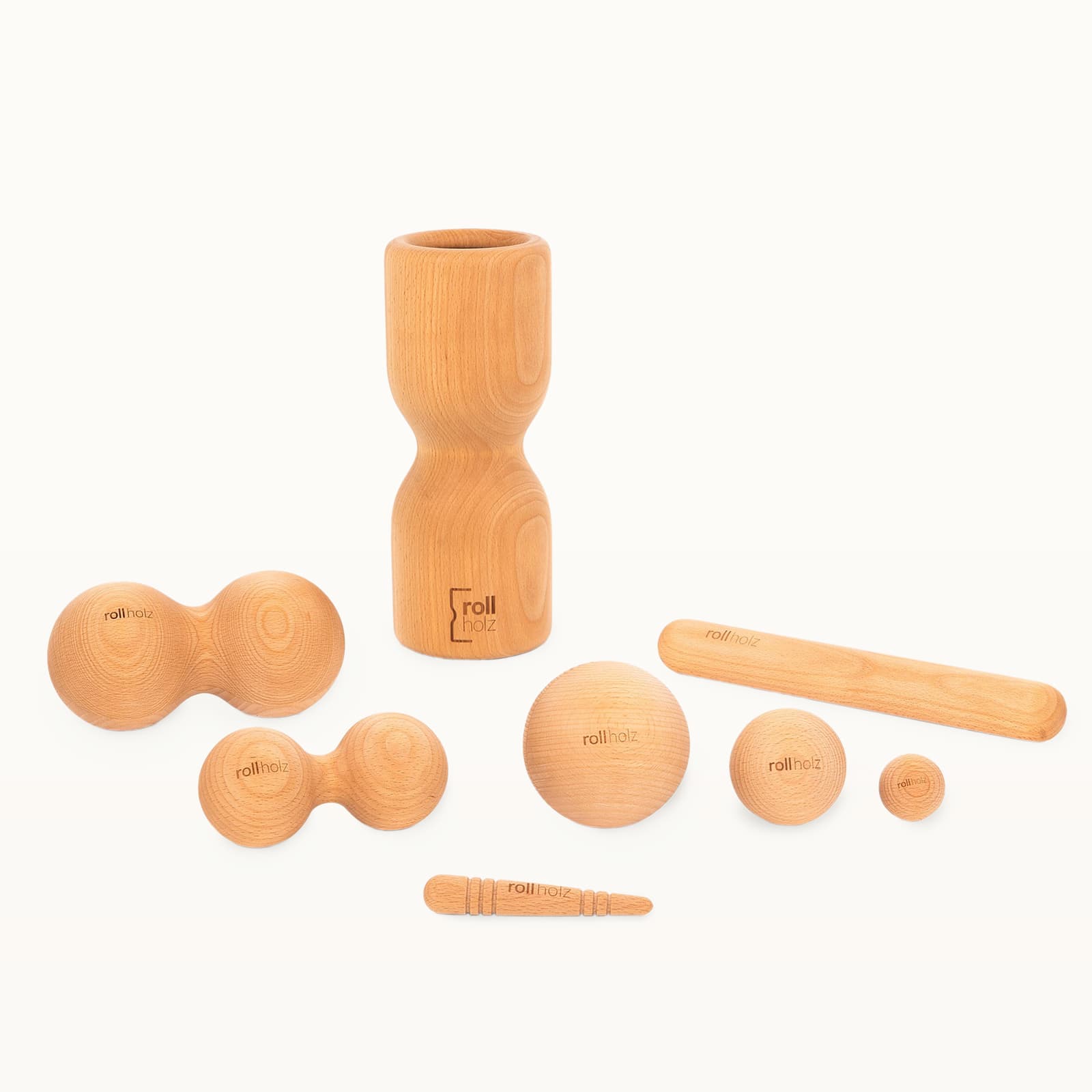
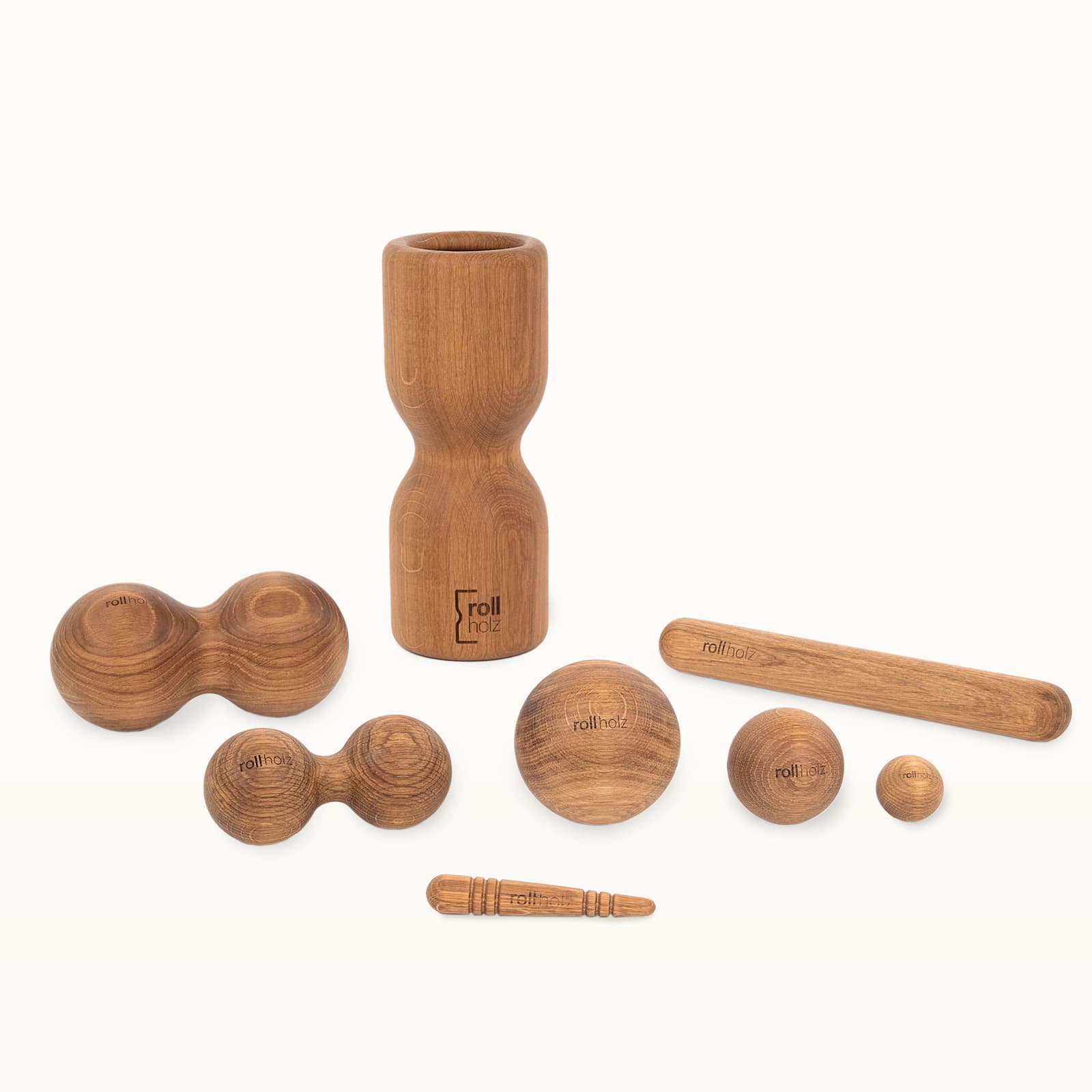
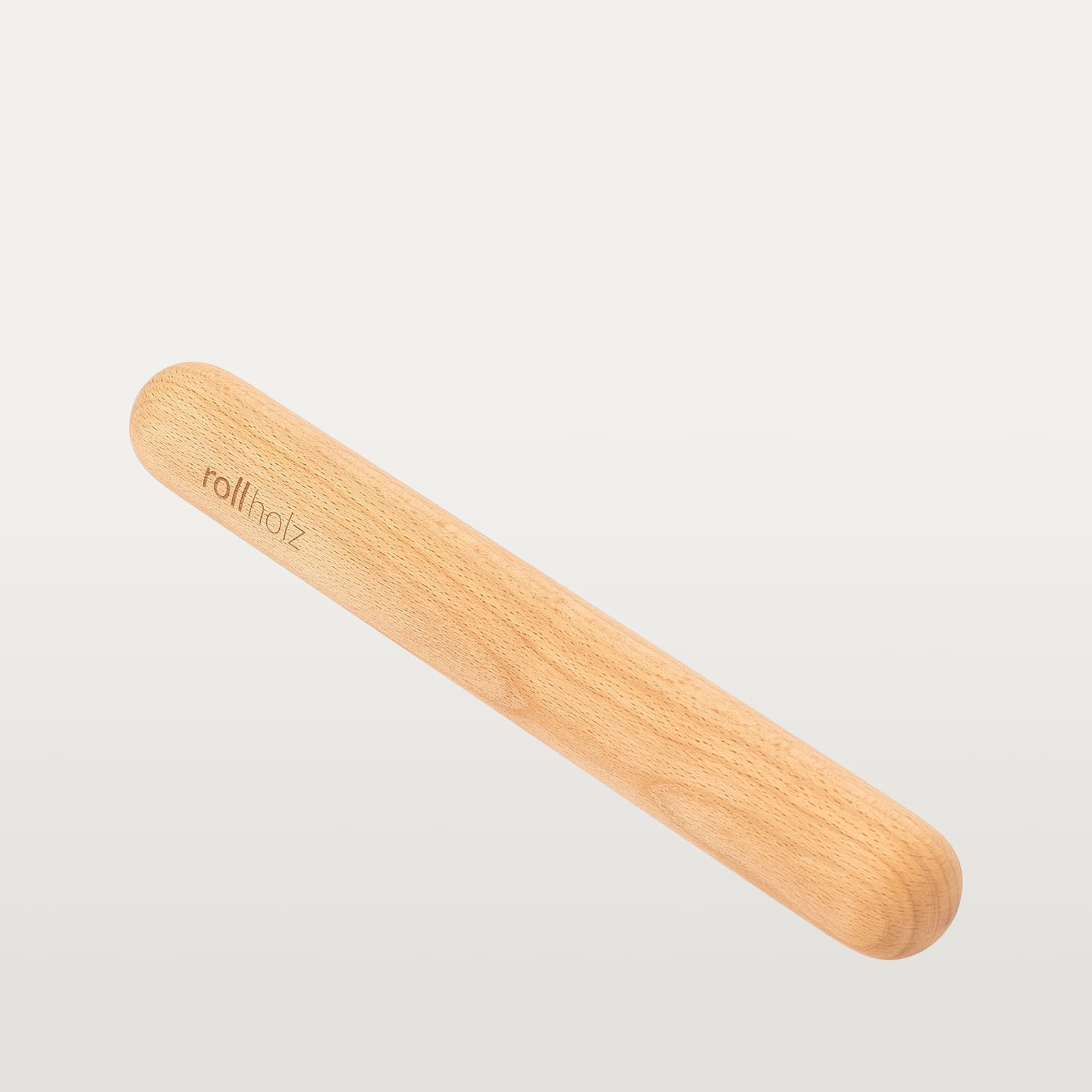
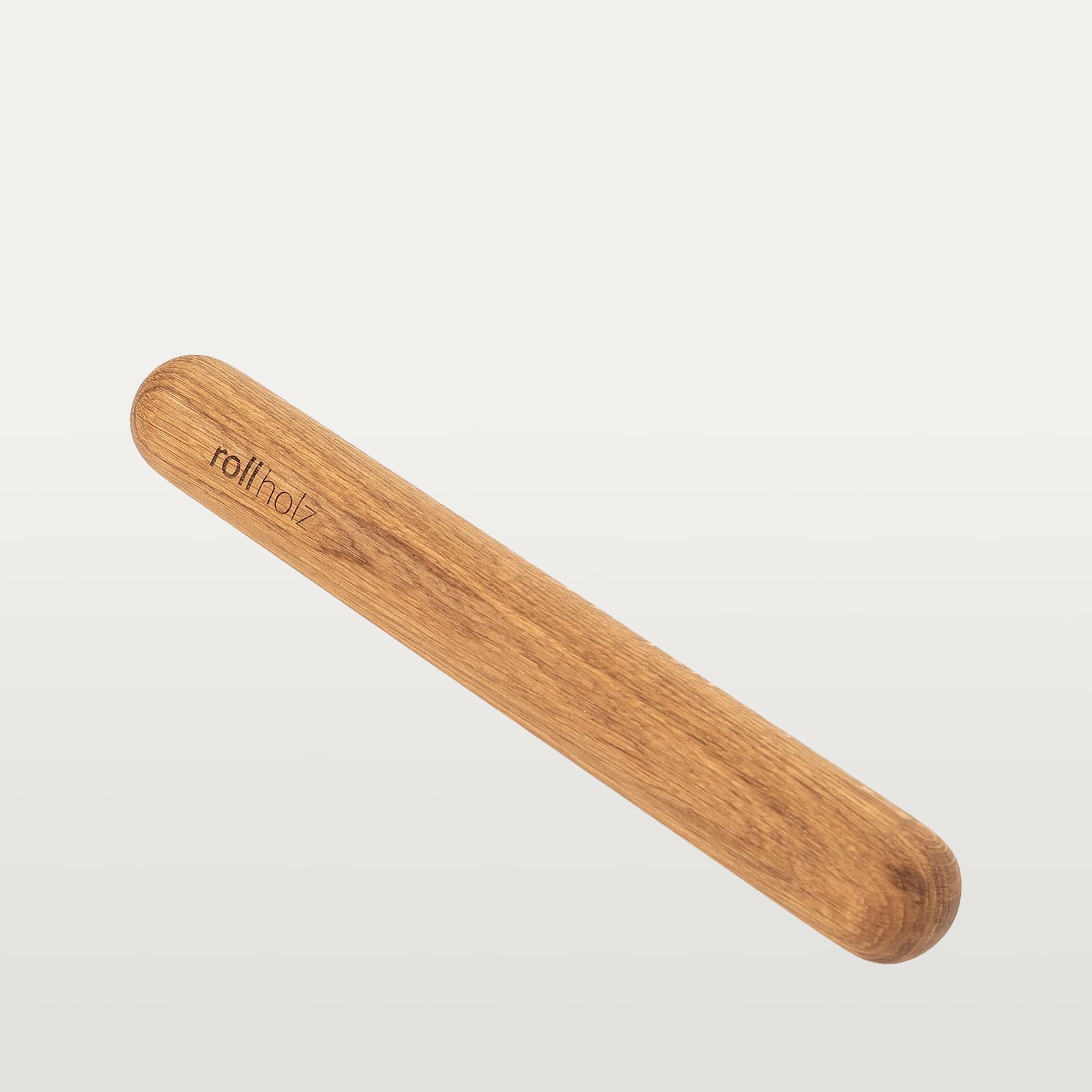
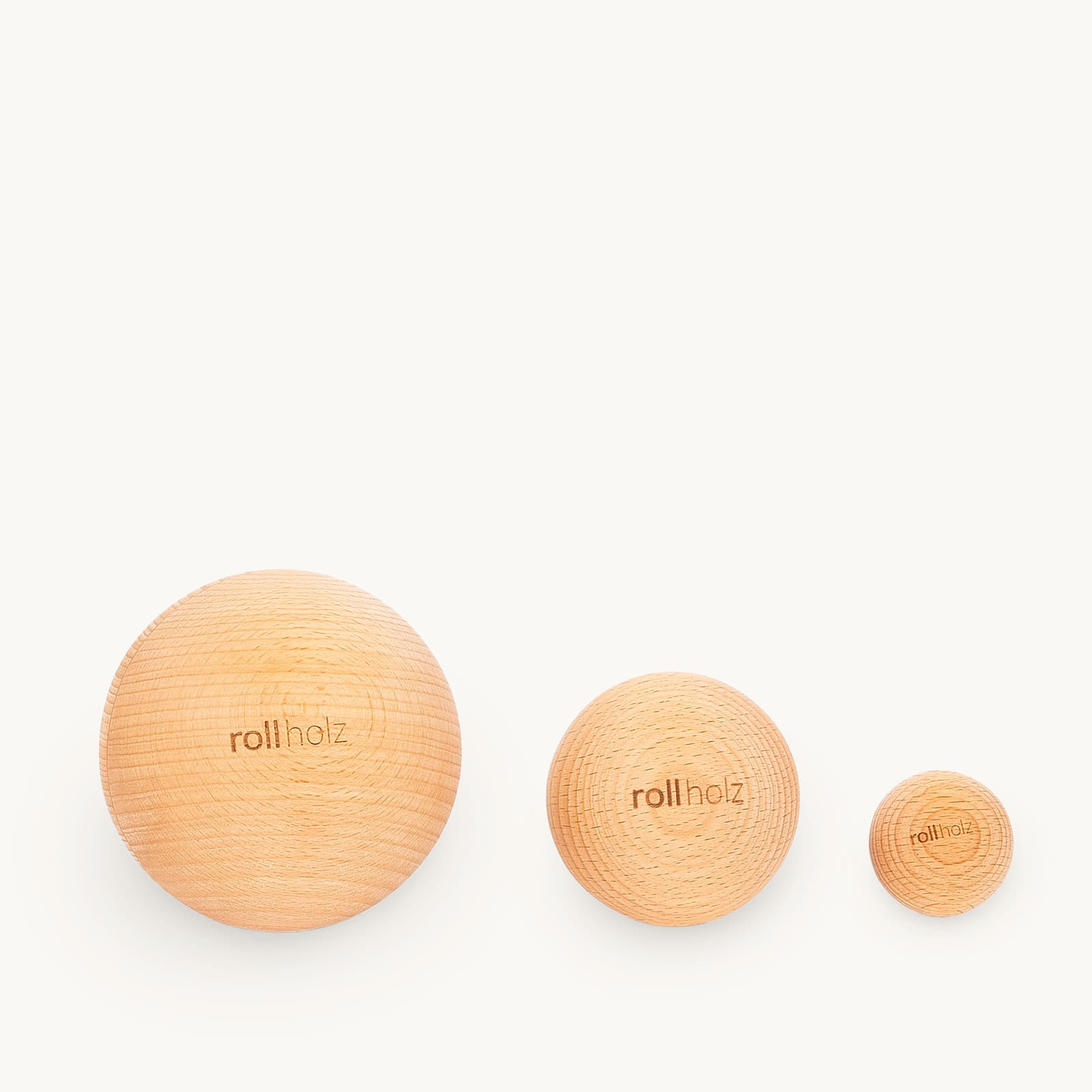
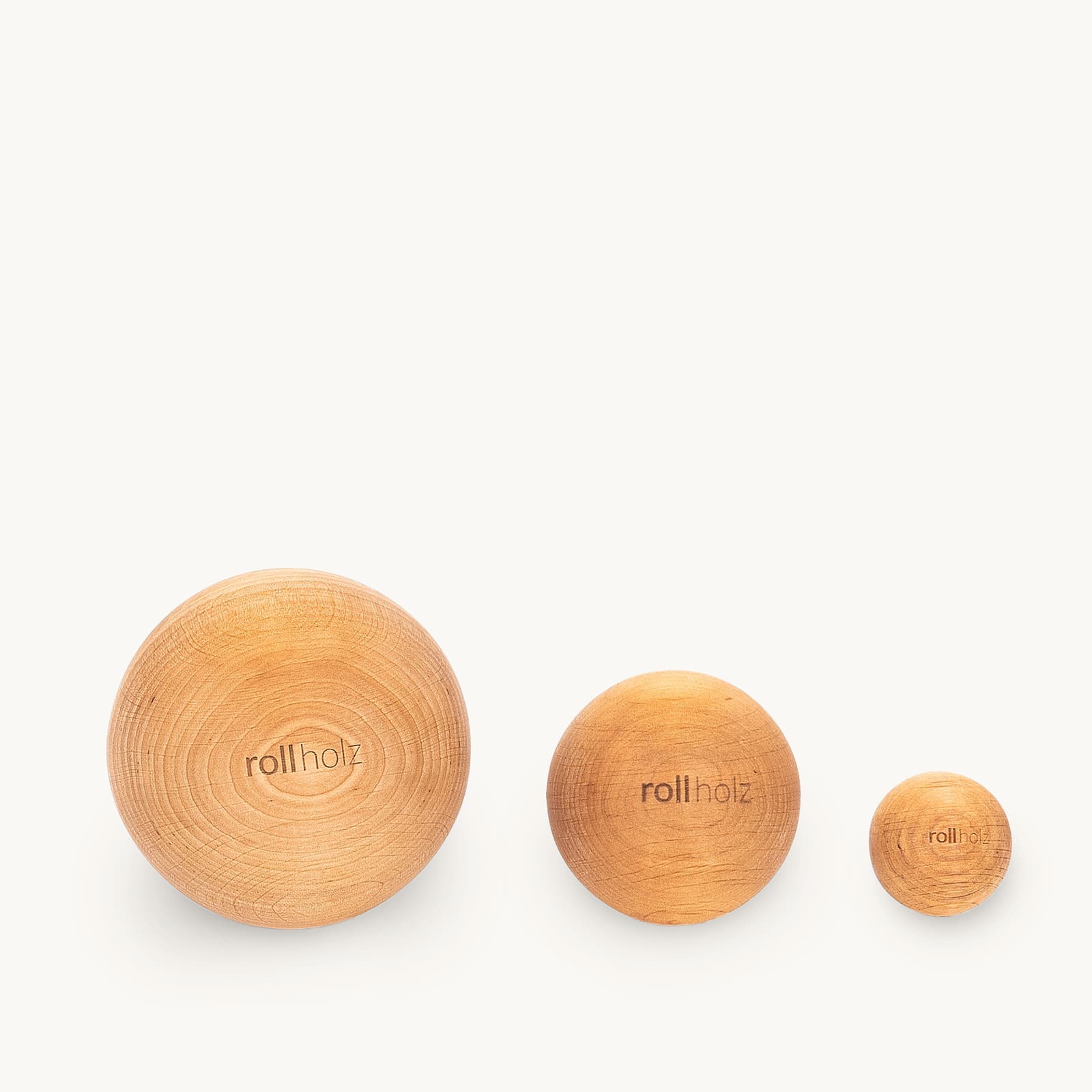
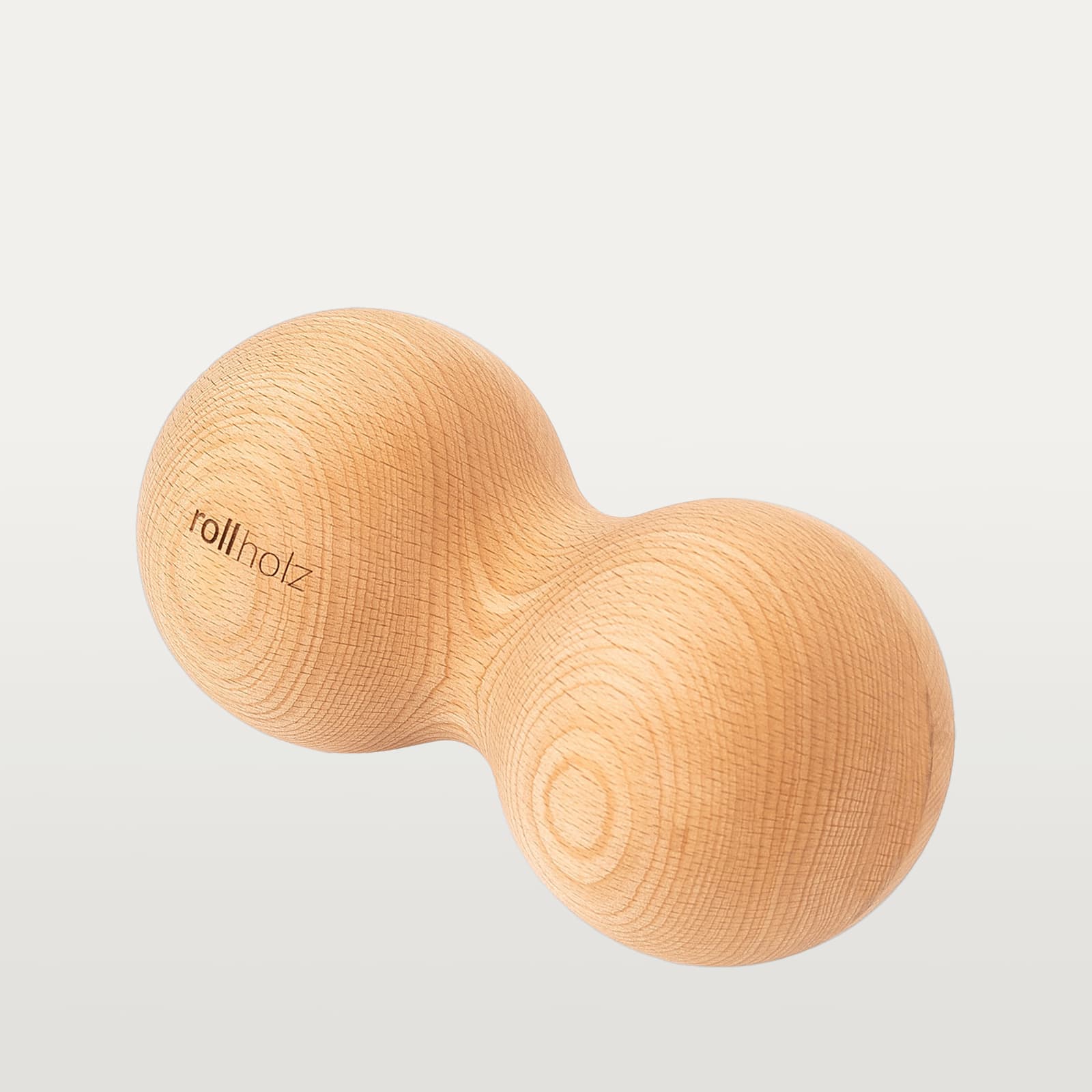
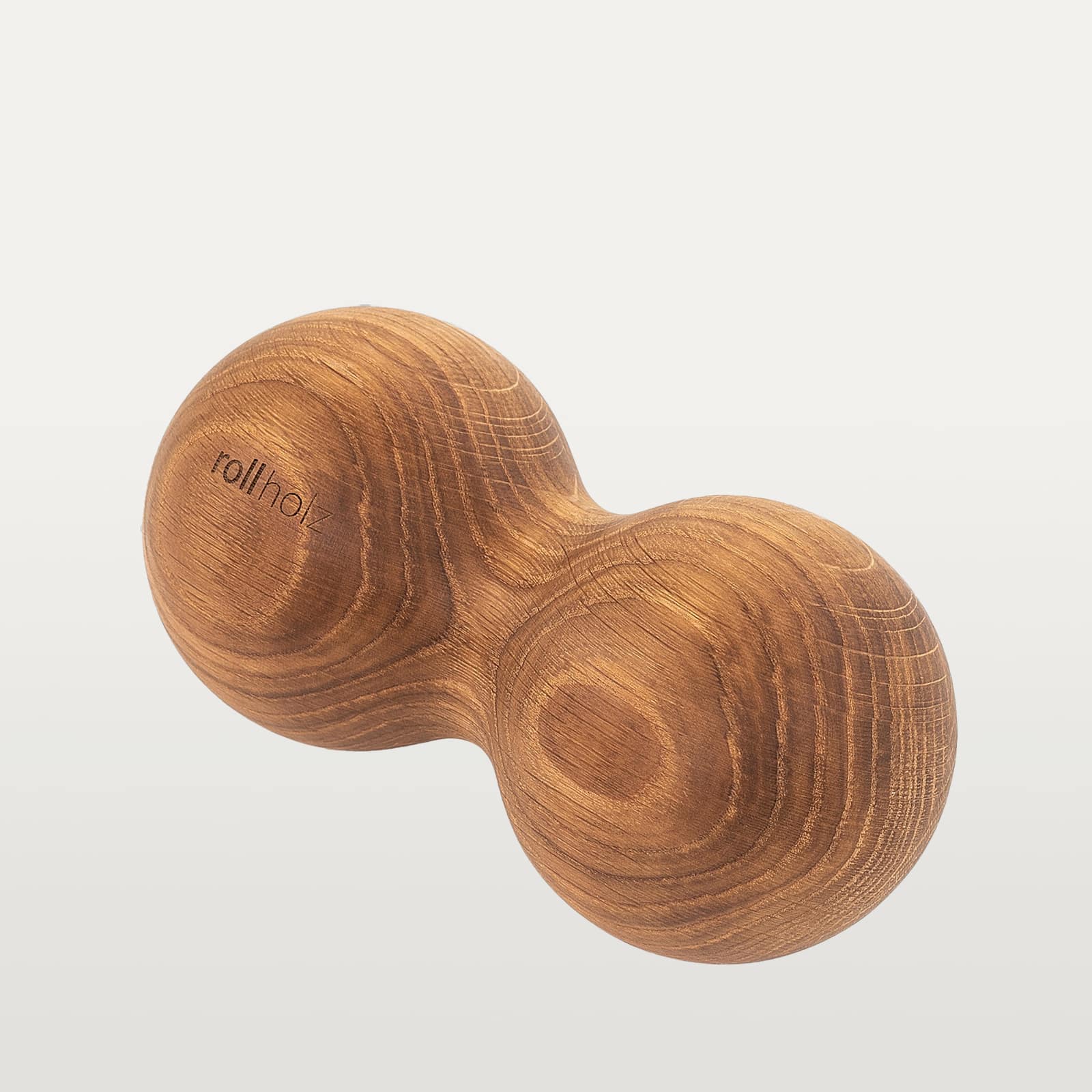
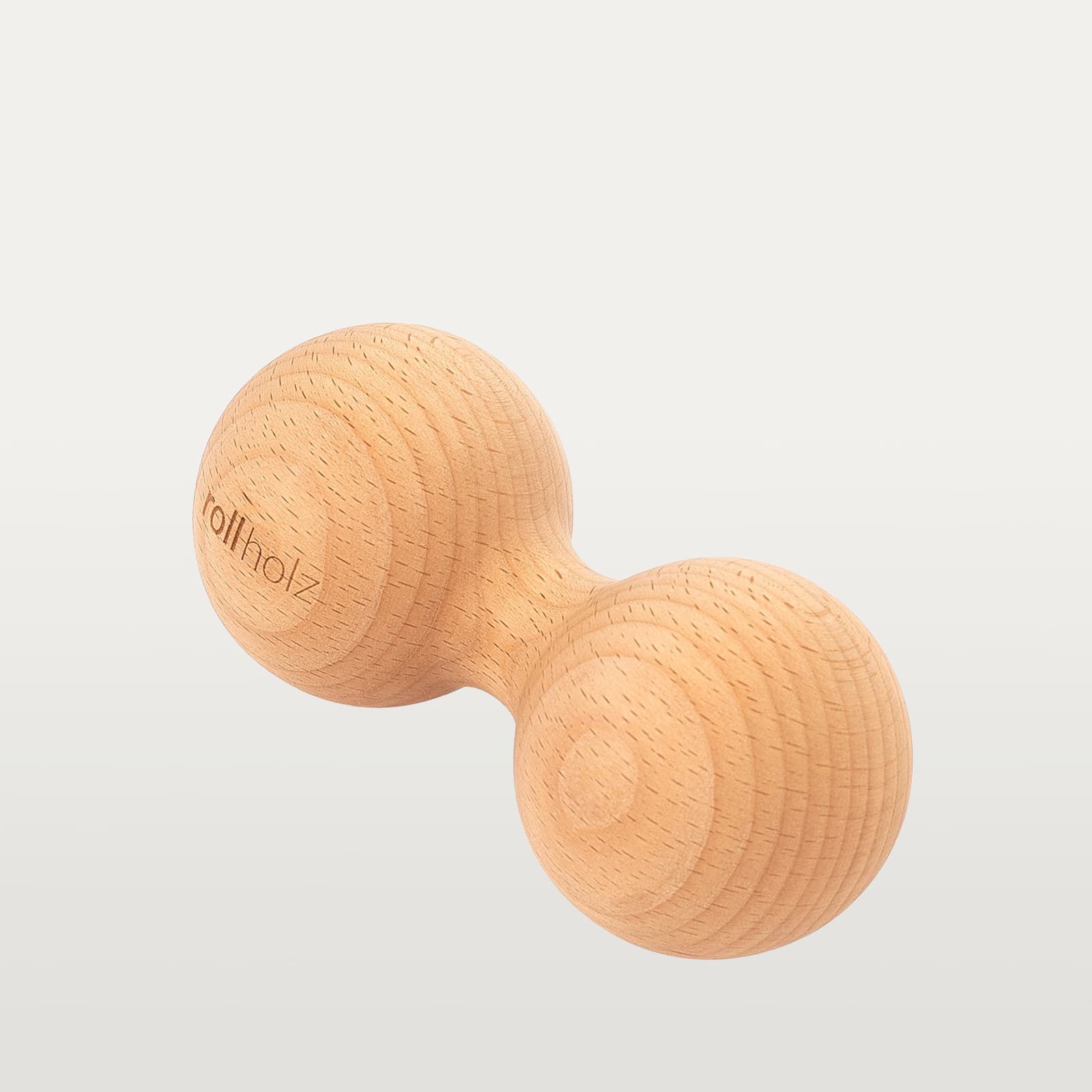
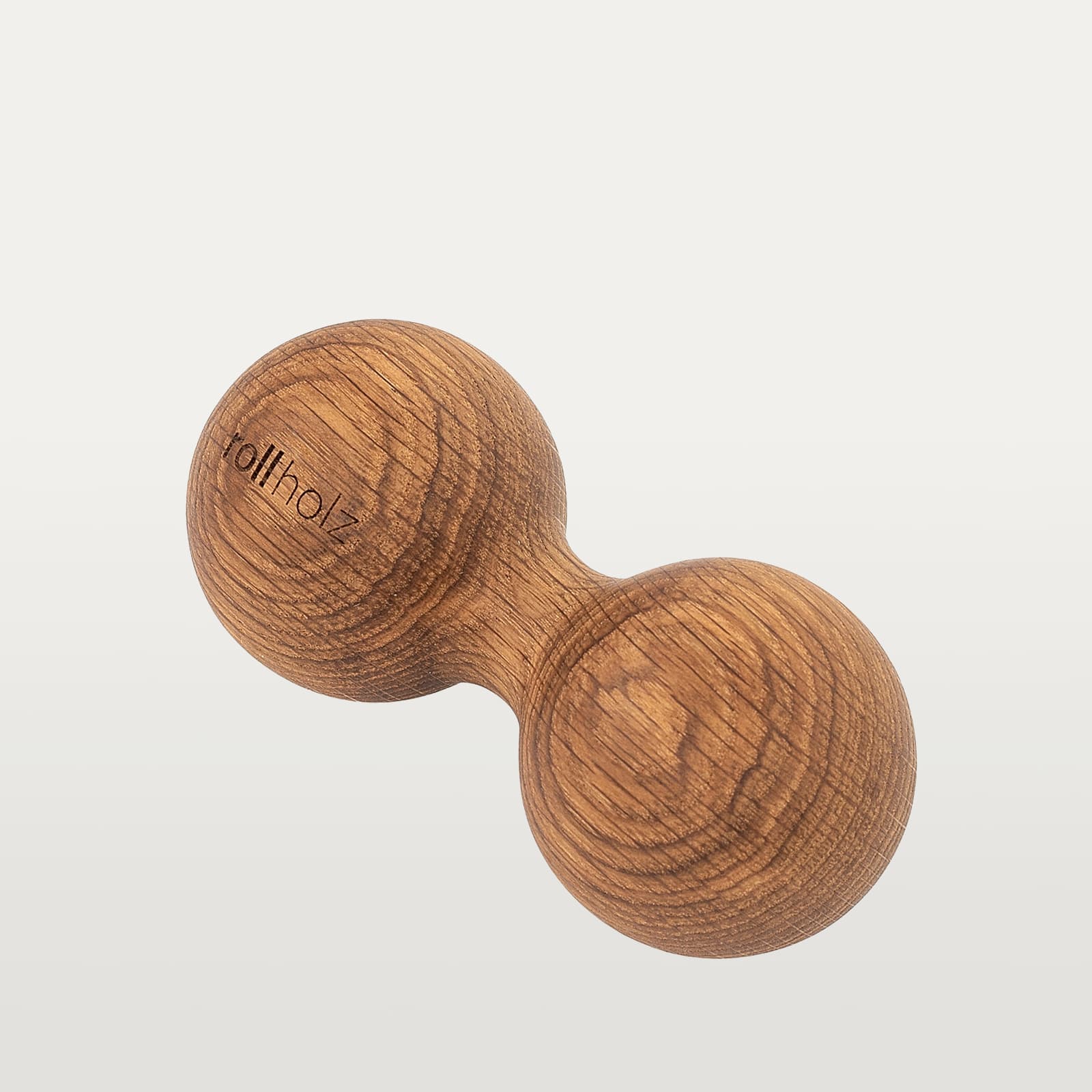
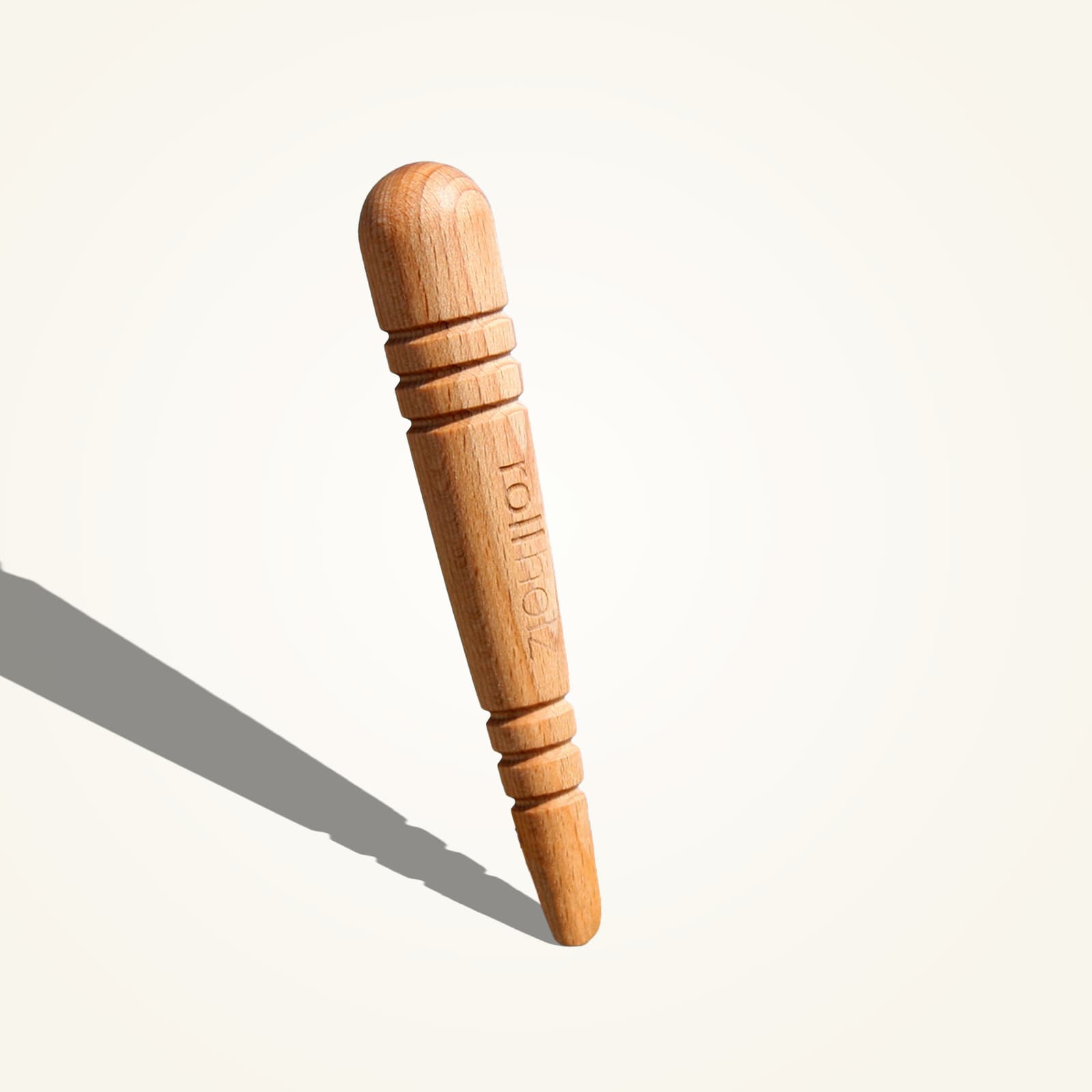
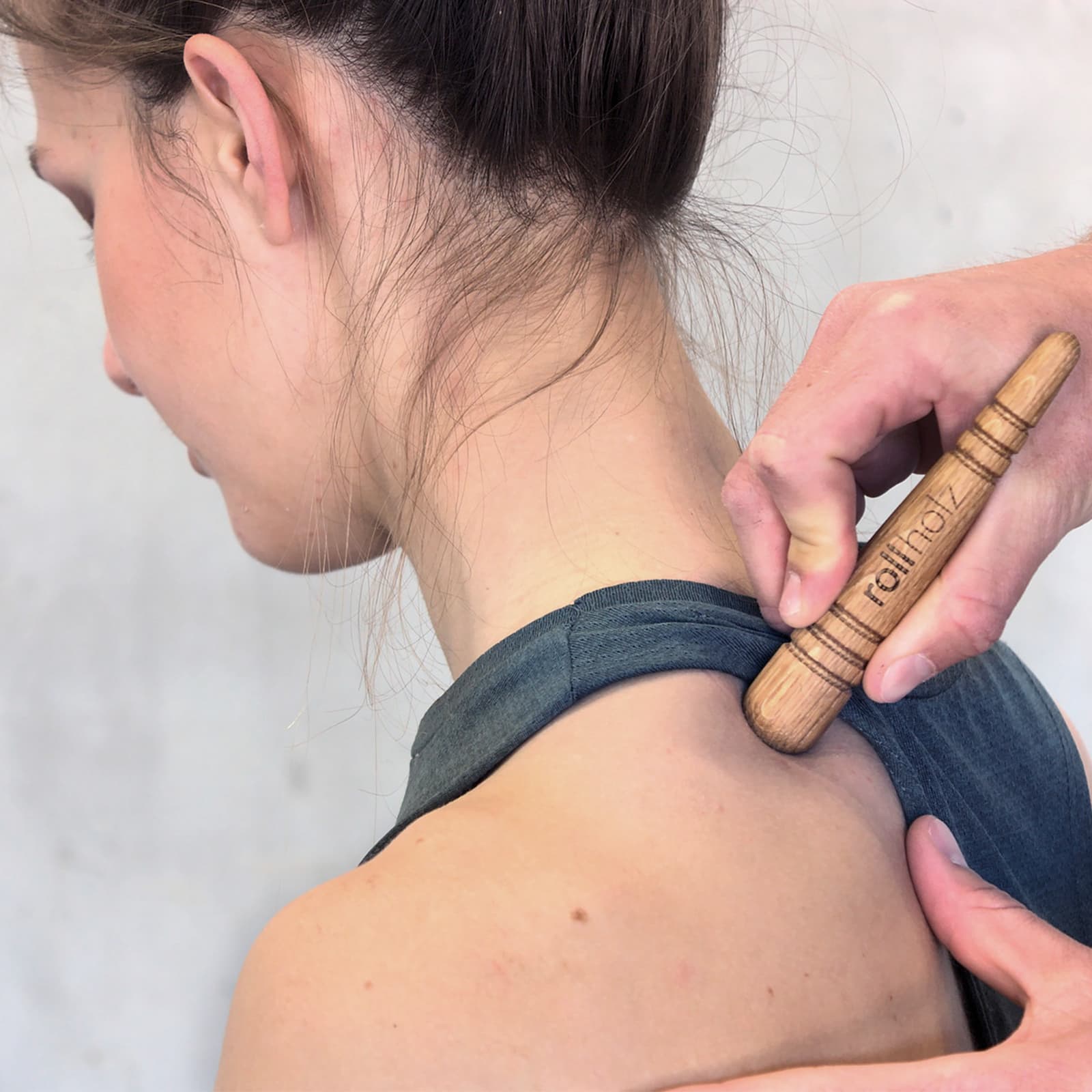
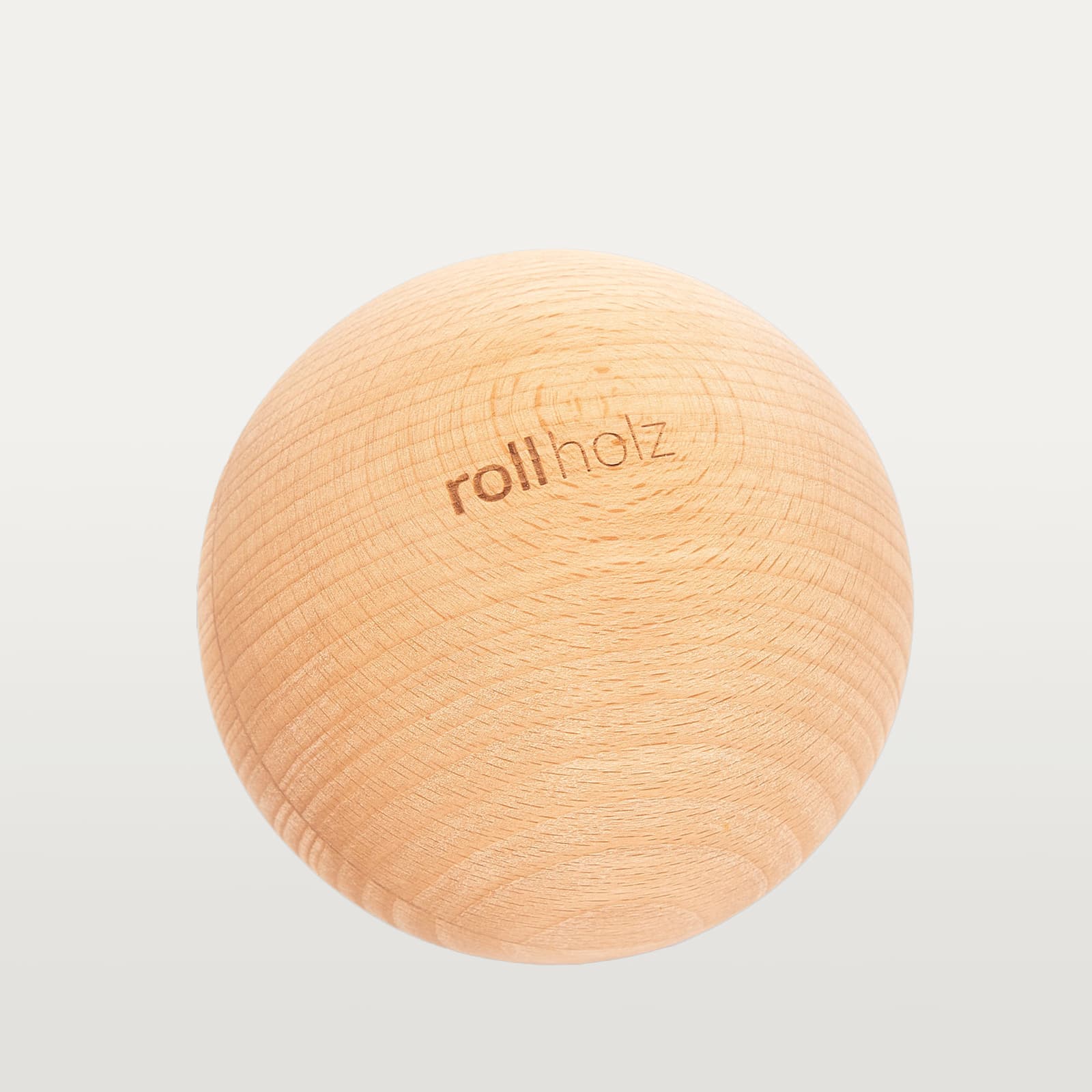
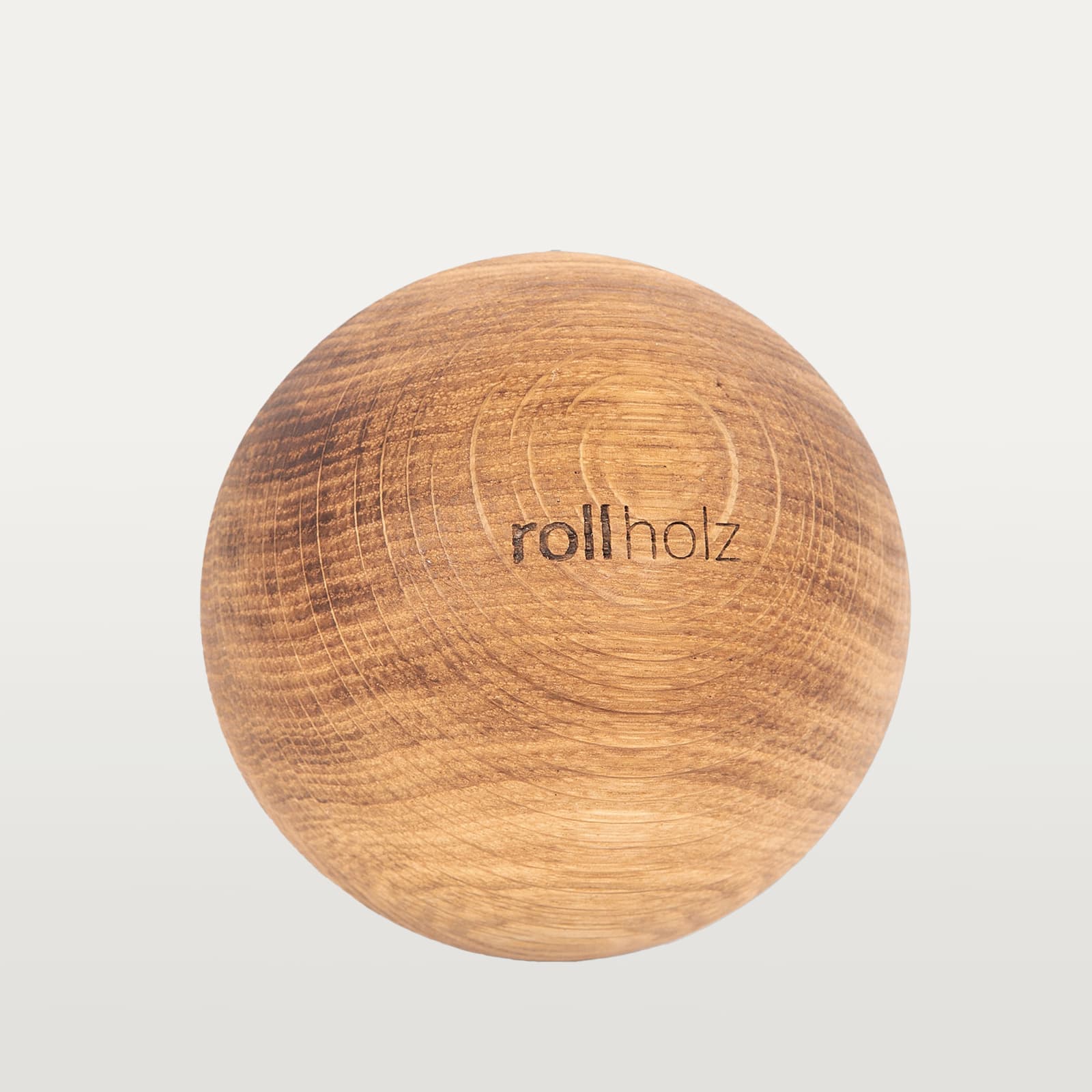
Lie on your upper back on a fascia roller and slowly roll in the area between your shoulder blades. For the pectoral muscles, a fascia ball is suitable, which you gently press against a wall or doorframe and move in small circles. For localized tense spots, for example, directly at the muscle attachment on the shoulder blade, a trigger stick is also suitable, with which you can apply targeted and dosed pressure. This releases fascial-muscular tensions that have often built up over years due to one-sided posture.
Stretching for chest and upper back
Shortened pectoral muscles pull the shoulders forward and promote the typical rounded back posture, which in turn puts additional strain on the shoulder and neck area. Counter-stretching creates balance here.

Doorway stretch for the chest
Stand in a doorway, place both hands on the side of the doorframe, arms almost extended at chest height, and take a small step forward until you feel a noticeable stretch in your chest. Hold for 20-30 seconds, breathing calmly.
Thread the needle for back and shoulder blade
From the tabletop position, thread one arm under the body until the shoulder and temple rest on the floor. The stretch works between the shoulder blades and in the upper back. 20-30 seconds per side.
Strengthening the rotator cuff with a resistance band
The most important building block to prevent tension in the long term: a strong, balanced rotator cuff. The two crucial movement directions for this are external rotation and abduction – both can be trained excellently with a resistance band. The lightest (green) strength is suitable for beginners.

External rotation with band
Attach the band at elbow height to a fixed point (e.g., a doorknob). Elbow close to the body, bent at a 90-degree angle. Pull the forearm outwards without detaching the elbow from the body, and slowly return. 3 sets of 12-15 repetitions per side.
Abduction with band
Stand with both feet on the center of the band, holding an end in each hand. Lift your straightened arms sideways to shoulder height and lower them back down in a controlled manner. 3 sets of 12-15 repetitions.
Y-Raises with band
Stand on the center of the band, arms extended slightly forward-upward in a Y-shape. Pull your arms up and out; the movement comes from the shoulder blades, not the lower back. 3 sets of 10-12 repetitions.
Warning signs: When to see a doctor
The exercises shown are suitable for everyday, muscular tension. If you experience the following signs, you should seek medical advice instead of continuing to exercise on your own:
Sudden, very severe pain or pain after a fall or accident. Significant loss of strength in the arm, for example, when lifting. Tingling, numbness, or pain radiating into the hand. Pain that does not subside or worsens after several weeks despite rest and the mentioned exercises.
Conclusion
Shoulder tension rarely develops overnight – and accordingly does not disappear overnight either. However, with a combination of regular mobilization, targeted stretching, and building a stable rotator cuff, you create the basis for your body to break free from the tension cycle. Ten to fifteen minutes, three to four times a week, is often enough.



Leave a comment
This site is protected by hCaptcha and the hCaptcha Privacy Policy and Terms of Service apply.