
Balance is not something you either have or don't have, but a skill you can train. You need it in everyday life, for example on the stairs or on slippery floors, and just as much in sport. Here you will find 10 exercises for home: first without equipment, then with a Balance Board for progression.
What is part of balance?
Your balance comes from the interplay of three systems: the vestibular organ in the inner ear, the eyes and the depth perception in muscles and joints (proprioception). If one system fails or becomes imprecise, the others step in. That is why the best way to train balance is to change the conditions: on one leg, with eyes closed, on a soft or moving surface.
You can read more about how to train the depth perception of ankle and knee in a targeted way in Proprioceptive Training: Exercises for Ankle and Knee.
Before you start
- Practise near a wall, a chair or a door frame that you can hold on to.
- Barefoot or in non-slip socks, on a mat or non-slip surface.
- If you have acute pain, dizziness, cardiovascular problems or a pre-existing condition, talk to your doctor first.
Level 1: 5 exercises without equipment
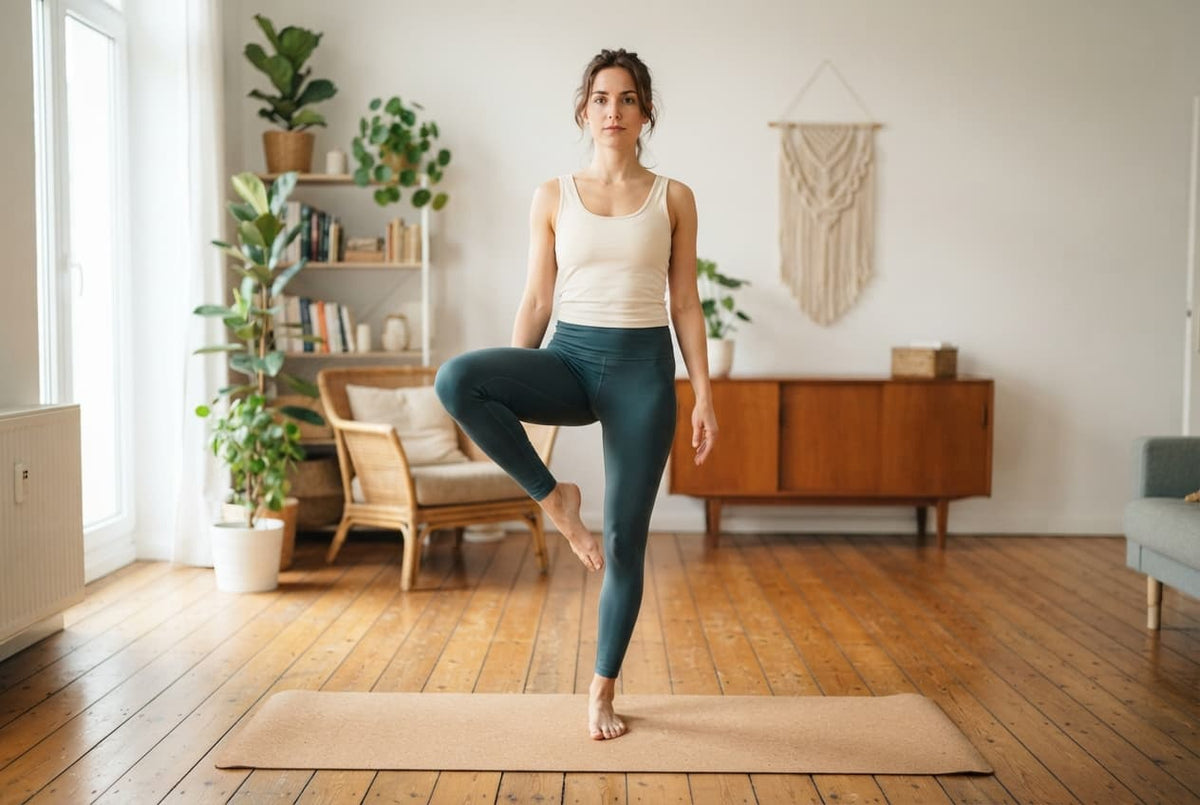
1. Single-leg stance
Shift your weight onto one leg and lift the other slightly. Hold for 20 to 30 seconds, then switch. The standing leg stays loosely bent.
2. Tandem stance
Place one foot directly in front of the other, as if standing on a line. Hold for 30 seconds. Look at a fixed point in front of you.
3. Tandem walk
Walk along an imaginary line, heel to toe. Slowly, with your upper body upright.
4. Toe stand
Slowly come up onto your toes, hold the position briefly and lower your heels again. Ten repetitions.
5. Standing scale
Lean your upper body forward while lifting one leg straight behind you. You can spread your arms out to the sides. Only as low as you stay in control.
Level 2: Progression in everyday life
- Eyes closed: Do the single-leg stance with your eyes closed. This takes away the help of your sense of sight.
- Brushing your teeth on one leg: Every morning and evening, one leg per brushing session.
- Turning your head: While standing on one leg, slowly turn your head to the left and right.
Level 3: With the Balance Board
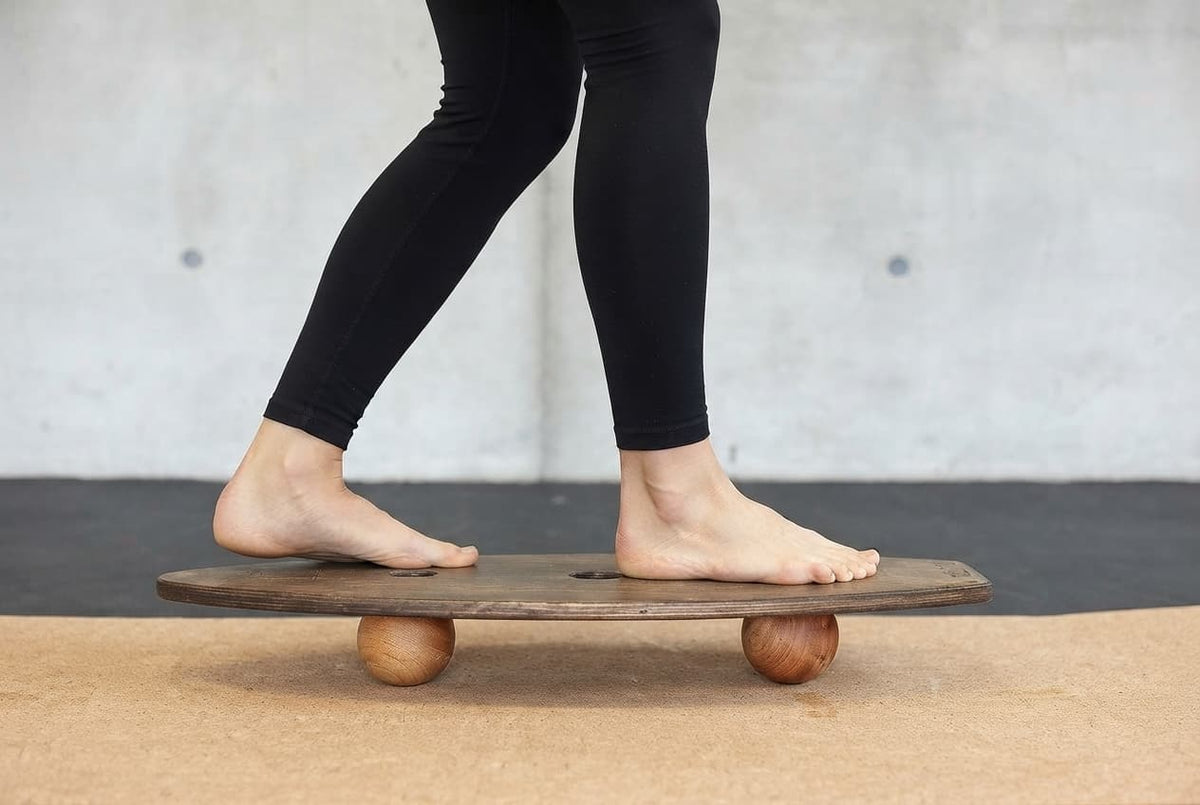
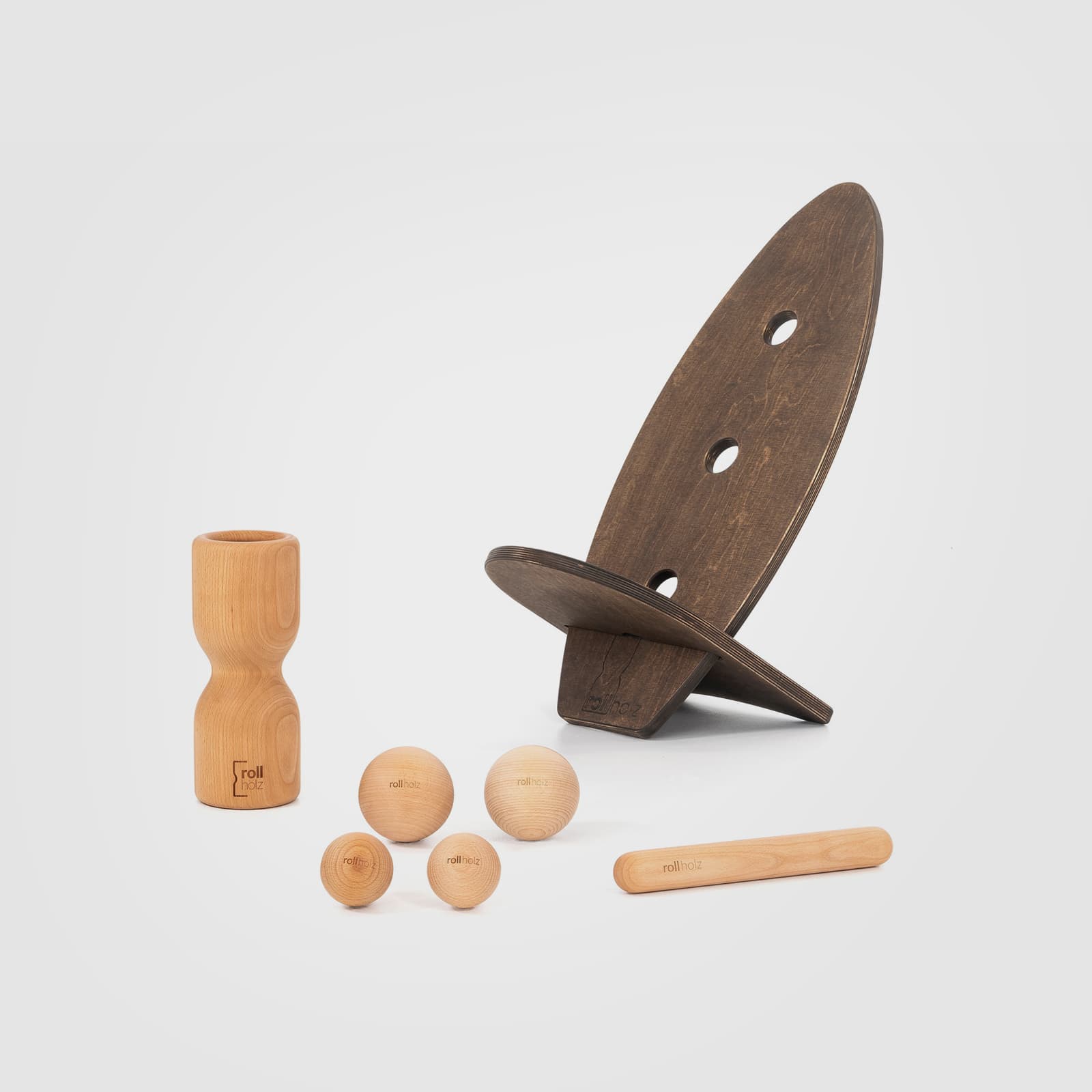
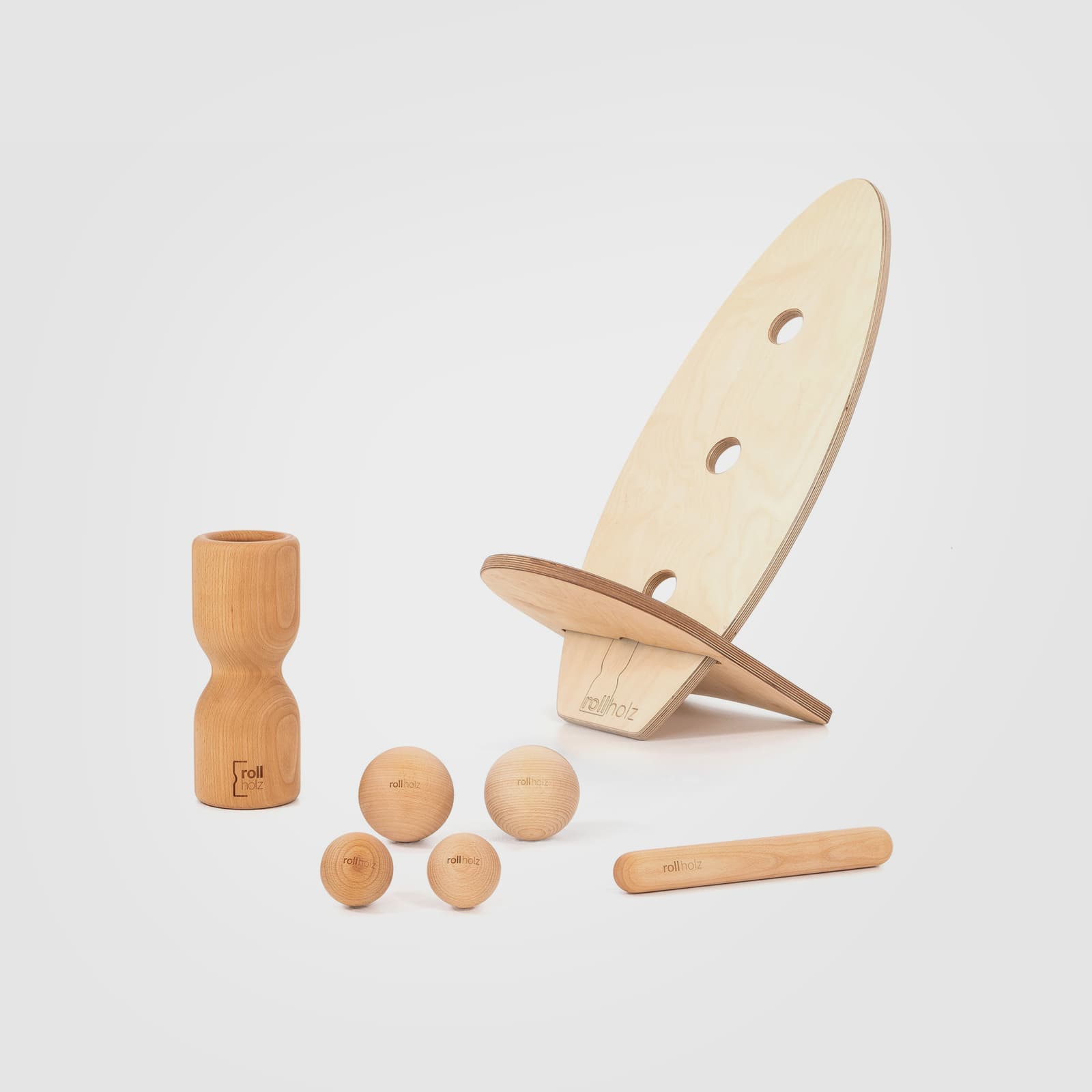
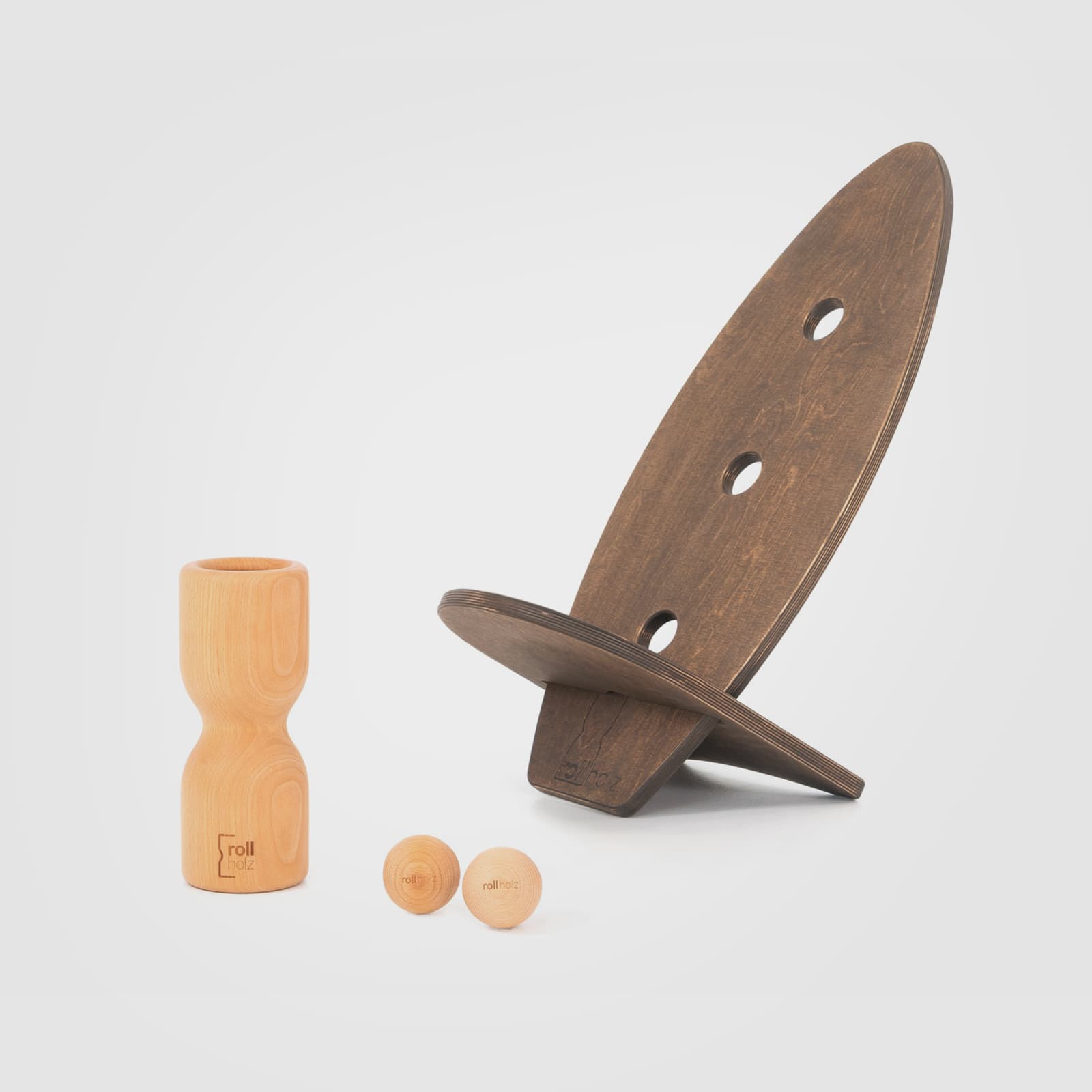
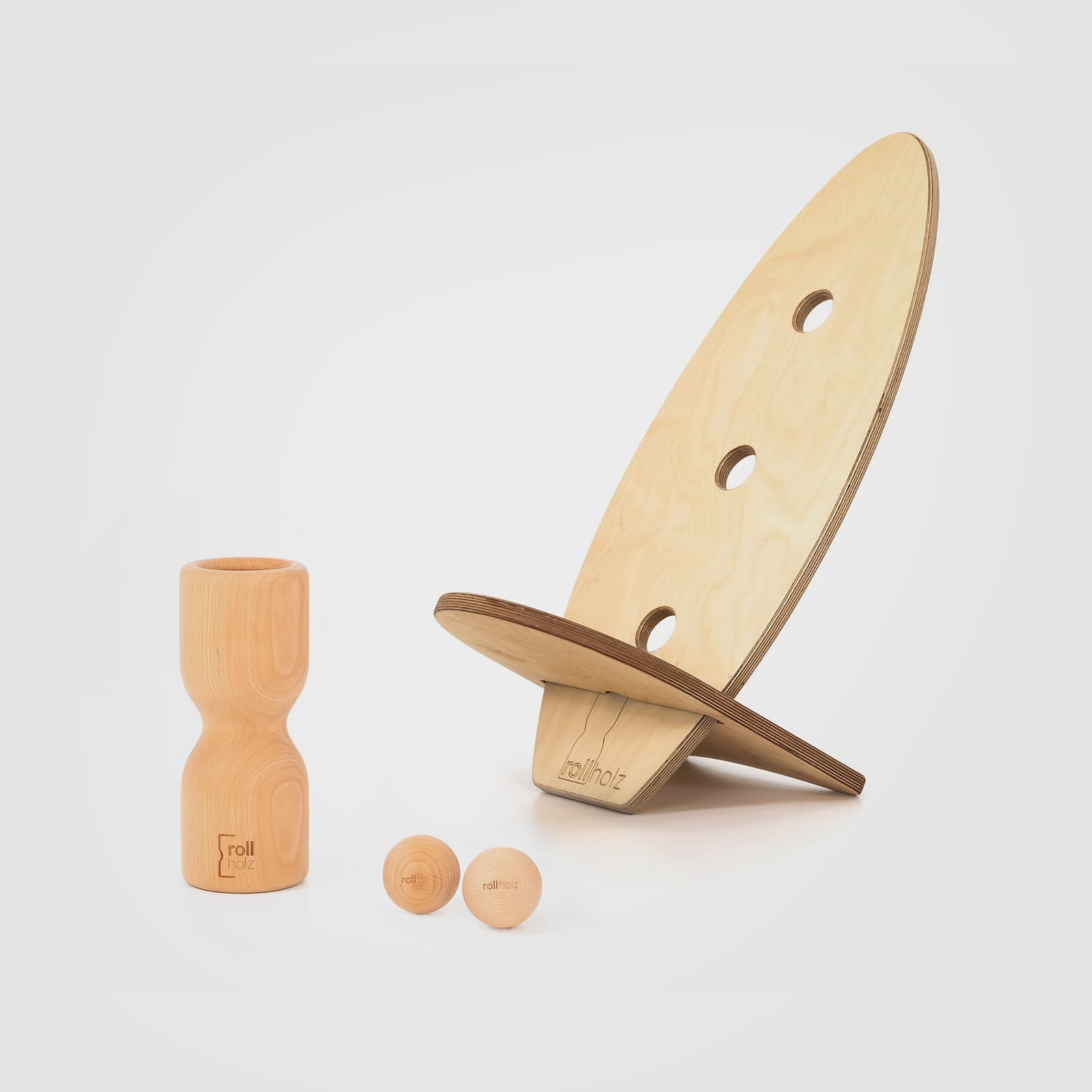
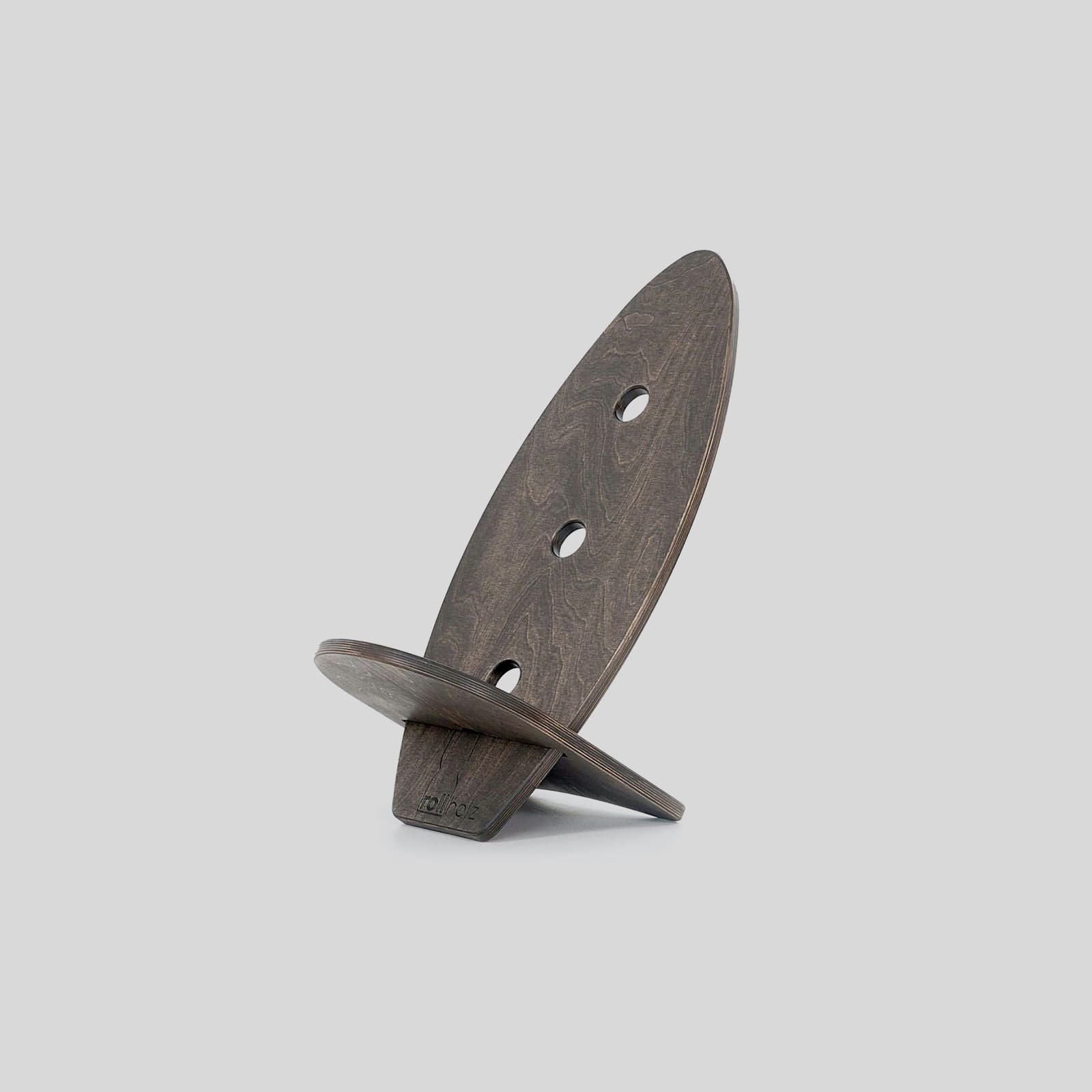
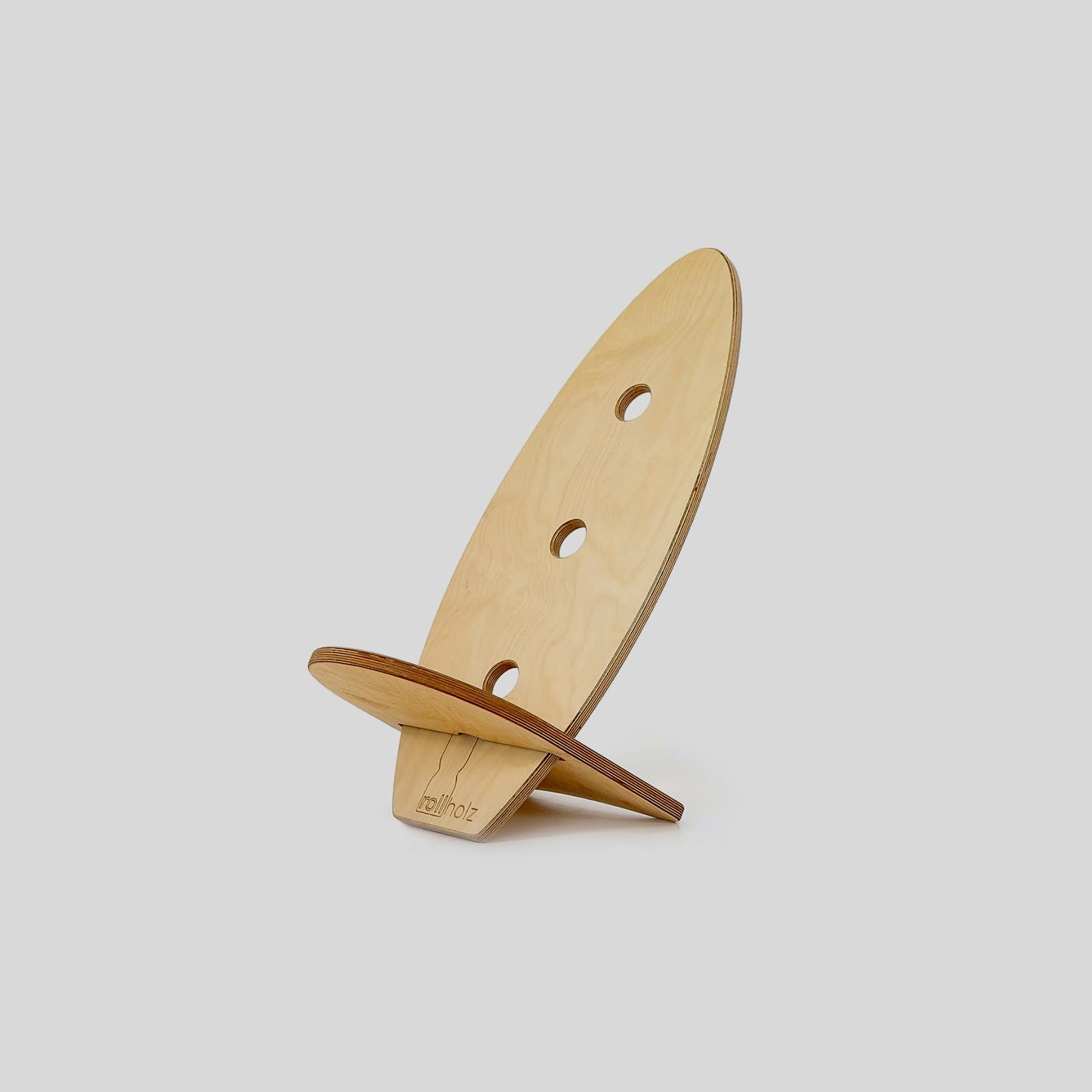
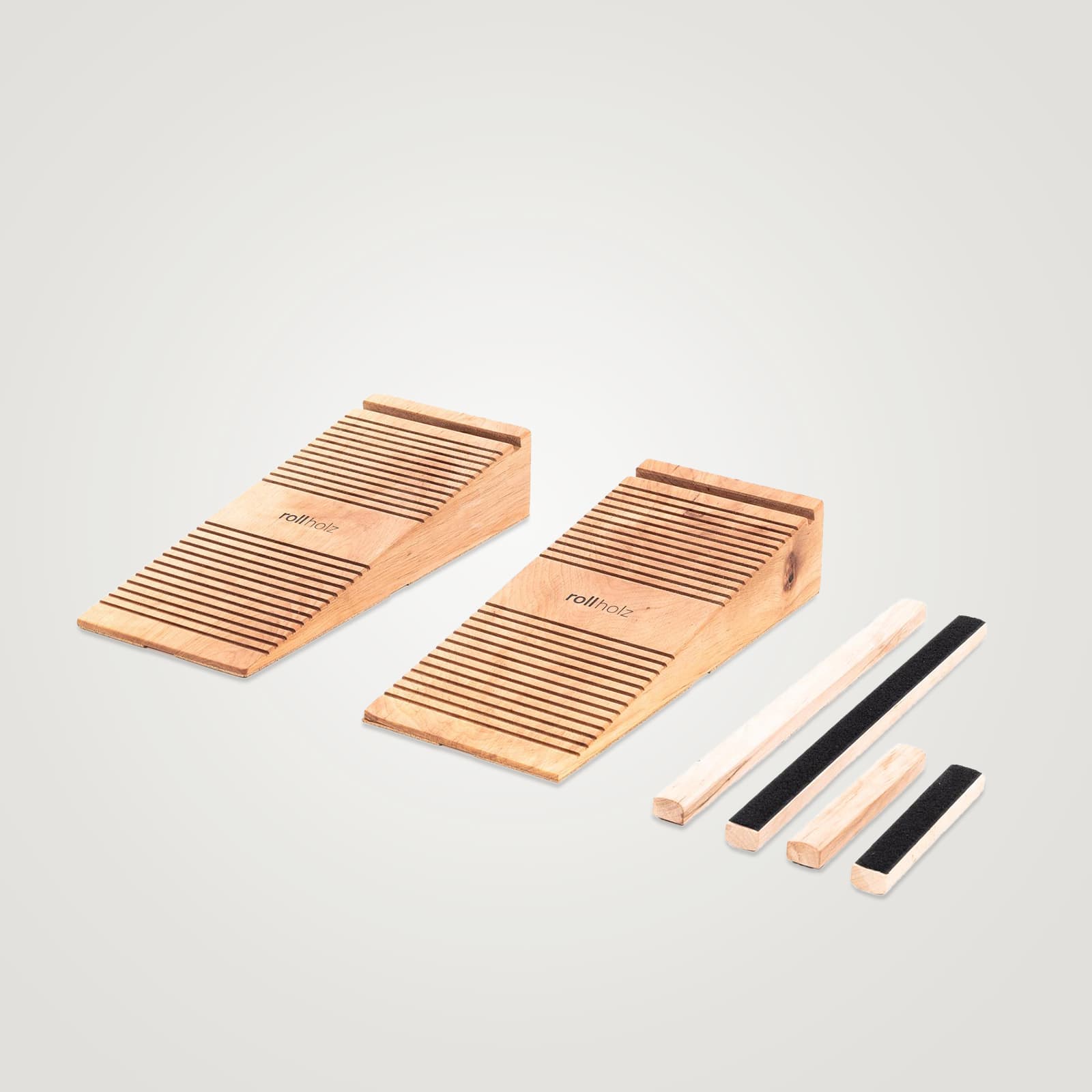
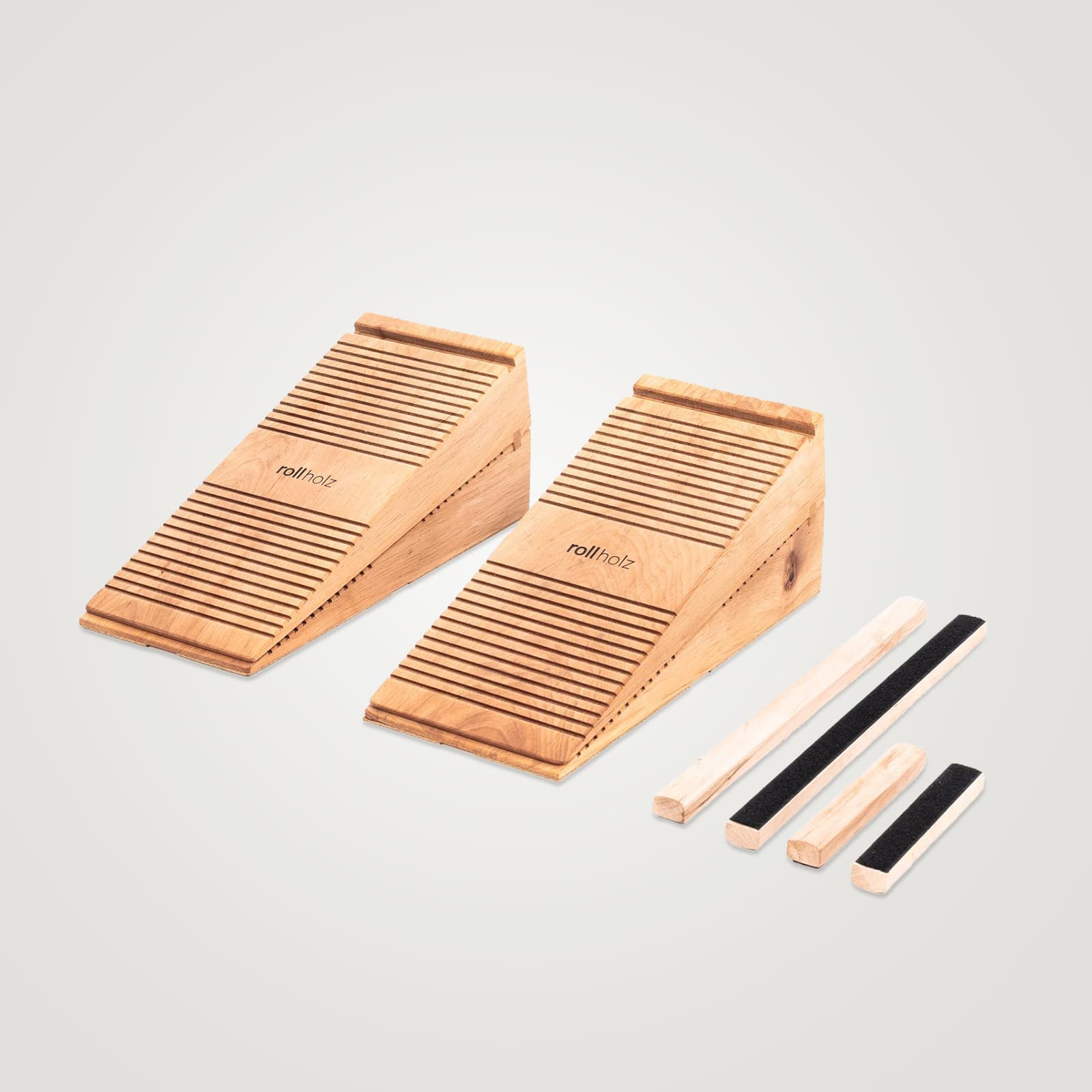
Once the single-leg stance works reliably, you can move on to a Balance Board. The rollholz Balance Board tilts to different degrees depending on the accessory, so you progress in levels.
6. Getting on and balancing with the mini roller

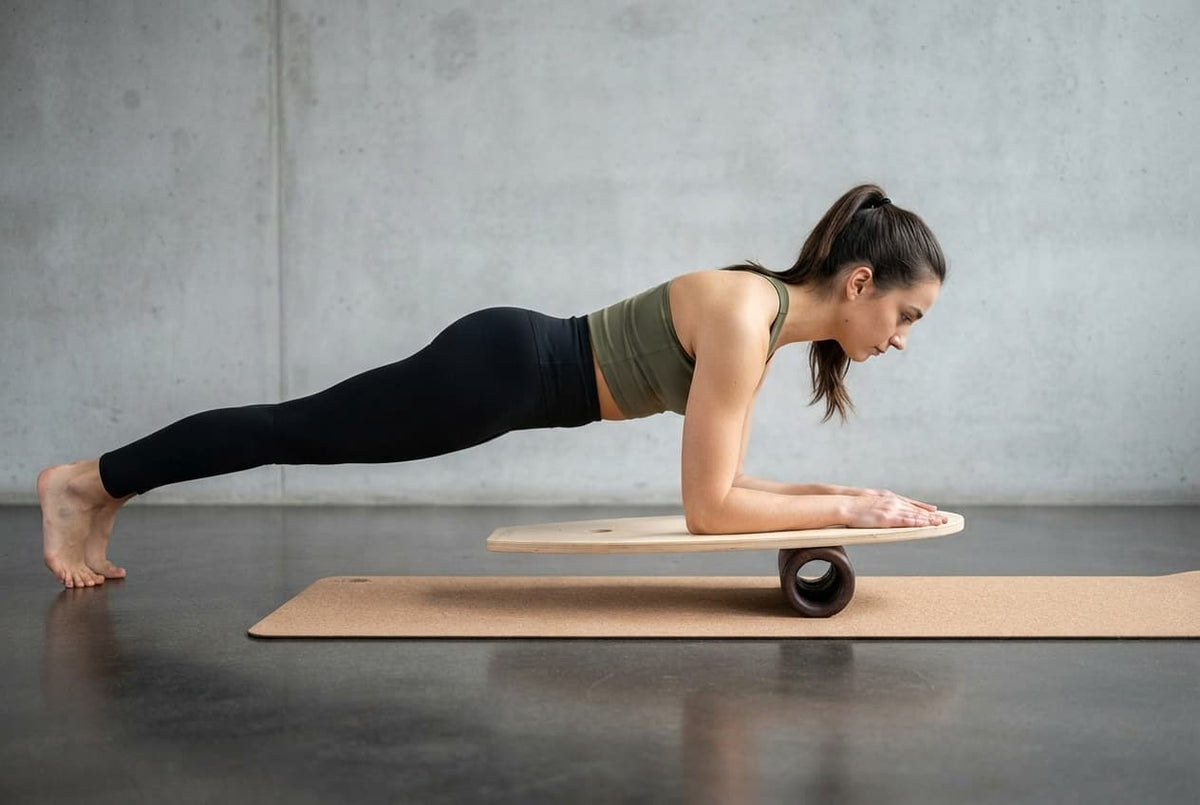
Place the mini roller under the small board with the slot. The roller sits firmly in the slot, the board only rocks back and forth. Step on, bend your knees slightly and try to keep the board level.
7. Squat on the board

From a secure stance, slowly go into a squat, back straight, knees not inwards. Your arms help with balancing.
8. Tandem stance with two balls

Place two balls under the outer holes of the large board. It only tilts around one axis and is therefore easier than with a single ball. Place your feet one behind the other and keep the board level.
9. Lunge

The front foot stands in the middle of the board, the back foot on the floor. Bend both knees. This challenges balance and leg strength at the same time.
10. One ball
The most demanding level is a single ball under the board, which can now tilt in all directions. Start with weight shifts and hold on to a wall at first.
You can find more exercises, with photos and step-by-step instructions, in the main article Balance Board Exercises: 15 Exercises from Easy to Hard.
Which equipment suits me?
There are simple devices such as balance cushions and wobble boards, as well as boards with a roller or ball. If you are unsure what you need to get started, our Guide: Buying a Balance Board will help.
Balance training for athletes
For runners, cyclists and everyone whose sport puts one-sided strain on the body, balance training complements strength training. We show what that can look like in Stable Leg Alignment and Power Transfer and Core in Road Cycling. A Balance Board is also worthwhile for surfing, skating or snowboarding, because it challenges the depth perception you need on the board.
And for older people?
Balance training is valuable in old age too, but should be done carefully and with safeguards. You can find more in our article Fall Prevention: Training Balance in Old Age.
Frequently asked questions
How long does it take for balance to improve?
With regular training, you often notice after a few weeks that you stand more securely. What matters is that you practise briefly and often.
How often should I do balance exercises?
Two to three times a week for 5 to 10 minutes is enough to start with. If you like, you can build individual exercises into your day.
Do I absolutely need equipment?
No. Exercises 1 to 5 work without equipment. A Balance Board makes the training more varied and offers ways to progress once the single-leg stance becomes too easy. Our range of Balance Boards gives an overview of all models.


Leave a comment
This site is protected by hCaptcha and the hCaptcha Privacy Policy and Terms of Service apply.