
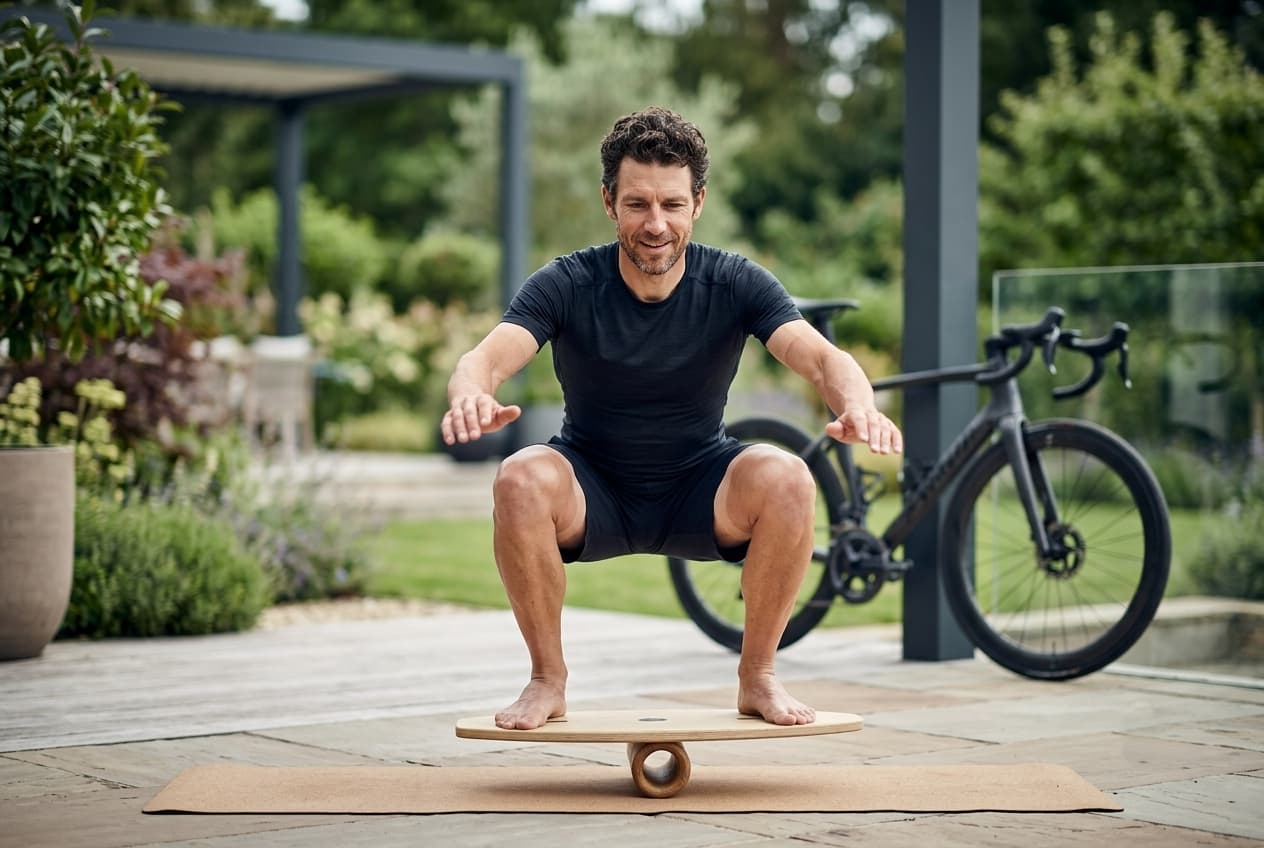
Many cyclists only train their leg strength. But on the bike, the core is the central anchor point: If it's unstable, some of your energy dissipates before it even reaches the pedal. A stable core ensures that your power is efficiently transferred "to the road" instead of being lost in compensatory movements.
The Chain of Power Transmission: From Core to Pedal
Stability on the bike means your pelvis remains still while your legs work. If you sway while standing or climbing a hill, or unconsciously counterbalance with your upper body, you lose valuable energy. Your core must act as a stable bridge, transferring pressure from your legs to the frame without loss.
Why "Strong Abs" Are Not Enough
Classic crunches alone won't make you faster. When cycling, the deep-lying musculature that stabilizes your pelvis in every situation is crucial. These muscles are not trained by static exercises, but by unstable conditions where your body constantly has to make tiny corrections – just like on the bike on different surfaces or in windy conditions.
Your Training for Maximum Efficiency
Performance is no accident, but the result of targeted stimuli. To optimize your neural control, we recommend:
- Core Stability & Coordination: The Balance Board is the ultimate tool for training muscular coordination under unstable conditions. You force your deep core muscles to keep your pelvis stable – a direct transfer to your stability in the saddle.
- Progression through Instability: By using one or two balls under the board, you can individually adjust the difficulty. This instability trains your brain to maintain a calm, economical posture on the bike even under high strain.
- Fascial Control: A core system targeted by specific training not only improves your wattage but also protects your lower back during long rides.
Recovery & Training
You now have the tools for an efficient posture and better power transmission. Regularly combine this training with the mobilization presented in Part 1 to keep your "fascial hardware" supple. This lays the foundation for an injury-free and high-performance cycling year.
Strengthen Your Foundation
Efficiency on the bike is the result of consistent work. Our balance tools provide you with the necessary resistance to take your performance to the next level.
Discover Balance Tools Now



Leave a comment
This site is protected by hCaptcha and the hCaptcha Privacy Policy and Terms of Service apply.