
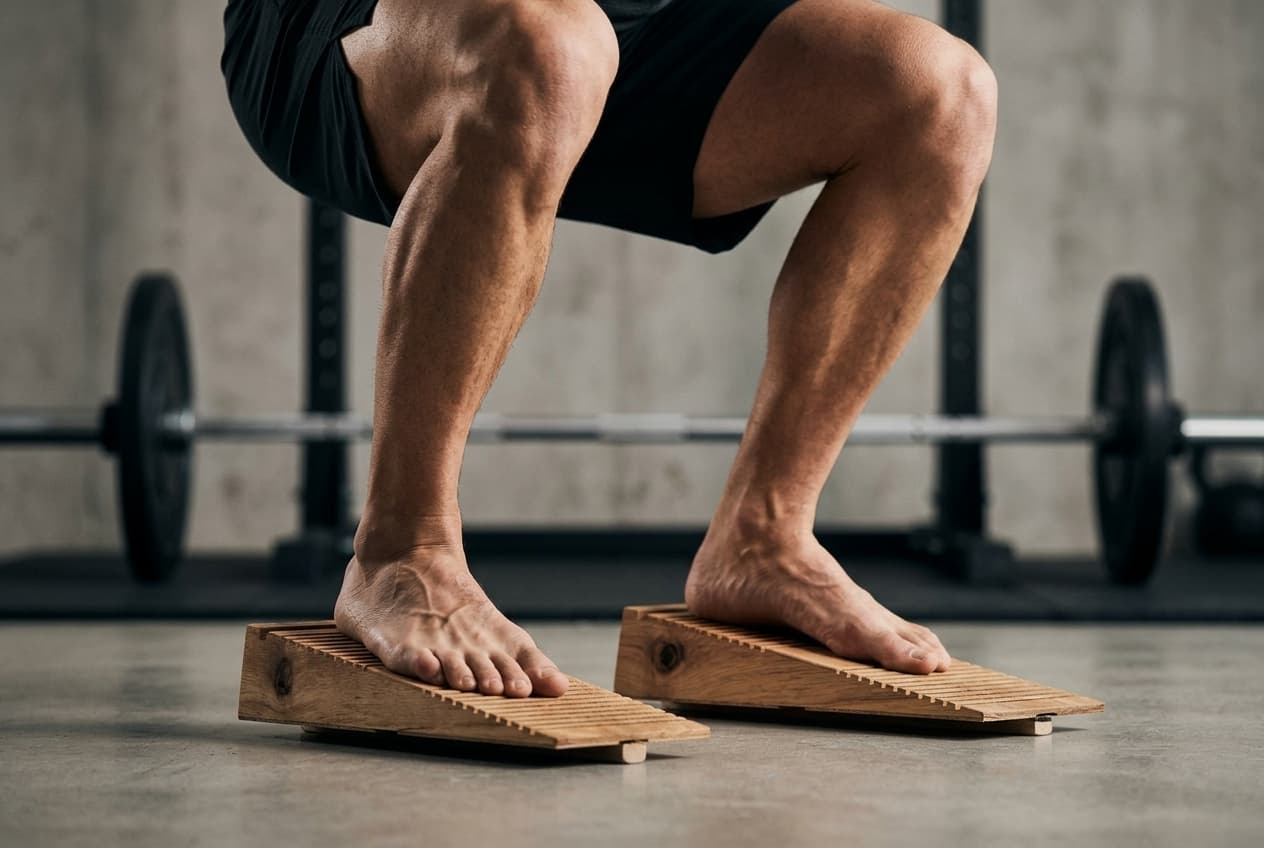
In this series, we've learned how to meticulously plan heavy lifts, optimize training parameters, and stabilize the core. However, even the most impressive upper-body powerhouse is useless if your direct foundation to the ground is unstable. Every squat, lunge, and deadlift stands or falls with your feet. Sports science shows: strength starts at the foot – and biomechanical errors at the base propagate upwards like a chain reaction.
The Biomechanics of the Foundation: The Three-Point Stance
When we move heavy loads at the base, the pressure distribution on the ground is the crucial factor for stability. In exercise science, we refer to the so-called three-point stance. Body weight should be evenly distributed across three anatomical pillars:
- The first metatarsophalangeal joint (base of the big toe)
- The fifth metatarsophalangeal joint (base of the pinky toe)
- The heel
If contact is lost at any of these points – for example, because the arch of the foot collapses inwards – the entire kinetic chain above it becomes unstable. A stable three-point stance ensures that your foot arch functions as an optimal shock absorber and force transmission platform.
The Ankle as a Bottleneck: Why Stiffness Blocks Your Knees
An extremely common problem in strength training is limited mobility in the upper ankle joint (talocrural joint), more precisely, a lack of dorsiflexion (the ability to push the shin forward over the toes). If you try to force a deep squat with stiff ankles, an evasive movement will inevitably occur:
Either your heels lift off the floor, causing you to lose balance, or your foot collapses inwards. This inward collapse leads to a functional valgus collapse of the knee (knee valgus). This causes the knees to move inwards under load, which puts enormous stress on the menisci and cruciate ligaments. In addition, this malposition promotes overuse injuries to the shin bone – the painful shin splints (MTSS).

1. Immediate Help: Heel Elevation with Balance Wedges
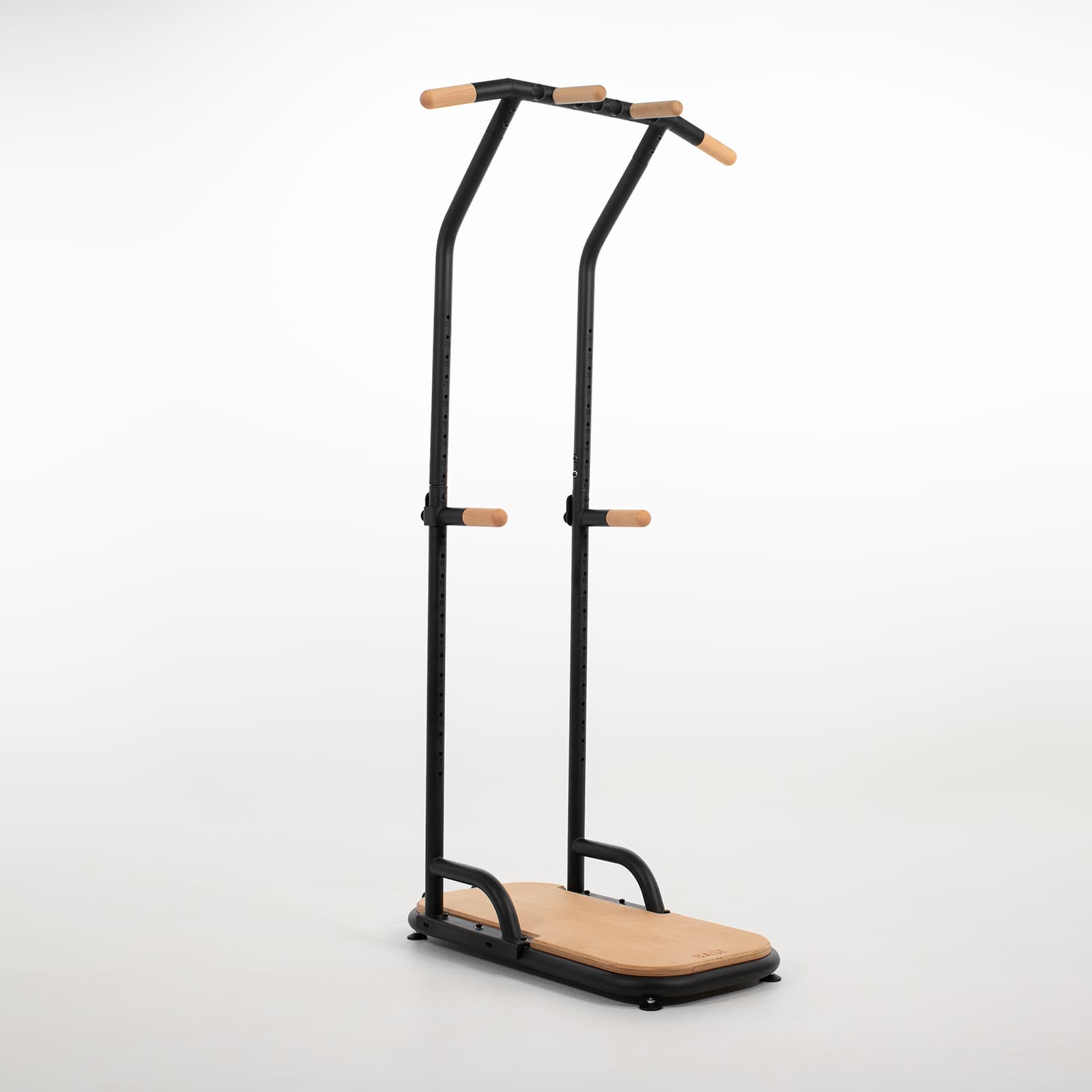
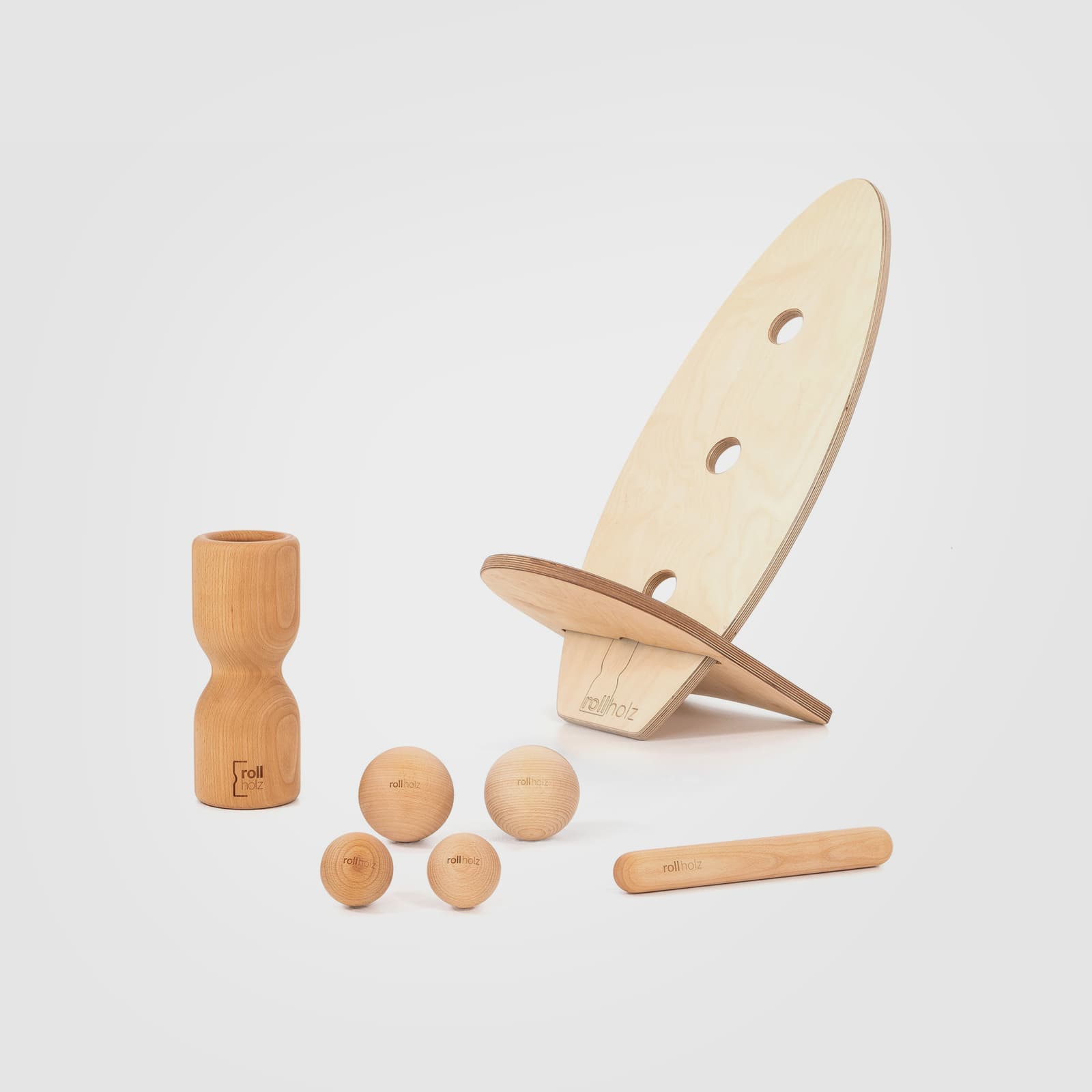
Building ankle mobility takes time. To be able to squat safely and deeply immediately during training on the rollholz Base, we use a biomechanical trick: artificial heel elevation with the rollholz Balance Wedges.
The effect: By placing your heels on the wedges, you reduce the required ankle angle. You can immediately squat significantly deeper and with a perfectly upright torso, without losing your stable three-point stance. The target muscle (quadriceps) experiences maximum stretch and thus a significantly stronger hypertrophy stimulus, while your lumbar spine is relieved.

2. Sustainable Correction: Reactive Axis Training
However, the wedges not only serve as a passive elevation but are also the ultimate tool in their unstable set to actively and reactively train your foot and ankle stability. The goal is to strengthen the short foot muscles and program the nervous system to keep the leg axis stable.
The exercise: Use the wedges in their unstable variant for single-leg squats (split squats) or pure balance holds in a single-leg stance. Due to the fine tilting movements, your foot must constantly work to secure the three-point stance. This quickly builds a strong foot arch, sustainably corrects misalignments in the leg axis, and protects you from spraining your ankle in everyday life and sports.
Conclusion of the Series: Seeing the Big Picture
Sustainable, scientifically-backed muscle building in the home gym is not a product of blind diligence, but of smart systematics. From the secure foundation of your three-point stance to the reactive control of your core cylinder and progressive overload at the base, every cog fits into the other. If you give your body the right structure – both in biomechanics and training planning – absolutely nothing will stand in the way of your athletic goals.
Thanks for reading!
Our 5-part Science Guide series is now complete. You now have the theoretical and practical tools to transform your home gym into an evidence-based high-end forge. Which part helped you the most? Be sure to let us know in the comments and share your progress with the rollholz community!






Leave a comment
This site is protected by hCaptcha and the hCaptcha Privacy Policy and Terms of Service apply.