
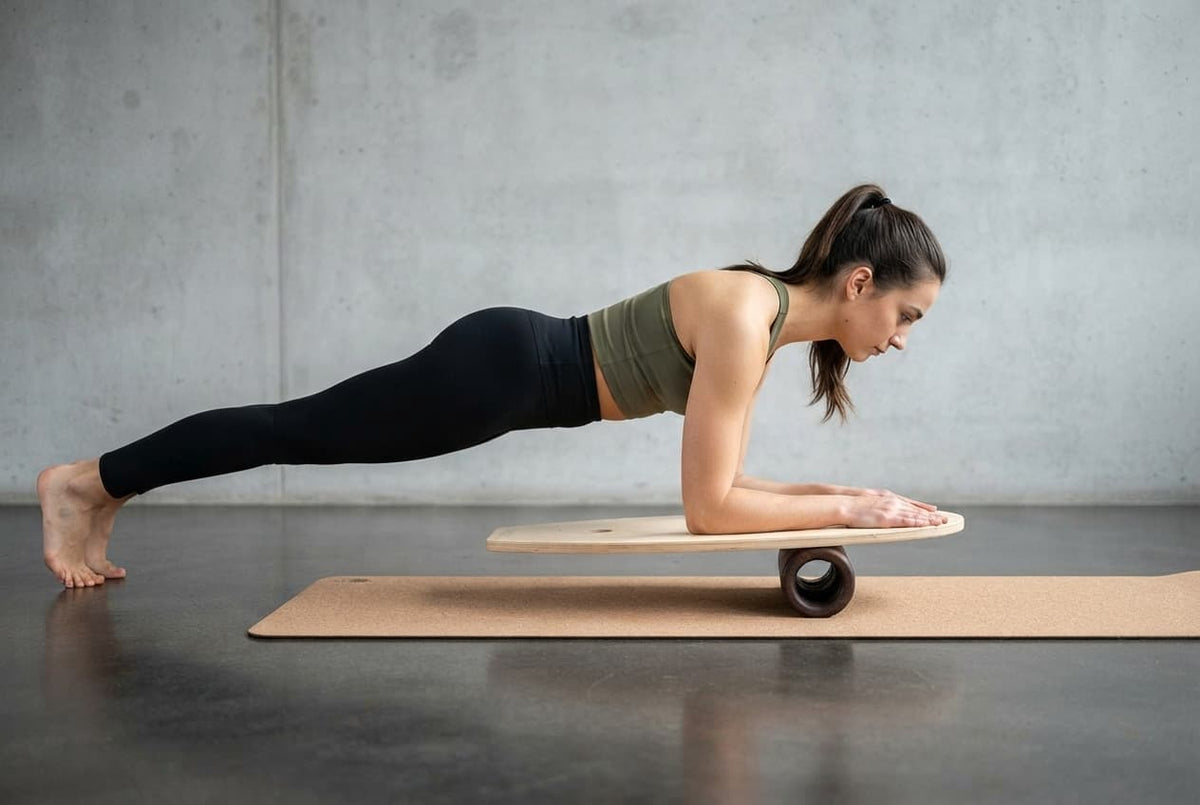
A stable core is the foundation of almost every movement: it connects legs and arms, protects the spine and determines how cleanly you move. On a Balance Board your core gets a special task, because it has to compensate for every movement of your arms or legs. Here you will find out how to train core stability with the board.
What is core stability?
The core includes the abdominal, back and pelvic floor muscles, plus the deep postural muscles along the spine. Core stability means that these muscles work together and hold the body in a stable, upright posture, even when you move. Exercises on an unstable surface activate this stabilising musculature more than exercises on a firm floor, because small corrections are constantly needed.
You can also see how to use core work in strength training in Advanced Core Training.
How does the accessory affect core work?
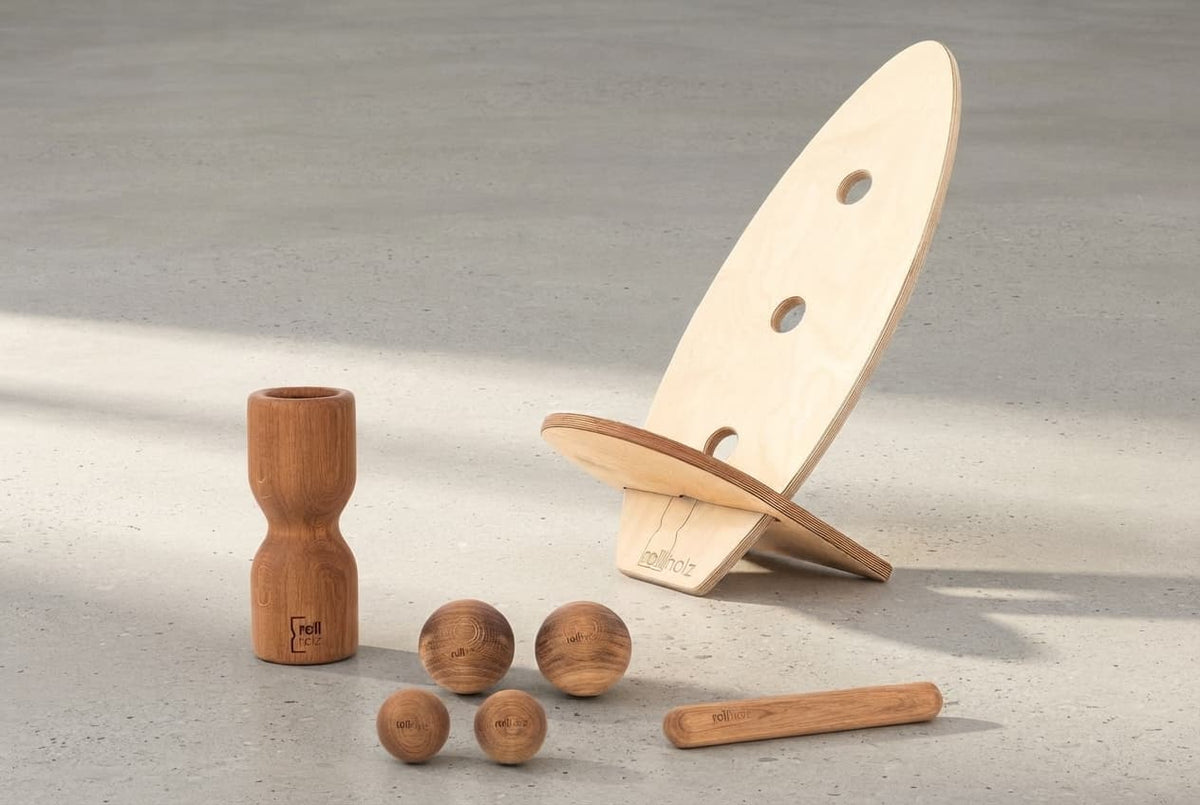
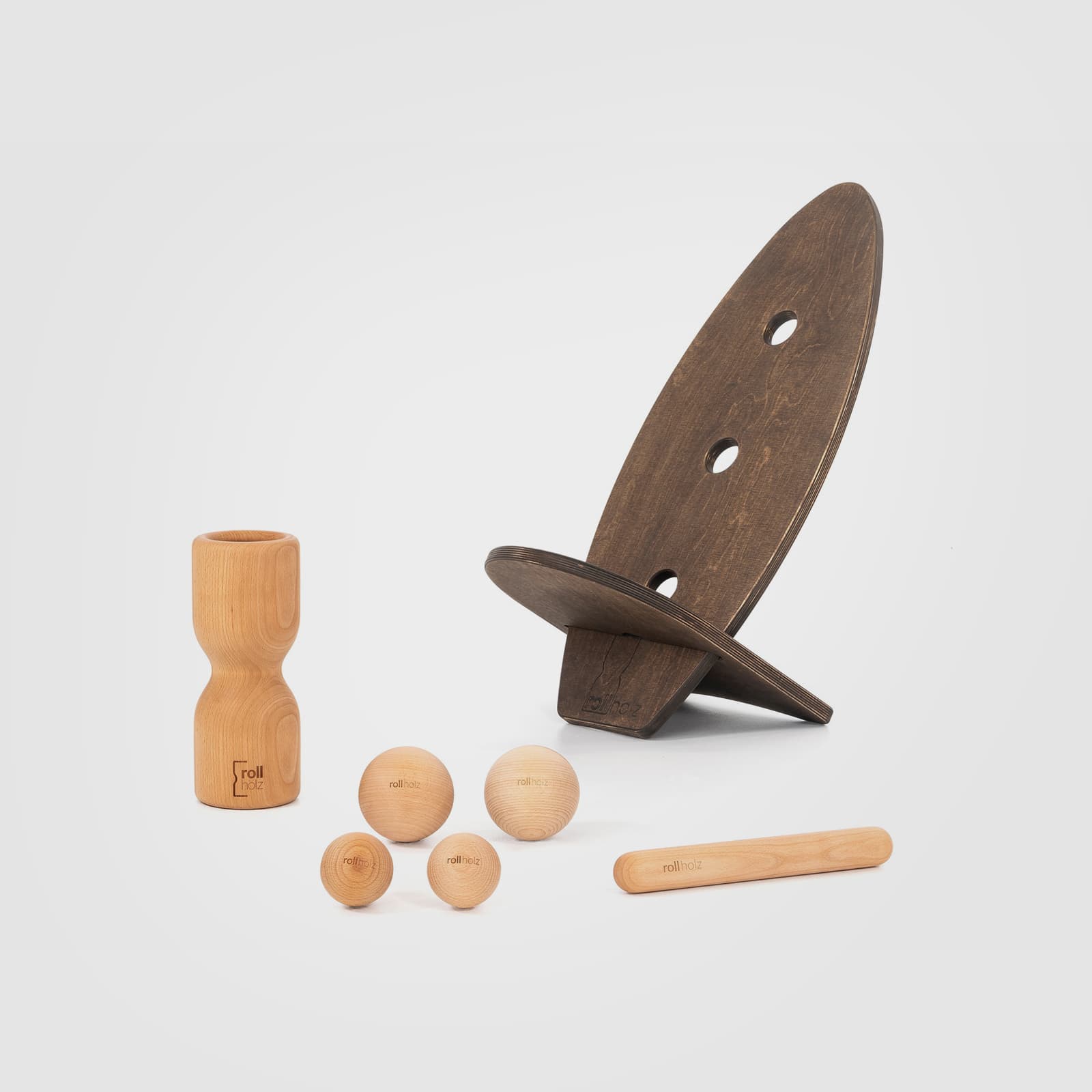
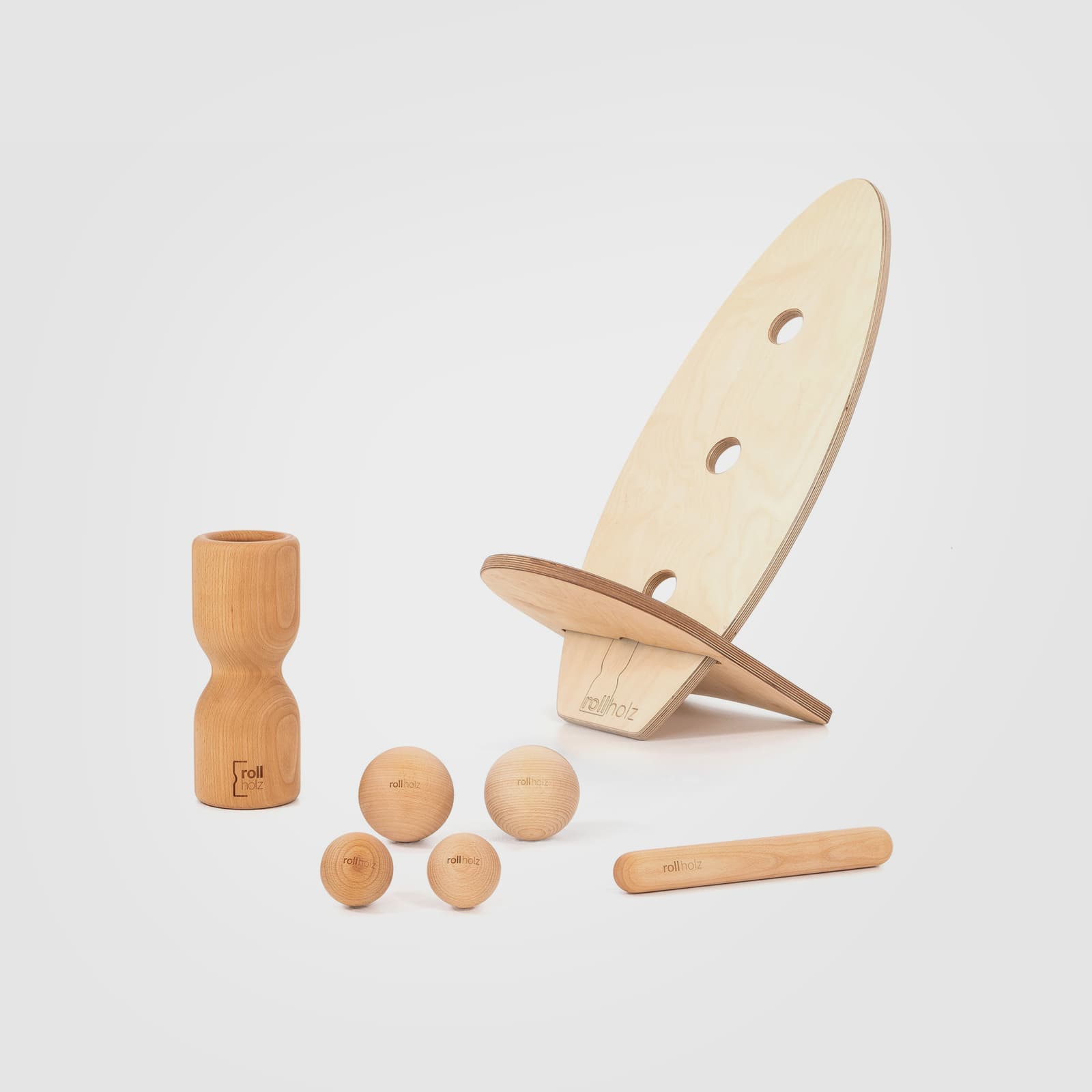
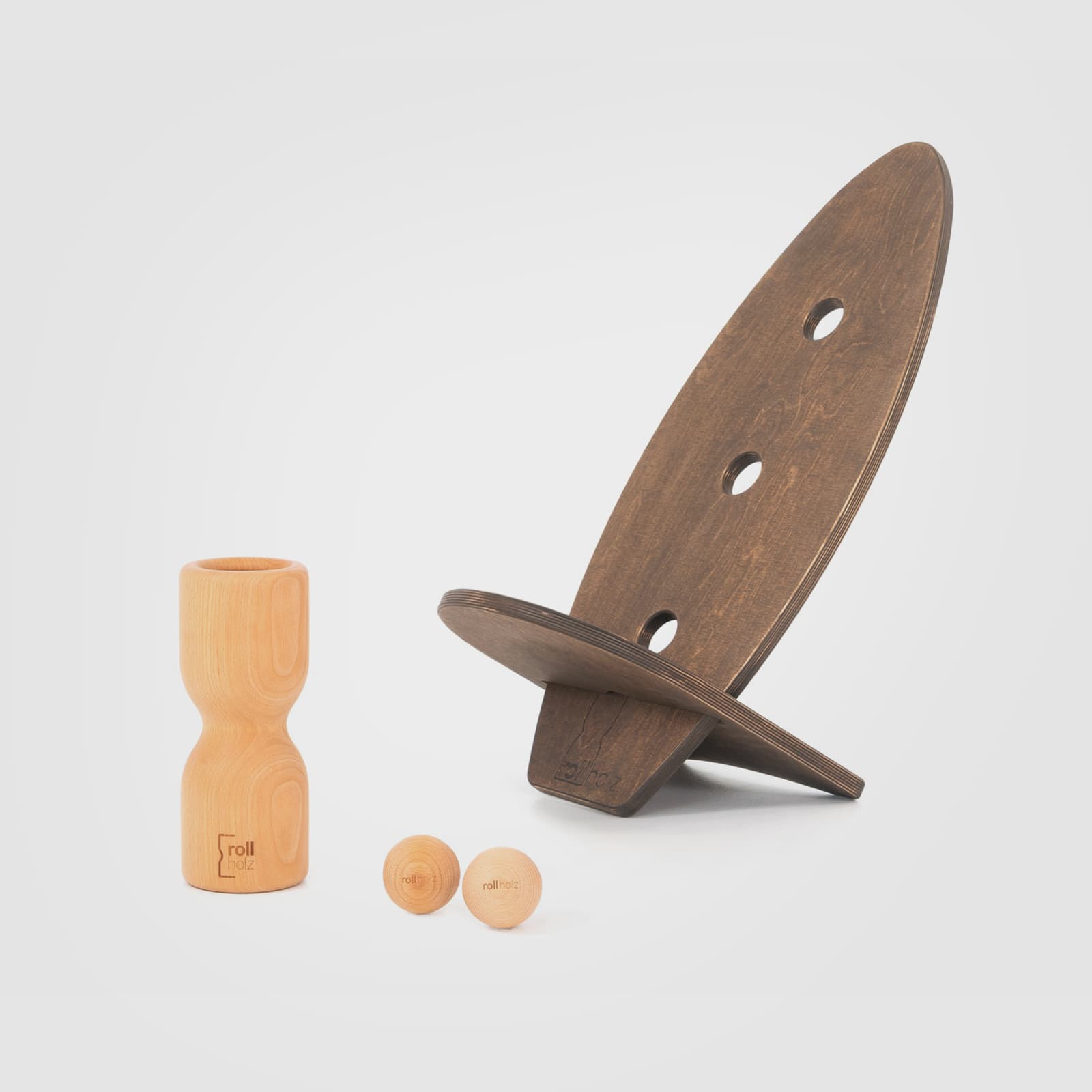
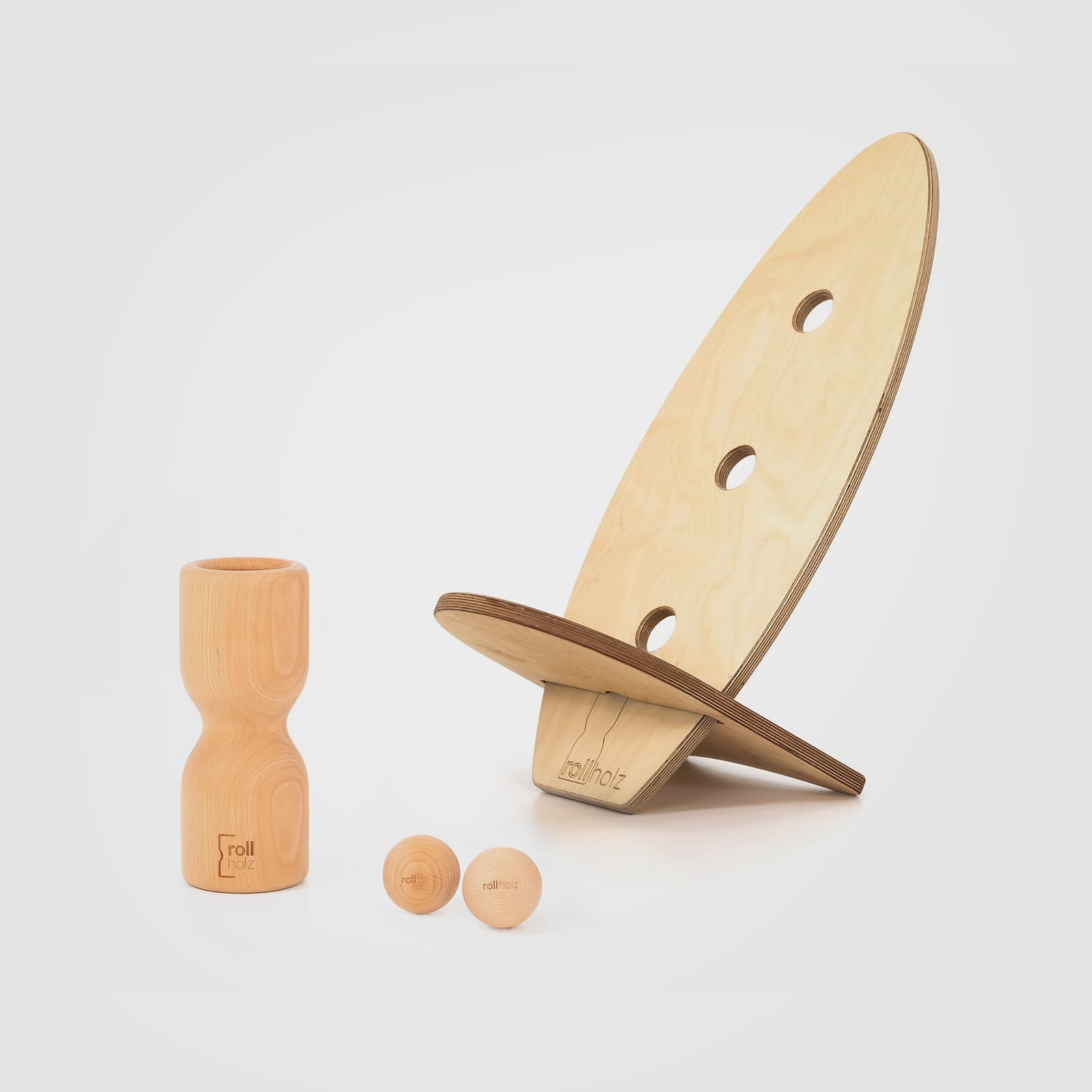
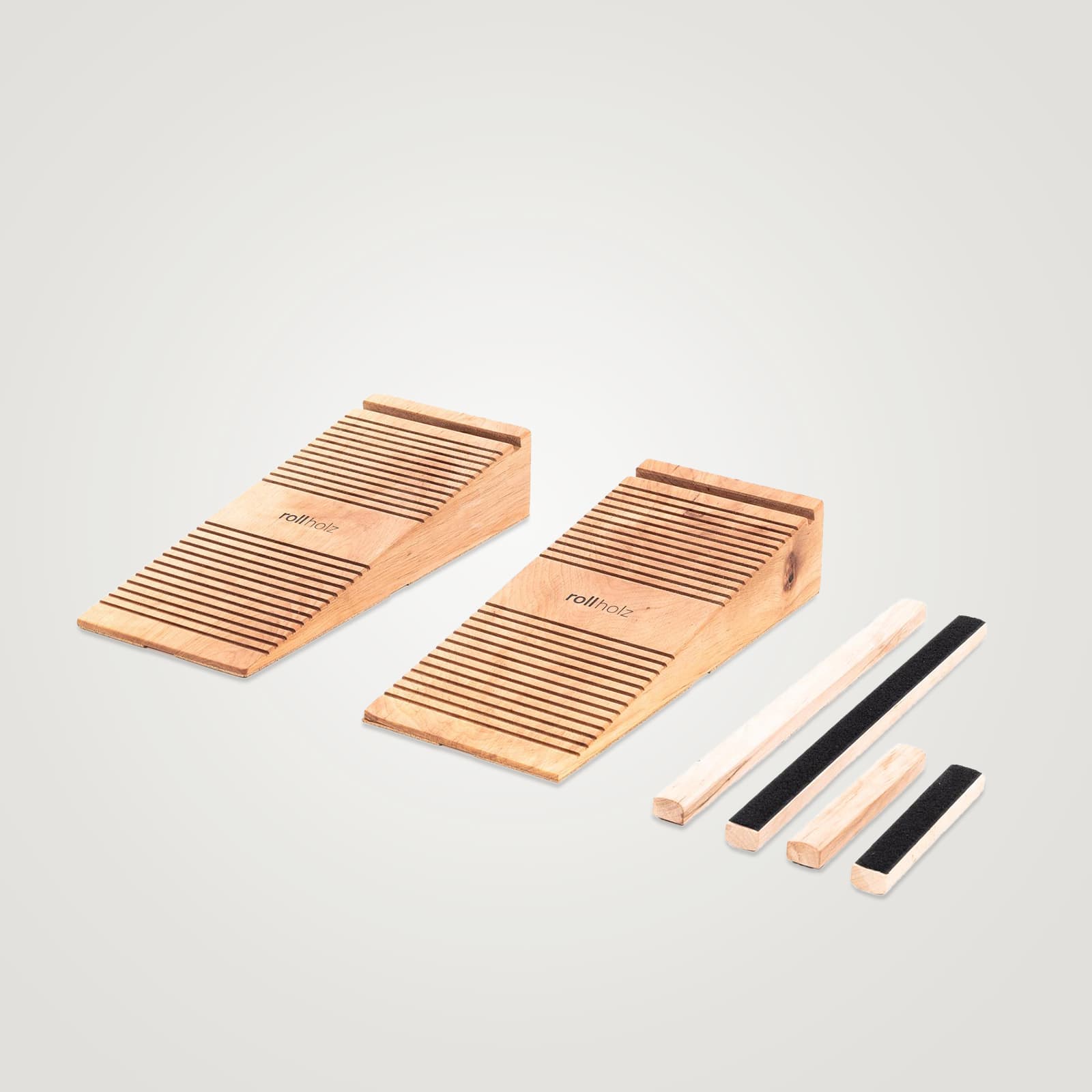
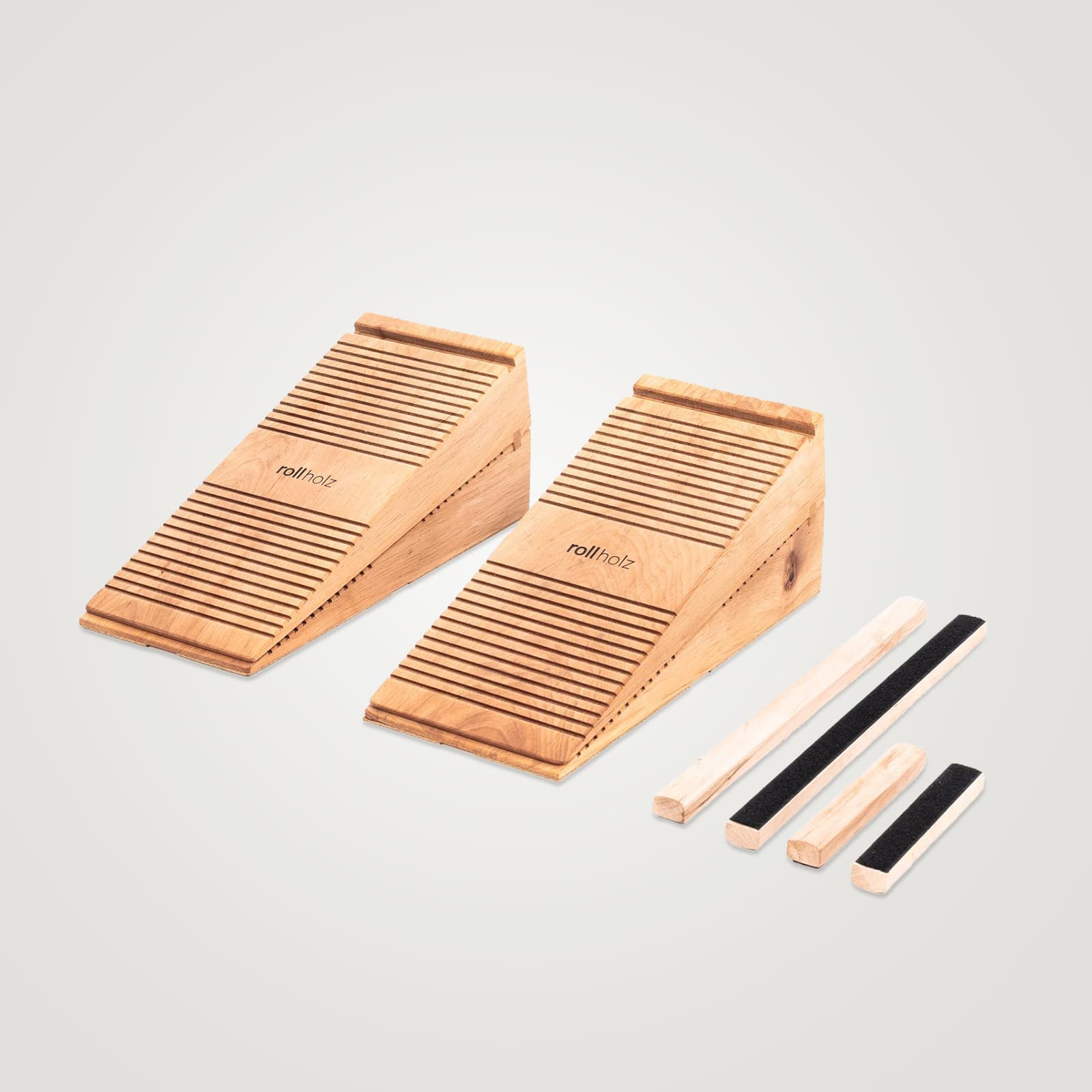
With the rollholz Balance Board, the accessory changes the range of motion:
- Mini roller under the small board: The board only rocks back and forth, you stay close to the floor, good for getting started with support exercises and plank.
- Two balls: Tilting around one axis, easier than a single ball.
- Ball size: The 7 cm balls are enough for the ankle. The 10 cm balls are taller, the board tilts more and has more range of motion, which makes it harder but challenges your core much more in the plank and the bridge.
Both ball sizes are included in the Balance Board Set Large; the Balance Board Set Small includes the 7 cm balls.
Before you start
- Practise on a mat, such as a cork mat.
- Breathe evenly and keep your head in line with your spine.
- If you have back pain, osteoporosis, high blood pressure or other pre-existing conditions, talk to your doctor first.
7 exercises for more core stability
1. Plank

Place your forearms parallel and about shoulder-width apart on the board. Stabilise your shoulder girdle, core, glutes and legs so that you don't sag into a hollow back. Hold the position for about 30 seconds at first. For the ambitious: alternately lift one foot with the leg extended.
2. Push-up

Place your hands slightly wider than shoulder-width on the board. Find your balance so that both ends of the board are in the air. When that works, try a push-up. Look forward and down.
3. Side plank

With one ball under the board, place one forearm on the board and get into the side support, with your knees on the floor or in the full lever. Keep your hip up and stabilise shoulder girdle and core. Hold for about 30 seconds, then optionally lift the top leg.
4. Bridge

Lie down on the mat with your feet on the board. Bring it into balance, then slowly lift your hips until shoulders, hips and knees form a line. For more difficulty, take your arms off the floor.
5. Seated

Sit in the middle of the board and hold on with your hands at first. Then lift your feet off the floor and hold the position. Once that works, take your hands off too.
6. On your knees

Step onto the board with both knees slightly wider than hip-width, hips pointing forward, glutes and core stabilising. Keep your balance with your feet in the air.
7. Lying on your stomach

Lie with your hips and breastbone on the board, your toes on the floor. From this position you do swimming movements or lift your arms and legs off the floor.
Sample plan: 15 minutes for the core
- Plank: 3 × 30 seconds
- Bridge: 3 × 8 repetitions
- Side plank: 2 × 20 seconds per side
- Seated: 3 × as long as possible
- Lying on your stomach: 2 × 30 seconds
Two to three times a week, with at least one day of rest in between. Progress by lengthening the time or switching to the larger balls.
Frequently asked questions
How often should I train core stability?
Two to three times a week is enough for most people. What matters is clean execution, not duration.
Is a Balance Board better than a mat?
On the floor you train the same muscles; on the board the challenge of constantly compensating is added. Both have their place.
Where can I find more exercises?
In the main article Balance Board Exercises: 15 Exercises from Easy to Hard we describe all exercises in detail; you can find the right board in our range of Balance Boards.


Leave a comment
This site is protected by hCaptcha and the hCaptcha Privacy Policy and Terms of Service apply.