
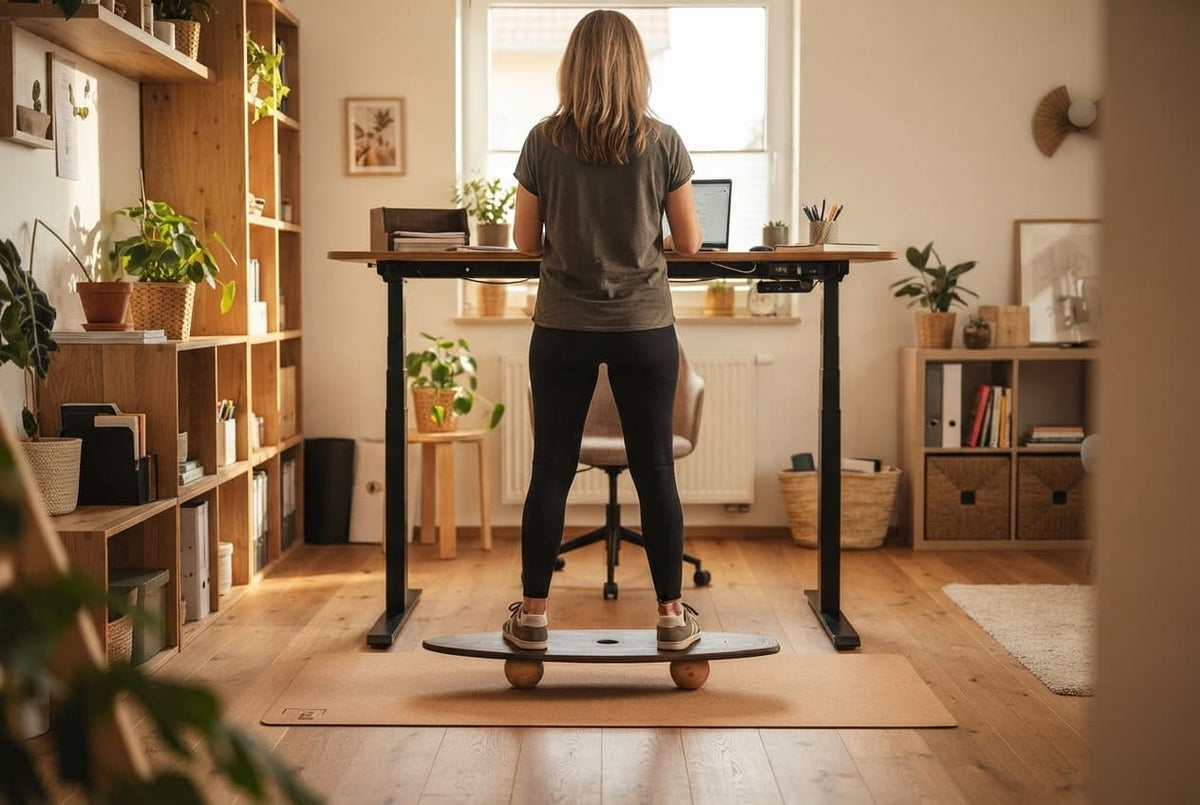
Sitting for hours is tiring, and permanent standing at a standing desk also wears you out over time. A Balance Board brings movement into the standing phases: small balancing movements keep legs, core and attention awake. Here you will find out how to use the board at the desk and what to look out for.
Why a Balance Board at the desk?
On an unstable surface your body constantly makes tiny corrections. This keeps the muscles of your feet, legs and core active without you doing classic training. Many people find standing more varied this way. A Balance Board does not replace training or breaks, though: it makes the standing phases more dynamic.
Which variant suits the desk?
At the desk you want to concentrate, not constantly balance. Even so, almost all variants are suitable; only the 10 cm balls are the least suitable, because they are meant more for core exercises. For getting started, these work well:
- Large board with two balls (Ø 7 cm): It wobbles a little more than the small board with the mini roller, but is still very manageable.
- Large board with one ball or small board with one ball: Also suitable for beginners; the ball tilts in all directions.
- Mini roller: The mini roller sits firmly in the slot of the small board, the board only rocks back and forth and stays close to the floor. You can also place it under the large board, in which case it quickly touches the floor when tilting. The calmest choice for the office.
- rollholz Pro: If you no longer have any trouble standing on the board with the rollholz Pro, you can use this combination at the desk just the same.
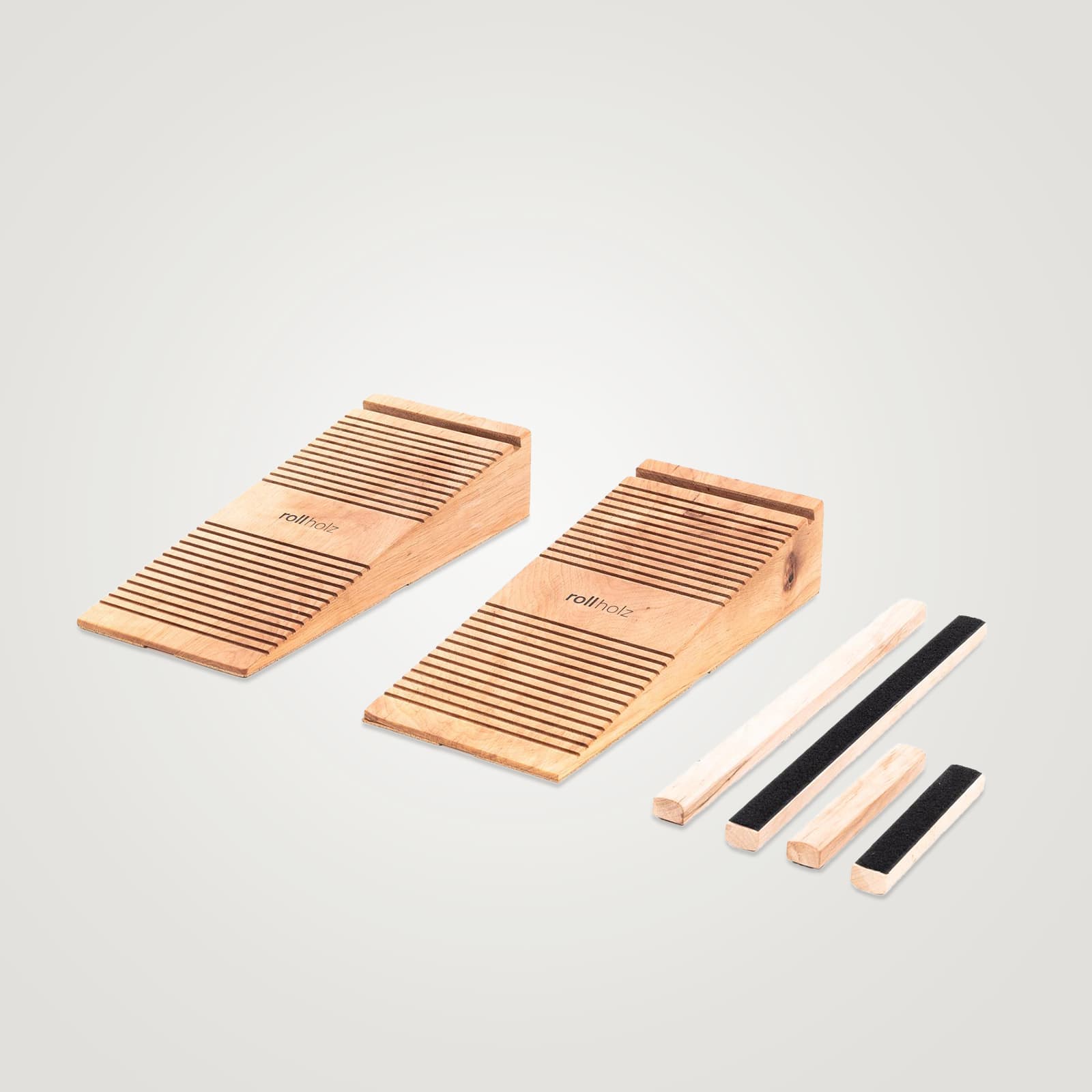
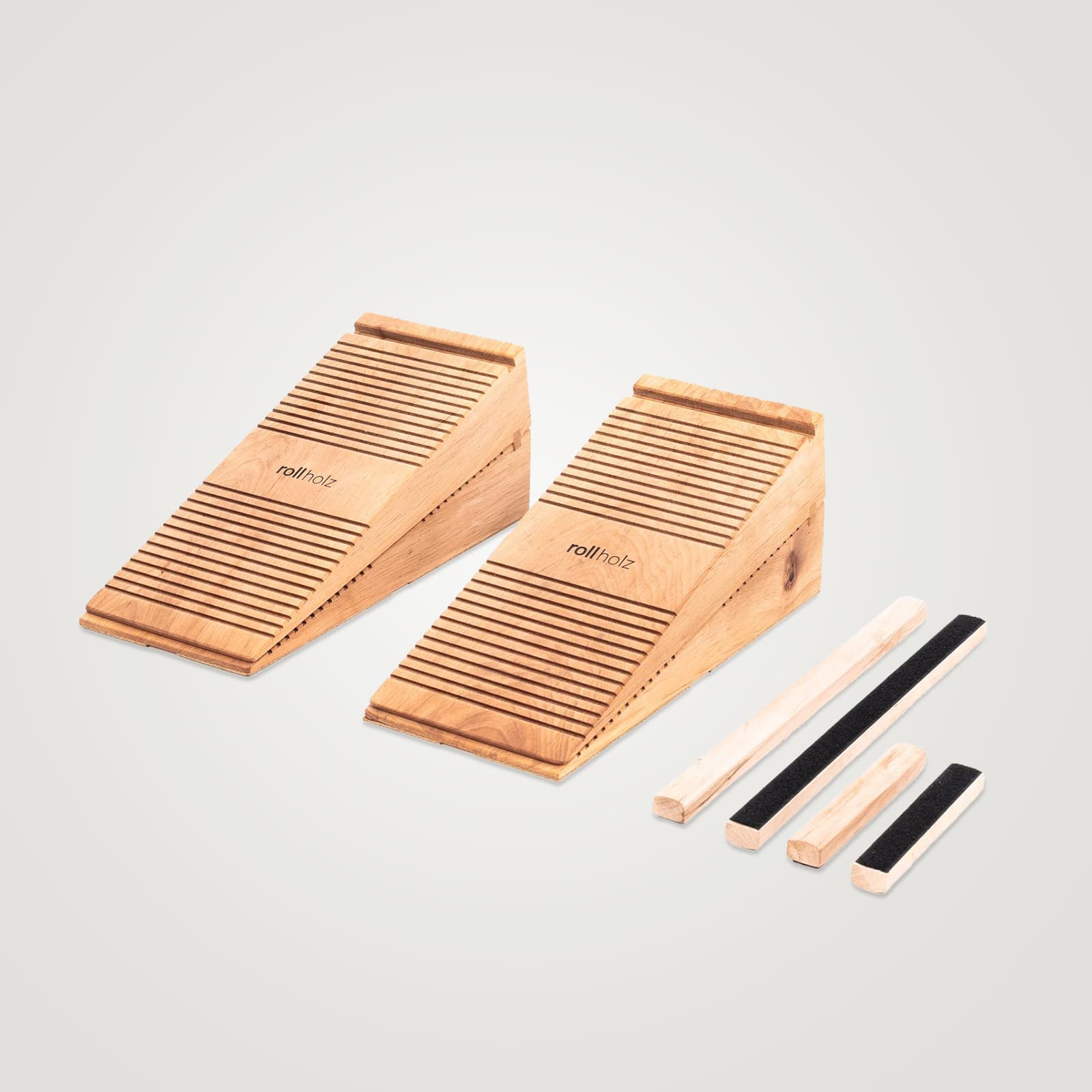
The rollholz Balance Board consists of two boards; depending on the variant you can use the large or the small one. The balance wedges are also suitable if you want to stand actively at your desk.
How to set up your workspace
- Non-slip surface: Place the board on a mat, for example a cork mat, so that it doesn't slip and the floor is protected.
- Adjust the height: Set the desk slightly higher than usual, because you stand a little elevated on the board. Your elbows stay at roughly a right angle.
- Support within reach: Hold on to the edge of the desk when getting on.
- Shoes: Barefoot or in socks you feel the board best; make sure you have a secure stance.
How long may you stand on the board?
Start with five to ten minutes at a time and increase slowly. Standing and sitting are best alternated. If you have pain in your feet, knees or back, end the session. If you have pre-existing conditions or complaints, talk to your doctor first.
Small exercises for in between
- Balancing: Bend your knees slightly and hold the board still for 30 seconds.
- Squat: Two to three slow squats, for example while waiting for a download.
- Weight shifting: Shift your weight from left to right and back again.
- Calf stretch: With two 7 cm balls under the large board, position yourself so that the board stays tilted and your heel points towards the floor. This stretches the calf, which is often shortened from long periods of sitting and standing. The balance wedges are also suitable for this. More on this in Relieving Calf and Achilles Tendon.
If you want to use the board for training, you can find more exercises in Balance Board Exercises: 15 Exercises from Easy to Hard.
And for relaxing: the board as a lounge chair
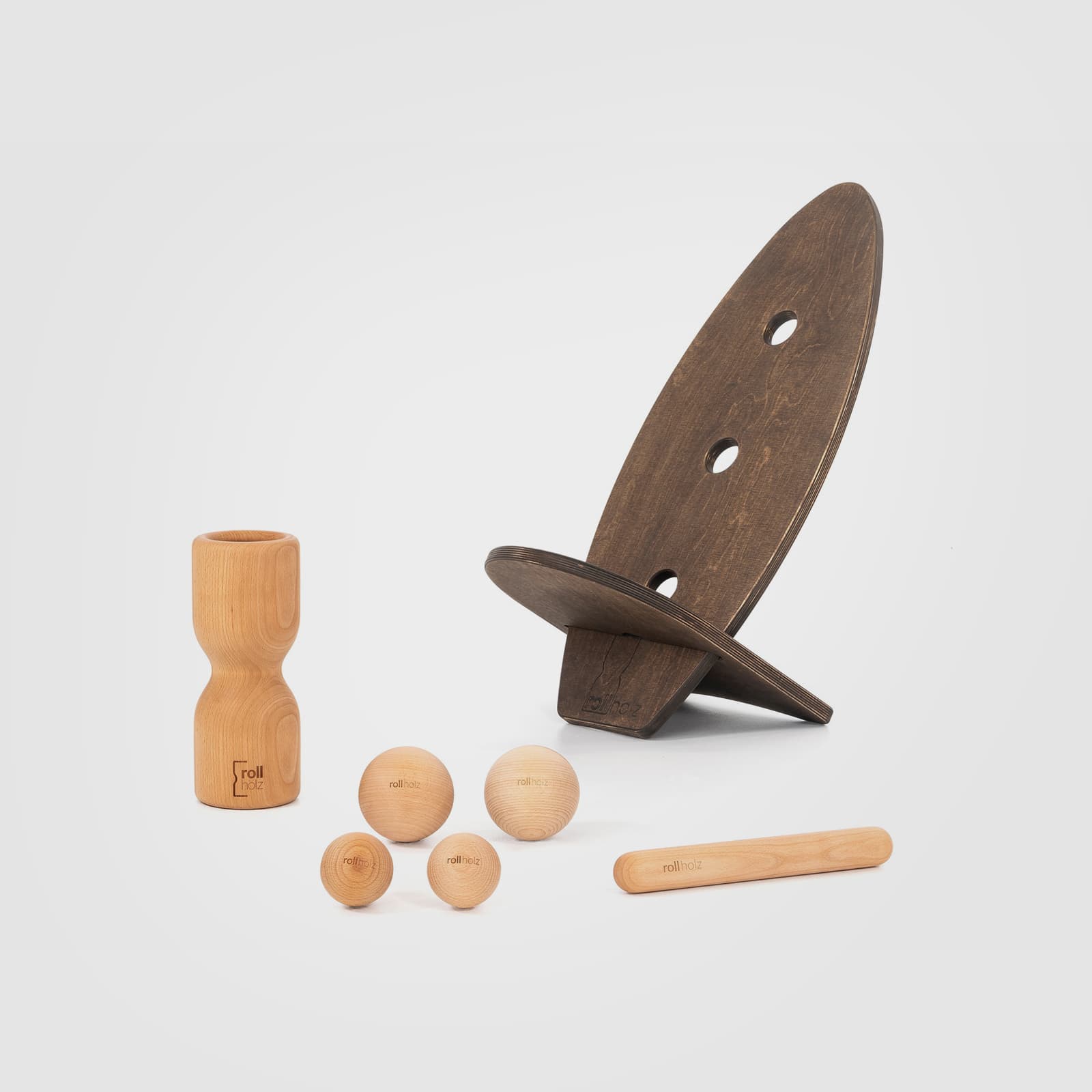
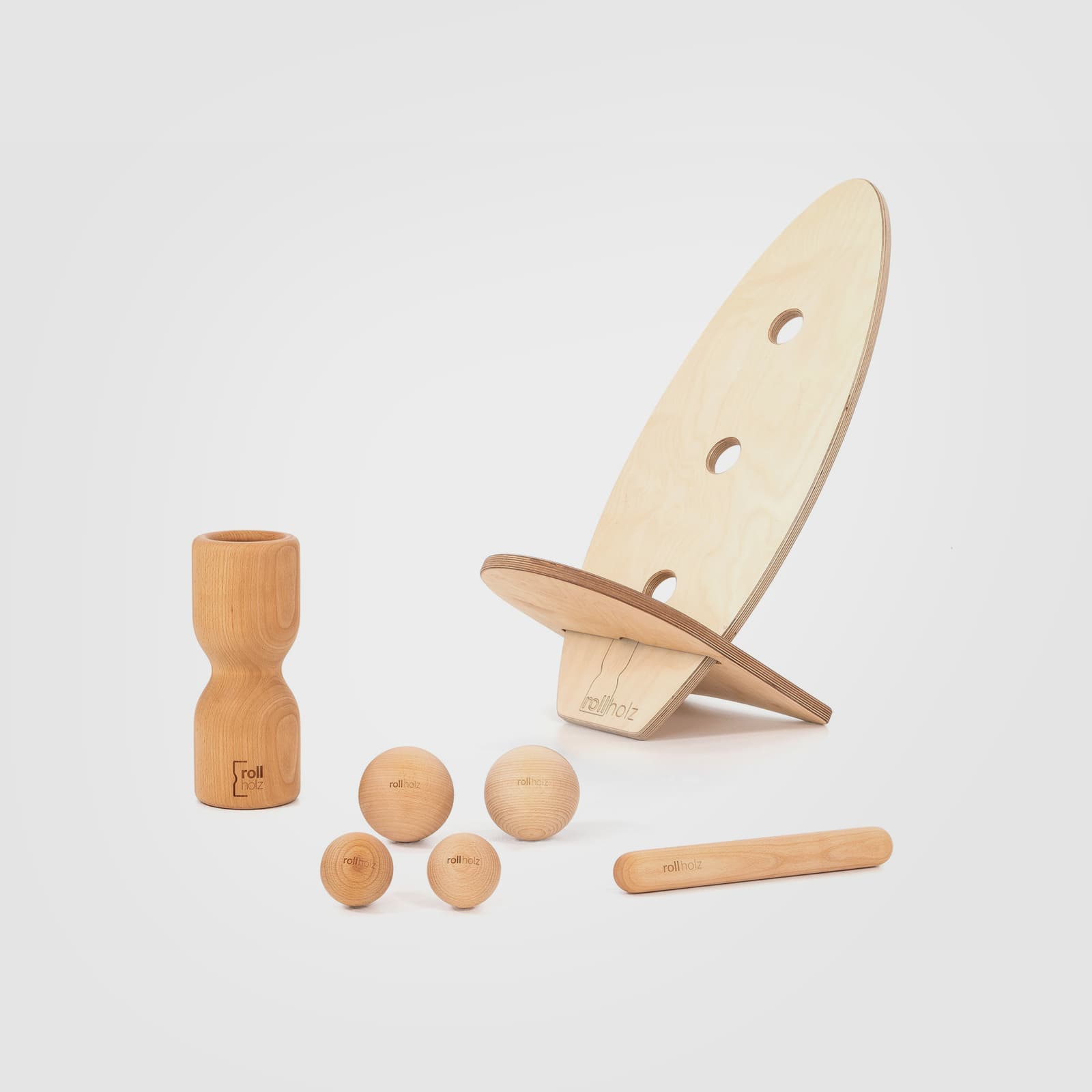
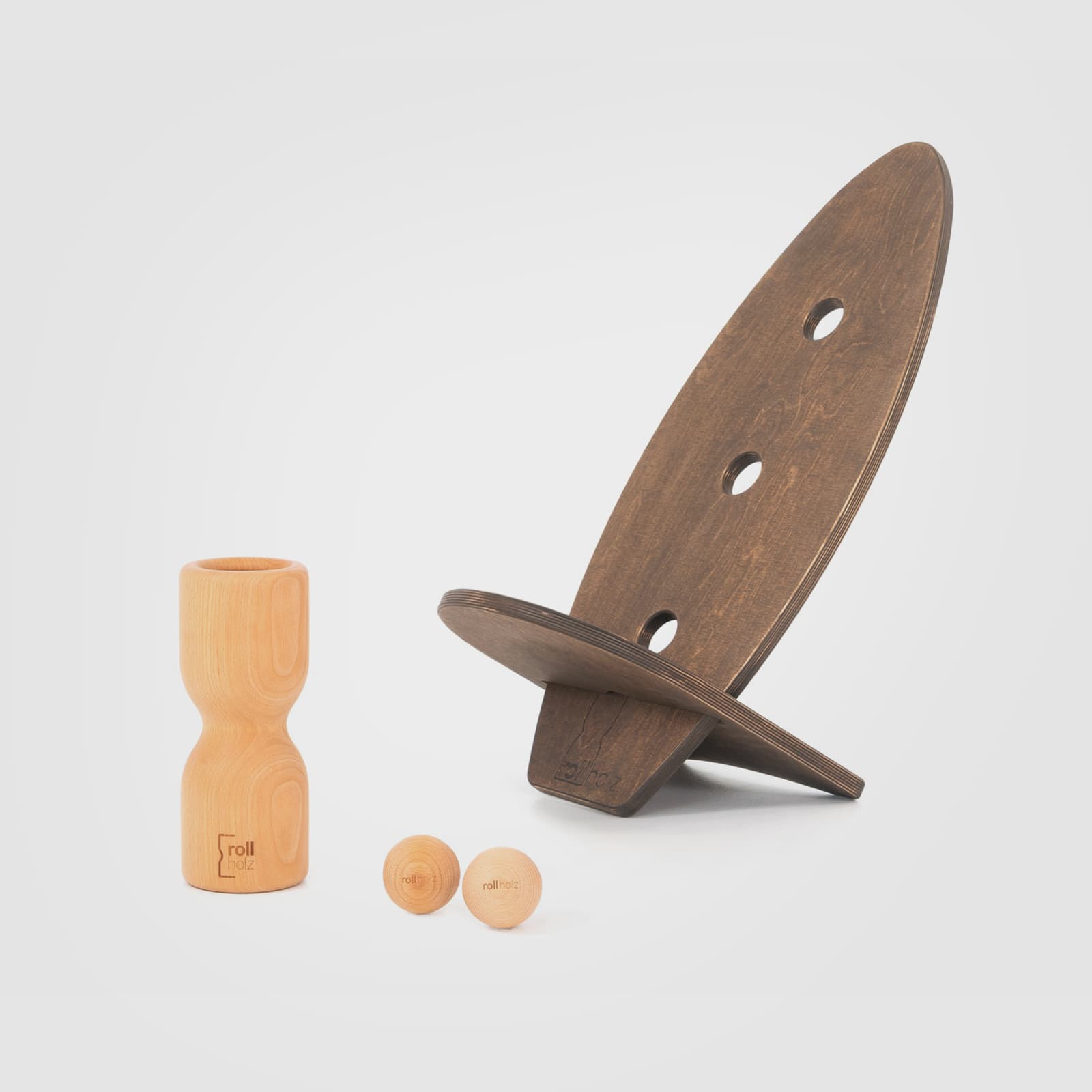
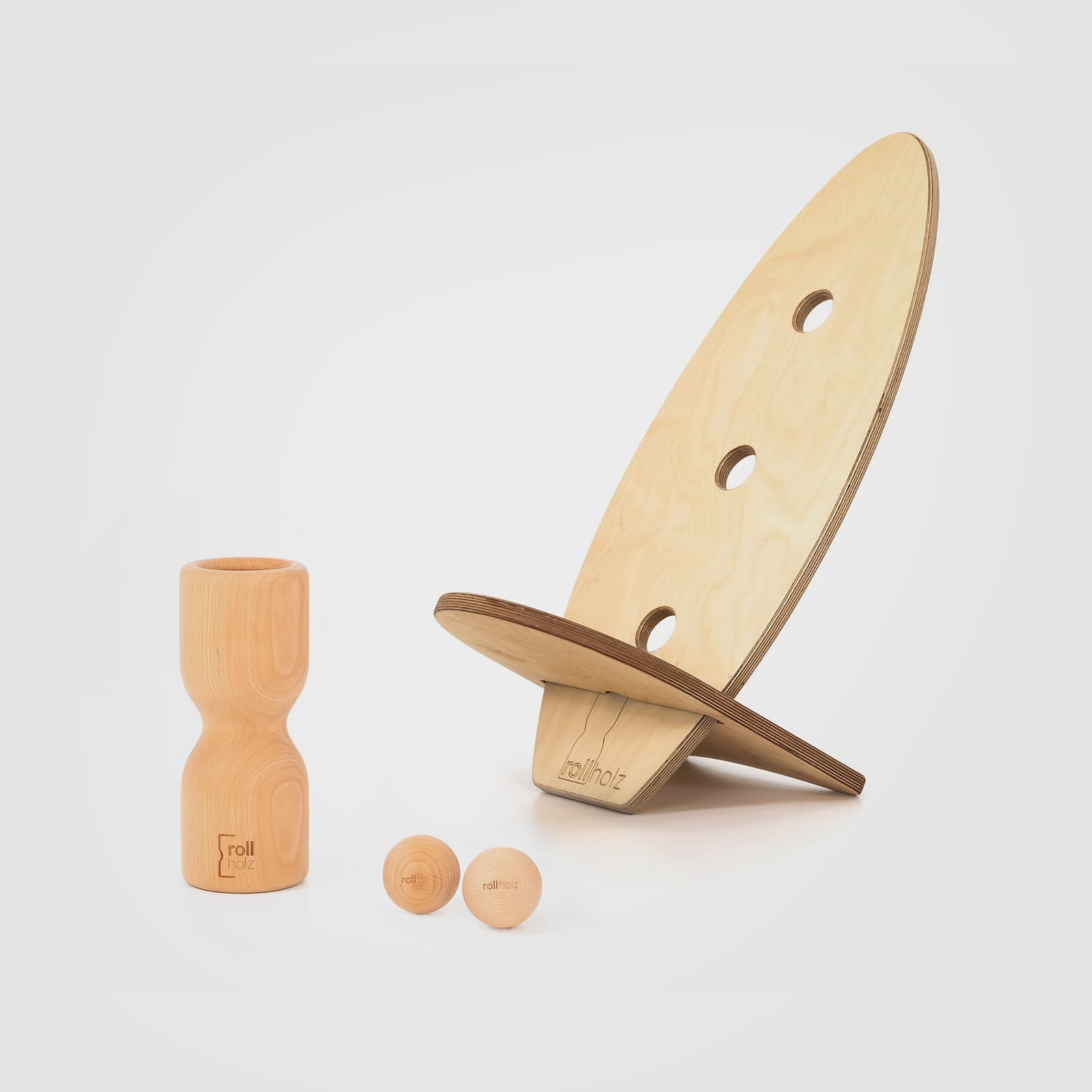
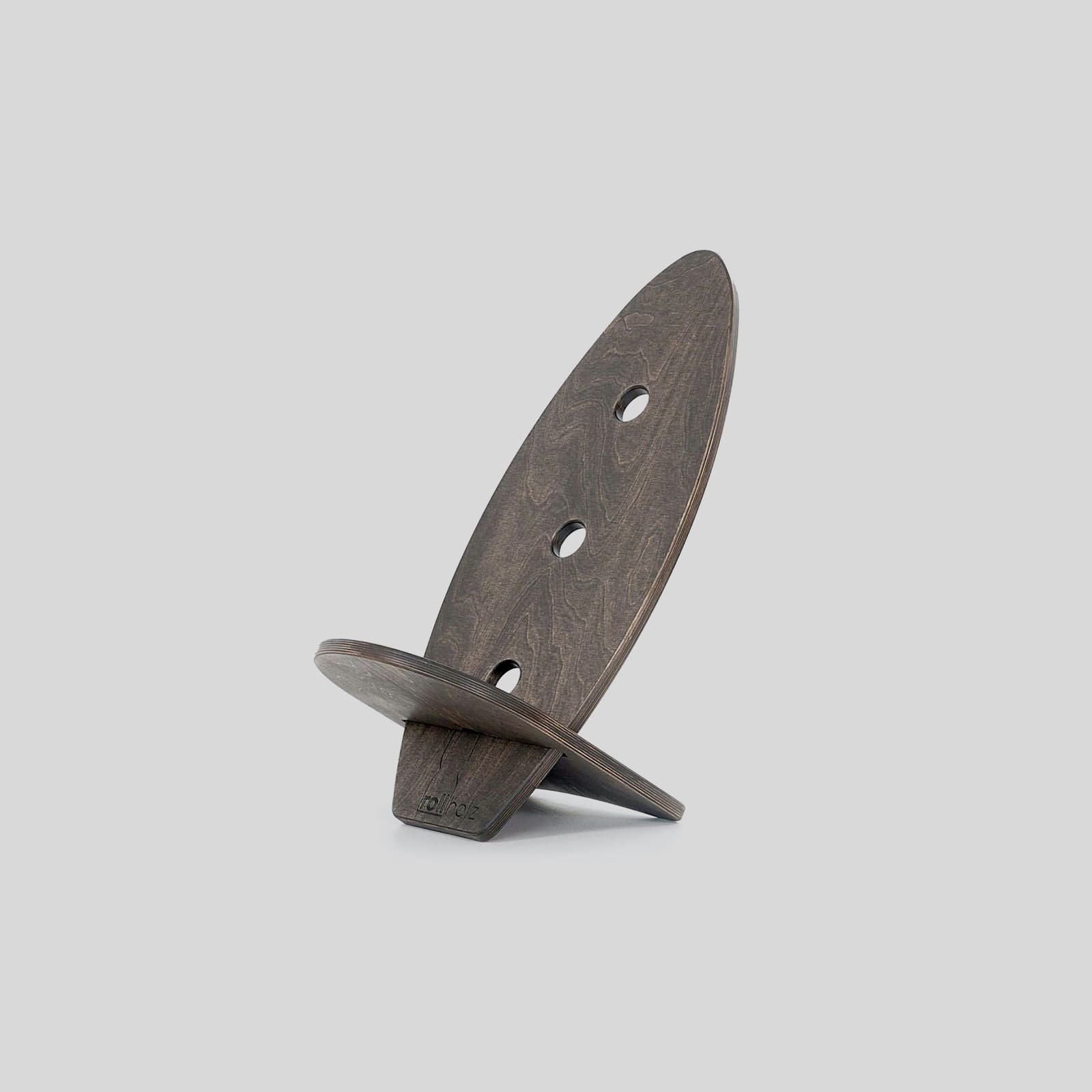
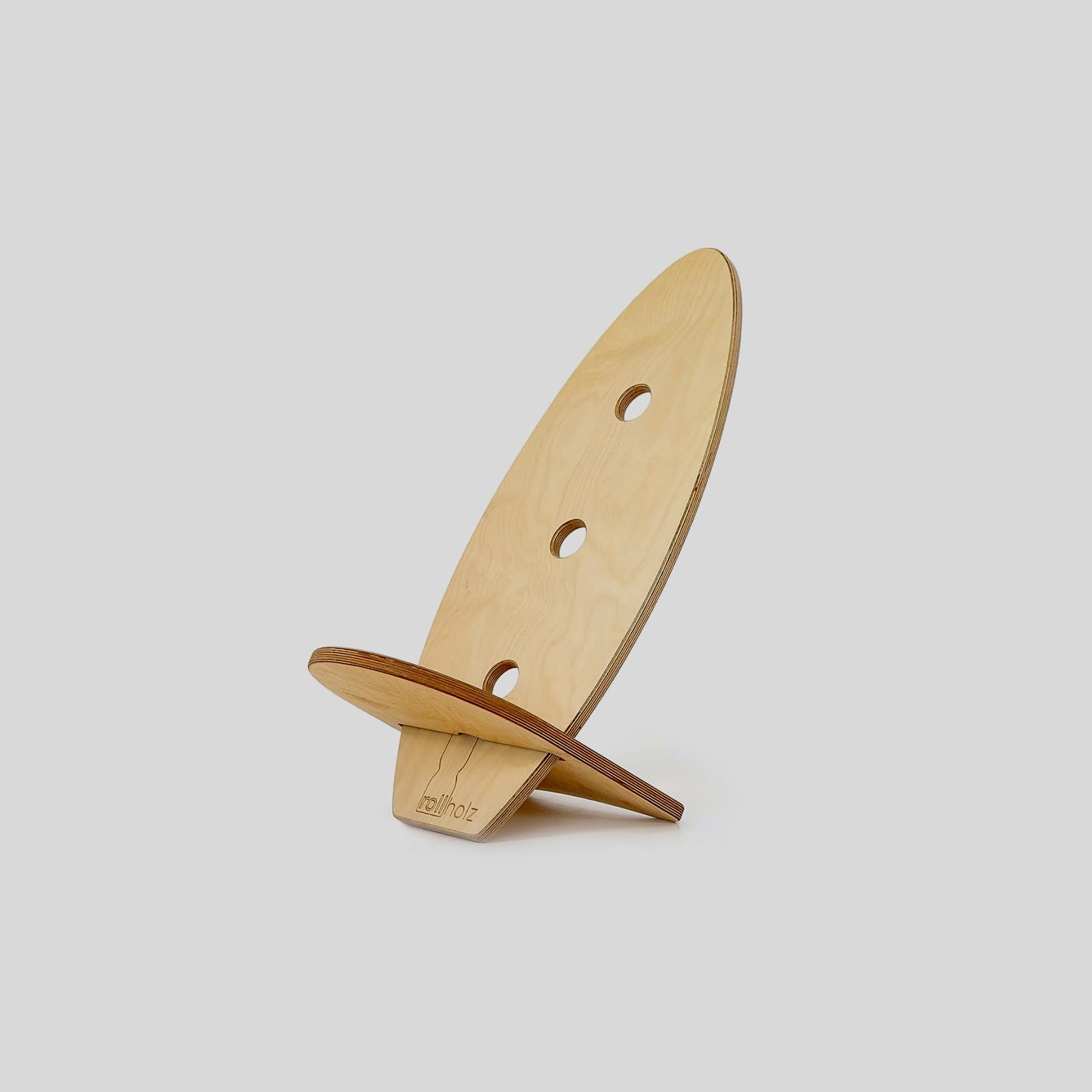
If you plug the two boards together, you get a lounge chair. During your lunch break, for reading or taking a breather, it is a nice change from the desk chair.
Frequently asked questions
Can I work and type on the Balance Board?
Yes, especially with the calmer variants such as the mini roller or two 7 cm balls under the large board. If the rocking bothers you while typing, use the board during breaks rather than permanently.
Do I need a standing desk?
A height-adjustable desk is the most practical, because you can switch between sitting and standing. Alternatively, a raised work surface will do.
Which set suits me if I also want to train?
Both sets are suitable. Two 7 cm balls under the large board are great at the desk: it wobbles a little more than the small board with the mini roller, but is still very manageable. The Balance Board Set Small includes rollholz Pro and two balls (Ø 7 cm) for this. The Balance Board Set Large additionally includes the mini roller, which is also available separately, plus balls with Ø 10 cm that are meant more for core exercises. Our range of Balance Boards gives you an overview of all variants.


Leave a comment
This site is protected by hCaptcha and the hCaptcha Privacy Policy and Terms of Service apply.