

In the previous parts of our series, we analyzed the biomechanical fundamentals of major compound exercises, adjusted hypertrophy parameters, and, in the last part, optimized deep core stability. But how does this accumulated sports science knowledge fit into your daily routine? The best equipment and most effective exercises are useless without structure. To continuously build muscle mass and avoid plateaus, you need a clever plan: the perfect training week.
The Golden Rule of Exercise Order: Always Do the Hardest First
A common mistake in home gyms is a random order of exercises. However, training science clearly shows that exercise order has a massive impact on your strength and muscle gains. The rule is: Complex, multi-joint compound exercises always belong at the beginning of your training session.
Exercises like squats or deadlifts on the rollholz Base not only challenge your target muscles but also heavily stress your central nervous system (CNS) and stabilizers. If you perform these lifts at the end of your session when you are already fatigued, your performance will drastically decrease, technique safety will suffer, and the risk of injury will increase. Isolation exercises or functional core training with a suspension trainer and balance board should therefore always conclude your session.
Frequency and Splitting: How often should you train a muscle?
To create maximum hypertrophy stimuli, training frequency is crucial. Current research shows that it is significantly more effective for muscle growth to stimulate a muscle twice a week, rather than completing the entire volume for that muscle in a single, gigantic session (the classic "bro-split").
For your home training, two highly effective models are available, depending on your time budget:
- The Full-Body Plan (3 times a week): Perfect for a time budget of three days. In each session, the entire body is trained with a focus on different basic movement patterns.
- The Push/Pull Split (4 times a week): Here, you divide into upper body pushing movements (push) and upper body pulling movements plus legs (pull). This allows you to achieve more volume per muscle group and ensures optimal regeneration windows.

Periodization: Why You Shouldn't Go All Out Every Week
Muscle growth is not linear. Anyone who tries to set new weight records week after week in every single workout will inevitably run into a plateau or an overuse injury. The magic word is periodization.
We structure your training into cycles (mesocycles) of usually 6 to 8 weeks. During this time, you progressively increase the load (weight or repetitions) from week to week. At the end of this cycle, there is a strategic deload week: the Deload.
In the deload week, you reduce training volume (sets and repetitions) by about 30 to 50% and reduce some intensity. This gives your passive structures (tendons, ligaments, joints) and your nervous system the much-needed time to fully regenerate. After the deload, you start the next cycle at a new, higher performance level.

The rollholz Sample Plan: Science in Practice
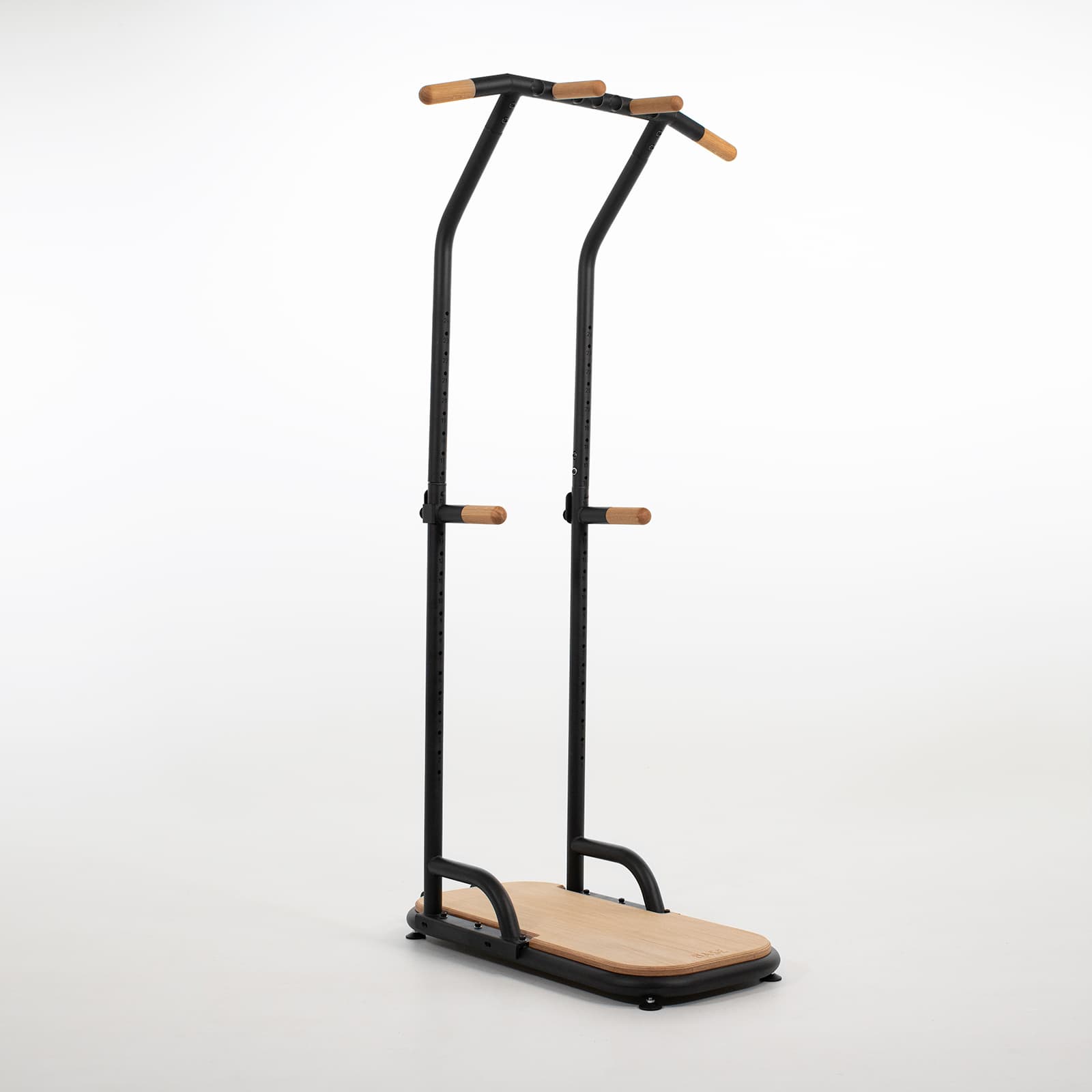
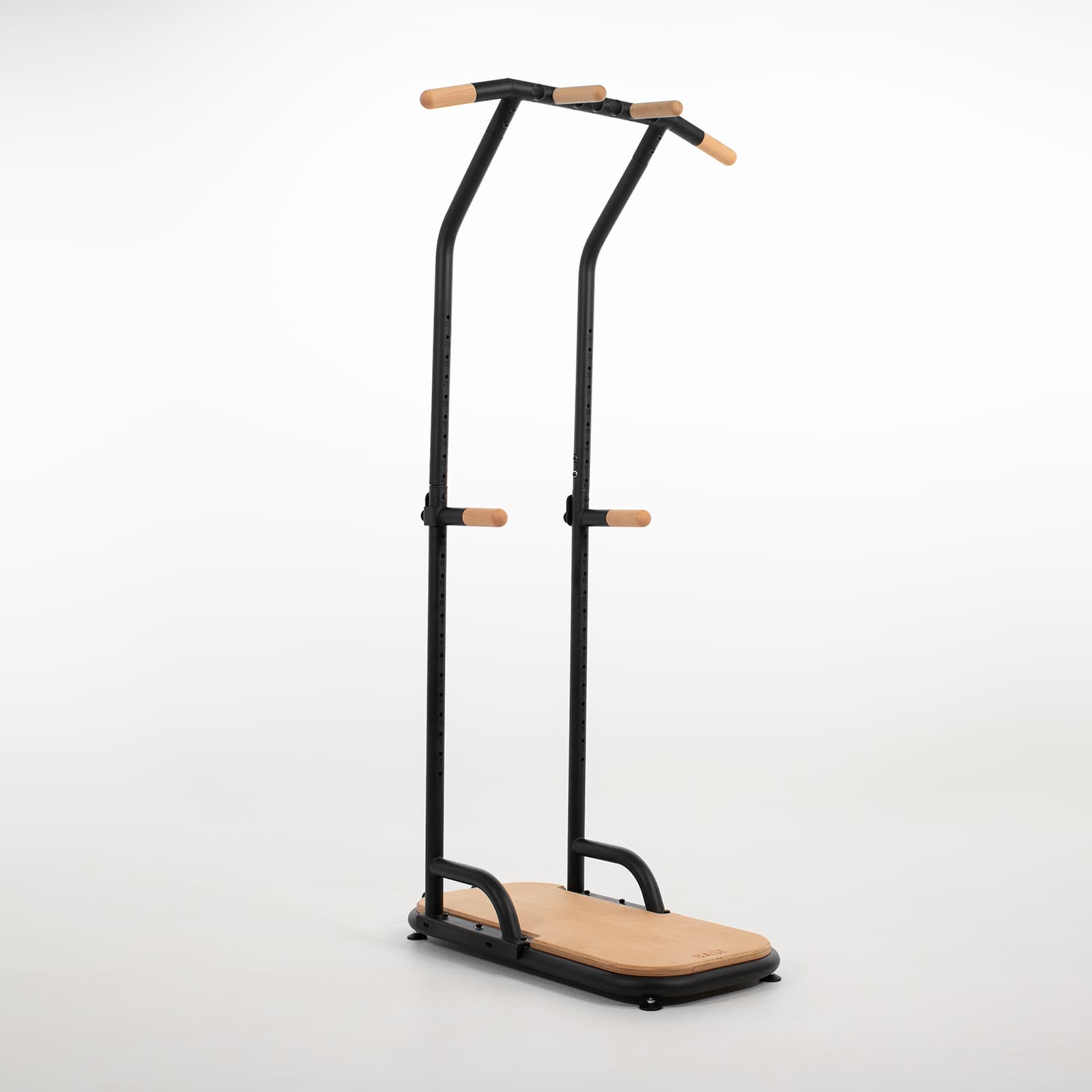
To put scientific findings into practice, we use a highly effective 3-day full-body plan. There is always at least one day of complete regeneration between sessions (e.g., Monday, Wednesday, Friday). The center of your setup is the rollholz Base, which guarantees maximum stability for heavy basic exercises and also offers space for functional accessories.
Monday: Training Session A (Focus: Squats & Push)
| Exercise / Pattern | Equipment | Sets × Reps | Rest |
|---|---|---|---|
| 1. Squats (Knee-dominant) | Base Rack + Barbell | 3 × 6–8 | 3 Min. |
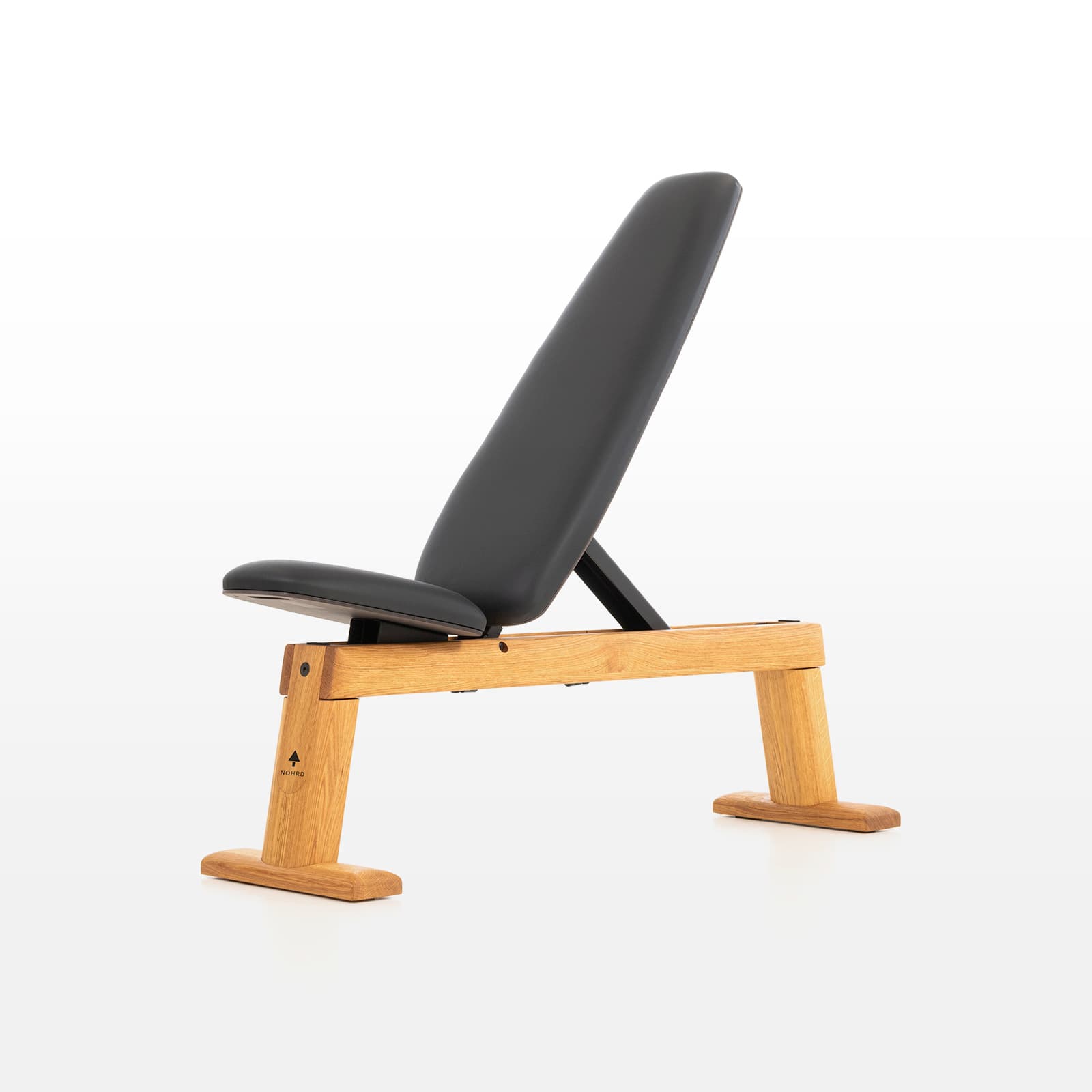
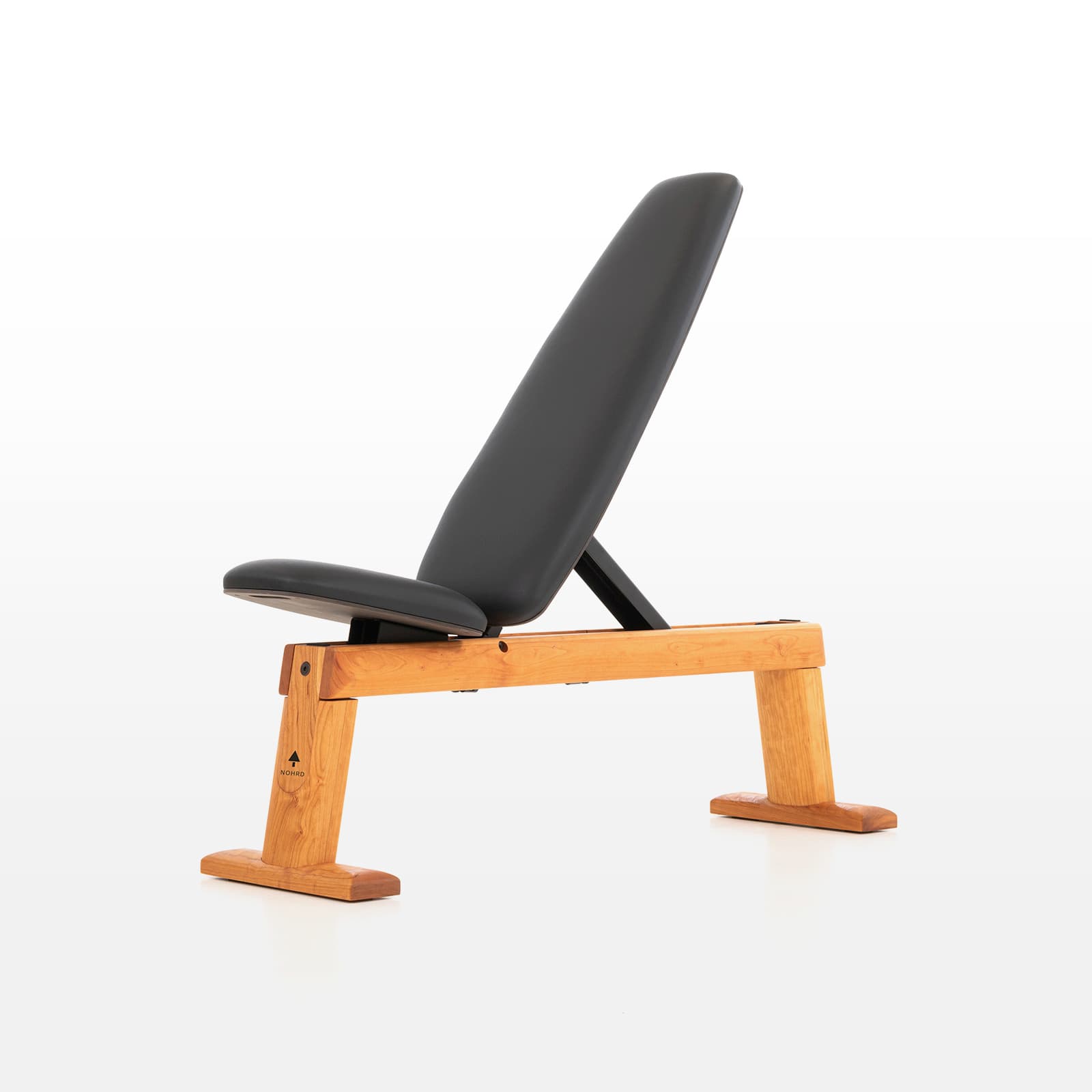
| 2. Bench Press (Horiz. Press) | Base + WeightBench + Barbell | 3 × 6–8 | 2.5 Min. |
| 3. Inverted Rows (Horiz. Pull) | Suspension Trainer on Base | 3 × 10–12 | 90 Sec. |
| 4. Core Rollouts & Planks | Suspension Trainer + Balance Board | 3 × Hold Time | 60 Sec. |
Wednesday: Training Session B (Focus: Deadlifts & Pull)
| Exercise / Pattern | Equipment | Sets × Reps | Rest |
|---|---|---|---|
| 1. Deadlifts (Hip-dominant) | Base + Barbell | 3 × 5 | 3 Min. |
| 2. Overhead Press (Vert. Press) | Base Rack + Barbell | 3 × 8–10 | 2 Min. |
| 3. Pull-ups / Lat Pulldowns (Vert. Pull) | Base Pull-up Bar | 3 × Max / 8-10 | 2 Min. |
| 4. Pallof Press (Anti-Rotation) | Resistance Band on Base | 3 × 12 per side | 60 Sec. |
Friday: Training Session C (Focus: Unilateral Strength & Hypertrophy)
| Exercise / Pattern | Equipment | Sets × Reps | Rest |
|---|---|---|---|
| 1. Lunges / Split Squats | Base + Barbell | 3 × 10 per leg | 90 Sec. |
| 2. Dumbbell Incline Bench Press | WeightBench + Dumbbells | 3 × 10–12 | 90 Sec. |
| 3. Bent-Over Rows (Horiz. Pull) | Base + Barbell | 3 × 8–10 | 2 Min. |
| 4. Hanging Leg Raises / Side Plank | Base Pull-up Bar | 3 × Max / Hold Time | 60 Sec. |
Conclusion: Structure Trumps Randomness
Success in strength training is not a product of chance, but the result of consistency and intelligent planning. By adhering to the exercise order, providing your muscles with sufficient frequency, and firmly planning deload phases, you will get the maximum out of your high-end equipment. Train hard, but train with a system.
Preview of the final Part 5:
Your training plan is in place – but is your foundation solid? In the grand finale of our series, we'll focus on the basis of all movements: foot health and axial stability. Learn why your feet determine power transfer in squats and how to effectively prevent injuries with balance wedges. Stay tuned!












Leave a comment
This site is protected by hCaptcha and the hCaptcha Privacy Policy and Terms of Service apply.