
The key points in brief
- There is no single “test winner” for balance boards – the criteria decide.
- For adults, what counts is user weight, standing surface, material and adjustable difficulty.
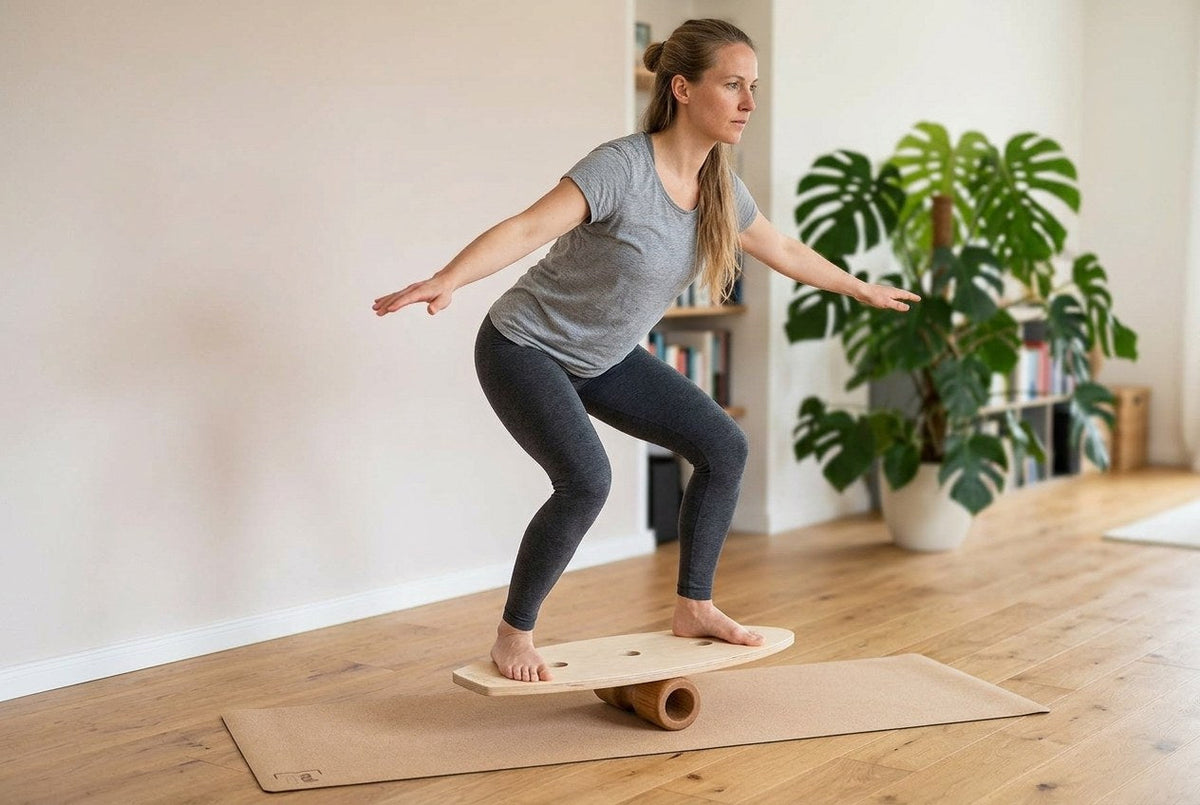
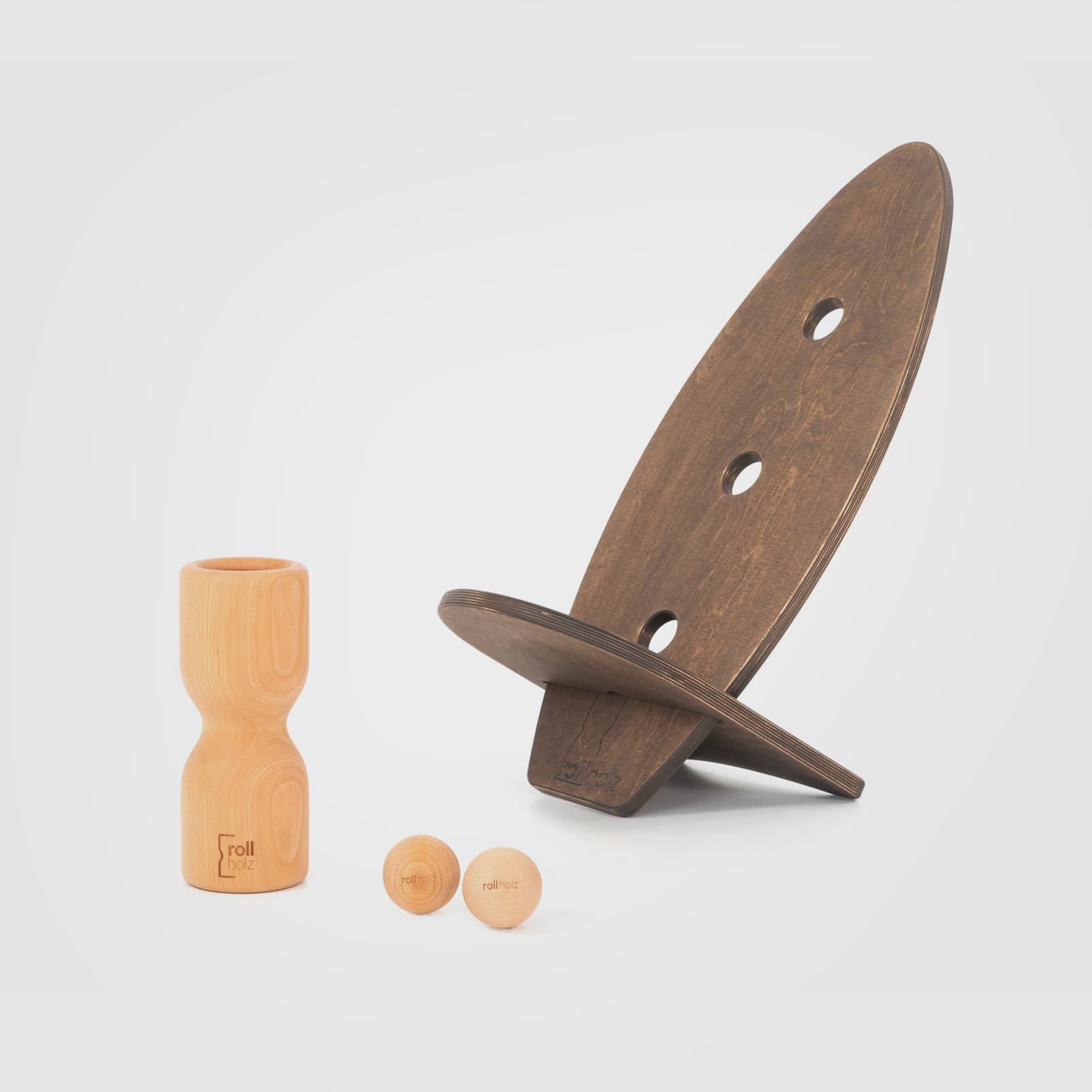
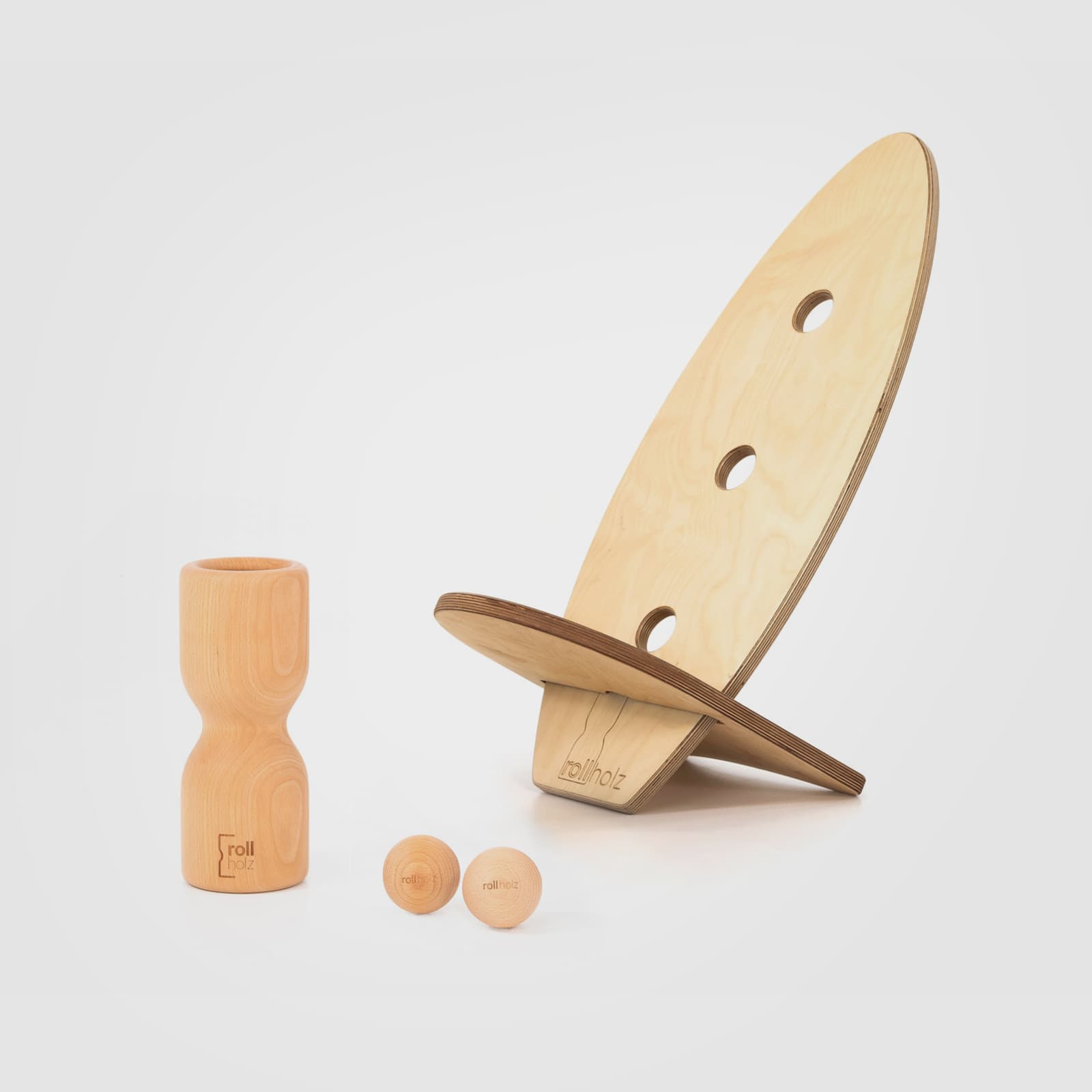
- The rollholz balance board does more than balance: it becomes a seat, and the base becomes a fascia tool.
- To get started: small set. For the full range: large set. Accessories already at home: single board.
Looking for a balance board for adults and seeing “test winner” everywhere? Then you will notice that every list names a different board. That is not down to mistakes, but to different criteria.
Here we show you seven criteria that let you find the right board yourself – and what is behind the rollholz balance board.
Why there is no single test winner
A board for the desk, one for rehab and one for surf training serve different purposes. Some lists weight the price, others the fun factor, others the build quality.
So what matters is not who is in first place, but what you plan to do with it.
Seven criteria for adults
1. Material and build quality
Wood is robust and feels direct. The rollholz balance board is made of wood, oiled dark – either with linseed oil or with hard wax oil – and is made in Freiburg.
2. User weight and standing surface
As an adult you need enough room for both feet. The large board measures 84 × 35 cm, and the board is designed for users up to 150 kg.
3. Adjustable difficulty
A good board grows with you. With the rollholz board you set the difficulty through the base:
- Mini roller: the harmless option, also for older people. Finding the sweet spot on the small roller is not that easy because of its small diameter, but the board quickly touches the floor, so you hardly fall off.
- Large roller (rollholz Pro): it is easier to stay standing on it, but the board rolls freely. The risk of falling is higher, so hold on at the start.
- Two balls: tilts in one direction, good for the ankles.
- One ball: tilts in every direction, very demanding.
For this, the large board has three holes, the small one a hole and a slot. This lets you combine base and board in many ways.
You use the small board with the mini roller in the slot: it then rocks around the axis of the mini roller, similar to the large board on two balls. With a small ball underneath, it tilts in every direction like the large board and is rather difficult.

4. Functions beyond balancing
This is where the rollholz board differs from many others. It covers three areas:
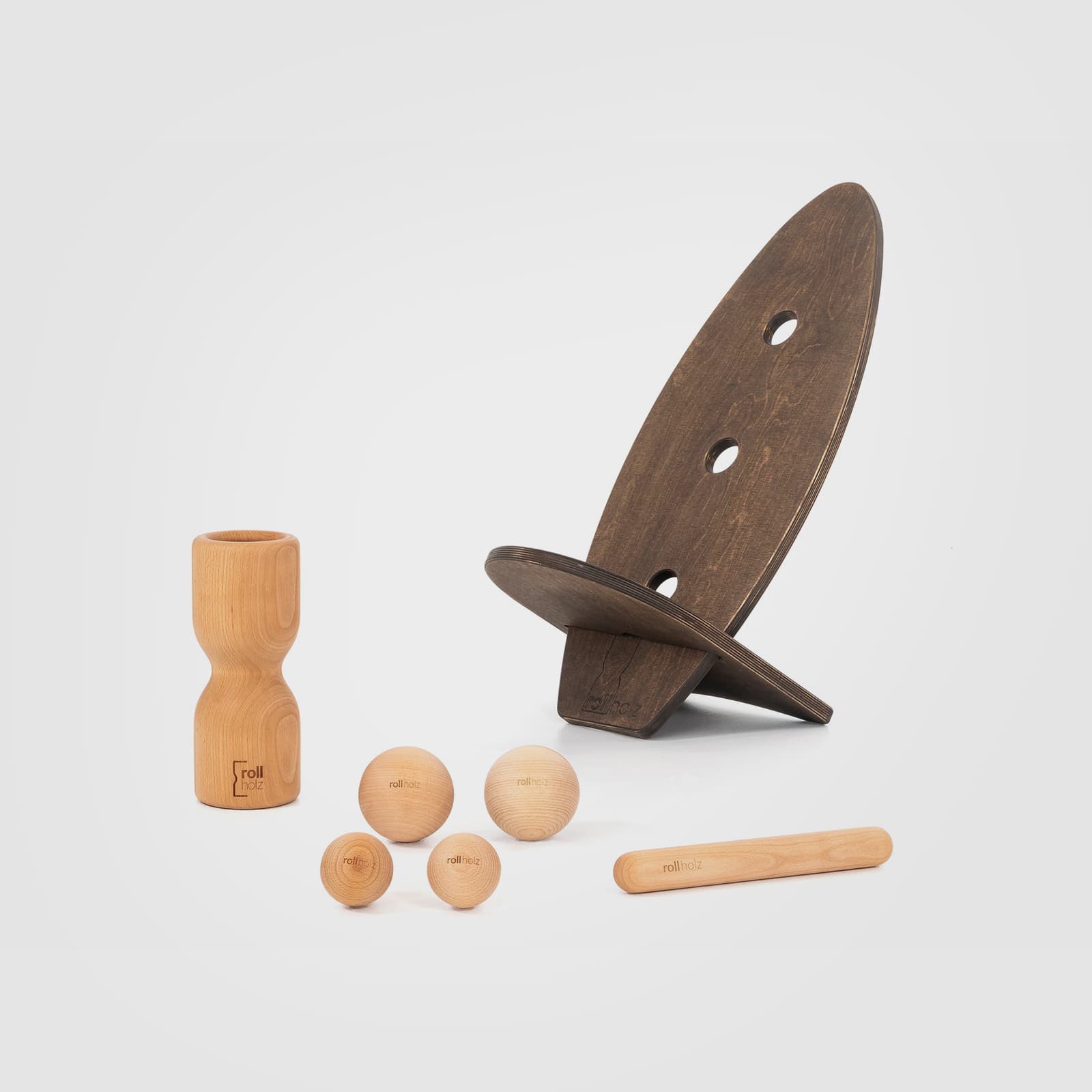
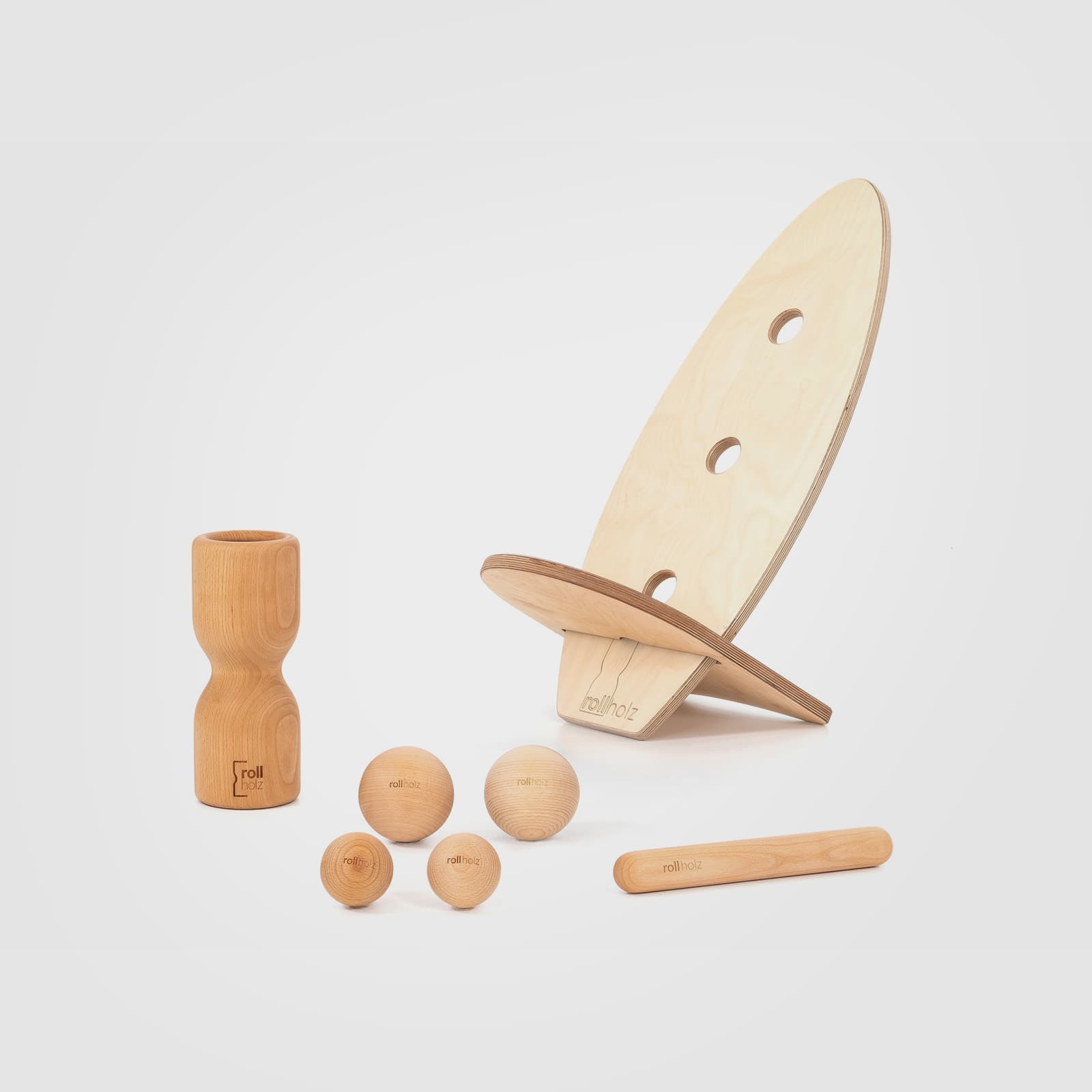
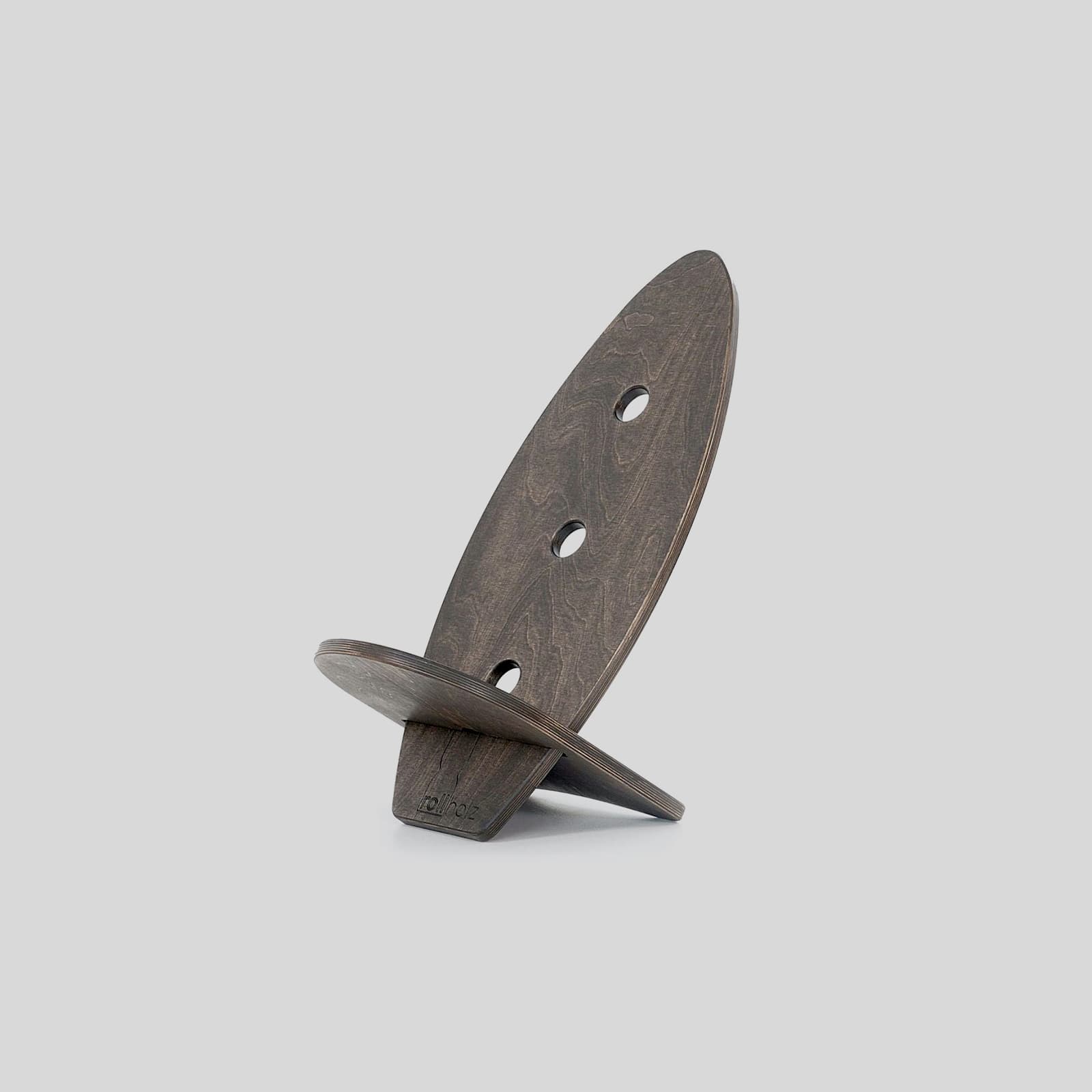
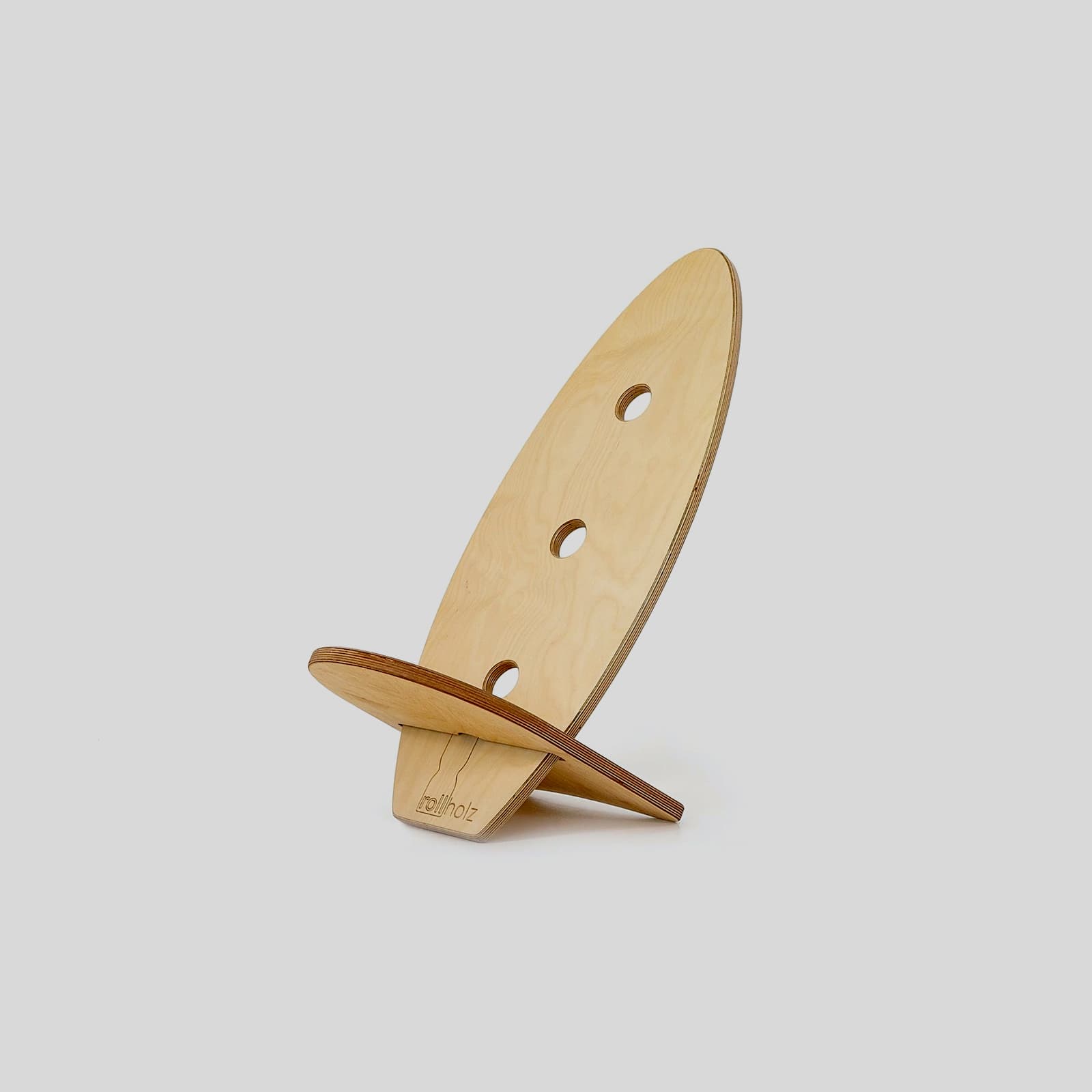
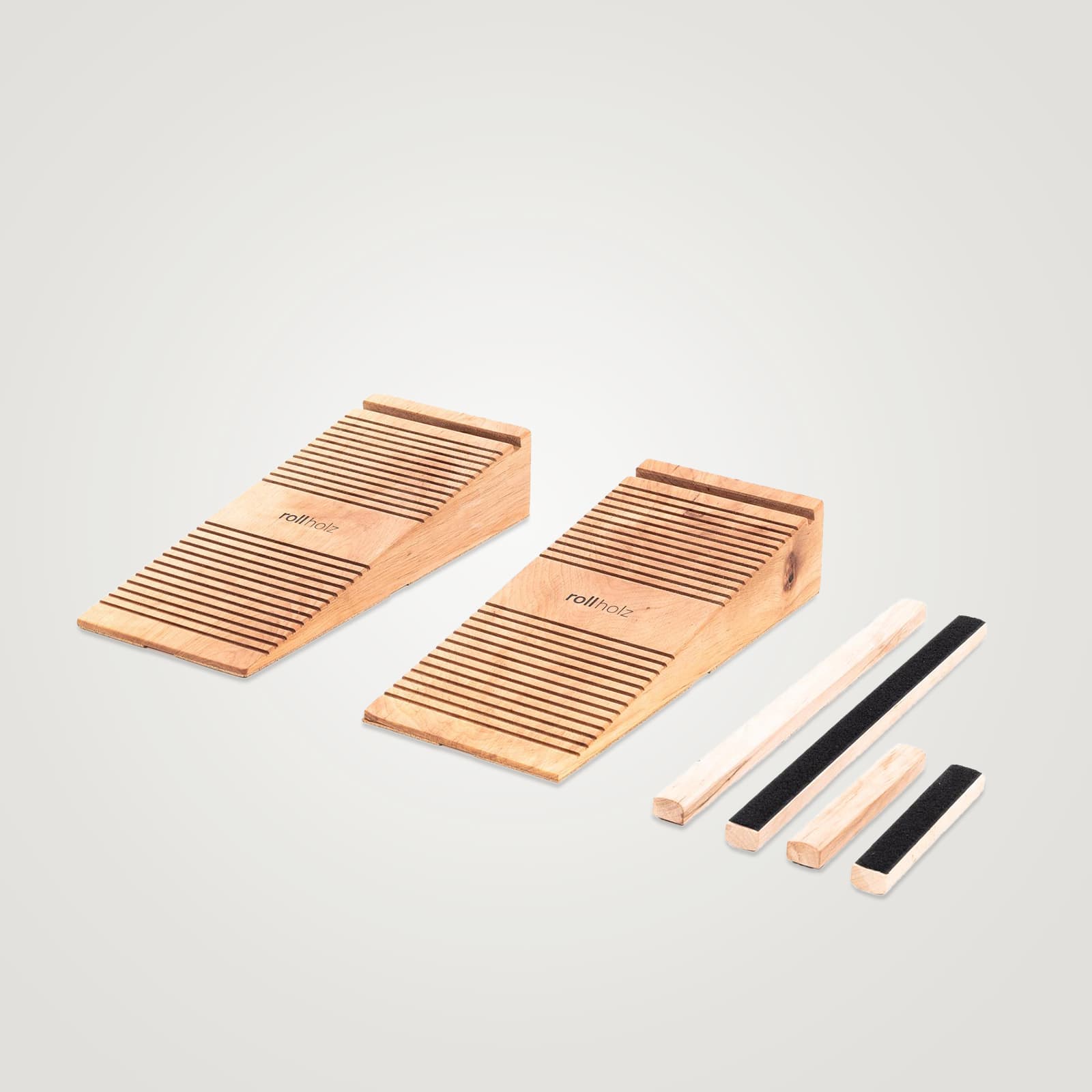
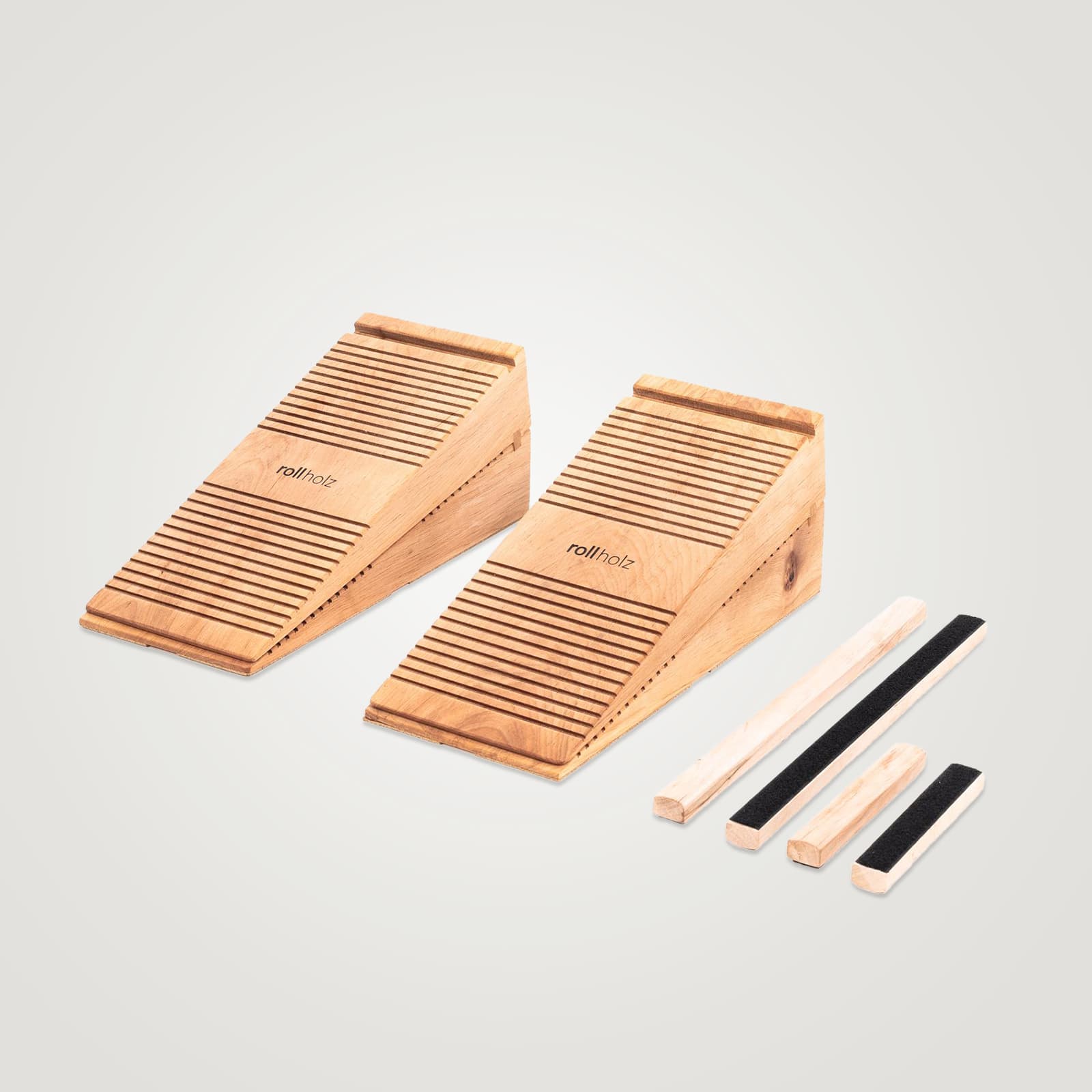
- Seat: The two boards can be slotted together. This makes a seat – so the board stands tidily in the room when you are not training.
- Fascia tools: You can also use the rollers and balls under the board for fascia training.
- Balance training: the actual purpose, in many levels.

You can find more about the seat and the accessories in the guide Buying a balance board: wood or plastic, roller or ball?

5. Space and everyday use
Leave one to two metres of free space around the board. If you have little room, the seat helps: the board does not have to go in the cupboard.
6. Surface
A mat, for example a cork mat, gives grip and protects floor and board.

7. Price and what is included
The single board costs 159 to 179 euros. The sets include roller and balls, so you do not have to piece things together one by one.
Which board suits which goal?
| Your goal | Suitable |
|---|---|
| Getting started with balance and fascia training | Balance board set, small (board, rollholz Pro, 2 balls of 7 cm) |
| Complete training with maximum variety | Balance board set, large (plus mini roller and 2 balls of 10 cm) |
| Roller and balls already at home | Balance board, single |
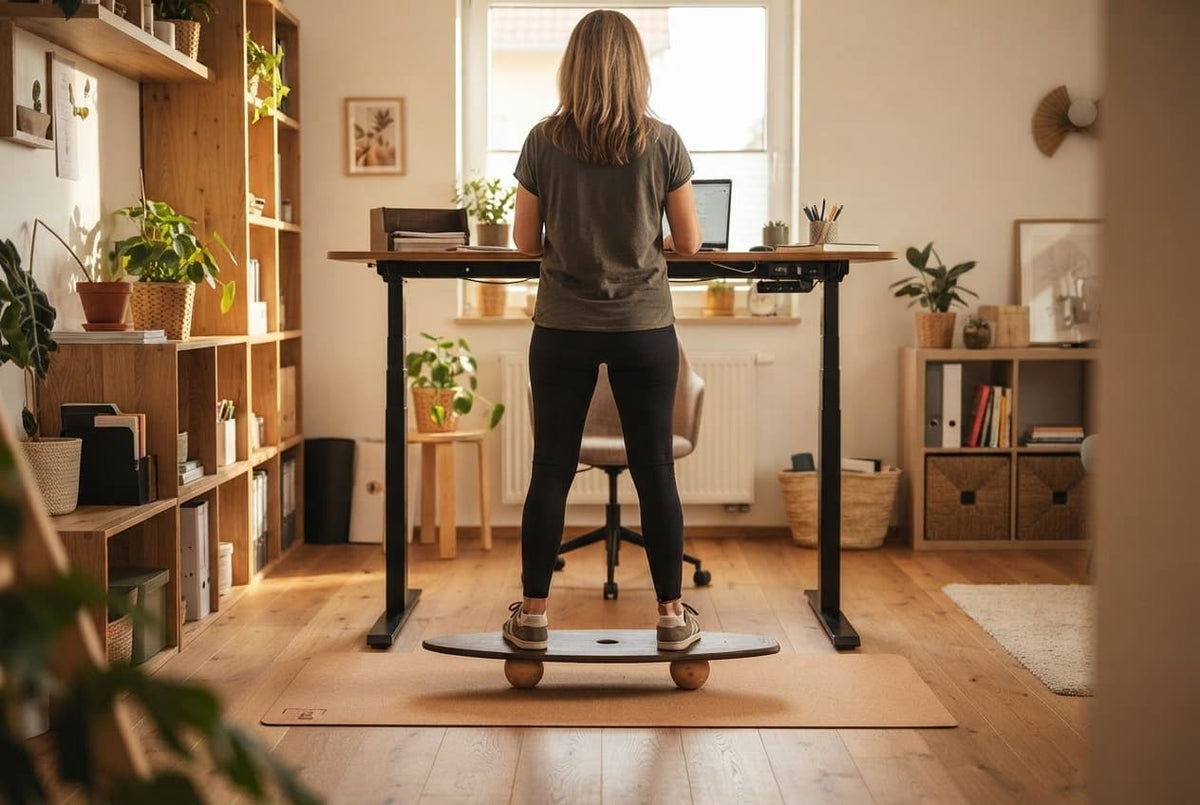
| Standing actively in the home office | Single board or set, plus the article Balance board at the desk |
Adults and children
The balance board is meant for adults, but not only: children can train on it too. The mini roller is the harmless choice for getting started; stay close to a wall or handrail.
Where to start
There is no fixed order. You can begin with any base:
- Large roller: the starting point for most people. Hold on to a wall or handrail at the start.
- Mini roller: the safe choice, for example for older people who must not fall.
- Balls: a different kind of training. They mainly challenge the ankles.
The rollers, by contrast, train coordination and general balance.
You will find all exercises from easy to hard in the article Balance board exercises: 15 exercises from easy to hard. For older people, fall prevention is worth a look.
If you have a pre-existing condition, talk to your doctor first.
Frequently asked questions
Which base should I start with?
There is no fixed order; every base is possible from the start. The large roller is included in both sets and is the starting point for most people: it is actually easier to stay standing on it, but the risk of falling is higher. Hold on to a wall or handrail at the start.
The mini roller is the harmless option: when it tilts, the board quickly touches the floor, so you can hardly fall off. It suits older people, for example, who must not fall. The balls are a different kind of training: they mainly challenge the ankles, while the rollers train coordination and general balance.
Small set or large set – what is the difference?
The small set contains the board, rollholz Pro and two balls of 7 cm. The large set adds the mini roller and two balls of 10 cm. The taller balls let the board tilt further and mainly challenge your core. The small set is enough to get started; if you want the full range from the beginning, take the large one.
How often and how long should I train?
Begin with a few minutes a day or several times a week. Short, regular sessions beat one long one. Stop when your concentration drops – that is when the risk of falling rises.
Barefoot, in socks or in shoes?
Barefoot you have the most grip, because your feet naturally hold well on the wood. In shoes you also have good grip. In socks alone you slip quickly, because there is hardly any grip.
That is what the cork grip strips for the balance board are for: you stick them on the board and stand securely even in socks. Also put the board on a mat and stay near a wall at first.
Does a balance board help with complaints or in old age?
Balance training strengthens coordination, ankles and core. If you have injuries, dizziness or pre-existing conditions, talk to your doctor first. More in Proprioceptive training and Fall prevention.
Can I use it in the home office?
Yes, for example for active standing at the desk. The article Balance board at the desk shows how.
What can the board do besides balancing?
Slotted together, the two boards make a seat, so the board stands tidily in the room. You can also use the rollers and balls that sit under the board while balancing as fascia tools.
Conclusion
Instead of looking for a test winner, a clear view of your goal helps. If you are looking for a board you can balance on, that serves as a seat and whose rollers and balls you can use as fascia tools, the balance boards from rollholz are a good choice.


Leave a comment
This site is protected by hCaptcha and the hCaptcha Privacy Policy and Terms of Service apply.