
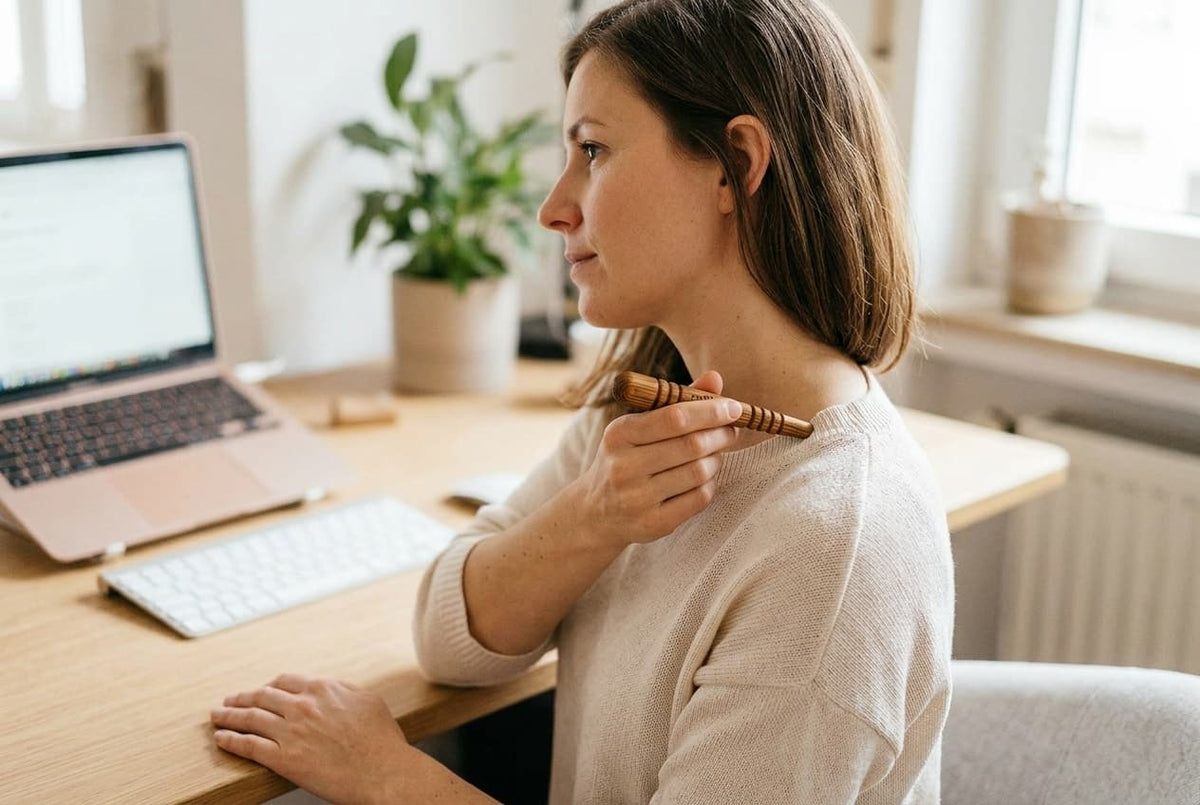
A hard knot in the neck, a spot between the shoulder blades that hurts at the slightest pressure, or a pulling feeling in the arch of the foot after a long day: many people know these pressure-sensitive points in their muscles. In physiotherapy and self-massage they are usually called trigger points.
In this article we explain what that means, where trigger points are especially common, how you can treat them yourself with a trigger stick, double ball and fascia ball – and when you should rather ask a doctor or physiotherapist.
The key points
- Trigger points are small, hardened and pressure-sensitive spots in a muscle.
- Calm, steady pressure for 20 to 60 seconds – never on bones or the spine.
- For radiating pain, tingling or persistent complaints: have it checked by a doctor.
What are trigger points?
A trigger point is a small, hardened and pressure-sensitive spot in a muscle – often palpable like a taut band or a small knot.
Typically, pressure on this spot does not only hurt there, the feeling can also "radiate" into another part of the body. For example, a point in the neck muscle can cause a pulling sensation up to the back of the head, or a point in the buttock a pulling sensation into the thigh.
To be honest: science is still debating exactly how trigger points develop and how they can be measured. What is clear, however, is that many people find targeted pressure massage on these spots soothing – and that posture, one-sided strain and stress often keep the muscles tense for long periods. This is exactly where self-massage comes in.
An important note first
The exercises in this article are intended for occasional, everyday tension. They do not replace a medical check-up. Pressure pain in the chest area, pain that radiates into the arm or jaw, shortness of breath or dizziness do not belong in self-massage but need to be seen by a doctor immediately. You will find more below under "When you should see a doctor or physiotherapist".
Where trigger points are especially common
Trigger points can occur in almost any muscle. In practice, however, we come across them especially often in places that do a lot of holding work in everyday life or stay in the same position for a long time:
- Neck and upper trapezius: typical with screen work and stress. More on this: Relieving neck tension.
- Shoulder and shoulder blade: often after long periods of sitting or carrying. More on this: Relieve shoulder pain & tension.
- Upper back between the shoulder blades: a classic with home office work and driving. More on this: Tension in the upper back.
- Glutes and hip: frequent after a lot of sitting or when running. More on this: Relieving piriformis syndrome.
- Sole of the foot and calf: for runners and after standing for a long time. More on this: Relieving pain in the sole of the foot.
- Jaw and back of the head: with tension and teeth grinding. More on this: Relieve jaw tension.
How to treat trigger points yourself: the basic rules
The same simple technique applies to all exercises below. It keeps self-massage pleasant and safe:
- Find the point: Slowly feel the area until you notice a particularly pressure-sensitive spot.
- Build up pressure slowly: Start gently and increase the pressure until it feels "good-uncomfortable" – about 6 out of 10 on a pain scale. It must never feel stabbing, burning or radiate into the arm or leg.
- Hold instead of rubbing: Stay on the point for 20 to 60 seconds and keep breathing calmly. Many people notice the pressure pain easing after a while.
- Release and move on: Slowly take the pressure away and, if needed, look for the next point.
- Don't overdo it: One or two rounds per spot are enough. Afterwards the area may feel a little more yielding, but it should not feel sore.
Important: always work on muscle, never directly on bones, the spine, joints or easily palpable pulse points.
6 exercises for trigger points
1. Upper trapezius with the trigger stick (with a partner)
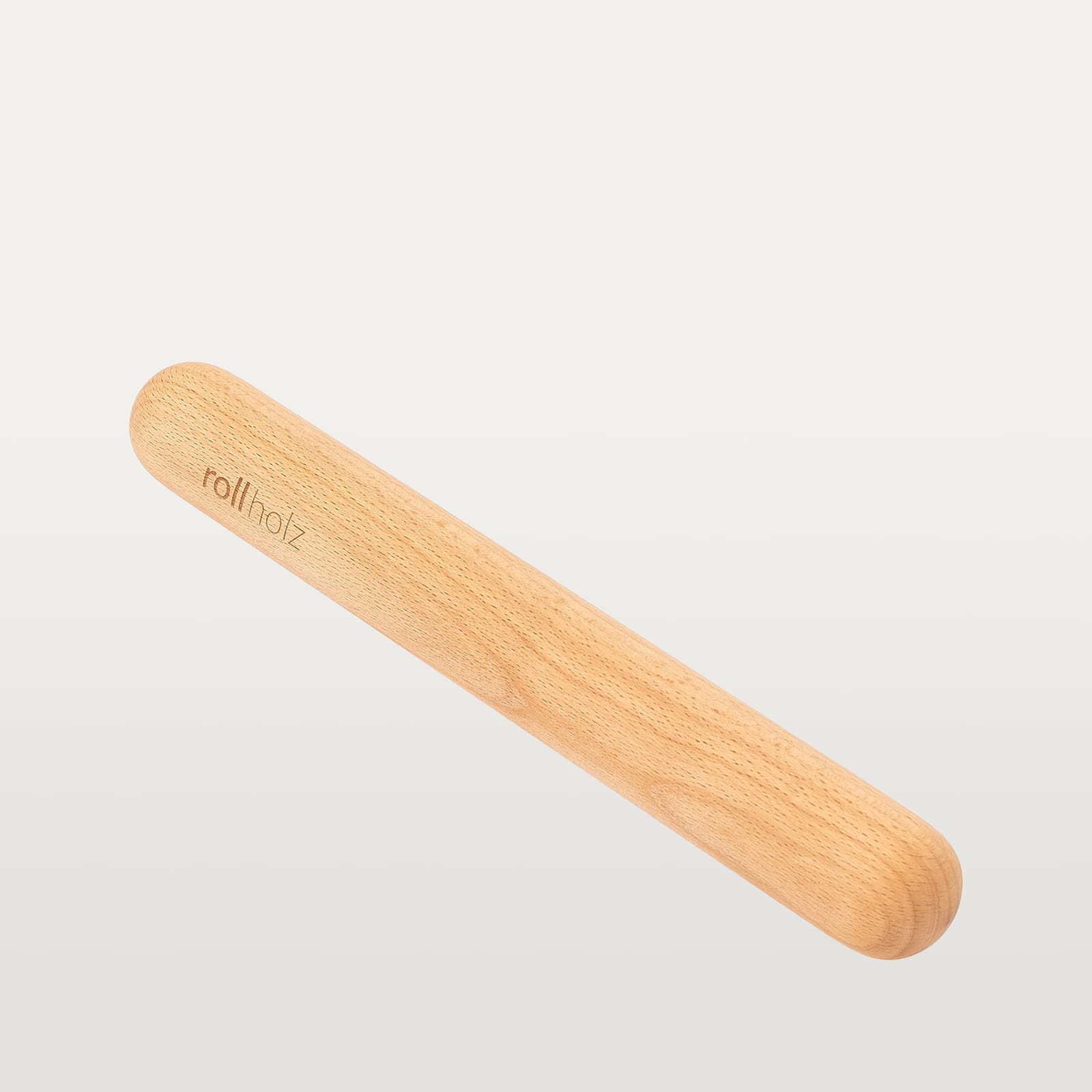
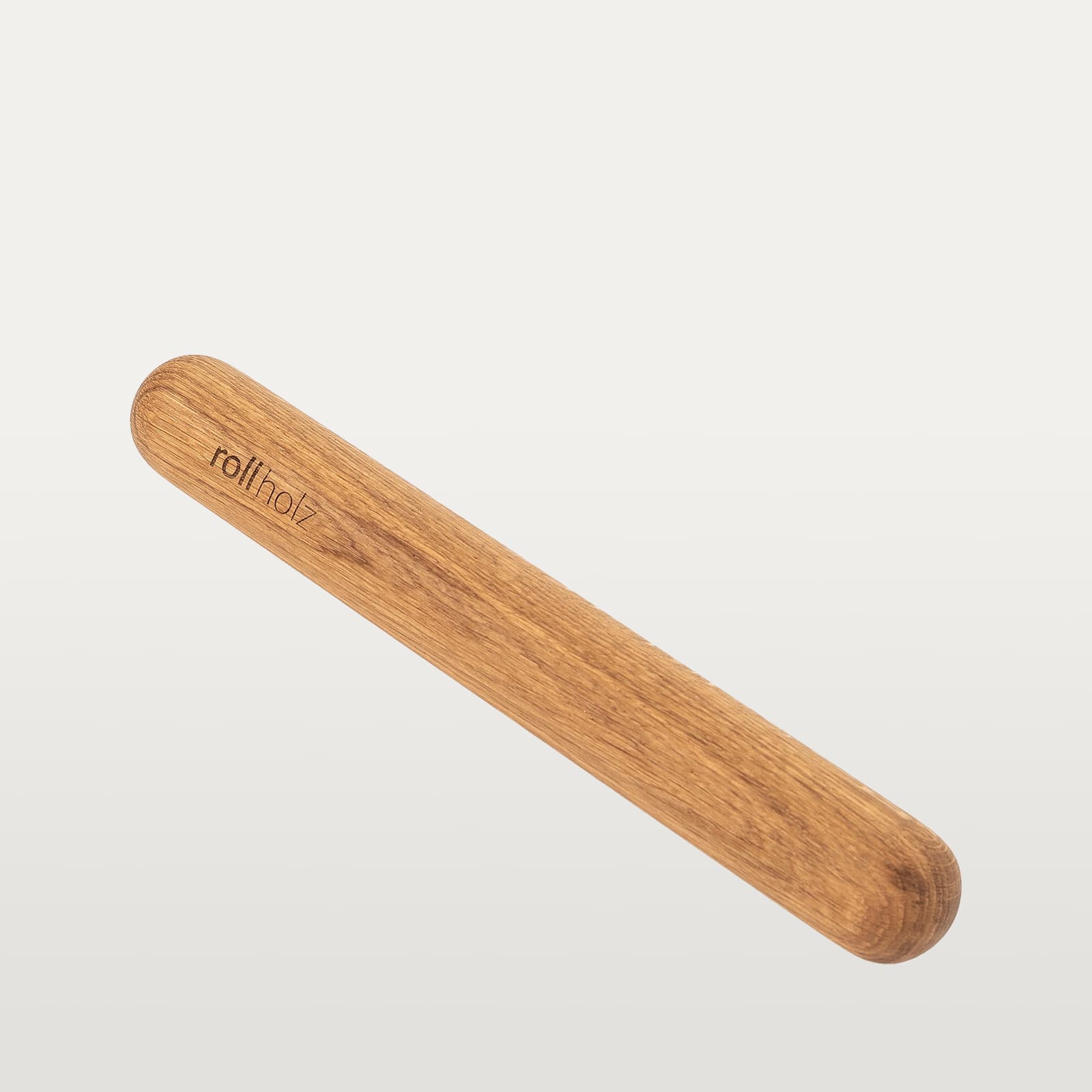
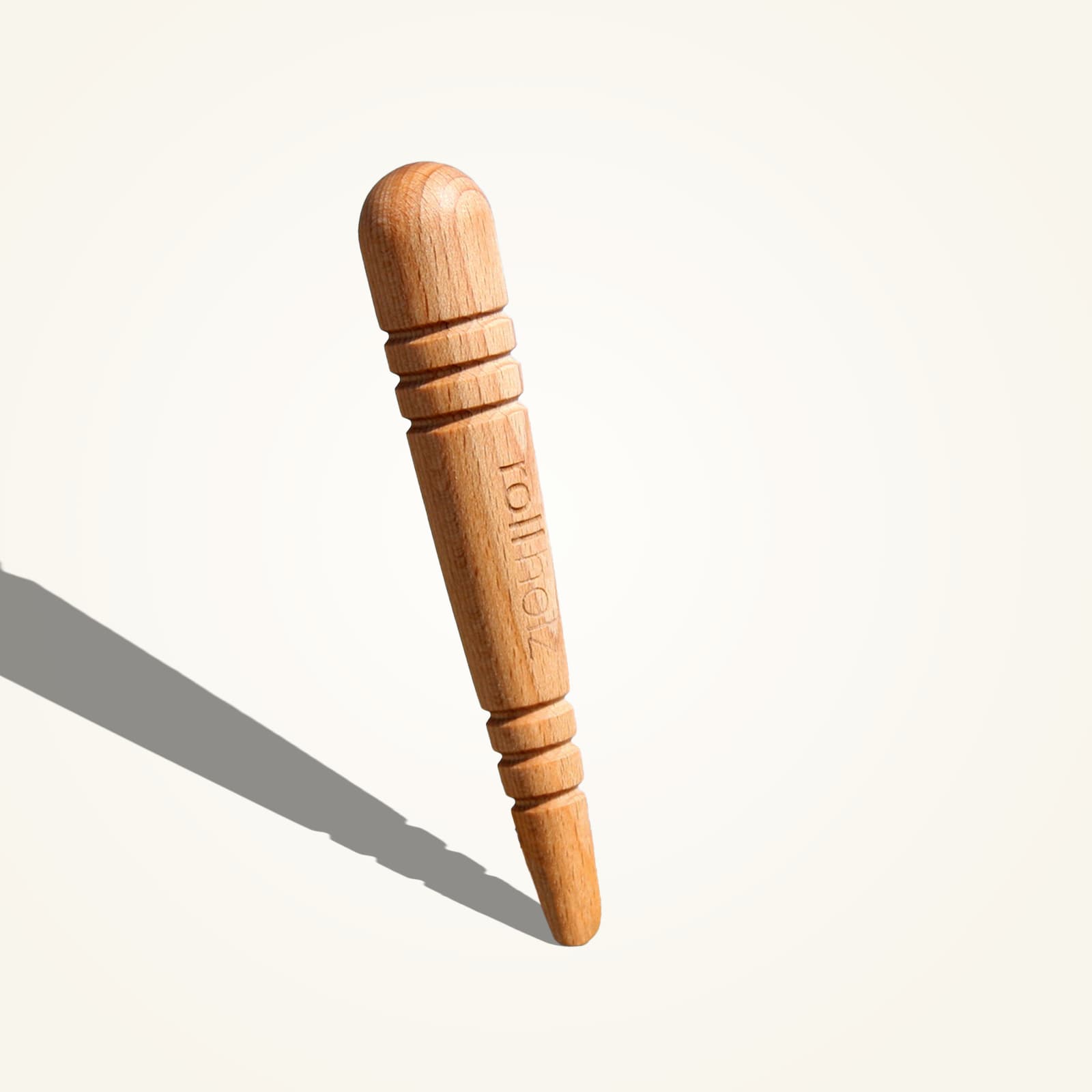
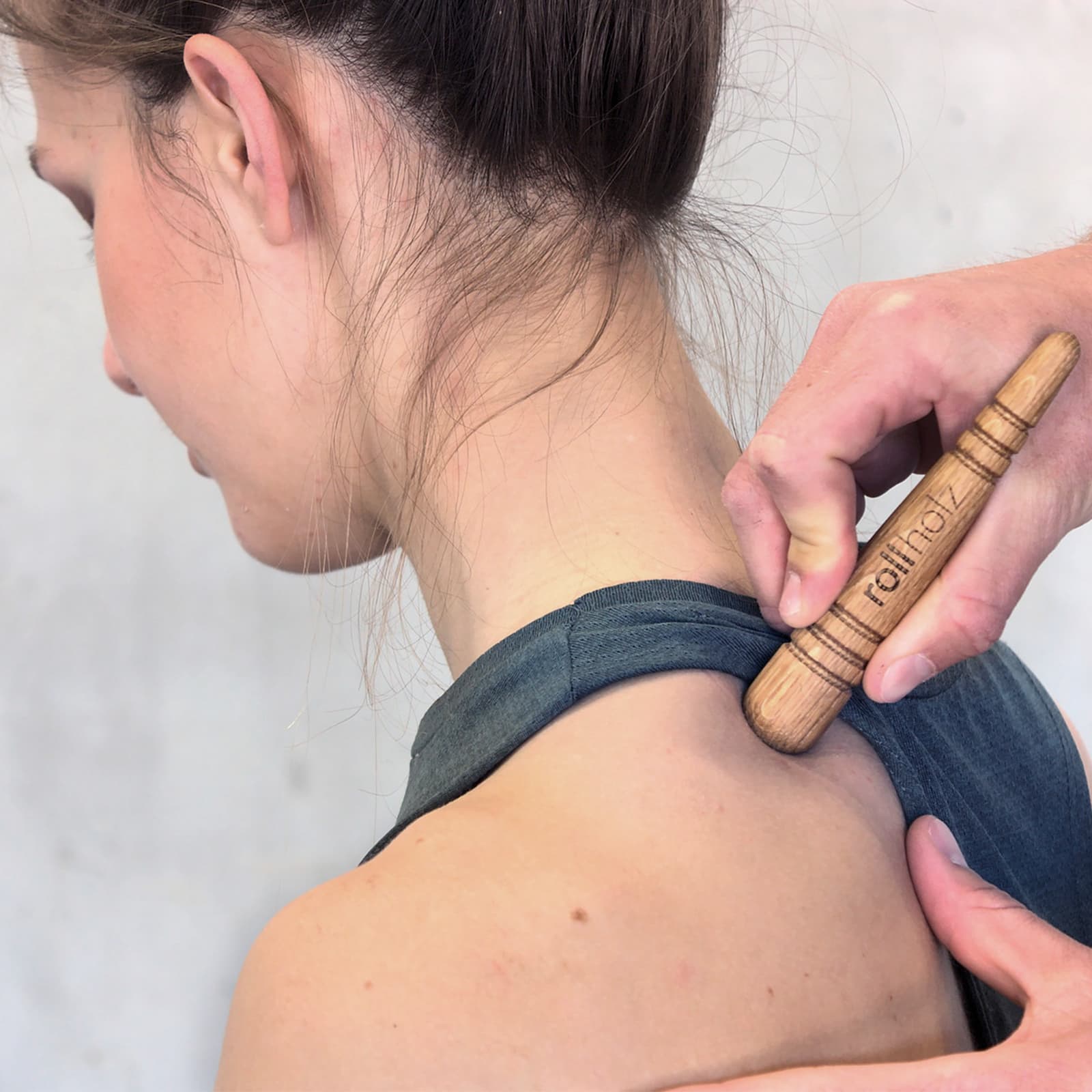
A second person presses down from above onto your upper trapezius – the muscle between neck and shoulder tip – with the trigger stick (also called a massage stick).
- Sit upright on a chair and let your shoulders hang loosely.
- The second person stands behind you and feels the muscle between neck and shoulder tip until they find a pressure-sensitive spot.
- They then press down on it from above with the wider end (2 cm) of the trigger stick – to the side of the cervical spine, never on the vertebrae themselves.
- The pressure is built up slowly and held for 20 to 30 seconds. Tell your partner out loud if it becomes too much.
- Then switch sides.
To increase the pressure: The wider end is usually perfectly sufficient to begin with. If you want to increase the pressure, use the narrow end (1 cm).
It also works on your own: Reach over your shoulder with the hand of the opposite side and feel for the spot yourself.

2. Between the shoulder blades with the double ball (lying, head lifted)
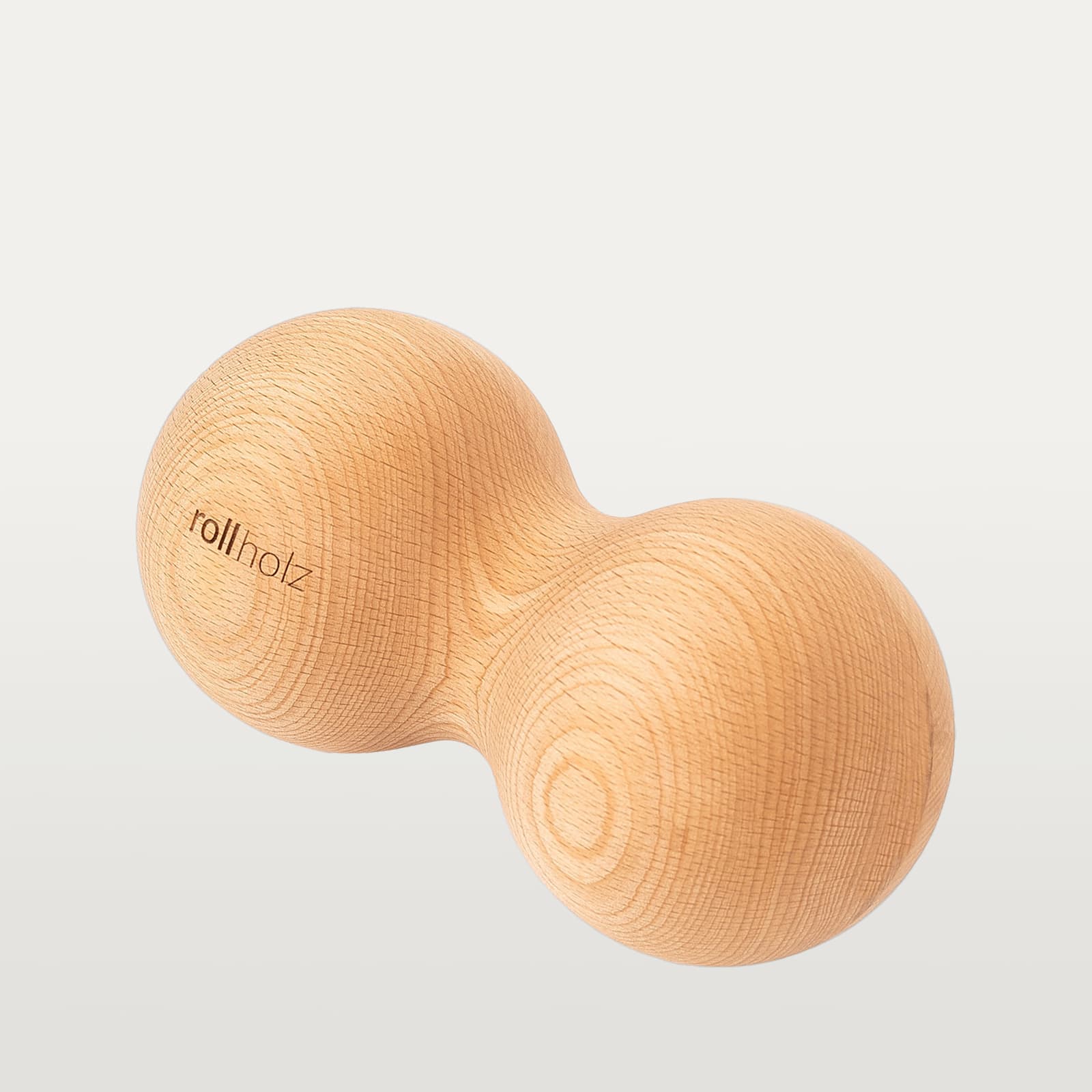
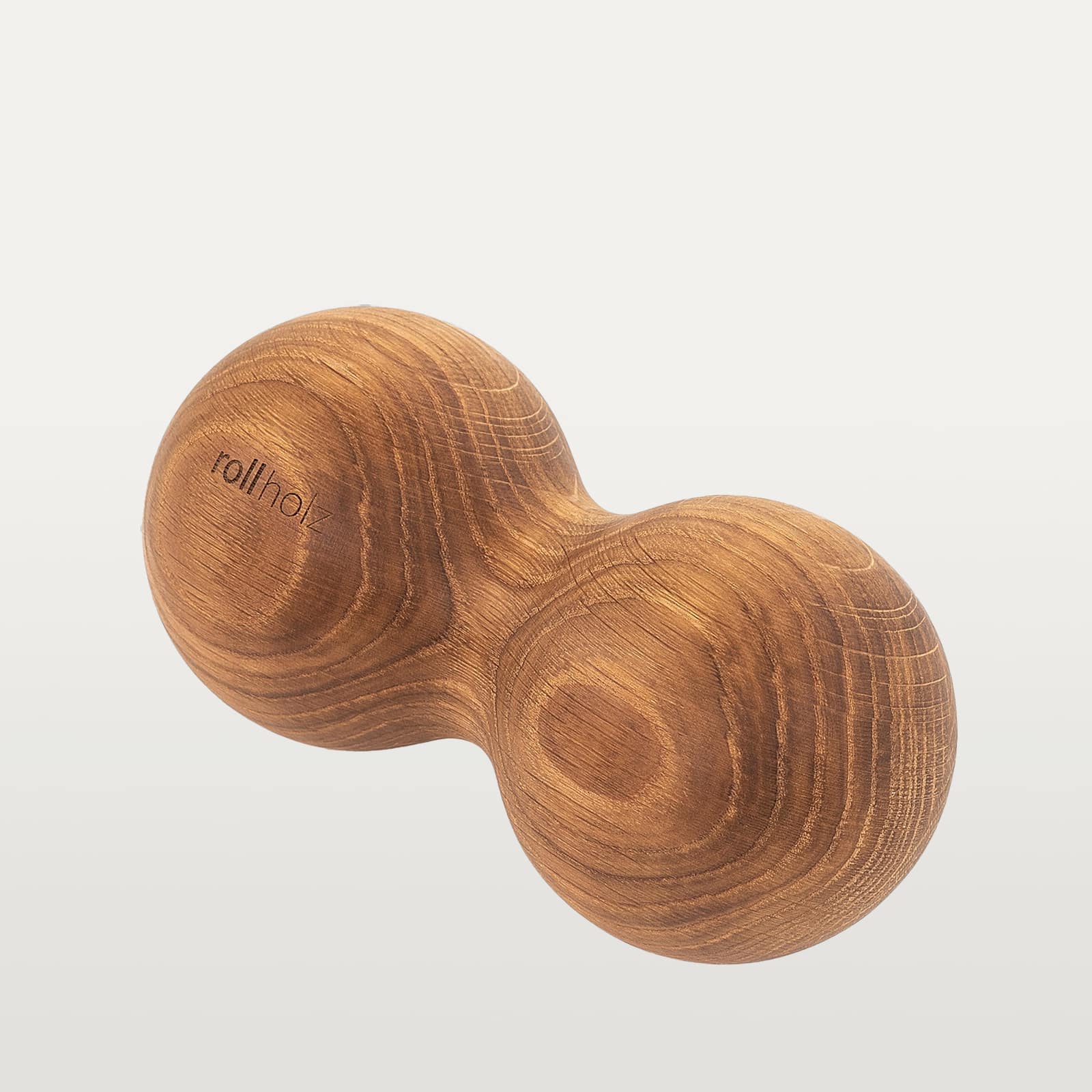
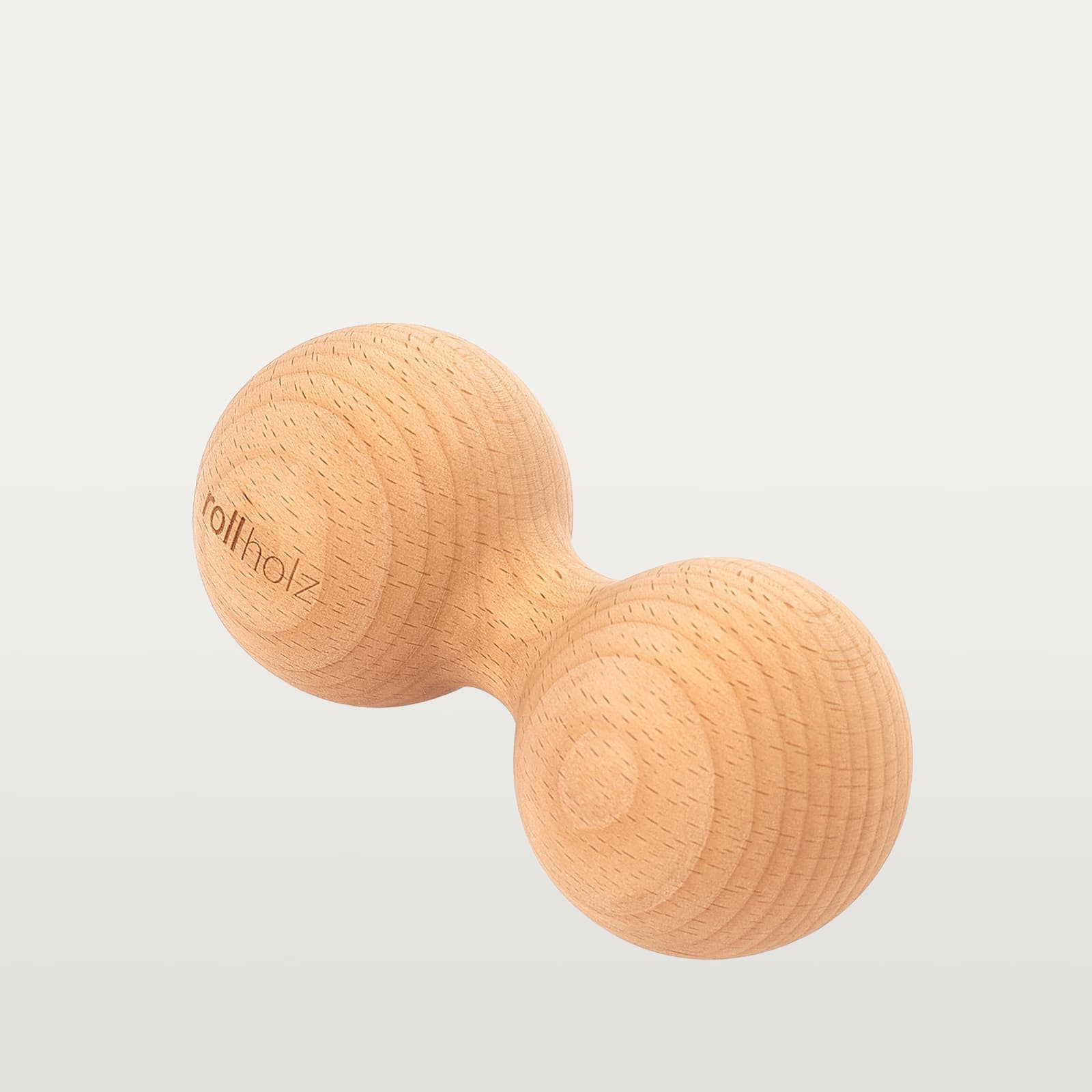
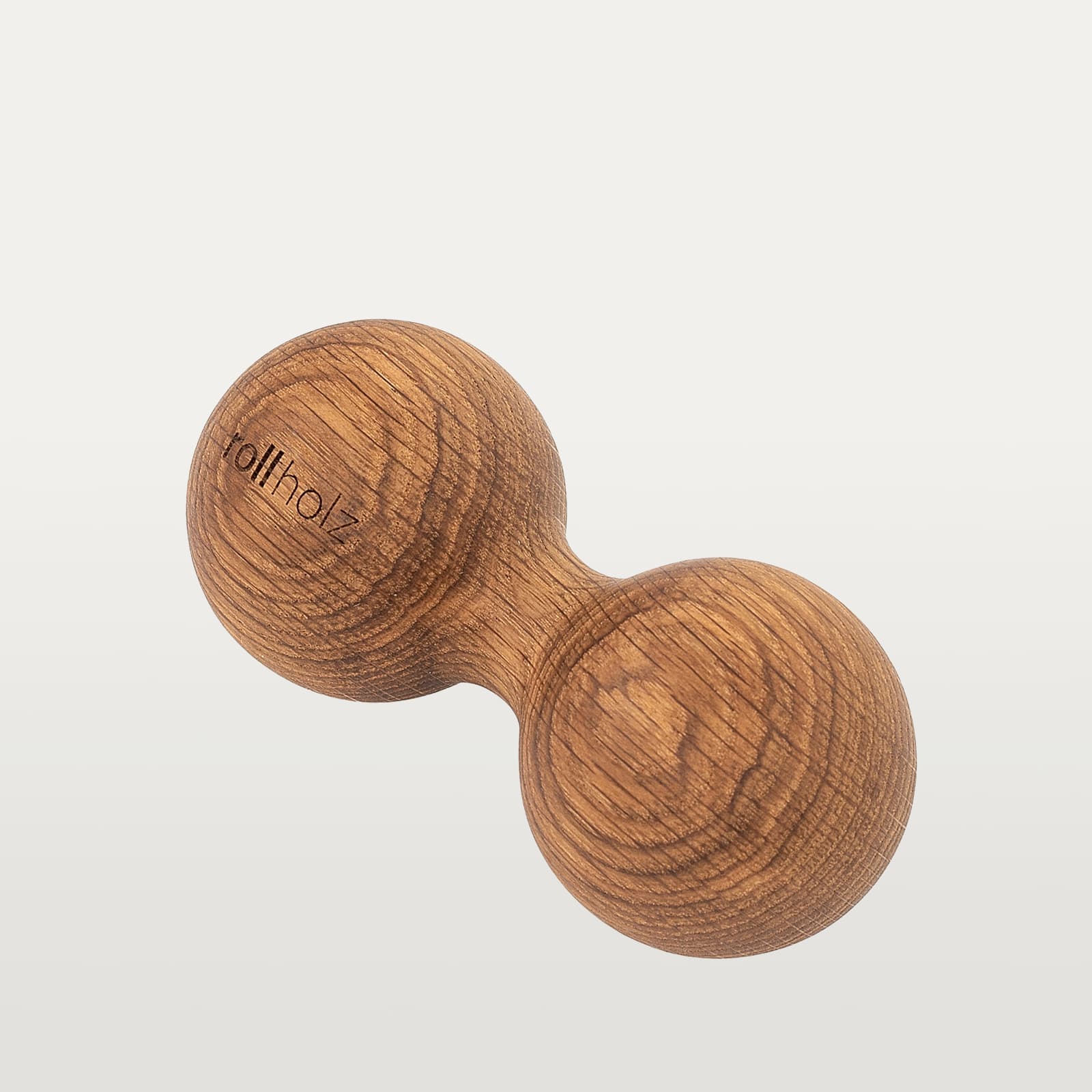
The double ball lies under your upper back and massages the muscles left and right of the spine.
- Lie on your back on a mat with your knees bent and your feet flat on the floor.
- Place the double ball under your upper back at shoulder blade height. It lies horizontally: the two balls sit next to each other, left and right of the spine, and the spine rests freely in the groove between them.
- Clasp your hands behind your head and lift your head slightly off the mat. Your shoulders stay on the floor.
- With small movements of your buttocks and feet you move the ball a little up and down. Pause briefly on pressure-sensitive points and keep breathing calmly.
To increase the pressure: try resting your head and arms on the mat: this puts more body weight on the ball.

3. Chest muscle with the fascia ball
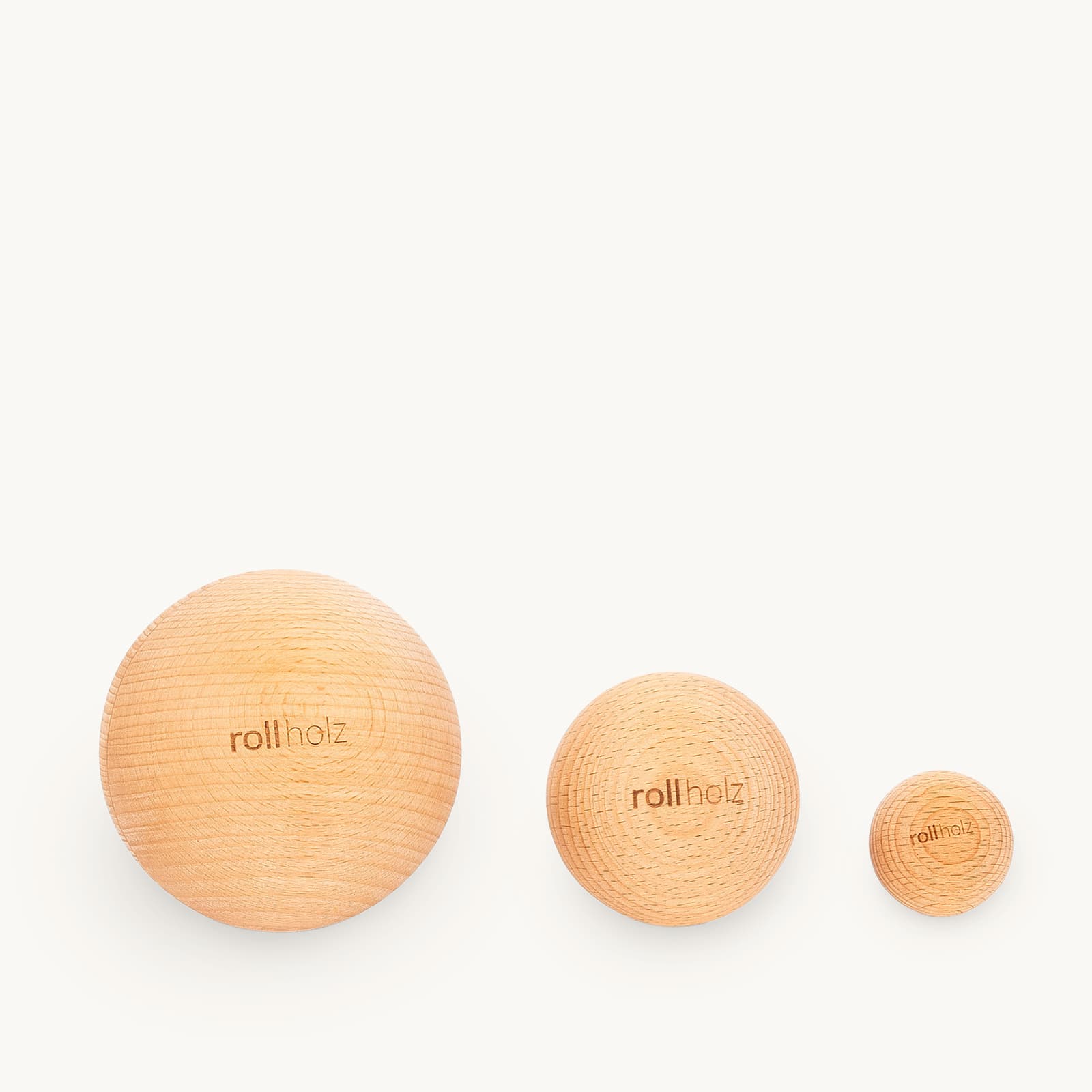
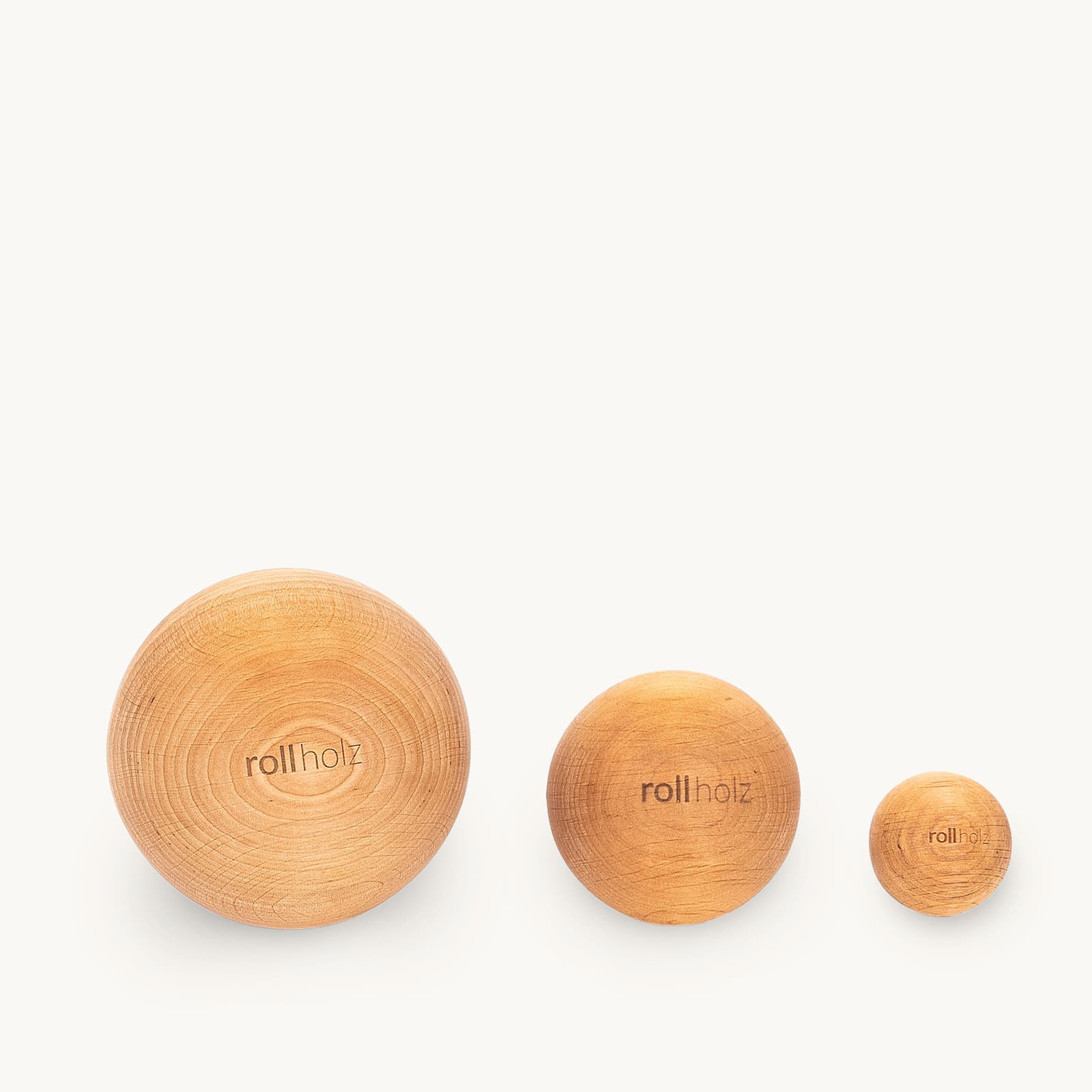
A fascia ball (7 cm) is wedged between your chest and a wall.
- Stand facing a wall.
- Place the ball on your chest muscle, directly below the collarbone and next to the shoulder joint – not on the breastbone and not on the ribs.
- Lean towards the wall so that the ball is wedged between your chest and the wall.
- Slowly put more body weight on the ball until the pressure feels "good-uncomfortable".
- Move the ball over the muscle with small circles or slight shifts of weight.
Caution: chest and ribs are sensitive. If you get a pressure feeling that does not seem muscular, stop the exercise. More on this in Relieving chest muscle tension.
4. Gluteal muscle with the fascia ball
A larger fascia ball (10 cm) under one buttock reaches the gluteal muscle.
- Sit on the floor and place the fascia ball under one buttock.
- Rest the leg on that side loosely over the other knee.
- With small shifts of weight you search for the pressure-sensitive points.
- Stay there briefly until the pressure eases.

5. Calf with the fascia ball
A fascia ball (7 cm) rolls over the calf muscles.
- Sit on the floor with your legs stretched out and place the fascia ball under your calf.
- Lift your buttocks slightly and slowly move your leg to the left and right to move the ball over the calf muscles.

6. Sole of the foot with the small fascia ball
A small fascia ball (4 cm) reaches the arch of the foot.
- Stand upright and place the fascia ball under the arch of your foot.
- Roll slowly back and forth and pause briefly on pressure-sensitive points.
Tip: especially after a long day this often feels particularly pleasant. More on this in Relieving pain in the sole of the foot.

Fascia roller or trigger stick: which one when?
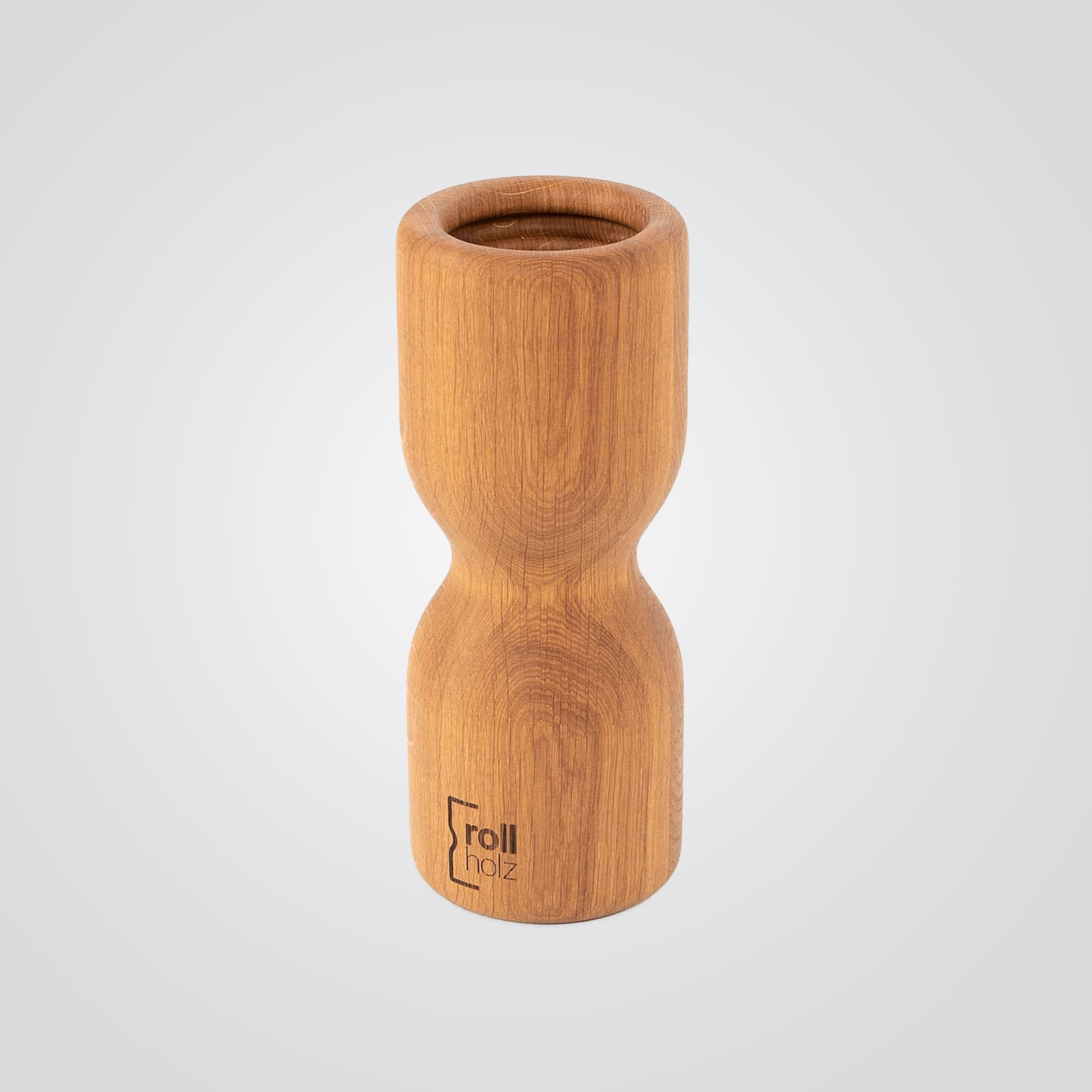
The fascia roller is suited to large areas such as thighs, back or calves. For single, precise spots, smaller tools work better:
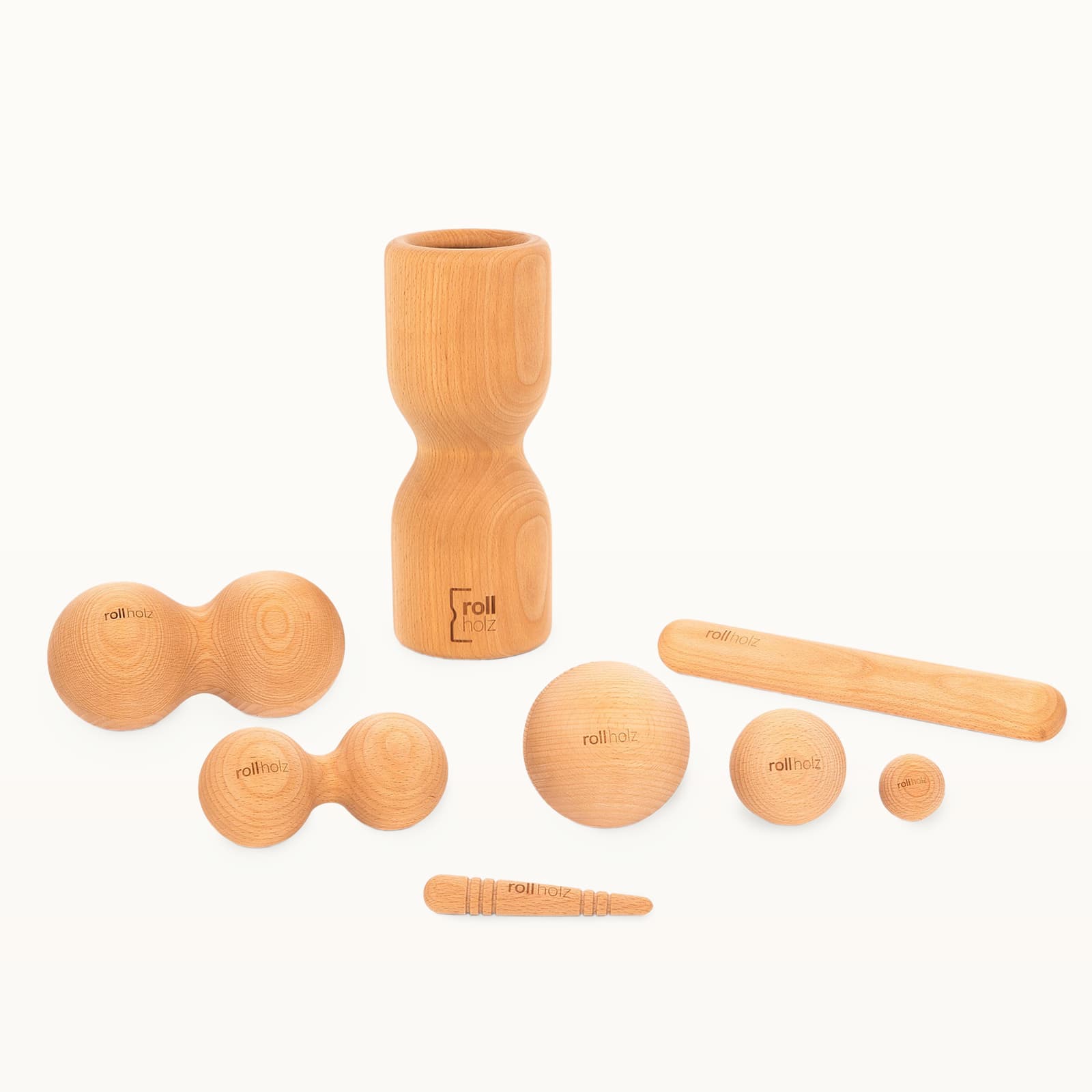
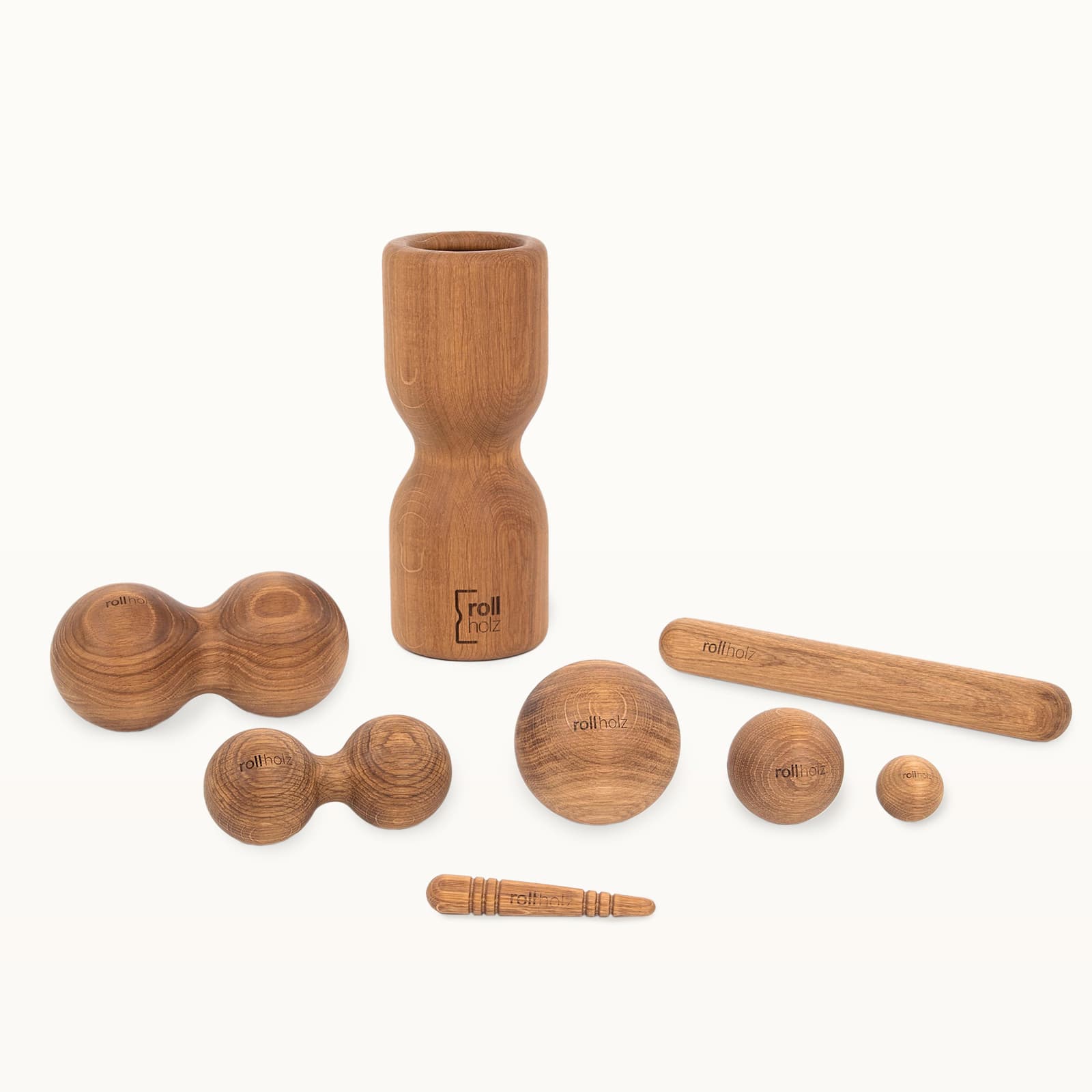
- Trigger stick: for precise pressure on the neck, shoulder, buttocks and foot.
- Double ball: for the muscles next to the spine, without pressing directly on the bone.
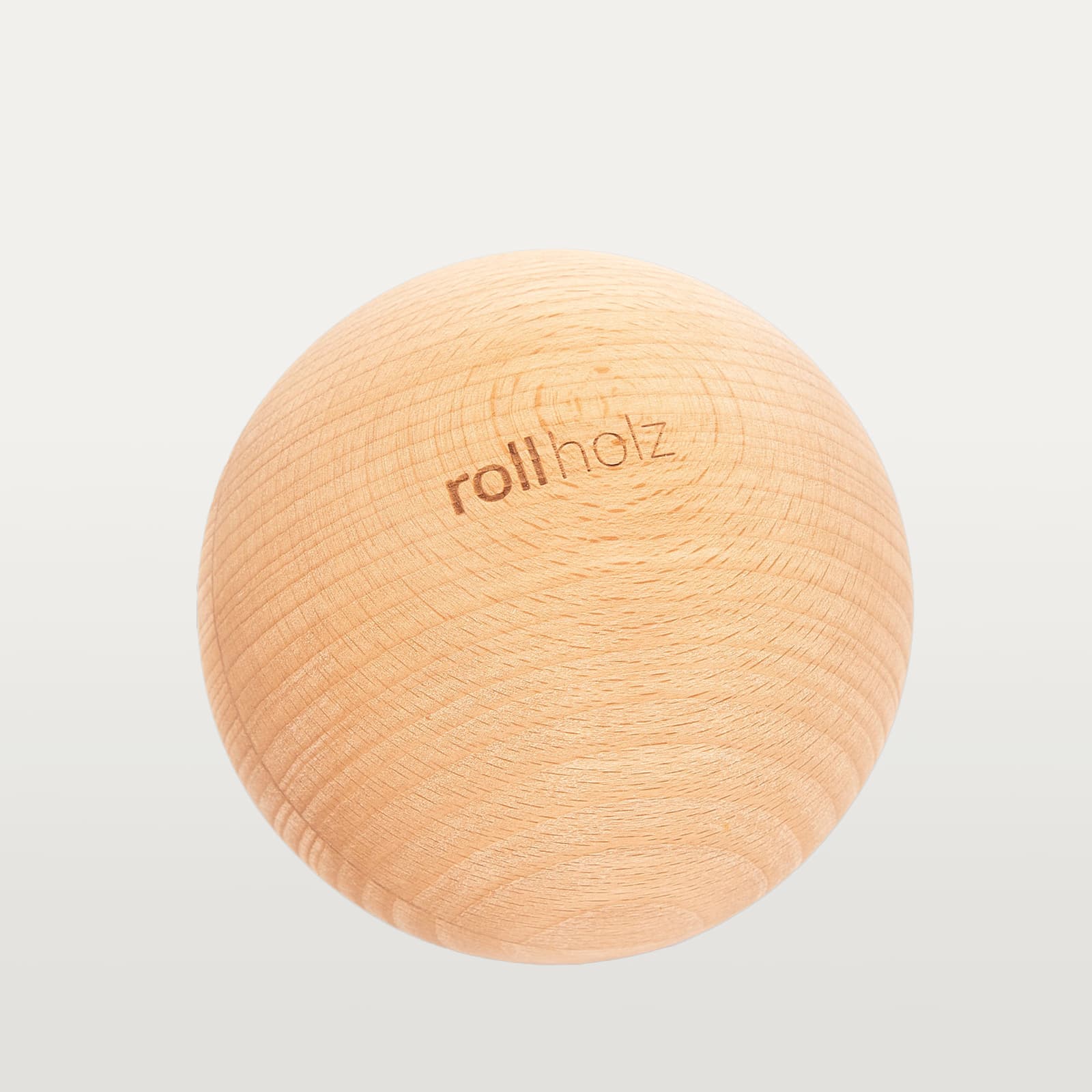
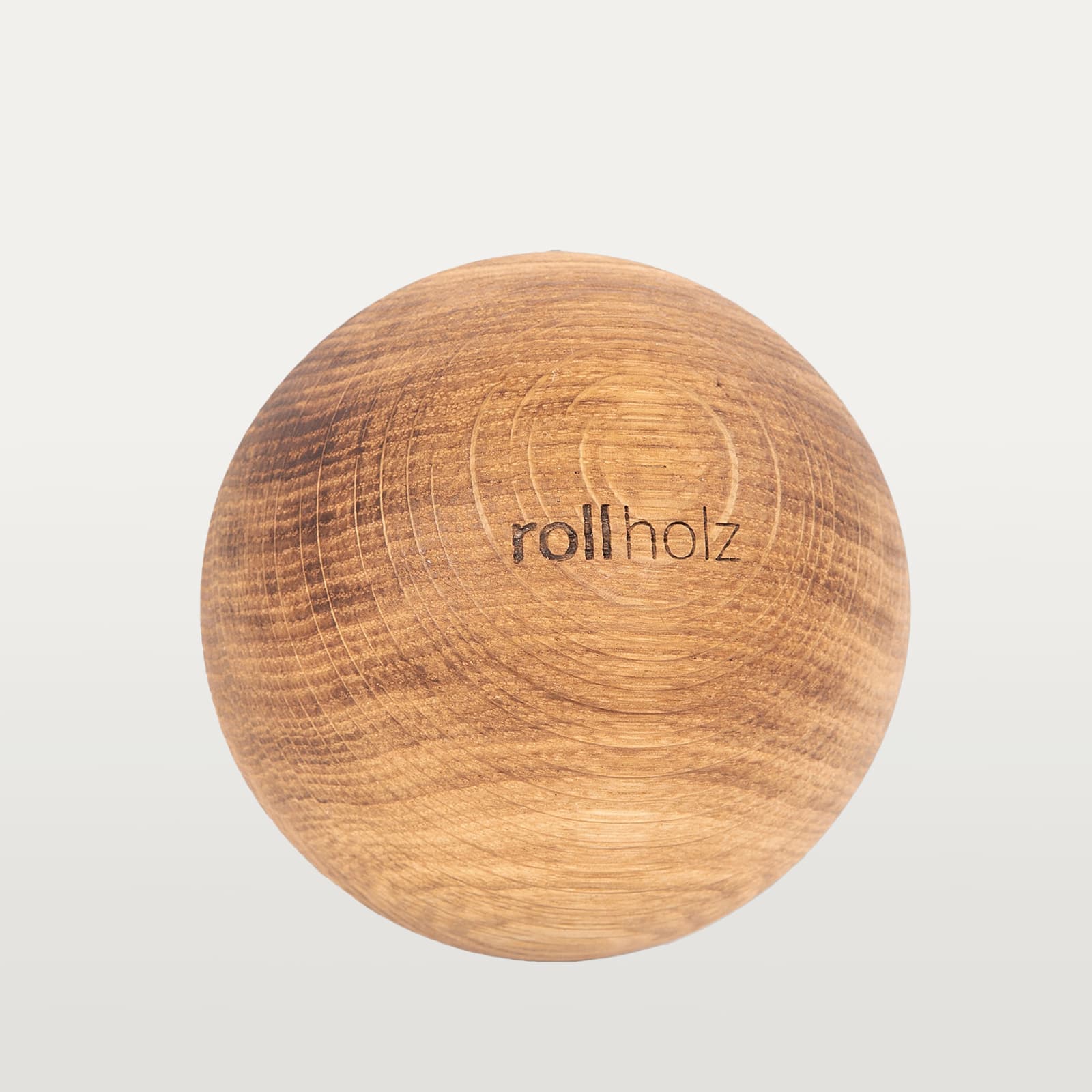
- Fascia ball: in three sizes for chest, buttocks, calf and foot.
Frequently asked questions about trigger points
How long should I press on a trigger point?
Usually 20 to 60 seconds per spot are enough. You do not have to work against the pain: the pressure should feel intense, but not unbearable.
How often can I treat trigger points myself?
Once or twice a day is fine for most people. If the spot feels irritated or sore afterwards, give it a day or two of rest.
Is it normal for it to hurt?
Clear pressure pain at the spot is common. It should stay "good-uncomfortable", though. Stabbing, burning or radiating pain is a sign to reduce the pressure or end the exercise.
Does self-massage replace treatment by a physiotherapist?
No. It can be a good addition in everyday life. For persistent complaints, a professional assessment is the better way.
When you should see a doctor or physiotherapist
The exercises above are intended for occasional, everyday tension. Self-help exercises do not replace a medical check-up. If you notice any of the following signs, we recommend seeing a doctor or physiotherapist:
- The complaints last longer than two weeks or get worse despite the exercises.
- Pain radiates into the arm, hand, leg or jaw.
- Numbness, tingling or loss of strength occur.
- The complaints begin after a fall or accident.
- Fever, severe headache, shortness of breath or dizziness occur as well.
Conclusion
Trigger points are pressure-sensitive, hardened spots in the muscle that can often be addressed well with targeted, calm pressure. With a trigger stick, double ball and fascia ball you reach spots that you can hardly work on with your hands alone.
Patience, breathing and a pressure that stays "good-uncomfortable" are important. A few minutes a day usually work better in the long run than a single strong session. And for persistent or radiating complaints the rule applies: better to have it checked once too often than once too little.



Leave a comment
This site is protected by hCaptcha and the hCaptcha Privacy Policy and Terms of Service apply.